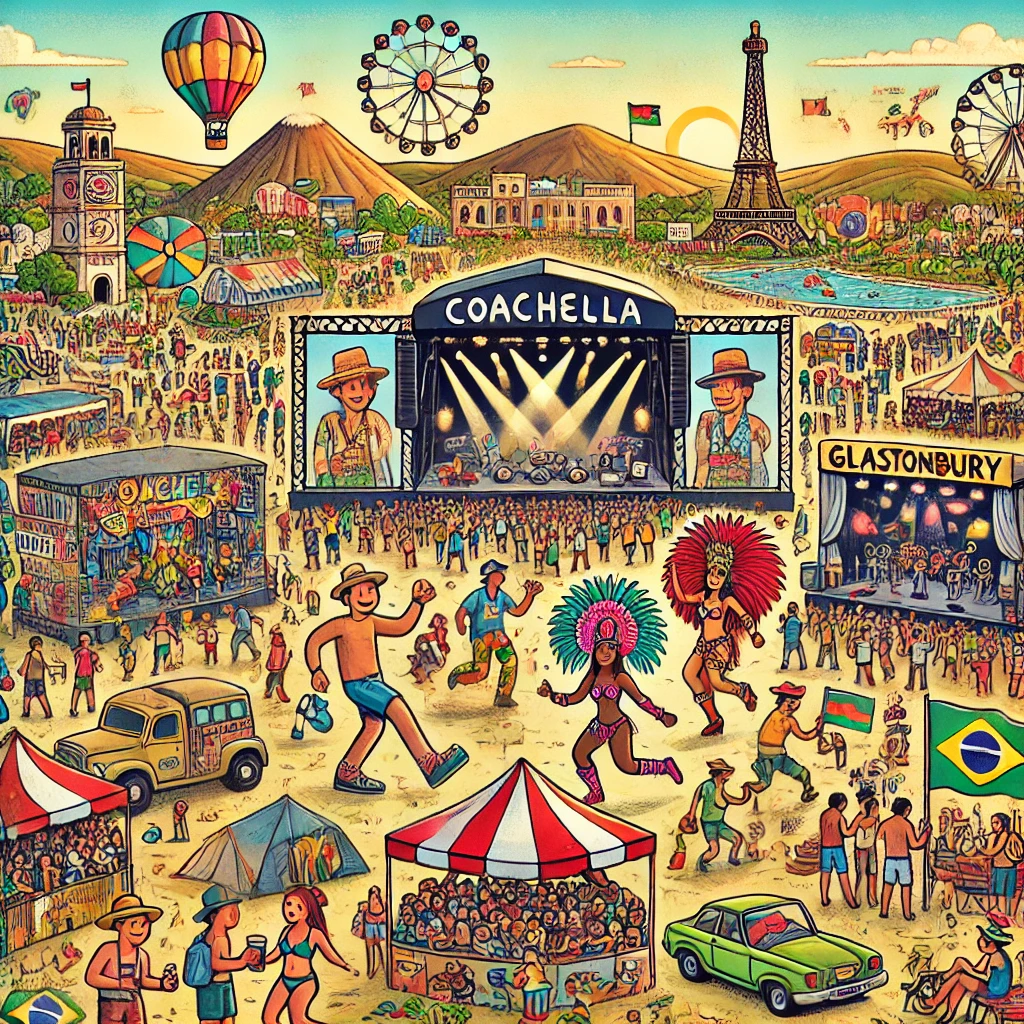
Music has always been a powerful force in uniting people across the globe. From ancient folk songs to today’s chart-topping hits, music transcends borders and cultures. In the contemporary world, English has become the lingua franca, especially in the realm of global music festivals. As English permeates more deeply into the fabric of these international gatherings, it not only impacts the organization and presentation of these events but also influences the audience experience. This article delves into the profound influence of English on global music festivals, examining its role in communication, marketing, and cultural exchange.
Global music festivals are melting pots of diverse musical traditions and audiences. Since many festivals feature artists from various countries, a common language becomes essential for smooth communication and coordination. English, as the most widely spoken second language in the world, naturally fills this gap. By fostering clear communication among artists, organizers, and attendees, English ensures that these festivals run seamlessly. This shift towards English also reflects broader global trends in trade, education, and technology, further cementing its authority and acceptance in the music festival arena.
The Role of English in Communication
At global music festivals, effective communication is paramount. The success of these events depends on the ability of organizers, performers, and attendees to understand each other. Due to English’s status as a widely recognized second language, it is often chosen as the primary medium of communication. This makes English an indispensable tool for scheduling coordination, technical setup, and artistic collaboration.
For instance, many music festival organizers use English to send out invitations and contracts to international artists. This not only simplifies the process but also ensures that there is no miscommunication due to language barriers. Technical crews, often composed of members from various countries, rely on English to operate sound systems, lighting, and stage equipment efficiently. Interviewers and journalists covering these festivals also use English as a common language to reach a broader audience. By standardizing communication in English, music festivals become more inclusive and organized, creating a smoother experience for everyone involved.
The Influence of English in Marketing
English plays a pivotal role in the marketing strategies of global music festivals. Promotional materials, websites, social media campaigns, and press releases are often crafted in English first to reach the widest possible audience. By using English in marketing efforts, festivals can attract international visitors, artists, and sponsors, significantly increasing their reach and profitability.
A significant portion of the global population uses English to search for information online. As a result, music festival organizers prioritize English in their digital presence to enhance visibility and engagement. Social media platforms like Facebook, Instagram, and Twitter, which have widespread use, feature festival updates, artist lineups, and promotional content primarily in English. The anticipation and buzz generated through these platforms drive ticket sales and participation rates. Additionally, English-language advertisements in international media further bolster a festival’s global image and appeal.

English and Cultural Exchange at Music Festivals
Beyond logistical and marketing benefits, the use of English at music festivals significantly contributes to cultural exchange. Festivals are spaces where artists and audiences from diverse backgrounds come together to share their love for music. By utilizing English as a common language, these festivals facilitate intercultural dialogue and appreciation.
Performers often address the crowd in English, making their messages more accessible to an international audience. This fosters a sense of unity and belonging, encouraging attendees to embrace cultural diversity. Workshops, panels, and interactive sessions conducted in English provide additional opportunities for learning and collaboration. For example, an artist from Latin America can teach traditional dance moves to a group of festival-goers from Europe, all communicated in English. This exchange enriches the festival experience, promoting global understanding and respect for different cultures.
English and the Evolution of Music
The influence of English on global music festivals extends to the music itself. Many artists, regardless of their native language, compose and perform songs in English to reach a wider audience. This trend is particularly evident in popular music genres like pop, rock, and EDM, where English lyrics dominate the charts.
International artists often include English tracks in their repertoires to increase their global appeal. For instance, K-pop bands frequently release English versions of their hits to capture Western markets. Festival-goers, familiar with popular English songs, enthusiastically sing along, enhancing the collective experience. Additionally, collaborations between artists from different countries often result in bilingual or multilingual tracks, with English serving as a bridge language. This blending of languages and musical styles fuels innovation and creativity, driving the evolution of contemporary music.
Many music festivals feature a diverse lineup of artists, including native English speakers and those who have adopted English for their performances. This not only showcases the versatility of English as a musical language but also highlights the global nature of music. As a result, English becomes a unifying thread that connects diverse musical traditions, fostering a sense of global community through music.
The Educational Impact of English at Music Festivals
Music festivals also serve as educational platforms, providing learning opportunities for both artists and attendees. For many non-native English speakers, these festivals offer practical language immersion experiences that enhance their English proficiency. Engaging with English-speaking artists, attending English-language workshops, and navigating festival environments in English contribute to language learning and cultural competency.
For ESL learners, music festivals present a unique and enjoyable way to practice English. Listening to lyrics, participating in conversations, and attending sessions in English all aid in vocabulary expansion and comprehension. Additionally, the informal and relaxed atmosphere of festivals encourages language experimentation and reduces the fear of making mistakes, which is crucial for language acquisition. By integrating language learning with the joy of music, festivals make English practice more engaging and effective.
Educational initiatives at music festivals, such as language exchange programs, further promote learning. Through these programs, festival-goers can practice English while teaching their native languages to others. This mutual exchange not only enhances linguistic skills but also fosters intercultural understanding and friendships. By leveraging the universal appeal of music, these educational experiences make language learning enjoyable and memorable.
The Future of English at Music Festivals
As global music festivals continue to grow in popularity, the influence of English is likely to expand further. Trends indicate that English will remain the primary language of communication, marketing, and performance at these events. However, the integration of other languages alongside English is expected to increase, reflecting a more inclusive and multicultural approach.
Technological advancements will also play a crucial role in shaping the future of English at music festivals. Real-time translation devices and multilingual apps are becoming more sophisticated, allowing for seamless communication in multiple languages. While English will still serve as a common ground, these technologies will enable more inclusive interactions and broaden the linguistic diversity of festivals.
Furthermore, as digital music streaming platforms democratize access to music from around the world, artists and audiences are becoming more exposed to a variety of languages and musical styles. This exposure encourages a greater appreciation for linguistic diversity and may influence future festival lineups and performances. Artists may experiment with incorporating multiple languages into their sets, celebrating linguistic diversity while maintaining English as a core element.
The future of music festivals will likely be characterized by a harmonious blend of English and other languages, reflecting the dynamic and interconnected world we live in. As these festivals evolve, they will continue to serve as platforms for cultural exchange, unity, and artistic innovation, with English playing a pivotal role in this journey.
Conclusion:
In conclusion, the influence of English on global music festivals is undeniable. From communication and marketing to cultural exchange and education, English serves as a vital tool that enhances the experience for all participants. Its role in facilitating smooth operations, expanding reach, and fostering unity makes it indispensable in the context of these international events. As the music festival landscape continues to evolve, English will remain at the forefront, driving innovation and inclusivity while celebrating the rich tapestry of global musical traditions. By embracing English alongside other languages, music festivals can continue to break down barriers, promote cultural understanding, and create unforgettable experiences for artists and audiences alike.