

Learning English as a second language (ESL) involves mastering various components, one of the most fundamental being vocabulary. Building a robust lexicon is crucial for effective communication, particularly when discussing everyday topics such as weather. Weather conditions influence our daily lives and conversations about them are common in English-speaking cultures. Therefore, acquiring vocabulary related to different weather conditions can significantly enhance your fluency and boost your confidence when engaging in casual chats.
The English language has a rich repertoire of terms related to weather, each lending nuance and specificity to discussions. Whether it’s sunny, cloudy, or stormy, English provides distinct words to describe even the most subtle differences in these conditions. This article will delve into essential weather-related vocabulary that every ESL learner should know. By understanding these terms, you’ll be better prepared to describe, discuss, and report weather conditions – a subject that is an integral part of everyday conversation.
As we venture through various categories of weather conditions, you’ll learn vocabulary that comes in handy during different seasons and scenarios. You might be wondering why learning weather vocabulary is so important. Well, discussing the weather is not just about the climate; it’s a social tool and an excellent icebreaker. Many English-speaking cultures often use weather as a topic to start conversations, whether in line at the coffee shop or during morning meetings. Let’s jump in and warm up our weather vocabulary!
Sunny and Warm Weather Vocabulary
Let’s start with sunny and warm weather, which is often associated with happy activities and positive moods. When the sun is out, the sky is clear, and temperatures rise, conversations about such pleasant conditions become inevitable. Common terms used during these times include “sunny,” “clear,” “warm,” and “bright.”
During exceptionally warm months, especially during the summer, you might hear people say it’s “hot” or “blazing.” The term “heatwave” is often used when the temperature remains exceptionally high for extended periods. On particularly sunny days, you might hear someone comment on the “sunshine” or that it is “scorching.”
Alongside these basic terms, idiomatic expressions related to warm weather are also quite popular. For example, phrases like “soak up the sun” mean to enjoy being outside in sunny weather, while “catching some rays” is another playful way to indicate spending time in the sunlight. By familiarizing yourself with this vocabulary, you’ll not only describe the weather more accurately but also relate better to various cultural references and expressions surrounding sunny weather.
Cloudy and Overcast Vocabulary
As we move from sunny to cloudy weather, the vocabulary shifts to include terms like “cloudy,” “overcast,” and “gloomy.” These words describe skies filled with clouds, often blocking the sun’s direct rays. The absence of sunshine can create a “dreary” atmosphere that many associate with introspection or rest.
When the sky is mainly covered in clouds but with occasional sun peeping through, it’s referred to as “partly cloudy.” “Partly sunny” is used interchangeably depending on which is more dominant at that moment – clouds or sun. A “cloudburst” refers to sudden, heavy rainfall from dense clouds and is an event one might experience during overcast conditions.
In addition to describing the atmospheric conditions, cloudy weather often brings about a change in mood, reflected in expressions like “feeling under a cloud,” suggesting feeling sad or troubled. On a lighter note, the expression “having one’s head in the clouds” indicates someone who is daydreaming or not paying attention. This vocabulary helps solidify one’s understanding of cloudy weather and its impacts on both the environment and human nuances.
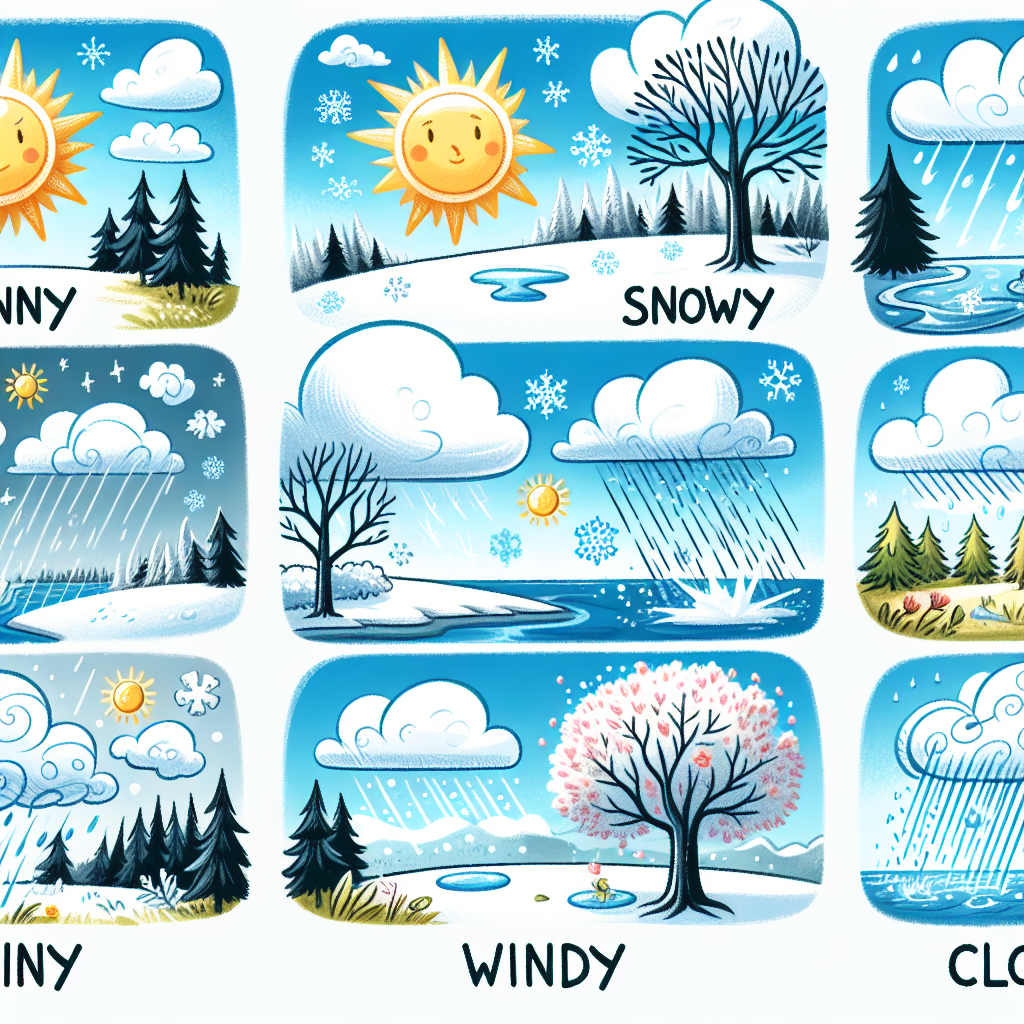
Rainy Weather Vocabulary
Rain brings with it a whole set of vocabulary that is crucial for ESL learners to comprehend and use effectively. Common terms such as “rainy,” “drizzle,” “downpour,” and “shower” describe different intensities and types of rain. The word “drizzle” implies light rain, while “downpour” and “torrential rain” suggest heavy precipitation.
“Thunderstorms” are characterized by the presence of thunder and lightning, often accompanied by heavy rain. These can be described as “severe” or “intense”, particularly if they’re causing alarm or damage. A “cloudy with a chance of rain” forecast indicates the possibility of rain, leaving some room for uncertainty regarding actual showers.
Familiarity with these terms will help you understand weather reports more clearly, give you the ability to describe weather conditions in detail, and aid in making conversations about precipitation, whether discussing personal preferences or planning an outing impacted by rainy days.
Stormy Weather Vocabulary
Stormy weather brings more dramatic shifts in conditions, requiring vocabulary that captures the intensity and potential danger associated with these phenomena. Terms such as “stormy,” “blustery,” “gale,” and “hurricane” describe different aspects of stormy weather.
A “blustery” day involves strong, gusty winds, whereas a “gale” refers to very strong winds often accompanying storms at sea. The term “hurricane” applies to a tropical cyclone with violent winds exceeding 74 mph, mainly affecting regions near large water bodies.
Expressions like “weathering the storm” metaphorically discuss enduring difficult times. Stormy scenarios are depicted vividly through idioms and express emotions or turbulence inherent in conversations. Being equipped with this vocabulary not only helps in accurately identifying storm conditions but also enriches your communicative expressions in discussing challenging situations.
Snowy and Cold Weather Vocabulary
As we transition into winter, snowy and cold weather command a distinct set of vocabulary. “Snowy,” “frosty,” “blizzard,” and “chilly” are common descriptors. “Frosty” and “chilly” suggest lower temperatures, often resulting in frost-covered surfaces.
A “blizzard” describes a severe snowstorm with high winds and low visibility – an intense condition that often causes disruptions. “Icy” implies the presence of ice on surfaces, hazardous for travel. When snow is falling lightly and settling in delicate layers, it’s often described as “flurries.”
Acquiring snow and cold weather vocabulary is particularly useful for planning travel or engaging in winter sports. It also enables you to describe your experience of different holiday environments accurately, from a cozy “white Christmas” to a brisk winter hike.
Conclusion
Mastering English vocabulary for various weather conditions is an invaluable skill for any ESL learner. Everyday conversations often involve discussing the weather, making it essential to have a strong grasp of this specific vocabulary. From bright, sunny days to overcast skies, from gentle drizzles to fierce hurricanes, each weather condition has its own unique vocabulary that encapsulates the natural phenomena impacting our world.
As you continue to improve your English proficiency, consistently incorporating these weather terms into your speech and writing will aid in developing a more comprehensive vocabulary. This knowledge not only sharpens your communication skills but also allows for meaningful engagement with native speakers who often use weather as a conversational bridge.
Remember, language is a living entity, and the more you practice, the easier it becomes to express your thoughts and experiences. Whether planning an outdoor adventure or engaging in a casual chat, you’ll find that having the right weather vocabulary at your fingertips proves useful time and again.
As you reflect on this new vocabulary, consider how cultural weather idioms and expressions can add depth to your understanding and usage of English. Becoming well-versed in weather-related language sets a foundation for dynamic and engaging communication, expanding both your linguistic repertoire and cross-cultural comprehension.





