
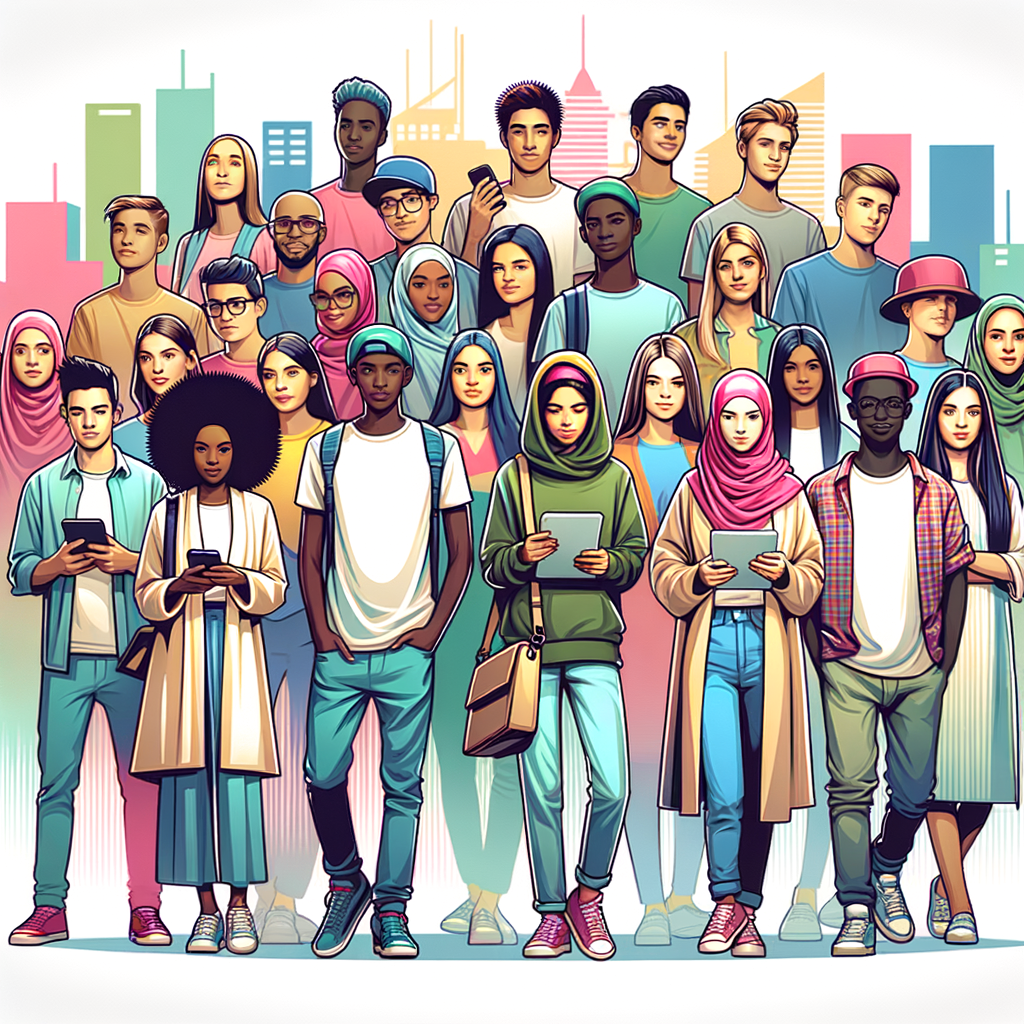
In today’s digital age, the landscape of youth communication is evolving rapidly. With the rise of social media, streaming services, and global connectivity, young people across the world have been immersed in a digital culture that transcends borders. One of the most fascinating aspects of this cultural shift is the influence of the English language on global youth slang. As the lingua franca of the internet, English has played a pivotal role in shaping the way young people from different corners of the planet express themselves. This article explores how English, both as a language and a cultural force, has permeated youth slang globally, emphasizing the factors driving this phenomenon and the resulting cultural implications.
English as a Lingua Franca
English dominates as the primary linguistic medium for international discourse, particularly online. It bridges diverse cultures, allowing seamless communication. It’s the default language on popular social media platforms like Facebook, Instagram, Twitter, and TikTok, and is pervasive in video games and global chat communities. With digital media being intrinsic to many youths’ daily lives, exposure to English is inevitable.
Furthermore, English is the primary language in the entertainment industry. Hollywood films, globally popular music, and television series predominantly feature English. This content garners massive viewership internationally, embedding English words and phrases into the daily lexicons of young audiences everywhere. Fashion trends, memes, and viral challenges initially crafted in English rapidly spread worldwide through these media channels, compelling non-native speakers to adopt English terms as part of their slang.
The importance of English extends into academia and business as well. Many educational resources, research publications, and business communications are primarily in English. Young individuals aiming for higher academic pursuits or international career opportunities often learn English as a second language, making it an integral part of their linguistic toolkit.
Social Media’s Role in Language Exchange
Social media has revolutionized communication, offering platforms for real-time interaction and cultural exchange. Sites like TikTok, Snapchat, and Instagram are popular among today’s youth, fostering a digitally interconnected global community. These platforms facilitate not only visual and cultural exchange but also linguistic trends. Youth from various linguistic backgrounds mix their native languages with English, creating a vibrant blend of new slang. This dynamic exchange contributes significantly to the development of unique linguistic identities.
The abbreviated nature of communication on social networks—employing hashtags, emojis, and trendy abbreviations—often stems from English. Phrases like “LOL” (laughing out loud), “OMG” (oh my God), and “YOLO” (you only live once) have roots in English-speaking communities but have now become ubiquitous in multiple languages worldwide.
Evolution of a Globalized Youth Slang
The evolution of a globalized youth slang is characterized by the blending of languages, leading to a multicultural lexicon. Words and phrases travel swiftly across borders, sometimes maintaining their original form, at times morphing to fit local dialects. This fusion creates a youth language that is simultaneously international and local.
Young people often take standard English words and modify them to better suit their cultural context. Consider the word “lit.” In English, it originated as a slang term for being inebriated, evolving into a descriptor for anything exciting or excellent. This word has crossed linguistic borders and has been adapted into various languages, maintaining its essence while being pronounced in diverse accents and incorporated into non-English sentence structures. Similarly, words like “selfie” and “hashtag” have been seamlessly integrated into multiple languages, reflecting a global youth culture largely shaped by digital interaction.
The Impact on Non-English Languages
The infiltration of English into global youth slang has also prompted debates regarding its impact on native languages. Critics argue that this phenomenon erodes linguistic diversity, as English words replace indigenous terms. This shift raises concerns about the potential loss of cultural identity tied to language. Languages that were historically marginalized due to colonial influences might face further suppression if younger generations predominantly use English-derived slang.
On the flip side, proponents see this linguistic blending as a sign of cultural evolution and inclusivity. Slang evolves as societies change, and incorporating foreign elements can enrich a language by introducing novel concepts and expressions. The adoption of English slang could be viewed as a means of keeping languages modern and relevant, particularly in a digital world where traditional linguistic boundaries are less rigid.
English-Influenced Slang in Regional Contexts
Interestingly, different regions have adopted and adapted English-influenced slang in unique ways. In East Asia, for instance, English slang percolates into languages like Korean, Japanese, and Mandarin. The “Konglish” blend of Korean and English, or “Engrish” in Japan, showcases how English has been incorporated into local languages, with a playful twist that reflects local cultural attitudes.
Similarly, in Africa, English blends with indigenous languages, creating new dialects that resonate with local experiences and emotions. In Nigeria, for instance, Pidgin English incorporates English slang within a distinctive linguistic structure that reflects Nigerian identity. These adaptations symbolize resistance to cultural homogenization, allowing young people to participate in global conversations while retaining their cultural uniqueness.
The Role of Pop Culture
Pop culture, especially music and film, serves as a powerful conduit for the spread of English-influenced slang. Musicians, especially in genres like hip-hop and pop, often introduce catchy phrases that quickly gain traction internationally. Iconic artists, through their global reach, influence fans who emulate their style and language, further propagating English slang.
Films and TV series also play a pivotal role. Catchphrases from popular shows and movies become part of common dialogue, resonating with audiences far from their origin. Blockbusters and cult classics alike contribute to this shared pop culture lexicon, embedding English phrases in the minds of viewers around the world. Netflix, for example, offers an extensive catalog accessible to global audiences and often sets linguistic trends through its popular series.
The Internet’s Pervasiveness
The internet’s expansion has made it a key player in disseminating English slang. Online forums, chat rooms, and memes provide a platform for the rapid spread of new linguistic trends. Memes, with their visual and textual wit, often originate in English-speaking regions but are quickly adapted and reshared globally, embedding English phrases into various cultures.
This process creates a cycle of influence where English slang is continuously reinterpreted by different cultures, creating new hybrids that reintegrate into English-speaking communities. Such linguistic exchanges demonstrate the fluid and accessible nature of language in the digital age, as English terms not only influence but are influenced by global cultures.
The Future of Youth Slang
As technology continues to advance and global connectivity becomes increasingly ingrained in society, the influence of English on global youth slang will likely grow. However, as youth across the world assert their identities, they are expected to continue reshaping English slang into something uniquely theirs.
Technological innovation may further facilitate this linguistic evolution. Virtual reality and augmented reality could spawn new slang reflective of experiences in these immersive environments. Artificial intelligence, especially language models, might predict and even influence the future direction of slang through analysis and creation of language patterns.
The current trajectory suggests that while English will remain a dominant influence, the blending of languages will become even more complex and diverse, reflecting the multicultural tapestry of modern youth.
Conclusion
The influence of English on global youth slang is a testament to the interconnectedness of our modern world. From social media platforms to pop culture, English serves as a unifying thread that ties together a complex web of cultural and linguistic exchanges. While it accelerates the pace at which linguistic trends cross borders, this process is not unidirectional. Non-English speaking youths are not passive recipients; they actively reshape English-infused slang, embedding it with cultural nuances and personal identity.
Despite concerns about linguistic homogenization, the adoption and adaptation of English slang represent the dynamism of language and culture. It highlights the global youth’s desire to communicate across traditional boundaries while negotiating local identities. The phenomena exemplify cultural resilience and creativity in a digital age, ensuring that despite English’s pervasive influence, the diversity of global voices continues to thrive.
As we look to the future, it is clear that the dialogue between English and global youth slang will continue to enrich linguistic landscapes worldwide, celebrating both the solidity of shared experiences and the vibrancy of cultural individuality.





