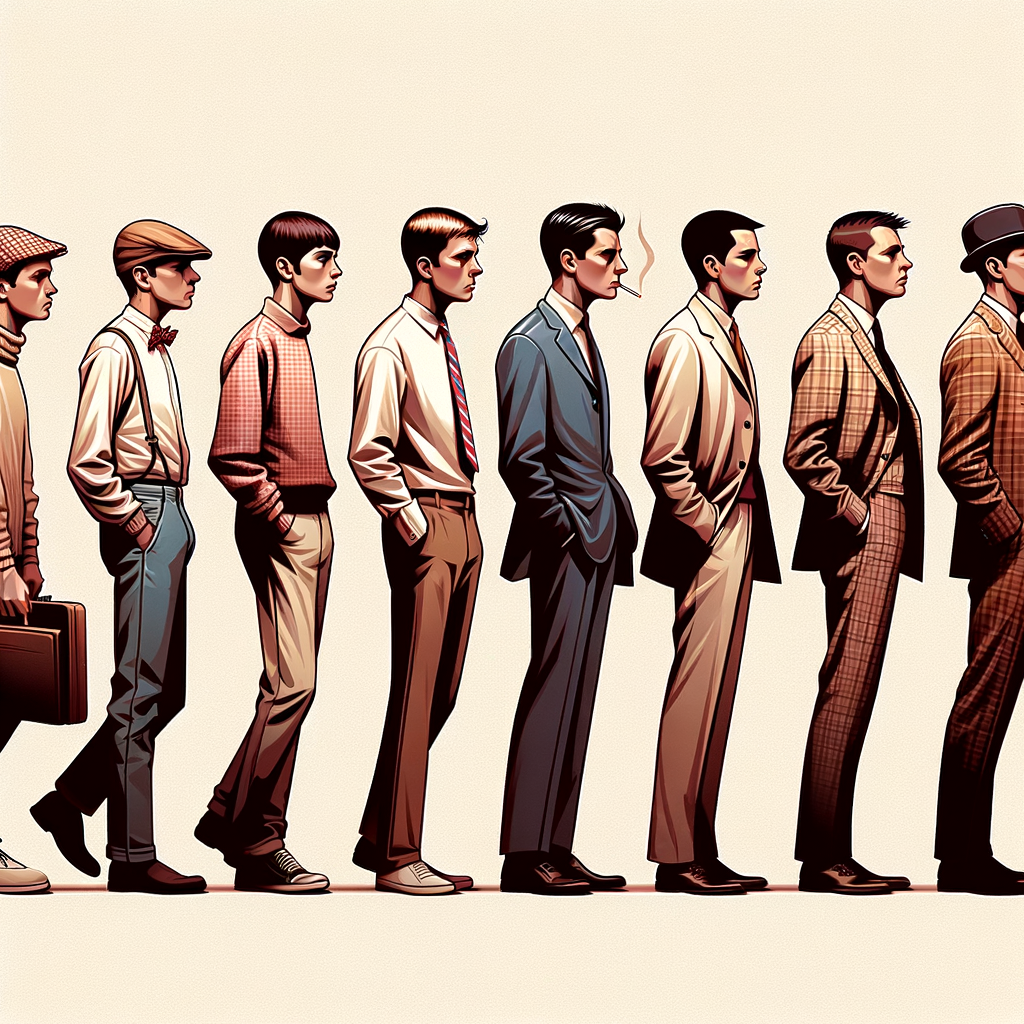
The landscape of language is ever-changing, and one aspect that highlights this dynamism is the evolution of slang. Slang reflects the zeitgeist of the era, capturing cultural shifts, technological advancements, and social movements. The 1960s marked a period of immense change, and with it, English slang began to evolve in ways both subtle and radical. As we journey from the countercultural explosion of the 1960s to the internet-driven lexicon of today, we witness a linguistic transformation that is as fascinating as it is telling of broader societal trends. This exploration into the evolution of English slang not only sheds light on how language morphs over time but also serves as a window into the collective consciousness of different generations.
The 1960s were a particularly catalytic decade in the world of slang, reflecting a tumultuous period characterized by civil rights movements, rock ‘n’ roll culture, and a general atmosphere of rebellion and experimentation. Terms like “groovy,” “hip,” and “far out” became emblematic of the era’s cultural climate. These words encapsulated the spirit of nonconformity and freedom that permeated society. Moreover, they served to unite groups with shared values, providing a linguistic identity to burgeoning countercultures.
As we leap forward into the latter decades of the 20th century and into the new millennium, we observe a compelling evolution. Slang of the 1970s retained the laid-back essence of the previous decade yet began to reflect new socio-political climates and emerging technological influences. This article embarks on a comprehensive journey through the trends and transformations in English slang from the vibrant 1960s to today’s internet-dominated era. We will explore how various socio-political, economic, and technological changes have influenced this evolution, tracking the birth, life, and sometimes the decay of slang expressions that have defined generations.
The 1960s: A Decade of Rebellion and Countercultural Identity
The 1960s were a defining decade marked by significant cultural and social change. An era of rebellion, the period saw the emergence of diverse movements challenging the status quo. Slang was central to these movements, shaping and being shaped by the societal changes of the time. Language became a tool of identification, with groups using distinctive slang to highlight their place within the burgeoning countercultural landscape.
A key element of 1960s slang was its connection to the music scene, particularly rock ‘n’ roll and psychedelic music. Words like “groovy” and “far out” were used to express enthusiastic approval and to encapsulate the innovative and sometimes surreal experiences associated with the music of the era. These expressions also reflected the laid-back and open-minded attitudes prevalent in many subcultures, including the hippie movement. On the other end of the spectrum, terms like “square” emerged to denote those who were traditional or resistant to new cultural waveforms.
The 1960s also saw the influence of the civil rights movement on language. Several slang terms, including ‘cat’ and ‘brother,’ were drawn from African American Vernacular English (AAVE). These words gained wider appeal and usage within mainstream society, highlighting the cross-pollination of linguistic elements across cultural lines. Often, such terms brought with them connotations of solidarity and camaraderie within various activist communities.
Furthermore, the vernacular of the beatnik and early hippie movements began gaining traction, fostering a sense of unity and identity among its adherents. Terms like “dig,” “flower power,” and “beat” emerged, signifying ideological positions and cultural alignments central to these groups’ philosophies. Thus, slang in the 1960s was not merely for ornamentation or novelty. It acted as a badge of identity, a verbal cue for belonging, and a means of social resistance.
The 1970s and 1980s: Disco, Punk, and Socio-Political Shifts
Moving into the 1970s and 1980s, the transformation of slang continued, mirroring the sociocultural oscillations of the era. As disco, punk, and emerging music genres shifted cultural norms, so too did the language. The disco era introduced terms like “boogie” and “funky,” symbols of the vibrant nightlife and social liberation that characterized the times. As nightclubs gained prominence, the language of dance floors seeped into everyday vernacular, promoting a sense of shared exuberance and vitality.
Amidst disco’s hedonism, the punk subculture arose as a stark counterpoint, with its own unique lexical contributions. Slang terms such as “poser” and “punk” itself were appropriated and repurposed to establish in-group versus out-group dynamics. The punk movement wielded language as a weapon of rebellion and social critique, often using it to mock mainstream values and fashion sensibilities.
In addition to the influence of musical subcultures, the 1970s and 1980s were periods marked by notable socio-political developments, including the ascendancy of conservatism in Western politics and the global cold war tensions. During this time, slang terms adapted to express and critique these phenomena, reflecting the decade’s ideological battles and ideological unrests.
Moreover, the emergent technology of the 1980s began laying the groundwork for further linguistic adaptation with the advent of personal computers and early digital communication systems. Words such as “geek” and “nerd,” which originated in previous era, took on new dimensions of meaning as they became associated with comput-er-savvy individuals and emerging tech cultures.
The 1990s: The Rise of Technology and Globalization in Slang
The 1990s heralded an era of technological revolution and globalization, leaving an indelible mark on the lexicon of slang. The proliferation of cable television, video games, and the nascent internet culture began to influence everyday language significantly. Slang terms emerged from these new technological realms, and by mid-decade, phrases like “surfing the web,” “spam,” and “the net” entered mainstream usage.
Popular culture of the 1990s, powered by iconic television shows, movies, and the music industry, further propelled the evolution of slang. Television shows such as “The Fresh Prince of Bel-Air” and “Friends” introduced terms that reflected the ethos and humor of the decade. The music scene, especially that of hip-hop and rap, immensely contributed to popularizing street slang. Terms like “bling” and “dope” moved steadily from niche subcultures into worldwide arenas, aided by the industry’s growth.
Moreover, the globalization of English was well underway by this period, bringing with it the intermingling of words from non-English languages, such as Spanish, into common slang. This resulted in cross-cultural slang expressions that spoke to a more diverse and interconnected world.
As a result, the 1990s became a vibrant period for linguistics, where globalization and technology collided to produce a new kind of slang—one that was faster, more connected, and increasingly driven by emerging tech and media landscapes. This trend would only accelerate as the world moved towards the new millennium.
The Turn of the Millennium: Digital Revolution and New Linguistic Frontiers
The dawn of the new millennium heralded transformative changes brought on by the digital revolution, triggering the swift evolution of contemporary slang. As the internet became an everyday utility, digital communication and the rise of social media platforms gave birth to a new breed of language. Acronyms, abbreviations, and emojis unearthed fresh possibilities for expression, shorthand that satisfied the digital age’s imperative for speed and brevity.
This period saw the advent of terms like “LOL” (laugh out loud), “BRB” (be right back), and “OMG” (oh my god), which quickly became endemic to online interaction. Social media networks like Facebook, Instagram, and later, Twitter, facilitated a rapid spread and acceptance of newly-coined lexicons. The ease of connectivity cultivated by social media environments meant that slang resonated and spread globally at an unprecedented rate.
Simultaneously, the era of text messaging spurred the creation of txtspk, a slang form derived from the need to communicate concisely within character-limited messages. This led to widespread usage of acronyms and contractions, demonstrating how technology molds linguistic adaptations in real-time.
The cultural zeitgeist of the 2000s and 2010s also emphasized individualism and personal branding, concepts that infiltrated the slang landscape with terms such as “selfie” and “brand.” In blending personal image with public perception, these terms highlighted the shift towards more self-referential language.
Today’s Slang: Internet Culture and Virtual Communities
In today’s world, English slang is predominantly driven by internet culture and virtual communities. With platforms like TikTok, memes, and viral challenges, new slang phrases emerge at an electrifying pace, often spurred on by youth culture and digital influencers. Terms such as “yeet,” “lit,” “stan,” and “vibe check” showcase the speed at which language adapts to cultural trends and online phenomena.
Online gaming environments have contributed significantly to today’s slang lexicon, with terms like “noob” (newbie) and “AFK” (away from keyboard) permeating mainstream language. These terms encapsulate the immersive and collaborative nature of digital interactions that define modern communication.
Moreover, the global proliferation of meme culture further drives the evolution of today’s slang. Memes often encapsulate humor or social commentary in a concise, transmit-table format, enabling slang to develop alongside cultural touchstones in a self-reflective and often humorous way.
Social and political conversations are also influential in shaping modern slang. Terms like “woke” and “cancel culture” are indicative of the ways slang expresses contemporary discourse on social justice and accountability.
Conclusion
The evolution of English slang from the 1960s to today is a testament to language’s adaptability and its power to reflect changing cultural landscapes. Each decade brought with it distinct developments unified by broader social narratives, leaving linguistic imprints on contemporary speech. Moving from the rebellion of the 1960s, through technological and cultural transformations of subsequent decades, into the entrenched internet era of today, English slang stands as a dynamic tapestry woven from diverse influences.
As technology continues to innovate and cultures continue to intermingle on unprecedented scales, the trajectory for slang remains expansive and unpredictable. The blending of pop culture, digital environments, and socio-political awareness suggests that future slang will continue to arise out of necessity and novelty alike. In this ceaseless evolution, slang not only serves the utilitarian purpose of communication but also brings an invaluable dimension to identity formation, solidarity, and cultural expression.
Ultimately, slang is more than mere linguistic play. It reflects a vibrant, living archive of human experience, ever-evolving and shaped by its speakers. As new developments arise, so too will the lexicon that captures them, ensuring that this story of evolution continues to unfold.
Frequently Asked Questions
1. How did the countercultural movements of the 1960s influence the evolution of English slang?
During the 1960s, society experienced a whirlwind of change that dramatically influenced language, particularly through the rise of countercultural movements. The era was marked by revolutionary shifts in music, politics, and social norms, as exemplified by events like the civil rights movement, the anti-Vietnam War protests, and the rise of psychedelic culture. These movements bred a new lexicon that captured the spirit of rebellion, experimentation, and unity.
Slang words like “groovy,” “far-out,” and “hippie” emerged, not just reflecting a lifestyle but also encapsulating a collective mindset seeking liberation and authenticity. “Groovy,” for instance, originally a jazz term, now translated to something cool or fashionable, symbolized the seamless blend between counterculture aesthetics and mainstream pop culture. Additionally, terms like “flower power” and “peace out” became mantras of the era, promoting ideals of non-violence and music-infused harmony. This linguistic evolution was not only a rebellion against the establishment but also a communion of like-minded individuals rallying under a shared cultural lexicon.
2. What role did music, specifically the influence of bands like the Beatles and the Rolling Stones, play in this evolution?
Music during the 1960s served as a powerful conduit for the dissemination and evolution of slang. Artists and bands were not only musicians but also cultural icons that influenced fashion, ideas, and language. The Beatles and the Rolling Stones, among others, had an enormous impact on popularizing certain slang terms globally.
The Beatles’ use of playful and inventive language in their music arguably gave rise to a new wave of British slang, making words like “fab” (short for fabulous) synonymous with an idealized lifestyle captured in the Mersey Beat scene. Similarly, the Rolling Stones’ intimate connection with blues music introduced terms from African American vernacular, like “cool” and “cat,” to a broader audience, emphasizing notions of sophistication and rebellion. These musical influences were steeped in the collaborative fusion of diverse cultural elements, thus acting as linguistic bridges between social classes and geographical divides.
3. How has technology influenced the evolution of English slang from the 1990s onward?
The advent of the internet in the 1990s ushered in a new era for slang, fundamentally transforming not only how we communicate but also how slang is created and shared. As the digital landscape expanded, so too did the pace and scope of slang adoption. Platforms like messenger chats, early social media, and forums became melting pots of creativity and linguistic innovation.
In particular, the rise of texting introduced abbreviations and acronyms like “lol” (laugh out loud), “brb” (be right back), and “omg” (oh my god), which have since transcended digital communication and seeped into everyday speech. The rapid spread of these terms reflects both the necessity for concise communication in fast-paced digital interactions and the creative potential of users globally contributing to a shared lexicon. As technology continues to evolve, so does the lexicon of the internet age, with memes, GIFs, and viral trends playing significant roles in introducing new slang faster than ever before.
4. Can you provide examples of how modern social issues and movements have shaped current English slang?
Contemporary social issues and movements have had a transformative influence on the language, resonating deeply in the slang of today. As society becomes increasingly aware of issues like social justice, identity, and equality, the language has adapted to reflect these themes. For example, the rise of terms such as “woke,” which originally meant to be awake, now signifies heightened awareness politically and socially.
Movements like #MeToo and Black Lives Matter have also contributed to this evolution. Words such as “cancel culture” and “toxic masculinity” have become part of the common vernacular, representing collective efforts to challenge outdated norms and promote inclusive dialogue. This change reflects a cultural sensitivity and an urgent need to align language with values emphasizing equity and respect.
5. What impact does globalization have on the evolution of English slang?
Globalization has significantly diversified the way English slang is both created and consumed. With cultures interacting more freely and information flowing at unprecedented rates, English slang today is a patchwork of global influences. This reflects not only the mobility of people but also of ideas, values, and cultural products that cross borders with ease.
Words from other languages have been adopted into English vocabulary, particularly noticeable in the influence of urban Latinx communities or the global spread of African American Vernacular English (AAVE). Terms such as “lit” (derived from AAVE, meaning exciting or excellent) or “bae” (a term of endearment, believed to have Scandinavian roots) illustrate how cultural exchange and interaction have given rise to a dynamic and hybrid lexicon. This globalization of slang reflects the blending of identities and the interconnectedness of modern cultures.