Introduction to Vocabulary Building and Its Importance
In today’s fast-paced world, communication is pivotal. A robust vocabulary is a key component in effective communication, serving as the backbone that supports understanding and articulation. Building vocabulary isn’t just about learning new words; it’s about embedding them into the fabric of our everyday usage, making them readily accessible when we need to express thoughts or understand others’ ideas clearly. Vocabulary building, especially through innovative methods like real-world simulations, can substantially impact an individual’s ability to communicate effectively. But what exactly are real-world simulations, and why do they hold such promise for vocabulary enhancement?
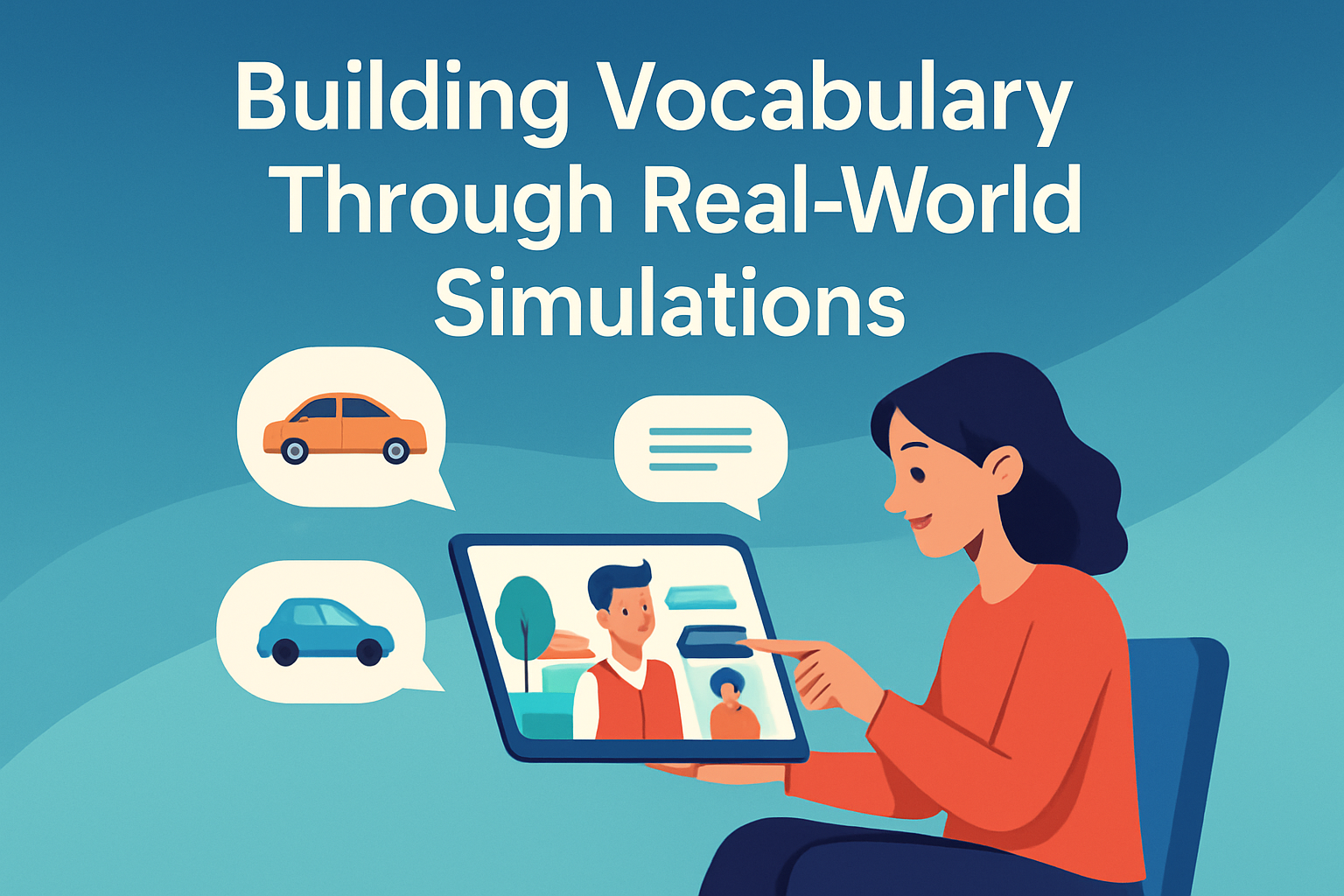
Real-world simulations are immersive learning experiences replicated or recreated from real-life scenarios. These simulations provide a safe, controlled environment where learners can engage dynamically with new concepts, applying knowledge in context, which aids in retention and understanding. When applied to vocabulary building, real-world simulations allow individuals to learn new words organically, as they encounter them in scenarios they might experience outside the classroom. This method can considerably improve both language acquisition and fluency.
The importance of vocabulary building through real-world simulations cannot be overstated. These immersive experiences provide learners with the opportunity to actively engage with language in a meaningful way, fostering not only the acquisition of new words but also a deeper understanding of their usage in context. This approach aligns with modern educational methodologies, emphasizing experiential learning and practical application over rote memorization, leading to more profound learning experiences.
Learning Vocabulary in Context
Contextual learning is a powerful tool in vocabulary acquisition, because it situates new words within the framework of broader conversations and scenarios. When learners encounter words within context, they are better able to understand nuances and multiple meanings, gaining insights that standalone word lists simply cannot provide.
Consider a real-world simulation in a business setting, where learners are tasked with preparing for a corporate meeting. In this exercise, they might encounter words like “agenda,” “consensus,” and “deadline,” all within the context of preparing materials, discussing strategies, and negotiating outcomes. By situating vocabulary learning within such a simulation, learners can see how each term is applied, making connections between words and their real-world functionality.
Simulations in academic environments can also improve this contextual understanding. For example, in a science-focused simulation, students might engage with terminology related to specific fields, such as biology or chemistry. Working in simulated lab environments or participating in project-based scenarios allows these learners to see exactly how and why certain terms are used, linking complex ideas to practical tasks.
Engagement and Immersion as Catalysts for Learning
Engagement and immersion are crucial for effective learning, as they require students to be active participants in their educational journey, rather than passive recipients. Real-world simulations are designed to be interactive and engaging, capturing learners’ attention by presenting them with a challenge or task that necessitates the use of new vocabulary.
For instance, in a customer service training simulation, learners might play the role of a customer service representative. They then interact with various types of customers, each requiring a different set of words and phrases to resolve their issues. Through these interactions, the learner is engaged, constantly adjusting their vocabulary use to suit the situation, thus reinforcing their learning through constant practice.
- Hands-on tasks help reinforce new vocabulary
- Immersive scenarios make learning exciting and relevant
- Active participation enhances language retention
Moreover, the immersion aspect of simulations means that learners are often surrounded by the language they’re acquiring, rather than isolated bits of vocabulary. This enriches the learning experience, making it more like how language is used in the real world – dynamically and fluidly.
Utilization of Technology in Vocabulary Simulations
Technology plays a pivotal role in advancing vocabulary acquisition through simulations. With the rapid growth of educational technologies, learners now have access to innovative platforms that offer immersive experiences that were previously unimaginable. Virtual reality (VR) and augmented reality (AR) technologies have opened up new horizons in this respect, providing realistic simulations that are both engaging and informative.
A VR simulation, for example, might put students in a historical setting where they interact with characters from the past, using vocabulary specific to that era. This not only expands their word knowledge but also gives them a historical context, providing a richer understanding of language evolution and cultural nuances.
Similarly, language learning apps with AI features can create personalized simulation experiences, adapting to the learner’s progress and adjusting the difficulty of vocabulary tasks accordingly. By evaluating learner performance, these applications offer targeted feedback and track improvement over time, thus customizing the learning path for everyone involved.
Incorporating technology in vocabulary building through simulations ensures that the learning experience is not only effective but also accessible to a broad audience, catering to various learning styles and preferences.
Collaborative Simulations: Learning Together
Collaboration is a fundamental aspect of learning that enhances vocabulary acquisition by incorporating peer interactions into simulations. Working alongside others in a simulated environment can enhance understanding through exposure to different perspectives and collective problem-solving efforts.
For example, in a group-based simulation designed for language learners, students might participate in a scenario such as organizing a community event. Each participant takes on a different role requiring specific vocabulary, thus covering a broad range of topics from logistics to public speaking. Through collaboration, students expose each other to their vocabulary, promoting peer teaching and learning, and ultimately aiding in each other’s vocabulary expansion.
Collaborative simulations also foster communication skills as students must often explain their strategies, persuade teammates, and negotiate meanings, further embedding the vocabulary in a social context.
Assessing Vocabulary Acquisition in Simulations
A significant aspect of building vocabulary through real-world simulations is the ability to assess progress in a dynamic setting. Unlike traditional assessment methods that might simply require the recall of word definitions, simulations allow educators to assess vocabulary in practical use.
| Assessment Type | Description |
|---|---|
| Performance-Based | Evaluates the use of vocabulary in action, such as navigating a simulated conference or event. |
| Scenario Analysis | Involves providing feedback on how learners apply vocabulary in different scenarios. |
| Peer Review | Students assess each other’s use of vocabulary through collaboration, offering constructive feedback. |
Utilizing these assessment techniques provides a comprehensive overview of a learner’s proficiency and facilitates further personalization of their education. It ensures that vocabulary learning is continually evolving and adapting to meet learner needs.
Conclusion and Steps Forward
Building vocabulary through real-world simulations proves to be a potent strategy in the realm of education. It connects learning with real-life application, enhancing both retention and understanding of new words in relevant contexts. As learners engage in simulations, they experience a depth of understanding that transcends traditional rote memorization, and they gain proficiency that is often immediately applicable in their daily lives.
The integration of technology in this learning approach not only enriches the experience but ensures that it is adaptable and accessible, catering to a diverse range of learning needs and preferences. Furthermore, collaborative and immersive aspects of simulations not only promote individual vocabulary growth but also foster essential communication and interpersonal skills crucial for success in any field.
For educators and learners alike, the next step is clear: embrace the potential of real-world simulations in vocabulary building. Whether through technological platforms or group-based scenarios, employing these techniques can create a vibrant, engaging, and effective language learning environment. Implement simulations in your curriculum or self-learning plans, and witness a significant boost in your vocabulary acquisition journey.
In conclusion, real-world simulations are more than just a modern educational trend; they are a crucial linguistic tool for anyone eager to improve their communication skills and enhance their understanding of the world around them.
Frequently Asked Questions
1. What is meant by ‘Building Vocabulary Through Real-World Simulations’?
Building vocabulary through real-world simulations refers to the immersive, experiential approach to enhancing one’s vocabulary by engaging with realistic scenarios that simulate situations one might encounter in daily life or specific environments. This educational method involves acting out or participating in activities that mimic real-world experiences, allowing learners to apply and practice new vocabulary in a context that mirrors actual usage. The purpose of this approach is to encourage deeper understanding and retention of words by connecting them with tangible experiences, making it easier to recall and use the vocabulary when similar real-life situations arise. In essence, real-world simulations provide an interactive and dynamic framework for learning, where vocabulary is not learned in isolation but rather in conjunction with practical application and contextual relevance.
2. Why is vocabulary building important in today’s fast-paced world?
In today’s rapidly evolving world, effective communication stands out as a crucial skill across all aspects of life, from professional environments to personal interactions. A strong vocabulary is central to this capability, acting as the foundation that supports not only our ability to articulate thoughts clearly but also our comprehension of others’ communication. In an age where information is abundant and often complex, having a robust vocabulary allows individuals to navigate, understand, and participate in discussions across various topics competently. Moreover, a developed lexicon enhances critical thinking and comprehension skills, enabling individuals to process information accurately and efficiently. It is not just about knowing a diversity of words but being able to apply them proactively in everyday conversations, writing, and reading. Therefore, vocabulary building transcends basic communication and becomes instrumental in fostering personal growth, education, career advancement, and engaging meaningfully with the world.
3. How do real-world simulations differ from traditional vocabulary learning methods?
Real-world simulations differ significantly from traditional vocabulary learning methods primarily through their hands-on, experiential approach. Traditional vocabulary acquisition often involves rote memorization of words and definitions, relying heavily on repetition and drills outside real-life contexts. While this method has been practiced extensively, it can often lead to a superficial understanding that lacks depth and context, making retention and actual application in conversation challenging. In contrast, real-world simulations immerse learners in scenarios where vocabulary is naturally integrated within the context of an activity or role-playing exercise. This process not only aids in better retention through contextual understanding but also enriches the learner’s experience by making the vocabulary relevant and immediately applicable. By actively engaging with the material in a realistic setting, learners are encouraged to interact with and use new words in meaningful ways, which substantially enhances both learning outcomes and motivation.
4. What are the key benefits of using real-world simulations for vocabulary building?
Using real-world simulations for vocabulary building offers numerous benefits over traditional learning methods. Firstly, it provides contextual learning; vocabulary is embedded in relevant scenarios, making it more memorable and easier to recall. This context-rich experience allows for a deeper understanding of words and phrases, as learners see firsthand how they fit into everyday conversations and tasks. Secondly, it enhances engagement. Real-world simulations are inherently interactive and dynamic, capturing learners’ interest much more effectively than static lists or drills. This increased engagement typically leads to better retention and application of new vocabulary. Thirdly, simulations foster practical usage by encouraging learners to use and practice vocabulary in scenarios they are likely to encounter outside the classroom, thereby bridging the gap between learning and application. Additionally, simulations may enhance other skills such as critical thinking, problem-solving, and collaboration, contributing to overall personal and educational development. Lastly, simulations can be adapted to meet the specific needs of learners, making them suitable for a wide range of proficiency levels and learning styles.
5. Can you provide examples of how one might use real-world simulations to improve vocabulary?
Real-world simulations can be implemented in a variety of ways to improve vocabulary effectively. For instance, in a classroom setting, educators might organize role-playing exercises where students assume specific characters or professions and utilize language relevant to those roles. A simulation of a doctor’s visit, for example, could enhance vocabulary related to healthcare and patient communication. Another practical application includes virtual reality environments where learners navigate scenarios that require the use of a specific vocabulary set, such as taking a virtual tour of a historical site while learning related historical and geographical terminology. Additionally, learners can engage in project-based activities that mimic real-world projects and goals, such as constructing a mock business proposal, which would naturally incorporate business-related vocabulary. Outside structured environments, interactive games and apps that simulate real-life experiences, such as survival scenarios or city-building games, can also be immensely beneficial. These real-world applications provide a platform where new vocabulary is not just memorized but actively used, helping facilitate a more comprehensive grasp and lasting retention.