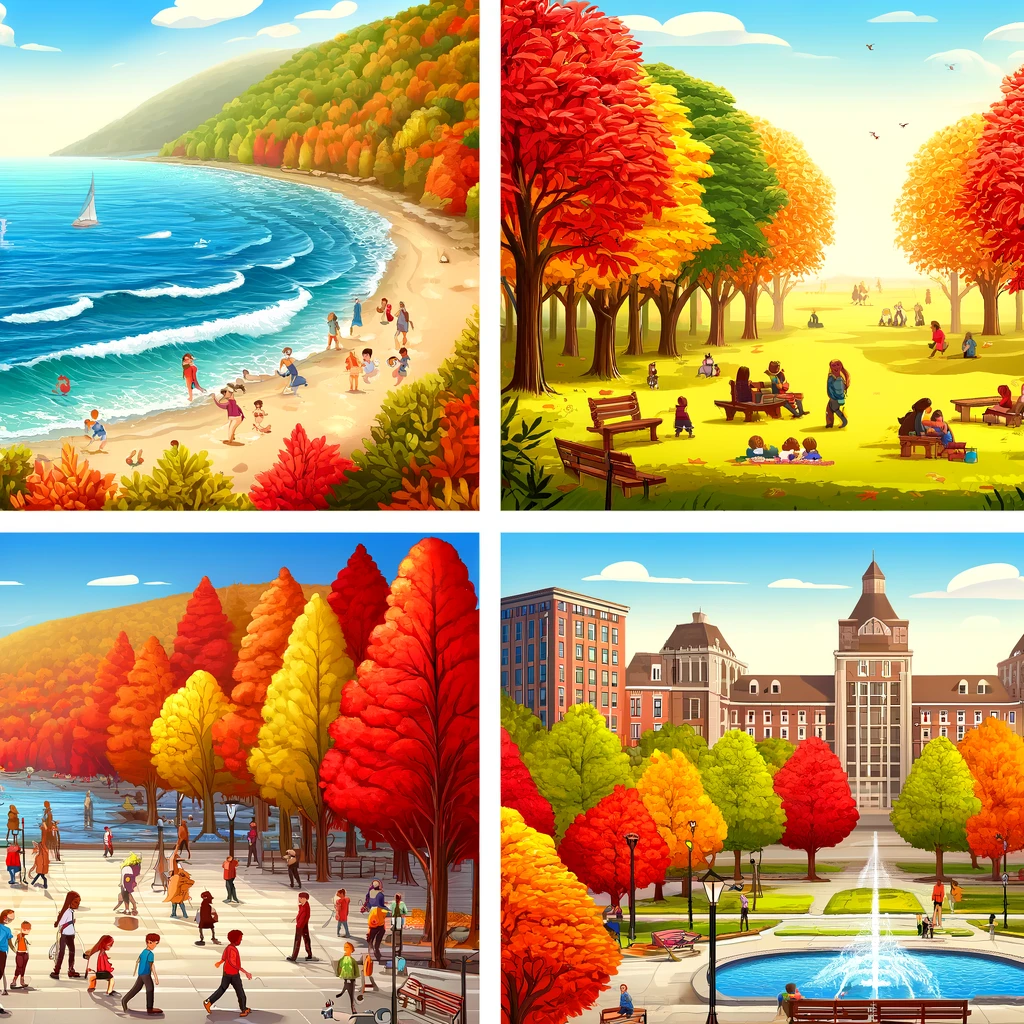
As the golden leaves fall and the air becomes crisp, autumn or fall brings with it a sense of comfort and nostalgia. For English as a Second Language (ESL) learners, this season offers a unique opportunity to learn and master a rich vocabulary set. Understanding and using autumn-related words can add a touch of warmth and clarity to your spoken and written English. Let’s dive into some essential autumn vocabulary and phrases that will help you blend seamlessly into seasonal conversations.
The Basics of Autumn Vocabulary
Autumn, also known as fall, is one of the four temperate seasons. It marks the transition from summer to winter and is characterized by shedding leaves, cooling temperatures, and, in many cultures, harvests and festivals. Here are key vocabulary words you need to know:
- Autumn/Fall: Both terms are used universally. “Autumn” is more common in British English, while “fall” is prevalent in American English.
- Leaves: The parts of the tree that change color and drop off during this season.
- Crisp: A common adjective used to describe the cool, refreshing autumn air.
- Harvest: The process of gathering mature crops from the fields, synonymous with hard work and abundance.
- Equinox: Occurs twice a year when the length of day and night are approximately equal. The Autumnal Equinox marks the beginning of fall.
Describing the Scenery
Autumn is renowned for its picturesque scenery. Here are some descriptive words and phrases to help you paint the autumnal landscape:
- Foliage: Refers to the collective leaves of plants and trees; in autumn, this foliage turns vibrant colors.
- Vibrant: Used to describe the bright and striking colors that dominate the fall scenery.
- Hue: A synonym for color. Autumn hues often include red, yellow, orange, and brown.
- Decay: A natural process where plants break down and return nutrients to the soil; it often gives a melancholic beauty to the season.
- Bare: Describing trees without leaves, giving a skeletal appearance.
- Golden/Burnished: Often describes the color of leaves and landscape during autumn.
Autumn Activities and Traditions
Autumn is a time rich with traditional activities and festivities. Knowing the vocabulary related to these customs can help you participate and understand cultural conversations:
- Apple Picking: An autumn activity where individuals or families visit orchards to pick apples straight from the trees.
- Pumpkin Patch: A farmer’s field where pumpkins are grown and picked, often associated with Halloween and Thanksgiving.
- Corn Maze: A maze cut into a cornfield, popular for autumnal recreation.
- Hayride: A recreational ride in a wagon filled with hay, commonly found in rural areas during fall.
- Bonfire: A large openair fire used as part of celebrations or gatherings.
- Halloween: Celebrated on October 31st, a holiday involving costumes, trick or treating, and pumpkin carving.
- Thanksgiving: A North American holiday that celebrates the harvest and blessings of the past year, recognized on the fourth Thursday of November in the U.S.
Seasonal Flavors and Foods
Autumn is also a season of distinctive flavors and foods that evoke the essence of the harvest. Here’s a palate-enhancing vocabulary list for ESL learners:
- Pumpkin Spice: A blend of ground cinnamon, nutmeg, ginger, cloves, and sometimes allspice, synonymous with fall.
- Squash: A versatile vegetable harvested in autumn, including varieties like butternut and acorn squash.
- Cider: A beverage made from pressed apples, enjoyed in both alcoholic and nonalcoholic forms.
- Pies: Popular desserts in autumn often filled with pumpkin, apple, or pecan.
- Roast: Often describes a method of cooking meat and vegetables in the oven; popular in autumn feasts.
- Harvest Soup: A hearty soup using autumn vegetables like squash, potatoes, and pumpkin.
- Maple Syrup: A sweet syrup made from the sap of sugar maple trees, collected during cooler months.
Weather and Atmosphere Vocabulary
Autumn brings specific weather patterns and atmospheric changes. This vocabulary will help you converse about or describe the seasonal environment:
- Chilly: Noticeably cold but not freezing, often describing early autumn mornings.
- Breezy: Describes gentle wind, typical in fall.
- Frost: A thin layer of ice that forms on surfaces when the temperature drops.
- Overcast: A sky covered with clouds; common during fall.
- Drizzle: Light rain, often occurring in the season.
- Fog: Thick mist, reducing visibility and giving an ethereal quality to autumn mornings.

Phrases and Idioms Related to Autumn
Idiomatic expressions and common phrases can make your English sound more natural and nuanced. Here are some autumn-related idioms and expressions:
- Turn over a new leaf: Means to start fresh or change one’s behavior positively, reminiscent of falling leaves.
- Fall into place: Signifies things happening in the right way or order.
- Soak up the autumn sun: Enjoying the fleeting warmth of the season.
- Rake in: To earn a lot of money or collect something in large amounts, similar to gathering leaves.
- Golden years: Refers to an idyllic time in someone’s life, paralleling the golden tones that dominate autumn.
Engaging in Autumn-themed Conversations
Equipped with this rich vocabulary, you can now engage in autumn-themed discussions. Here are some practice sentences and scenarios:
- “I love the vibrant foliage during autumn; the hues of red and gold are breathtaking.”
- “We went apple picking last weekend and made fresh cider at home. It was such a fun autumn activity.”
- “The crisp air and the scent of pumpkin spice always remind me of fall.”
- “Nothing beats a cozy evening by a bonfire under the clear autumn sky.”
- “Thanksgiving is around the corner. I can’t wait for the roast turkey and pumpkin pie!”
Sharpen Your Autumn Vocabulary
Delving into season-specific vocabulary is a fantastic way to expand your ESL skills. Each term and phrase enriches your understanding and appreciation of different cultural contexts and environments. Here are a few tips to further sharpen your autumn vocabulary:
1. Seasonal Reading and Writing
Engage with autumn-themed books, articles, and poetry. Try writing your essays, stories, or journals focusing on fall experiences. This will reinforce the vocabulary naturally and make it a part of your active vocabulary.
2. Speak and Listen
Participate in conversations about autumn activities with native speakers. Listen to seasonal podcasts, watch fall-themed movies, or even attend autumn events. Immersing yourself in these experiences will make the vocabulary more intuitive.
3. Practice with Flashcards
Create flashcards of the new vocabulary words. Regularly test yourself to reinforce memory retention and ensure you’re ready to use them in conversations and writing.
4. Visual Association
Use pictures and visuals associated with autumn words. Visiting parks, pumpkin patches, or engaging in autumn activities will provide real-life context, making the vocabulary more memorable.
5. Join a Community
Join ESL groups with an interest in seasonal activities. Discussing shared experiences can make learning more engaging and practical.
Conclusion
Autumn is not just a transition from summer to winter; it’s a tapestry of colors, flavors, activities, and traditions. For ESL learners, embracing autumn’s vocabulary and nuances can open doors to richer, more meaningful conversations. Immerse yourself in the language of the season, celebrate the harvest, and let your English skills flourish like the vibrant autumn leaves. Happy learning and enjoy the beauty of fall!—By enriching your ESL vocabulary with autumn-related terms, you’re not just learning words; you’re experiencing a season and its cultural essence. This is one of the most rewarding ways to deepen your language skills and connect with English on a personal and seasonal level.