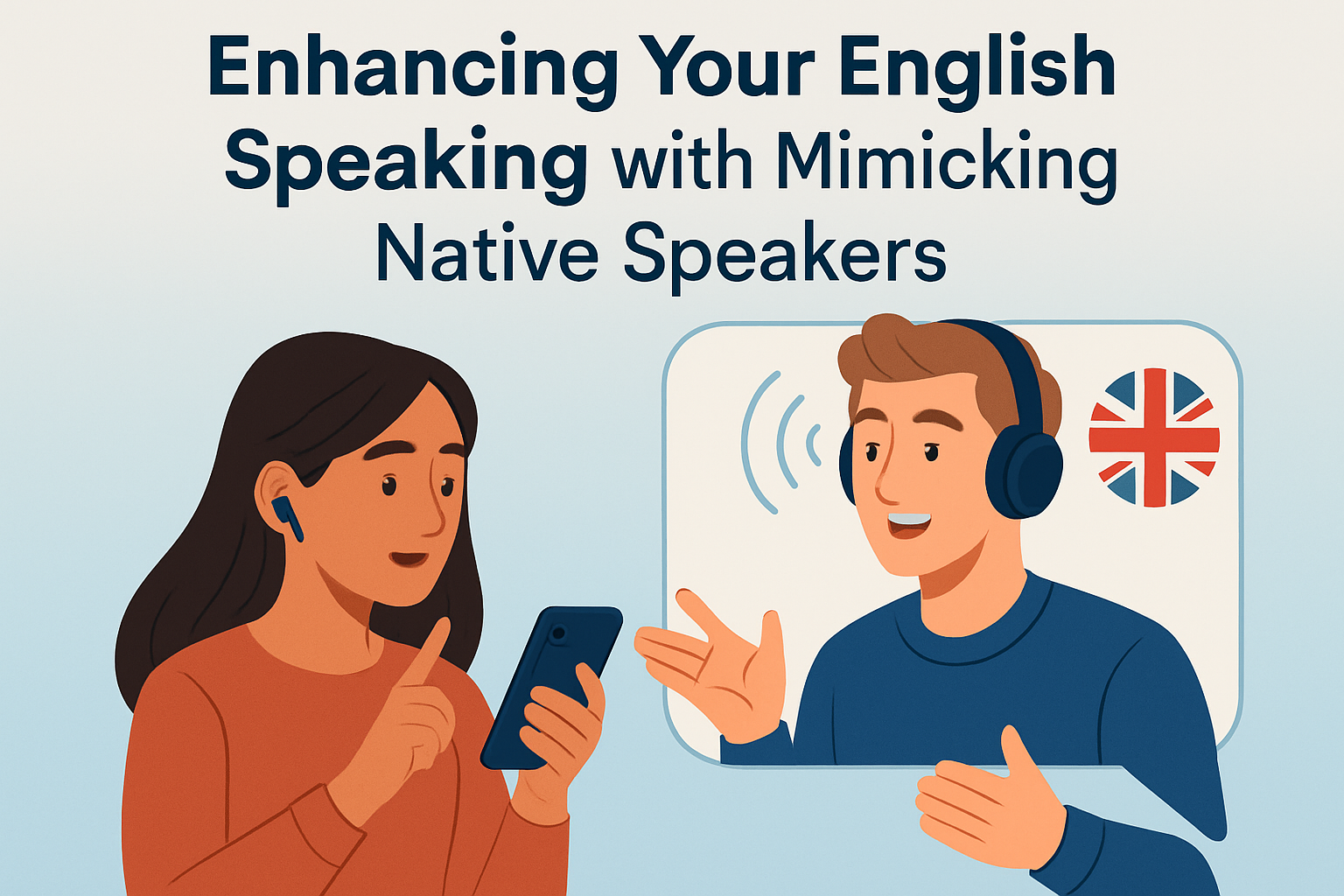
In an increasingly globalized world, the ability to communicate effectively in English is invaluable. English is the lingua franca of business, academia, and international diplomacy, making proficiency in spoken English a critical skill for professional and personal advancement. One technique that has gained traction among language learners is mimicking native speakers. Mimicking, in this context, refers to copying the speech patterns, intonation, and pronunciation of native English speakers as a means of improving one’s own language skills.
Why does this matter? For non-native English speakers, mastering spoken English with a native-like accent can make communication smoother and more effective. It reduces misunderstandings and increases the confidence of the speaker. Moreover, when learners mimic native speakers, they not only improve their pronunciation but also gain insight into the nuances and rhythm of the language. By understanding these subtleties, they can express themselves more accurately and participate more fully in conversations.
The Science Behind Mimicking
Mimicking native speakers is not just about parroting words; it’s a process deeply rooted in neuroscience. The brain’s mirror neurons play a crucial role in this learning strategy. Mirror neurons are akin to a learning mechanism that activates both during the execution of an action and when one observes the same action. When you mimic someone, your brain is engaged in a form of implicit learning. Research shows that this technique can effectively enhance pronunciation and linguistic competence.
Consider the experience of an Italian student studying English. The student begins by listening carefully to a native English speaker. They focus on how the speaker enunciates words and captures the subtle variances in tone and pitch. By repeating the words and sentences in the exact manner, the student is not just learning vocabulary but internalizing the natural flow of the language. Over time, this practice leads to noticeable improvements in the student’s speech, making them more confident and comprehensible.
Practical Techniques for Mimicking Native Speakers
Adopting effective techniques for mimicking can significantly enhance your language acquisition process. Here’s a structured approach to leveraging this strategy:
- Choose Authentic Sources: Start with materials produced by native speakers. Podcasts, movies, and interviews are excellent resources. Select content that interests you to keep the process engaging.
- Focus on Phonetics: Pay close attention to the phonetic elements of speech. Listen to how words are pronounced, the stress patterns in sentences, and the intonation used to express different emotions or questions.
- Segmented Practice: Break down speech into manageable chunks. Mimic short phrases and gradually increase the length as you become more comfortable.
- Record and Compare: Record your attempts and compare them with the original. This feedback loop is essential for recognizing improvements and areas needing refinement.
Take the example of a Japanese business professional preparing for a conference in an English-speaking country. By selecting relevant business English videos, the professional can practice key phrases and expressions used in meetings and presentations. Listening repeatedly and mimicking these phrases builds both familiarity and fluency.
Advantages of Mimicking Techniques
Mimicking offers several advantages that augment traditional language learning methods, such as:
- Improved Pronunciation: Regular practice of mimicking helps in fine-tuning pronunciation nuances, making one’s speech clearer and more natural.
- Reduced Accent: Gradually, mimicking can soften the native accent of a speaker, aiding in better understanding and acceptance by native speakers.
- Cultural Understanding: Understanding the cultural context in which certain expressions are used can be acquired by observing native speakers closely.
- Increased Confidence: Mastery of pronunciation leads to higher self-confidence while speaking, leading to more engaging and effective communication.
Think of a French traveller planning to explore New York. By watching travel vlogs from native speakers living in the city, they not only pick up colloquial language but also gain insights into cultural nuances. This preparation ensures they face fewer hurdles when conversing with locals.
Overcoming Challenges in Mimicking
While mimicking offers numerous benefits, it also presents challenges. Some learners might feel self-conscious or become frustrated with slow progress. It is important to approach this technique with patience and persistence. Even native speakers diversified in their accents, pronunciations, and colloquialisms, and understanding this diversity can help learners appreciate their uniqueness.
Consider an Indian student who initially struggles with differentiating between the British and American accents. By engaging with varied sources from news channels to Netflix series, the student begins distinguishing regional differences. Recognizing and appreciating these distinctions becomes a form of learning in itself, enhancing the student’s adaptive capabilities in real-world communication.
Making Mimicking a Habit
To truly benefit from mimicking, consistency is key. Integrating this practice into daily routines can yield significant gains. Here are some habits to develop:
- Set Achievable Goals: Define clear, specific goals like learning a new phrase each day or perfecting one sound weekly.
- Dedicate Time Daily: Short, focused sessions yield better results than sporadic longer sessions.
- Engage with Diverse Media: Exposure to a wide range of voices and contexts sharpens listening and speaking skills.
- Seek Feedback: Engage with language mentors or native speaking friends who can provide constructive feedback.
Let’s consider a Brazilian entrepreneur with tight schedules. They could allocate 10 minutes during their commute to mimic business podcasts. This steady practice molds their English proficiency, enhancing their capability to convey messages accurately in international meetings.
Incorporating Technological Aids
Technology can make the mimicking process both efficient and fun. Language learning apps, speech analysis tools, and smart assistants like Alexa or Siri offer interactive platforms for practice. These tools often come equipped with voice recognition technology that offers instant feedback on pronunciation, thus allowing learners to make corrections immediately.
A study conducted on a group of Korean students using speech analysis apps found a 20% improvement in accent reduction over six months. These students utilized the app to practice daily, simulating real-life conversations and receiving corrective feedback that helped in fine-tuning their speech.
Summing Up the Mimicking Approach
In conclusion, mimicking native speakers is a powerful strategy for enhancing English-speaking skills. It allows learners to master pronunciation, understand cultural nuances, and build confidence in communication. By incorporating regular practice, utilizing technology, and seeking diverse media exposure, learners can vastly improve their spoken English.
Ultimately, the journey to mastering English through mimicking is a continuous process of listening, practicing, and refining. Embrace this technique as part of your language learning toolkit and watch your proficiency grow. So why wait? Start today by selecting a native speaker resource that interests you, and begin your mimicking journey. Your path to fluent English awaits!
Remember: Patience and perseverance are your best allies in this endeavor.
Frequently Asked Questions
1. What does mimicking native speakers involve, and why is it an effective method for improving English speaking skills?
Mimicking native speakers involves closely listening to and replicating the way native English speakers talk. This includes their speech patterns, intonation, accents, pronunciation, and even the rhythm of their speech. The idea is to immerse yourself in the authentic sounds and linguistic nuances of native speakers, allowing you to intuitively pick up on the subtleties that aren’t always taught in traditional language classes.
Engaging in this practice is similar to how babies learn their first language – through listening and imitation. By doing so, language learners gain a better sense of how to naturally construct sentences, stress the right syllables, and use pitch and tone effectively, which can significantly improve fluency and comprehension. Mimicking helps in developing muscle memory for the new language patterns, minimizes the native language interference, and boosts confidence in speaking by reducing the fear of making mistakes.
2. How can I start mimicking effectively if I don’t have access to native speakers?
Fortunately, in today’s digital age, access to native English content has never been easier. Start by selecting resources from a variety of media like movies, TV shows, podcasts, and YouTube videos that feature native English speakers. Ensure that the content is interesting and aligns with your current level of comprehension so you remain engaged.
Listen to small portions of the audio material repeatedly until you can comfortably and accurately mimic the native speaker. Pay attention to not just the words, but also the rhythm and intonation. Music, particularly songs in English, can also be an amazing tool as it often emphasizes natural speech rhythms and rhyme, which can aid memorization. There are also numerous language learning platforms and apps designed for mimicking purposes that provide synchronized transcripts and audio for better practice.
3. What is the role of accent in English speaking, and should I aim to adopt a particular native English accent?
Accents are a natural part of any language and regional dialect, providing diversity in spoken English. While reducing a strong native language accent can sometimes improve clarity, it is not necessary to adopt a particular native English accent unless you have a specific goal, such as moving to a particular country or working in a region where a specific accent predominates.
Instead of aiming for perfection in adopting an accent, focus on clarity and understanding. It would be ideal to aim for a neutral accent that is widely understood globally. Nevertheless, having an accent can be beneficial as it often showcases your unique cultural identity and background while speaking English. Practice listening to a variety of native accents to not only clarify your own pronunciation but to also improve your listening skills across different English speakers.
4. Are there any challenges of mimicking native speakers, and how can I overcome them?
One challenge of mimicking is mishearing or misunderstanding words, especially due to the unique ways native speakers blend words together in rapid speech. This can lead to frustration, but it can be overcome by practicing with slowed-down audio options or looping difficult sections until they’re clear. Another common issue is feeling self-conscious or fearing that you’re not imitating perfectly.
To tackle these challenges, remind yourself that mistakes are part of the learning process. Consistent practice will build familiarity and improve your accuracy over time. Try recording your voice and comparing it to the native speaker’s to identify areas for improvement. Feedback from a language exchange partner or tutor can also be invaluable as they can provide constructive criticism and support.
5. Apart from mimicking, what other activities can complement this method to enhance my English speaking abilities?
While mimicking is a powerful tool, combining it with other activities can further enhance your speaking abilities. Engaging in conversation practice with native speakers or fellow learners can solidify your understanding and confidence while allowing for real-time feedback. Participating in language exchange meetups, online discussion forums, or joining English-speaking clubs (e.g., public speaking or debate club) can provide frequent speaking opportunities.
Additionally, expanding your vocabulary through reading can help improve your expression and idea articulation. Reading aloud not only improves pronunciation but also gets you comfortable with phrase phrasings and sentence structures. Writing practice, such as keeping a journal or blogging in English, can also be incredibly beneficial for organizing your thoughts, which in turn supports your spoken communication. Finally, learning about cultural contexts and idiomatic expressions will give depth to your understanding of language nuances, bringing you closer to true fluency.