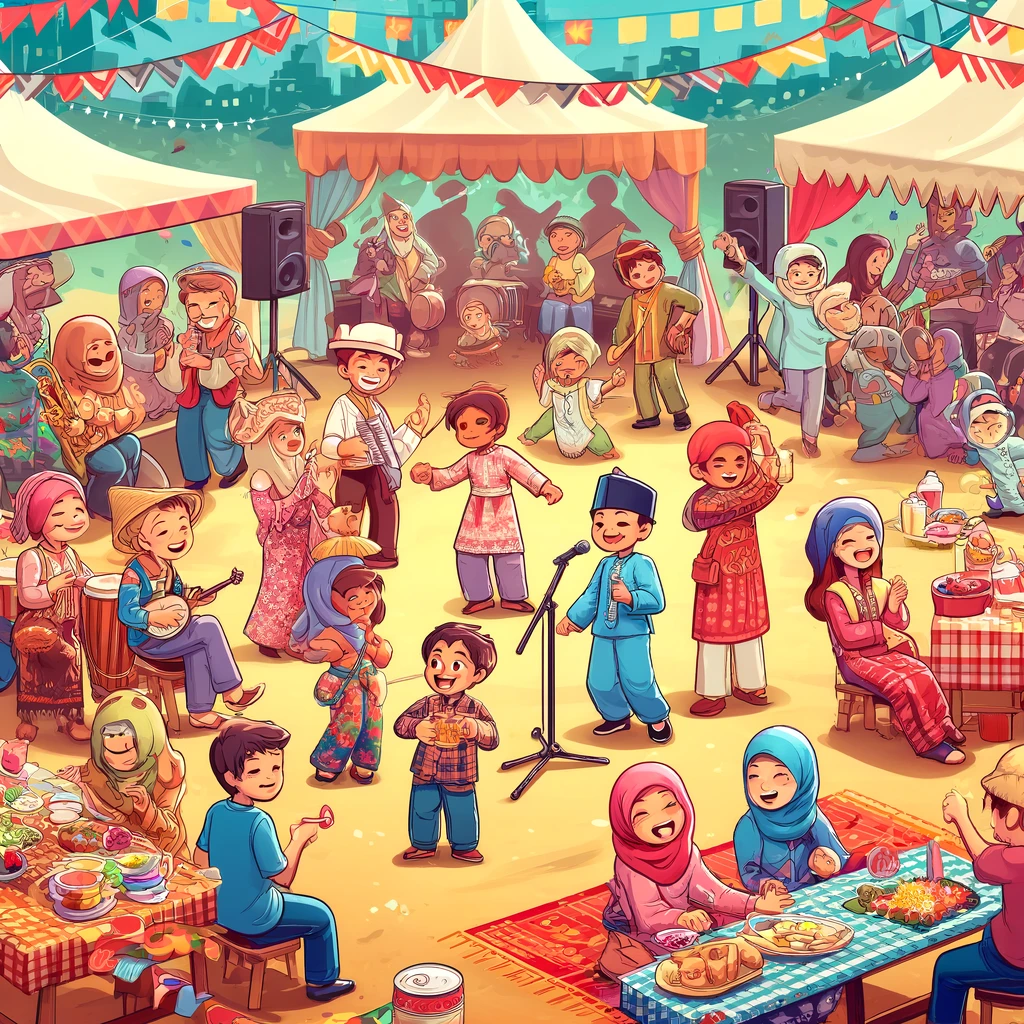
Cultural festivals are vibrant, colorful events where traditions come alive, communities gather, and the essence of a culture is celebrated. For ESL learners, these festivals are not only a chance to immerse in English-speaking environments but also to learn the unique vocabulary tied to these events. This article explores some popular cultural festivals across English-speaking countries and the specific English terms associated with them.
1. Thanksgiving (United States and Canada)
Thanksgiving is a major North American festival celebrated in the United States and Canada. It revolves around giving thanks for the harvest and other blessings of the past year. Families gather to share a meal, which typically includes turkey, stuffing, and pumpkin pie.
Key Vocabulary:
- Turkey: The main dish of the Thanksgiving meal.
- Stuffing: A mixture of bread cubes, herbs, and other ingredients used to fill the turkey.
- Gratitude: A feeling of thankfulness and appreciation.
2. Diwali (Widely celebrated by Indian communities in English-speaking countries)
Known as the Festival of Lights, Diwali is celebrated by millions around the world, including large Indian communities in countries like the UK, the USA, and Australia. This five-day festival is marked by the lighting of lamps, fireworks, and the sharing of sweets.
Key Vocabulary:
- Lamps: Small lights or lanterns, often filled with oil, used to decorate homes during Diwali.
- Fireworks: Explosive devices used for aesthetic and entertainment purposes.
- Sweets: Confectionery and desserts that are shared among friends and family.
3. Carnival (Notable in the United States, the United Kingdom, and Australia)
Carnival is a festive season that occurs before Lent in many countries, featuring parades, masquerades, and public street parties. It’s especially prominent in places with strong Caribbean influences, such as Notting Hill in London.
Key Vocabulary:
- Parade: A public procession, often involving costumes and music.
- Masquerade: A party or assembly of people wearing masks and often costumes.
- Float: A decorated platform, either built on a vehicle like a truck or towed behind it, used in parades.
4. Halloween (Widely celebrated in English-speaking countries)
Halloween, celebrated on October 31st, is a time for spooky fun. People dress up in costumes, go trick-or-treating, and carve pumpkins into jack-o’-lanterns.
Key Vocabulary:
- Costume: Clothes worn to look like someone or something else, often a character from a movie, book, or historical period.
- Trick-or-treat: An activity in which children dress up in costumes and ask for treats from their neighbors by knocking on their doors.
- Jack-o’-lantern: A pumpkin carved into a decorative lantern, typically with a face design.
5. Christmas (Globally celebrated)
Christmas is celebrated worldwide and involves various traditions such as decorating Christmas trees, exchanging gifts, and singing carols. It’s a time for families to come together and celebrate.
Key Vocabulary:
- Christmas tree: A decorated tree, usually an evergreen conifer such as spruce, pine, or fir, or an artificial tree of similar appearance.
- Carols: Religious or festive songs, typically based on medieval chord patterns.
- Santa Claus: A mythical figure originating in Western Christian culture who is said to bring gifts to the homes of well-behaved children on Christmas Eve.
Participating in these cultural festivals can provide ESL learners with a rich source of real-life contexts to practice English. Each festival comes with its own set of vocabulary that not only helps learners understand more about the culture but also helps them communicate more effectively during these celebrations. By engaging with the language of cultural festivals, learners can enhance their vocabulary in a fun and immersive way.

6. Easter (Widely celebrated in English-speaking countries)
Easter is a significant celebration in Christian communities, marking the resurrection of Jesus Christ. It features various customs such as Easter egg hunts, the Easter Bunny, and church services.
Key Vocabulary:
- Easter eggs: Decoratively painted or dyed eggs given as gifts or used in egg hunts during Easter.
- Easter Bunny: A mythical rabbit that delivers chocolates and candies to children on Easter Sunday.
- Resurrection: In Christian belief, the act of rising from the dead, specifically referring to Jesus Christ on Easter.
7. St. Patrick’s Day (Popular in Ireland, the United States, and Canada)
Originally a religious feast day for the patron saint of Ireland, St. Patrick’s Day has evolved into an international festival celebrating Irish culture with parades, dancing, special foods, and a lot of green.
Key Vocabulary:
- Shamrock: A three-leafed old white clover which is used as a symbol of Ireland.
- Leprechaun: A type of fairy in Irish folklore, typically depicted as a little bearded man, wearing a coat and hat, who partakes in mischief.
- Parade: A large public procession, especially one celebrating a special day or event, often with floats and marching bands.
8. Valentine’s Day (Celebrated worldwide)
Valentine’s Day, celebrated on February 14, is dedicated to romance and love. Common traditions include giving gifts like flowers and chocolates, sending greeting cards (known as “Valentines”), and romantic dinners.
Key Vocabulary:
- Cupid: Often represented as a small winged figure with a bow and arrow, symbolizing romantic love.
- Heart: A symbol of love and affection, often used in decorations and cards.
- Romance: A feeling of excitement and mystery associated with love.
9. Independence Day (United States, July 4th)
Independence Day, commonly known as the Fourth of July, commemorates the Declaration of Independence of the United States, on July 4, 1776. The celebration is marked by patriotic displays, fireworks, parades, barbecues, and picnics.
Key Vocabulary:
- Fireworks: A class of explosive pyrotechnic devices used for aesthetic, cultural, and religious purposes.
- Barbecue: A method of cooking meat with the heat and hot smoke of a fire, smoking wood, or hot coals of charcoal.
- Patriotism: Love for or devotion to one’s country.
10. Hanukkah (Celebrated by Jewish communities in English-speaking countries)
Hanukkah, also known as the Festival of Lights, is an eight-day Jewish holiday commemorating the rededication of the Second Temple in Jerusalem. It is marked by the lighting of the menorah, playing the dreidel game, and eating oil-based foods.
Key Vocabulary:
- Menorah: A nine-branched candelabrum lit during the eight days of Hanukkah.
- Dreidel: A four-sided spinning top, played with during Hanukkah.
- Latkes: Potato pancakes that are a traditional Hanukkah food.
Conclusion
Understanding the vocabulary associated with these diverse cultural festivals enriches the language learning journey for ESL students, giving them insights into customs and traditions while improving their conversational skills in English. Celebrating or even learning about these festivals from an English perspective can open doors to more meaningful interactions and deeper cultural appreciation.