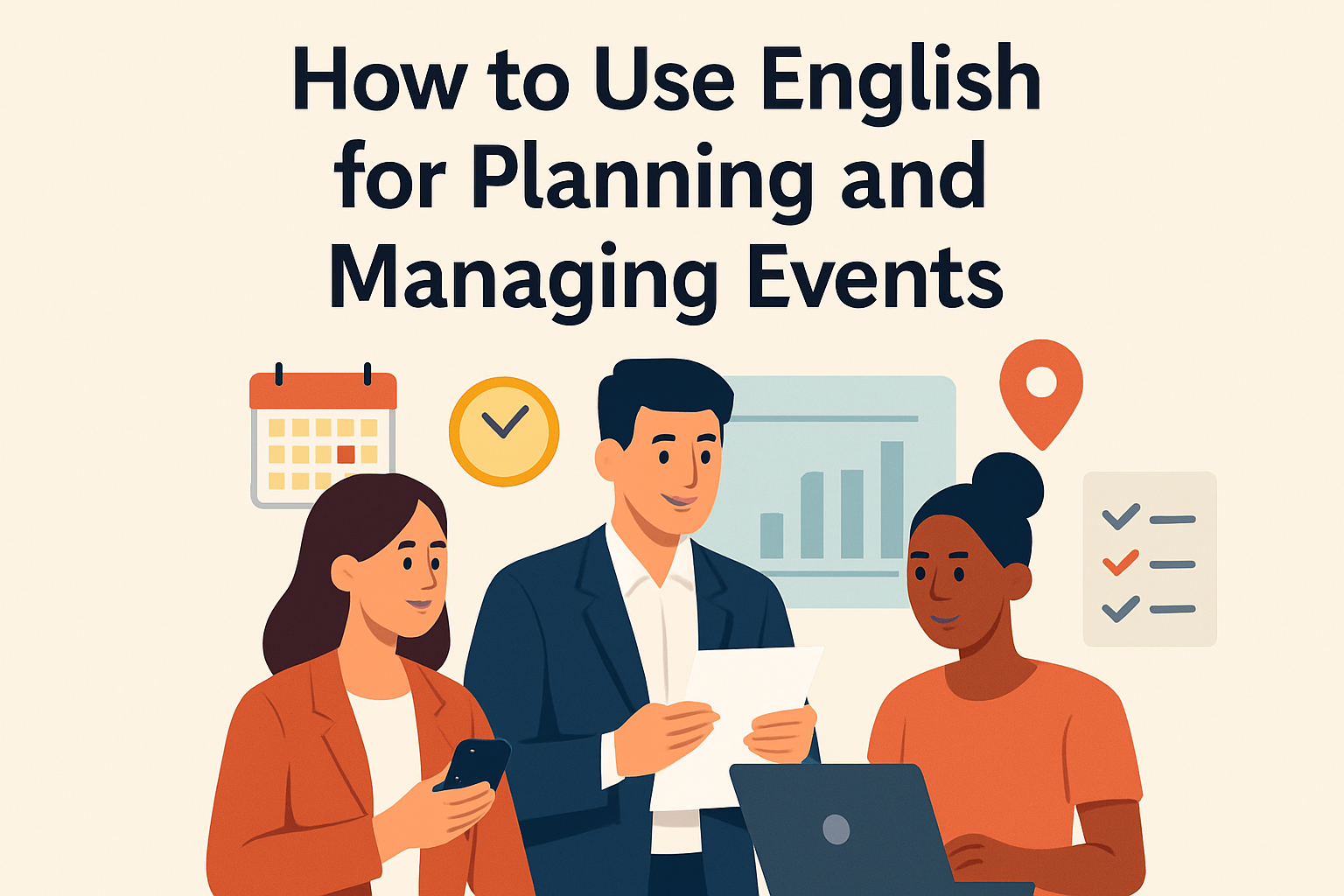
In today’s interconnected world, English stands as a global language that facilitates communication across diverse cultures and nationalities. When it comes to planning and managing events, proficiency in English becomes an indispensable asset. Whether you’re orchestrating a small gathering, a corporate function, or an international conference, the ability to effectively use English in planning and managing events can significantly impact your success. This article delves into the pivotal role English plays in event planning, highlights essential terminologies, and provides insights into its application in ensuring event success.
The importance of English in event planning cannot be overstated. As the lingua franca of the global business community, English allows coordinators to bridge communication gaps between clients, vendors, and participants from different linguistic backgrounds. Key terms such as itinerary, scheduling, negotiation, logistics, and execution are integral to the event planning lexicon and need to be thoroughly understood. By mastering these concepts in English, planners can ensure clarity and precision in their communications, ultimately leading to smoother and more successful events.
Effective use of English in event planning matters because it minimizes misunderstandings and errors, fosters cooperation among international stakeholders, and enhances the overall quality of the event experience. As events increasingly attract an international audience, mastering English can help event planners cater to a broader demographic, thus opening up more opportunities for growth and collaboration. By exploring various aspects of how English is used in event planning, this article aims to equip readers with the necessary skills to navigate the complexities of international events and achieve success.
Understanding Key Terminology for Event Planning
Understanding and using the correct terminology is crucial for efficient communication in event planning. Terms like contract, budget, timeline, and contingency are central to the planning process. For instance, when negotiating contracts with vendors or venues, utilizing precise English terminology is essential to convey specific requirements and expectations clearly.
Consider the case of planning a corporate conference. The event planner must draft a detailed itinerary, outlining each session’s start and end times, along with logistics such as transportation and accommodation for guest speakers. Miscommunication or misunderstanding of these key terms could lead to logistical nightmares. Thus, a solid grasp of English terminology facilitates seamless communication and helps avert potential issues.
Developing an Event Itinerary
An itinerary is the backbone of any event. It serves as a roadmap detailing the event’s flow—from the start to the end—ensuring that all activities are organized and on track. Drafting this document in English, the lingua franca for international delegates, ensures clarity and uniformity, which is essential for successful execution.
For example, consider an international tech summit held in London. The event planner must create an itinerary detailing keynote speeches, panel discussions, networking sessions, and workshops. Each segment’s timing and location must be communicated clearly in English to avoid confusion among participants from various countries.
| Activity | Time | Location |
|---|---|---|
| Registration | 09:00 AM – 10:00 AM | Main Lobby |
| Opening Keynote | 10:00 AM – 11:00 AM | Main Hall |
| Panel Discussion | 11:15 AM – 12:15 PM | Conference Room A |
Effective Communication with Vendors and Stakeholders
Effective event planning hinges on robust communication between the planner and various vendors and stakeholders. This includes caterers, decorators, venue managers, and technology providers. Using English to communicate specifications, expectations, and timelines ensures that each party has a clear understanding of their roles and responsibilities.
For instance, consider organizing a wedding with international guests. The planner might need to negotiate with a caterer for a diverse menu that accommodates different cultural preferences. This requires articulating specific dietary requirements and timelines for each meal in precise English to avoid any service hiccups during the event.
Managing Event Logistics
Logistics management is a critical component of event planning that involves overseeing transportation, venues, equipment, and accommodation arrangements. English serves as the common language for coordinating these elements, especially when dealing with international service providers.
Imagine coordinating a music festival that hosts artists and attendees from around the world. The planner must ensure transportation for all artists, manage stage setup logistics, and organize accommodation. Clear English communication is necessary to align with international transportation services and hotel chains, ensuring that performers and guests arrive at the festival site punctually and comfortably.
Handling Emergencies and Contingencies
Even the best-laid plans can go awry, which is why having a contingency plan is vital in event management. Communicating these plans in English is essential to ensure that everyone involved, including international participants, understands the action plan during emergencies.
Take, for example, an art exhibition in Paris. In the event of a sudden power outage, the English language emergency protocol plan should direct attendees to a safe location, notify local authorities, and ensure communication with emergency services. Having a well-documented contingency plan in English helps manage unforeseen events efficiently, minimizing disruption.
Evaluating and Reporting on Event Success
Post-event evaluation is crucial for understanding what worked, what didn’t, and how future events can be improved. Reporting these findings in English ensures that insights are comprehensively communicated to stakeholders, particularly those from different linguistic backgrounds.
For instance, after hosting an international trade show, the event planner might compile a report detailing attendance figures, participant feedback, and financial outcomes. Crafting this report in English allows it to be shared seamlessly with global partners and sponsors, ensuring insights are understood and acted upon by diverse audiences.
Utilizing Technology in Event Planning
Today, technology is integral to event planning, from registration software to virtual event platforms. Understanding technical jargon in English ensures that event planners can effectively utilize these tools to enhance the event experience.
As an example, consider using virtual event platforms to host an online conference. These platforms offer English settings to help planners set up virtual rooms, manage attendee access, and coordinate live streaming. Proficiency in English enables planners to navigate these platforms efficiently, providing an effective virtual experience for participants globally.
Summarizing the Key Takeaways
The foundational role of English in planning and managing events is evident across various aspects of the process. From understanding key terminology and developing an event itinerary to managing logistics, communicating with vendors, and handling emergencies, English serves as a vital tool for fostering clarity and efficiency. Mastery of English facilitates seamless communication with international stakeholders, promoting a well-organized and successful event.
Key takeaways include the importance of precise terminology, the creation of detailed English language itineraries, effective vendor communications, and thorough contingency planning. Furthermore, the ability to evaluate and report on event success in English is crucial for global dissemination of information and insights.
In conclusion, those involved in event planning should consider honing their English language skills as a strategic move to enhance international collaboration and drive success across diverse events. By integrating these skills into their planning practices, event planners can ensure their events are not only well-organized but also deliver memorable experiences across cultural and linguistic boundaries. The next step could be enrolling in language courses or workshops focused on event-specific English terminology to further bolster your proficiency and confidence in this area.
Frequently Asked Questions
1. Why is English important in planning and managing events?
English is crucial in event planning and management because it serves as a common lingua franca in multicultural settings. In our globalized world, English allows for seamless communication among diverse participants, vendors, and stakeholders. This is especially important if your event is attracting international attendees or partners, where language barriers can lead to misunderstandings or logistical hiccups. Proficiency in English enables event planners to efficiently draft proposals, negotiate contracts, coordinate schedules, and manage correspondences with precision and clarity. Moreover, since most resources, software tools, and industry literature are available in English, having a strong command of the language provides greater access to these invaluable tools and insights, ultimately leading to more effective planning and successful event execution.
2. How can I improve my English skills for better event management?
Enhancing your English skills requires a multifaceted approach. First, immerse yourself in English by engaging with English media such as movies, podcasts, and books focused on event management to familiarize yourself with relevant terminology. Joining language exchange groups or networking with English-speaking professionals can also offer practical conversational practice. Consider enrolling in specialized English courses aimed at business or event management. Many online platforms like Coursera and Udemy offer courses specifically designed for improving professional English. Additionally, practice writing by drafting emails, contracts, and proposals in English. Regularly revising and seeking feedback from fluent speakers can also bolster your confidence and proficiency over time. Embedding yourself in English-speaking environments, whether virtually or physically, will naturally enhance your skills and ease in using the language professionally.
3. What are some common English phrases used in event management?
In the realm of event management, certain phrases and terminology frequently emerge. Here are a few to familiarize yourself with: “Logistics management” refers to organizing the details concerning timing and location. “Budget allocation” is the process of distributing funds across different event segments. “RSVP” is an abbreviation derived from the French phrase “Répondez, s’il vous plaît,” used to request a response from invitees about their attendance. “Itinerary” refers to a planned schedule of events. “Networking opportunities” involve chances for attendees to build professional relationships. “Delegate tasks” means assigning responsibilities to specific individuals. “Post-event debrief” refers to meeting after the event to discuss its success and areas for improvement. Familiarizing yourself with these common phrases will facilitate clear, effective communication.
4. How can I effectively use English for negotiating with vendors and suppliers?
When negotiating in English with vendors and suppliers, clarity, professionalism, and courtesy are essential. Begin by preparing a script or list of key points that highlights your event’s needs, emphasizing aspects like budget, quality, and timelines. Using polite yet assertive language helps maintain a professional tone. For instance, instead of saying “I need a discount,” you might express “Could we explore potential options for cost reduction?” Active listening and confirming understanding by restating what has been discussed (“Just to confirm, you’re suggesting…”) can prevent misunderstandings. Employing persuasive language without being confrontational aids in creating a collaborative atmosphere. Finally, ensure to follow up with written confirmation in an email, summarizing the agreed terms, which helps protect your interests and clarifies any uncertainties.
5. What role does English play in the marketing and promotion of events?
In marketing and promoting events, English plays a pivotal role in creating impactful, globally accessible promotional material. Crafting compelling advertisements, press releases, and social media posts in English enables you to reach a broader audience. A well-written invitation or promotional content in English can captivate potential attendees with its clarity and appeal. Moreover, leveraging English in digital marketing through SEO strategies ensures that your event gains visibility in international markets. Utilizing appropriate jargon, catchy slogans, and clear calls-to-action in English can significantly boost engagement and attendance. Companies often hire skilled copywriters to ensure that their marketing content resonates well with diverse audiences, demonstrating the power of using English effectively in promotional endeavors. Investing in skilled translation services for non-English speakers also ensures inclusivity, thereby broadening your event’s appeal and outreach.