Introduction to Visualization Techniques for Memorizing Words
In an increasingly globalized world, mastering vocabulary is crucial for effective communication and personal development. Learning new words is vital whether you’re acquiring a second language for career advancement, engaging in academic pursuits, or simply expanding your knowledge base. However, memorizing new vocabulary can be a challenging task. Many of us find it difficult to retain newly learned words, often forgetting them just moments after closing the dictionary. Visualization techniques offer a powerful solution for this common problem, transforming how we internalize and retain new vocabulary.
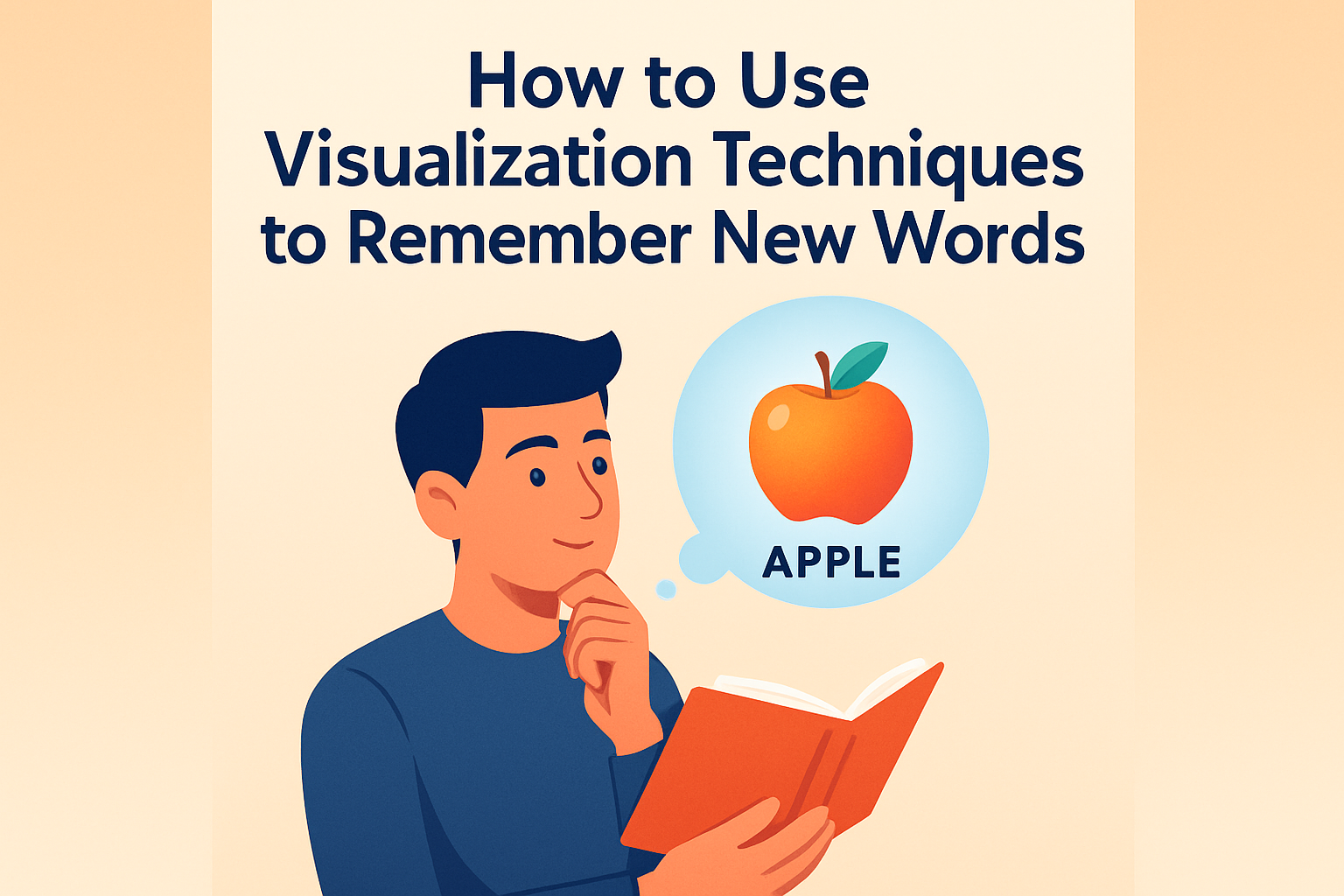
Visualization involves the creation of mental images to represent information. It is a cognitive technique that taps into our brain’s ability to recall visual information more effectively than text or auditory signals alone. By associating new vocabulary with vivid and meaningful images, we can enhance our ability to remember and recall words. This approach is rooted in the dual-coding theory, which suggests that the human brain processes visual and verbal information along two separate channels. When both channels are engaged, learning and memory retention become more effective.
This article delves deep into the art of using visualization techniques to remember new words, presenting methods backed by cognitive science. We will explore different visualization strategies, discuss their effectiveness, and illustrate their applications with real-world examples that can be immediately applied in your learning journey.
The Power of Mental Imagery
Mental imagery is the heart of visualization techniques. This concept relies on the brain’s capacity to create mental pictures, engaging the visual processing center to reinforce verbal information. Research demonstrates that mental imagery can significantly enhance memory performance. For example, if someone wishes to remember the Spanish word “gato” (meaning cat), they could visualize a playful kitten batting at a ball of yarn. This image makes the word “gato” much more memorable than rote repetition alone.
Consider the linguistic journey of Maria, a language enthusiast, who struggled with memorizing French vocabulary. Before adopting visualization strategies, her test scores stagnated around 60%. However, upon integrating these techniques, her retention rates soared to over 85%, mainly due to her practical use of vivid mental imagery.
To effectively leverage mental imagery, follow these steps:
- Identify the word’s meaning and possible synonyms.
- Connect the definition with an exaggerated or emotionally compelling image.
- Reinforce the memory by revisiting this image several times over the course of days or weeks.
The mental imagery method not only aids in memorization but also enriches your cognitive processes, making word-learning both enjoyable and enduring.
Creating Mind Maps for Vocabulary
Mind mapping is an excellent visualization technique that leverages the power of association. Through connecting words and concepts, mind maps mirror the brain’s natural process of connecting ideas, thereby facilitating memory retention. Picture a web of words related to “ocean,” each node bursting with imagery and further associations.
For example, an English learner named Alex uses mind maps to bolster his English vocabulary. When learning the word “serene,” he might place it at the center of his map, branching out with related words like “calm,” “tranquil,” and “peaceful,” each associated with specific, vivid images such as a still lake or a tranquil garden.
The steps for effective mind mapping are straightforward:
- Write the new word at the map’s center.
- Draw branches to related words or themes, each accompanied by a descriptive image.
- Use colors and emojis to create a more dynamic and engaging mind map.
Mind maps provide a visual structure that makes complex information more digestible and less daunting. This structure promotes deep learning and can transform a daunting vocabulary list into an engaging journey through interconnected ideas.
Dual Coding with Sketch Notes
Dual coding merges verbal and visual information, enhancing comprehension and retention. This technique’s efficacy is based on the brain’s separate storage systems for words and images, utilizing both to bolster memory retention. Sketch notes combine sketching with note-taking to harness this powerful cognitive synergy.
Imagine a language classroom where students are introduced to the term “volcano.” A typical explanation involves both verbal descriptions and a simple freehand sketch of a volcano erupting. By connecting the verbal definition with a visual representation, students are twice as likely to remember the term due to the dual coding effect.
| Strategy | Role of Visuals | Example |
|---|---|---|
| Mind Mapping | Creates connections between words/ideas. | Mapping “ocean” with “sea,” “waves,” and “beach.” |
| Mental Imagery | Engages vivid personal images for words. | Picture a tiger for “ferocious.” |
| Sketch Notes | Combines sketches with textual cues. | Draw an erupting volcano for “eruption.” |
The process of creating sketch notes involves:
- Listen to or read the new word and comprehend its meaning.
- Translate the verbal information into a quick sketch that captures its essence.
- Review and refine both the notes and visuals to strengthen the memory link.
These sketch notes provide a compact and meaningful representation of complex concepts, proving to be an effective memorization tool.
Visualization through Imagery Association
Imagery association involves linking new vocabulary with existing, familiar images in your memory. This technique takes advantage of the brain’s proclivity for connecting new and known information through associative networks. By establishing a vivid connection between a new word and something familiar, one can significantly enhance recall.
An illustrative example is that of an Arabic learner named Jasmine, who associates the Arabic word “kitab” (book) with the familiar image of her favorite childhood book. Whenever she encounters “kitab,” the image of her childhood book is instantly recalled, cementing the association in her mind.
To practice imagery association, follow these steps:
- Identify a familiar image, object, or scenario.
- Vividly incorporate the new word’s meaning into this image, focusing on senses or emotions.
- Reinforce this association by repeatedly recalling it in different contexts.
Such imagery associations offer a profound way to transform abstract words into concrete, memorable experiences that linger long in memory.
Conclusion: Mastering Vocabulary with Visualization
By adopting visualization techniques, individuals can significantly enhance their ability to remember and recall new vocabulary. These strategies, ranging from mental imagery and mind mapping to dual coding and imagery association, offer a diverse toolkit for learners of all disciplines. They elevate the learning experience from rote memorization to a dynamic interplay between images and words, mirroring the brain’s natural tendencies.
The key takeaways from using visualization techniques are simple yet powerful. By engaging multiple cognitive processes, one can transform new vocabulary into long-lasting and easily retrievable knowledge. The result is an enriched vocabulary and heightened confidence in communication, opening doors to new opportunities and deeper cultural understanding.
For those embarking on vocabulary enhancement, the call to action is clear: embrace these visualization techniques and experiment with different methods to discover what resonates best with your learning style. With consistent practice, visualization will inevitably transform how you engage with words, making the learning process both efficient and enjoyable.
Begin today by selecting a new word and applying one of the proposed visualization techniques. Observe the impact on your memory retention and continue refining your approach. Your journey to mastering vocabulary is just beginning.
Frequently Asked Questions
1. What are visualization techniques, and how do they help in remembering new words?
Visualization techniques are strategies that involve creating mental images to enhance memory retention. The human brain is wired to remember visuals better than written or spoken words alone. By associating a new vocabulary word with a vivid mental image, you create a stronger memory connection, making it easier to recall the word later. For instance, if you are learning the word “serendipity,” you might visualize a happy, accidental discovery like finding a $20 bill on the sidewalk, which the term embodies. This imagery makes the word stick in your mind more effectively than simple rote memorization.
Using visualization techniques isn’t just about creating any picture; it’s about making that image as vibrant and detailed as possible. The more sensory-rich and emotionally charged the image is, the more likely you are to retain the associated word. It’s almost like turning a dull script of vocabulary into an engaging movie that your mind loves to replay.
2. How can I develop effective visualization skills for memorizing vocabulary?
Developing visualization skills is like training any other skill—it requires patience and practice. Start by practicing targeted visualization exercises. For example, when learning a new word, spend a few minutes constructing an imaginative scenario that the word might live in. Engage all your senses: think about what you see, smell, hear, and touch within this scenario. If a word is more abstract, such as “mellifluous” (meaning a pleasingly smooth and musical sound), imagine a flowing stream of honey, with gentle music floating in the background—something that captures the essence of the word.
Another way to enhance your visualization skills is to practice regularly with simple exercises, such as visualizing a room in detail or walking along a familiar path in your mind. As you get comfortable with these exercises, you’ll find it easier to apply similar techniques to vocabulary learning. Remember, with visualization, the more vivid, exaggerated, and unique your imagery, the better it will stick.
3. Can you provide an example of using visualization to memorize a specific word?
Certainly! Let’s take the word “luminous,” which means emitting or reflecting light. Start by picturing a grand lighthouse atop a cliff, casting its light across a dark, stormy sea. Imagine the waves crashing against the rocks, the rhythmic sound of thunder, and the glow of the lighthouse cutting through the darkness like a beacon. You might also add some fantastical elements to exaggerate: perhaps the lighthouse beam reveals a sparkling path of glittering fish below. This mental image leverages not only the sense of sight but also sound and movement, creating a rich tapestry for the brain to remember the word.
By tying the word “luminous” to such a strong visual and sensory-rich imagery, you make it more memorable and distinct, effectively anchoring it within your mind’s memory palace.
4. Is visualization best used alone, or should it be combined with other techniques?
While visualization is a powerful tool for memory retention, it can be incredibly effective when used in conjunction with other techniques. Combining visualization with repetition, mnemonics, and context usage can create a layered approach to learning new vocabulary. For instance, after visualizing a word, try creating a mnemonic device or associating the word with a personal story that uses it in context.
Additionally, actively using the new word in conversations, writing, or even teaching it to someone else can reinforce the memory further. It’s like creating multiple paths to the same destination, making it easier for your brain to access the word during moments of retrieval. Hybrid learning strategies maximize the chances of retention by engaging different cognitive processes, enhancing depth of learning.
5. How can visualization be tailored for different types of learners or word types?
Every learner is unique, and visualization should be tailored to fit individual learning preferences or the nature of the words being learned. For visual learners, detailed, colorful imagery will be most effective. For auditory learners, incorporating sounds that relate to the word or even creating a rhyming song can complement the visual element. Kinesthetic learners might imagine themselves physically interacting with the image or word scenario to engage their learning style more fully.
When it comes to different types of words, such as abstract concepts or homonyms, visualization can be adapted to suit these challenges. Abstract words might benefit from being placed in imaginative, metaphorical settings to convey their essence, while homonyms may require contrasting images to highlight their differences. The goal is to create a personalized, engaging mnemonic experience that connects the learner emotionally and cognitively to each new piece of vocabulary.