
Introduction
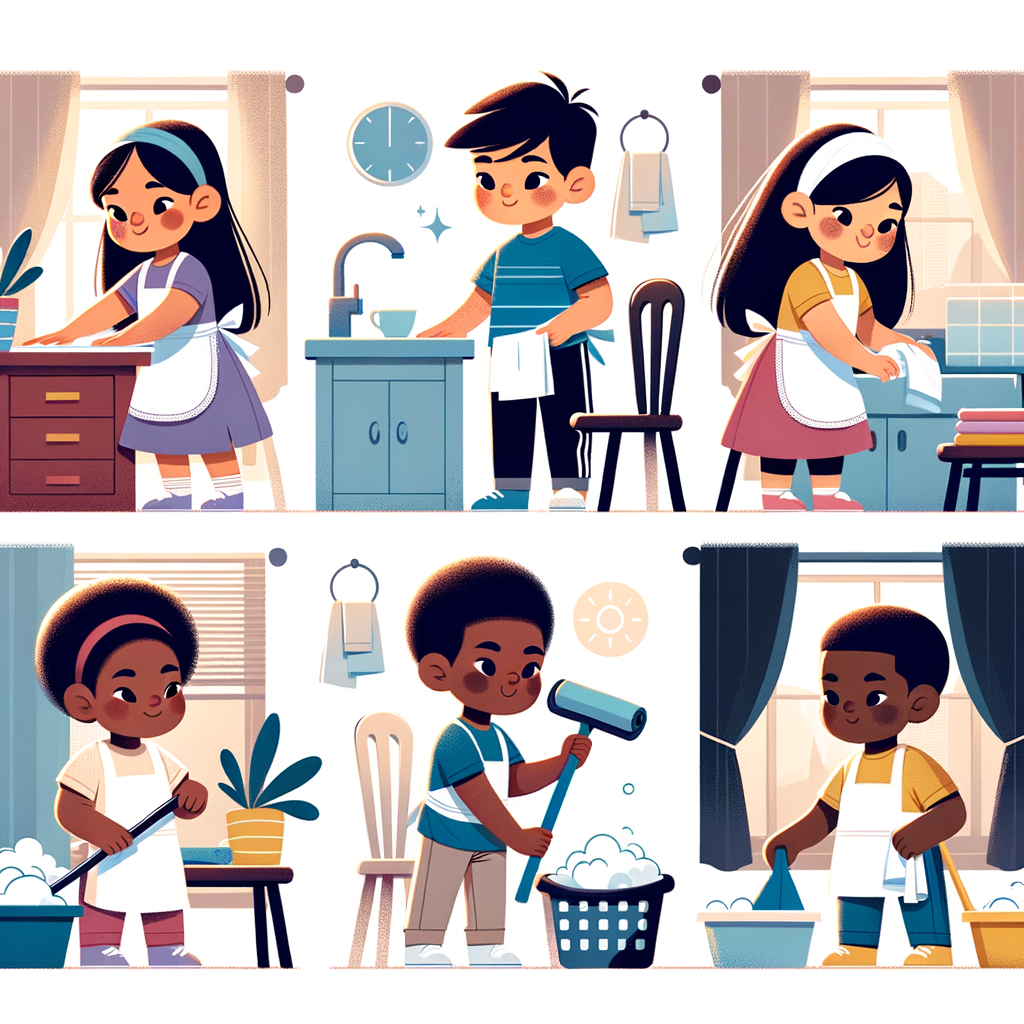
Talking about household chores is an important part of daily English conversations. Whether you are sharing responsibilities at home, hiring a house cleaner, or discussing daily routines, knowing how to talk about chores is useful in real-life situations.
By the end of this lesson, you will be able to:
✔️ Improve your listening comprehension
✔️ Learn common vocabulary for household chores
✔️ Understand how to talk about responsibilities at home
✔️ Practice real-life conversation skills
Let’s get started!
Step 1: Listen to the Conversation
🎧 Instructions:
- Listen carefully to the conversation about chores.
- Pay attention to common phrases and vocabulary used to describe household tasks.
- After listening, answer the comprehension questions below.
📌 Audio Script (Chores Conversation)
Mom: Jason, have you finished your chores?
Jason: Not yet, Mom. I’ve been busy with my homework.
Mom: Well, your homework is important, but so are your responsibilities at home. Did you take out the trash?
Jason: Oops, I forgot. I’ll do it now.
Mom: And what about your laundry? Did you put your clothes in the washing machine?
Jason: Not yet, but I’ll do that after I take out the trash.
Mom: Okay. What about the dishes?
Jason: I washed them after dinner!
Mom: Good job! Don’t forget to sweep the floor before you go to bed.
Jason: Alright, I’ll do it after my laundry is done.
Mom: Thank you. Everyone has to help around the house!
Step 2: Comprehension Questions
Test your listening skills by answering the following questions.
Multiple Choice Questions
- Why hasn’t Jason finished his chores?
a) He was at school all day.
b) He was busy with homework.
c) He forgot he had chores.
d) He was watching TV. - What chore did Jason forget to do?
a) Sweep the floor
b) Wash the dishes
c) Take out the trash
d) Vacuum the carpet - Which chore did Jason already finish?
a) Doing the laundry
b) Washing the dishes
c) Taking out the trash
d) Sweeping the floor - What does Mom ask Jason to do before going to bed?
a) Fold his laundry
b) Sweep the floor
c) Do the dishes again
d) Clean the bathroom - What does Jason say he will do after taking out the trash?
a) Watch TV
b) Finish his homework
c) Do the laundry
d) Walk the dog
(Answer Key: 1-b, 2-c, 3-b, 4-b, 5-c)
Step 3: Vocabulary Practice
Here are some important words and phrases from the conversation. Learn their meanings and practice using them in sentences.
| Word/Phrase | Meaning | Example Sentence |
|---|---|---|
| Chores | Household tasks or responsibilities | I do my chores every Saturday morning. |
| Take out the trash | To remove the garbage from the house | Can you take out the trash before it gets too full? |
| Do the laundry | To wash clothes | I need to do the laundry today because I have no clean shirts. |
| Sweep the floor | To clean the floor using a broom | She sweeps the floor every evening. |
| Responsibilities | Duties or tasks one is expected to do | Taking care of pets is a big responsibility. |
✅ Exercise:
Fill in the blanks using the vocabulary words above.
- Every morning, I _______ so the kitchen stays clean.
- After spilling juice on the floor, I had to _______.
- It’s important to share _______ at home so everyone helps out.
- My mom always tells me to _______ on Sundays.
- I forgot to _______ last night, and now the bin is overflowing!
(Answer Key: 1. do the dishes, 2. sweep the floor, 3. responsibilities, 4. do the laundry, 5. take out the trash)
Step 4: Grammar Focus – Talking About Responsibilities
When talking about chores and responsibilities, we often use modal verbs like “must,” “should,” and “have to.”
Examples from the Conversation:
- You must take out the trash before it overflows.
- I have to finish my homework before I do my chores.
- He should do the laundry because he has no clean clothes.
Practice Exercise:
Choose the correct modal verb (must, should, or have to) to complete the sentences.
- You _______ clean your room before your friends come over.
- I _______ do my chores after dinner. It’s part of our family rules.
- She _______ take out the trash before she leaves.
- We _______ wash the dishes after we eat.
- He _______ sweep the floor, but he always forgets.
(Answer Key: 1. should, 2. have to, 3. must, 4. have to, 5. should)
Step 5: Discussion Questions
Practice speaking by discussing these questions with a friend or writing down your answers.
- What chores do you usually do at home?
- Do you like doing household chores? Why or why not?
- How do families in your country divide household chores?
- What is your least favorite chore and why?
- Do you think children should help with chores? Why or why not?
Step 6: Writing Challenge
✍ Creative Writing Exercise
Write a short paragraph describing a typical day of chores in your home. Try to use at least three vocabulary words from this lesson.
🔹 Example Start:
“In my house, everyone has chores. I have to take out the trash and sweep the floor every evening. My sister does the laundry, and my mom cooks dinner. We all share the responsibilities!”
Frequently Asked Questions (FAQs)
1. How do I ask someone about their chores?
You can say:
- What chores do you have to do at home?
- Do you help with household chores?
- Who usually does the cleaning in your house?
2. What are common household chores?
Some common chores include:
- Doing the laundry
- Taking out the trash
- Sweeping and mopping the floor
- Washing the dishes
- Vacuuming the carpet
- Cooking meals
3. How do I politely ask someone to do a chore?
You can say:
- Could you take out the trash, please?
- Would you mind doing the dishes?
- Can you help me sweep the floor?
4. What’s the difference between “must” and “have to” when talking about chores?
- Must = A strong necessity or rule (You must clean your room before going out.)
- Have to = An obligation or duty (I have to take out the trash every night.)
5. Why are chores important?
Chores help:
✔️ Teach responsibility
✔️ Keep the house clean and organized
✔️ Teach teamwork and cooperation in families
Conclusion
This lesson helps you improve your listening, vocabulary, grammar, and speaking skills while learning how to talk about household chores and responsibilities.
✅ What’s Next?
- Listen to the audio again and try to understand more details.
- Practice talking about your own chores with a friend.
- Try writing a list of chores in English that you do every week!