

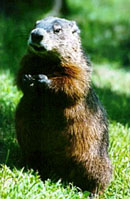
ESL Lesson on Groundhog Day
Groundhog Day is a popular North American tradition celebrated on February 2nd each year. Originating from Pennsylvania Dutch folklore, it centers around the behavior of a groundhog emerging from its burrow. According to tradition, if the groundhog sees its shadow due to clear weather, it will retreat back into its burrow, predicting six more weeks of winter weather. Conversely, if it does not see its shadow because of cloudiness, spring will arrive early. This quaint custom is not only a cultural event but also a festive gathering, featuring various activities and widespread media attention, most notably in Punxsutawney, Pennsylvania, the site of the largest celebration.
Vocabulary (Groundhog Day)
to hibernate (verb)- to sleep through the winter
hibernation (noun)- comes from hibernate (long sleep through the winter)
legend– old story that is told from parents to children, and children’s children, and so on for many many years
shadow– darkness made where the light can’t go through (when the sun shines you can see the dark outline of your body on the ground)
Practice Quiz on Groundhog Day
To further test your knowledge and understanding of Groundhog Day, here is a set of five questions designed to quiz your grasp of the tradition. These questions cover the history, significance, and current practices associated with Groundhog Day, helping reinforce what you’ve learned from the FAQs. Please read the following story and answer the reading comprehension questions that follow.
Story
A ground hog is a small animal that digs and lives under the ground. It is also called the woodchuck. Ground hogs live in many parts of America. In the winter they hibernate like bears and some other animals.
There is a legend that says a few hundred years ago Europeans brought Ground Hog Day to America. They said that the ground hog wakes up from his hibernation on February 2. (February 2 is half way between winter and spring.) If he comes up from his hole and it is sunny, he will see his shadow and be frightened. If he sees his shadow, there will be 6 more weeks of winter weather. But if he comes up and the sky is cloudy, he will not see his shadow and will not be frightened. Then spring weather will come very soon.
Some people believe this legend and they watch the sky on February 2. Many people are happy if it is cloudy on that day. They think spring will come soon. But most people think it is just a fun legend. What do you think?
Questions
Answer key is below (but answer Q’s first!)
1. What is another name for ground hog?
2. Where do ground hogs live?
3. What does a ground hog do during the winter?
4. When does the ground hog wake up from his hibernation?
5. If a ground hog sees his shadow, what will happen?
Frequently Asked Questions about Groundhog Day
The folklore states that if the groundhog sees its shadow on February 2nd, there will be six more weeks of winter weather. If it does not see its shadow, it predicts an early spring. This belief is based on old European weather lore where a sunny Candlemas Day similarly signifies a longer winter.
The largest and most famous Groundhog Day celebration is held in Punxsutawney, Pennsylvania. Here, Punxsutawney Phil, the most notable of all groundhogs, makes his prediction each year, attended by thousands of spectators and covered by various media.
Punxsutawney Phil is the name of the groundhog who participates in the Groundhog Day ceremony in Punxsutawney. Phil’s predictions have been recorded since 1887, and he is considered the “official” groundhog meteorologist. Legend has it that Phil drinks a magical “elixir of life” every summer, which grants him seven more years of life.
Despite the fun and enthusiasm surrounding Phil’s predictions, his accuracy rate is around 39% according to studies. The event is more about cultural celebration and folklore than scientific accuracy.
Groundhog Day is primarily a North American tradition, with its largest observance in the United States and some celebrations in Canada. Similar traditions involving animals predicting the weather exist in other cultures, but they do not usually occur on February 2nd.
Answer Key:
- woodchuck
- under the ground
- hibernates (sleeps)
- February 2
- there will be 6 more weeks of winter