

Where do you come from? What is your nationality? What language do you speak?
Languages and Nationalities – ESL Lesson
Languages and nationalities are fundamental aspects of our identities and the way we communicate within the global community. Language not only functions as a means of communication but also as a vehicle for cultural expression and preservation. Every nation typically associates with one or more languages, which can be official or widely recognized within its borders. Understanding the relationship between languages and nationalities helps us appreciate the diversity and intricacies of global cultures and societies.
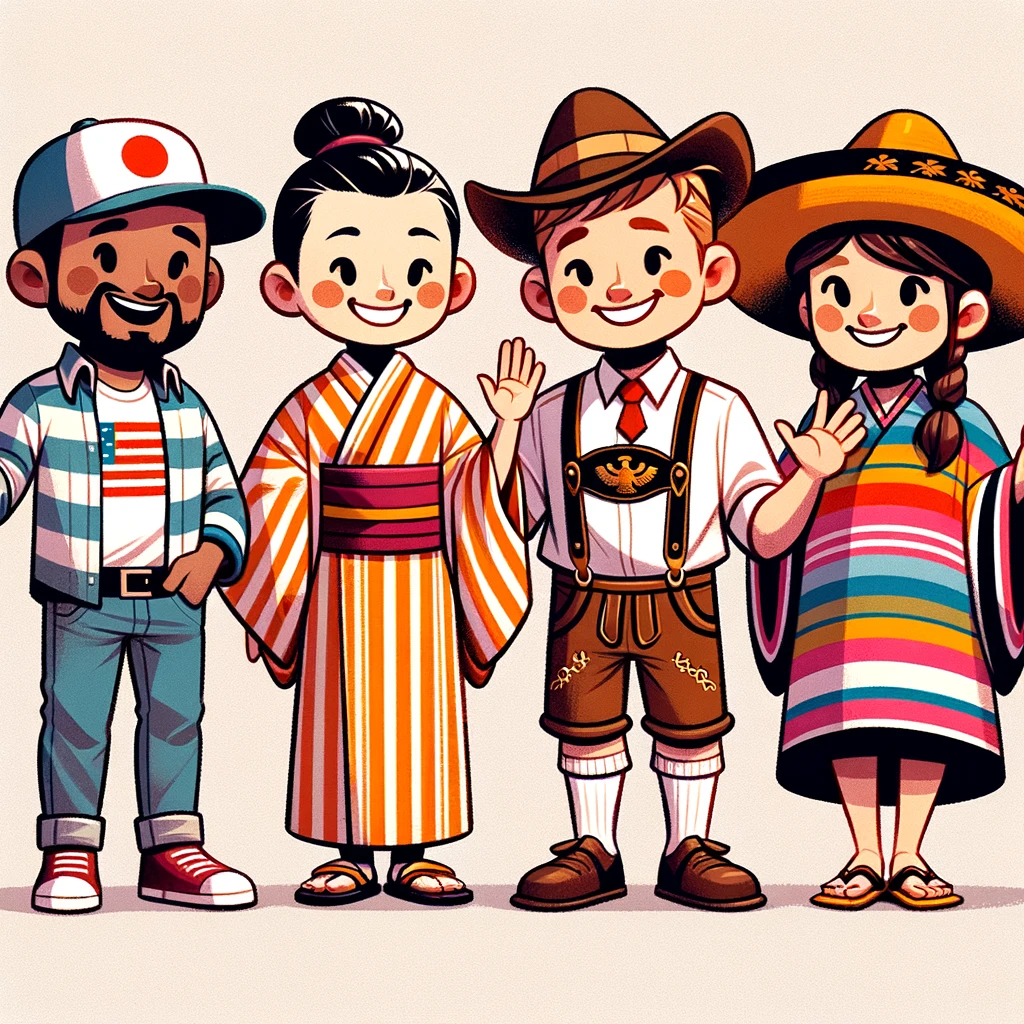
Look at the words and then read the example sentences.
Country / Nationality / Language
England / English / English
Japan / Japanese / Japanese
France / French / French
Germany / German / German
Korea / Korean / Korean
United States / American / English*
*Mexico / Mexican / Spanish*
Canada / Canadian / English + French*
Australia / Australian / English*
Spain / Spanish / Spanish
Thailand / Thai / Thai
Taiwan / Taiwanese / Chinese* + Taiwanese
* The word for the nationality and language are different. These languages came from other countries.
Examples

A. Jean is from France. He is French. His language is French.
B. A person from Japan speaks Japanese. His nationality is Japanese.
C. People from Mexico are Mexican. They speak Spanish.
*
Languages and Nationalities Practice Quiz: Test Your Knowledge!
Test your understanding of languages and nationalities with this quick quiz! Below are six questions (plus bonus Q’s on Nationality) designed to challenge your knowledge and help reinforce what you’ve learned about the relationship between different languages and the nations that speak them.
Type the answer. Check your answer below in the Answer Key.
1. Japanese people speak _____________________.
2. A person from Korea is a _____________________.
3. Kurt is from Germany. He is a _____________________ and he speaks _____________________.
4. Maria is Spanish. She is from _____________________.
5. Taiwanese people are from _____________________, but Thai people come from _____________________.
6. The United States, England, Canada, and Australia all speak _____________________.

Bonus Questions on Nationalities
If the above words are easy for you, do you know the following nationalities and languages? Guess and see if you are right. Good luck.
7. A person from Switzerland is _____________________.
8. A person from New Zealand is a _____________________.
9. A person from _____________________ is an Iraqi.
10. A person from Afghanistan is _____________________.
11. People from Brazil speak _____________________.
12. Belgian people speak _____________________ and _____________________.
Frequently Asked Questions about Languages and Nationalities
An official language is a language that is given a special legal status in a particular country, state, or other jurisdiction. It is used in the conduct of public affairs and government operations.
Yes, many countries have multiple official languages, reflecting their diverse cultural and ethnic compositions. For example, Canada has both English and French as official languages at the federal level.
A language is considered endangered when its use is declining among its speakers and it is being transmitted to fewer and fewer children. If this trend continues, the language may eventually become extinct.
Nationality is typically determined by a person’s country of birth or by the nationality of their parents. It can also be acquired through naturalization, which involves fulfilling specific legal requirements of another country.
Countries become multilingual due to historical, geographical, and social factors, including colonization, migration, and trade. Multilingualism reflects the diversity and intercultural interactions within these countries.
Answer Key:
- Japanese
- Korean
- German, German
- Spain
- Taiwan, Thailand
- English
- Swiss
- New Zealander
- Iraq
- Afghani
- Portuguese
- French, Flemish