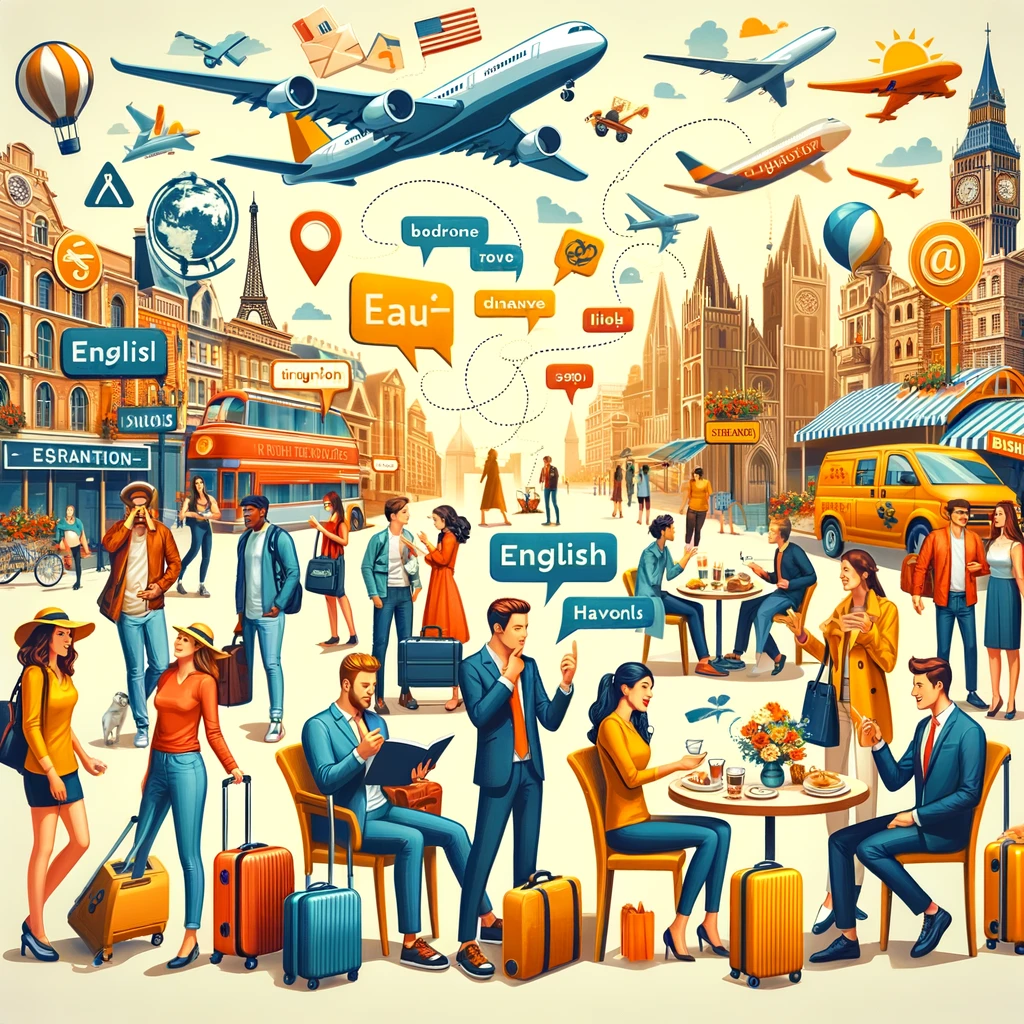
Traveling to a country where English is the primary or a major secondary language can be a thrilling and enriching experience. However, for non-native English speakers, the language barrier might seem daunting. This comprehensive guide aims to equip you with essential English phrases and practical tips to enhance your travel experience, making it smoother and more enjoyable.
Understanding Basic English Phrases
Greetings and Politeness
Start with the basics: greetings. These are your first step in interacting with locals.
- Hello/Hi: Universal greetings for all times of the day.
- Good morning/afternoon/evening: Time-specific greetings.
- Please/Thank you/You’re welcome: Fundamental to show politeness.
- Excuse me/Sorry: Useful to get attention or express apology.
Asking for Directions
Lost in a new city? These phrases will help you find your way.
- Where is [location/place]?: Use to inquire about a specific place.
- How do I get to [location/place]?: For detailed directions.
- Is this the way to [location/place]?: To confirm you’re on the right path.
- Can you show it on the map?: When verbal directions are not clear.
Dining Out
Eating out is a significant part of traveling. Navigate restaurants with these phrases:
- A table for [number of people], please: To reserve a seat.
- Could I see the menu, please?: To request the menu.
- I am allergic to [allergen]: To inform about food allergies.
- Could I have the bill, please?: To ask for the check after your meal.
Shopping and Transactions
Whether you’re buying souvenirs or necessities, these phrases will come in handy:
- How much does this cost?: To inquire about the price.
- Do you accept credit cards?: Useful in establishments where payment methods aren’t clear.
- Could you help me with [item]?: When you need assistance in finding something.
Emergency Situations
It’s crucial to know basic phrases for unexpected circumstances:
- I need help: A general call for assistance.
- Call the police/ambulance: In case of a serious emergency.
- Where is the nearest hospital?: Important for health emergencies.
Navigating Transportation
Understanding and using transportation terms is vital for getting around.
- Train/Bus/Taxi/Airplane: Familiarize yourself with these common modes of transportation.
- What time does the [train/bus] leave/arrive?: To check schedules.
- Where is the [train/bus] station/airport?: For locating transport hubs.
Accommodation Language Essentials
- I have a reservation under [name]: When checking into your hotel or hostel.
- Could I have a different room?: If there’s an issue with your accommodation.
- Where is the [gym/pool/restaurant]?: To locate facilities in your accommodation.
Practical Tips for Using English in Travel
1. Practice Active Listening
When engaging in conversations, practice active listening. This means not only hearing the words but also paying attention to the context and non-verbal cues. It can help you understand better and respond appropriately.
2. Don’t Be Afraid to Ask for Repetition
If you didn’t catch what someone said, it’s perfectly fine to ask them to repeat. You can use phrases like, “Could you please repeat that?” or “I’m sorry, I didn’t understand.”
3. Use Technology Wisely
In today’s digital age, make use of translation apps and language tools. They can be incredibly helpful in translating signs, menus, and even in live conversations.
4. Carry a Small Dictionary or Phrasebook
Having a physical or digital mini dictionary or phrasebook with essential phrases can be a lifesaver, especially in areas with limited internet access.
5. Practice Makes Perfect
Before your trip, practice English as much as possible. Watch movies, listen to music, or converse with native speakers to improve your fluency.
6. Learn Local Slang and Idioms
Understanding local slang and idioms can enrich your communication. It not only helps in understanding locals better but also in immersing yourself more deeply in the culture.
7. Body Language and Gestures
Sometimes, when words fail, body language and gestures speak volumes. Learn some universal gestures and be aware that some gestures might have different meanings in different cultures.
8. Cultural Sensitivity
Being culturally sensitive is key when traveling. This means being respectful of local customs and etiquette, which often reflects in the language use.
9. Keep It Simple
When speaking, use simple sentences and clear pronunciation. This makes it easier for others to understand you and reduces the likelihood of miscommunication.
10. Confidence is Key
Lastly, confidence plays a significant role in language acquisition. Don’t worry about making mistakes; the important part is to try and learn from those mistakes.
Advanced Phrases for Fluent Interaction
Once you’ve mastered the basics, incorporating more advanced phrases can enhance your interactions and show a deeper understanding of the language.
- I was wondering if you could recommend…: A polite way to ask for suggestions.
- Would it be possible to…: A formal way to make a request.
- I’m afraid I don’t understand: When you need clarification.
- I’m looking for something a bit more specific: To convey specific needs or preferences.
Dealing with Language Barriers
Despite your best preparations, you might still encounter language barriers. Here’s how to handle them:
1. Stay Calm and Patient
Frustration can make communication even more challenging. Stay calm and patient, both with yourself and the person you’re speaking to.
2. Use Simple English
Stick to basic vocabulary and sentence structures. Avoid idioms and slang, which can be confusing for those not fluent in English.
3. Non-Verbal Communication
Gestures, facial expressions, and body language can help convey your message. However, be mindful of cultural differences in non-verbal communication.
4. Draw or Write It Down
Sometimes, drawing a simple picture or writing down a word or number can be the quickest way to communicate.
5. Find a Common Language
If English isn’t working, see if there’s another language you both know, even at a basic level. Sometimes, a mix of languages can be effective.
Immersing in Local Culture Through English
Using English as a bridge, immerse yourself in local cultures:
- Attend Local Events: Participate in local events or festivals where you can practice English while experiencing local traditions.
- Join Guided Tours in English: These can provide both language practice and deeper insights into local history and culture.
- Engage with Locals: Conversations with local English speakers can be immensely beneficial. It’s a chance to practice your skills and learn about the area from a resident’s perspective.
Overcoming Shyness and Hesitation
Many travelers hesitate to use English due to fear of making mistakes. Here’s how to overcome this:
- Accept Imperfection: Remember that making mistakes is a part of learning. Most people will appreciate your effort to speak their language.
- Practice with Fellow Travelers: Practicing with someone in the same learning phase can be less intimidating.
- Join Language Exchange Meetups: These meetups are great for practicing English in a friendly, supportive environment.
Using Technology for Language Learning
Incorporate technology into your language learning:
- Language Learning Apps: Apps like Duolingo, Babbel, or Rosetta Stone can be useful for learning English on-the-go.
- Online Tutorials: Platforms like YouTube have countless tutorials for learning English.
- Virtual Language Exchange: Websites and apps facilitate language exchange with native speakers worldwide.
Staying Safe and Informed
Language also plays a key role in staying safe and informed during your travels:
- Understand Safety Instructions: Pay attention to safety instructions, especially in transportation or accommodation.
- Stay Informed: Keep up with local news and updates in English. This can be crucial in times of emergencies or changes in travel advisories.
Conclusion
Mastering essential English phrases and tips for travel not only makes your journey more comfortable but also opens up a world of cultural exchanges and deeper experiences. With practice, patience, and a willingness to learn, you can navigate any English-speaking environment with confidence and ease.
Remember, language is a bridge that connects people and cultures. By embracing English for travel, you’re not just learning to communicate; you’re unlocking the door to global exploration and understanding.