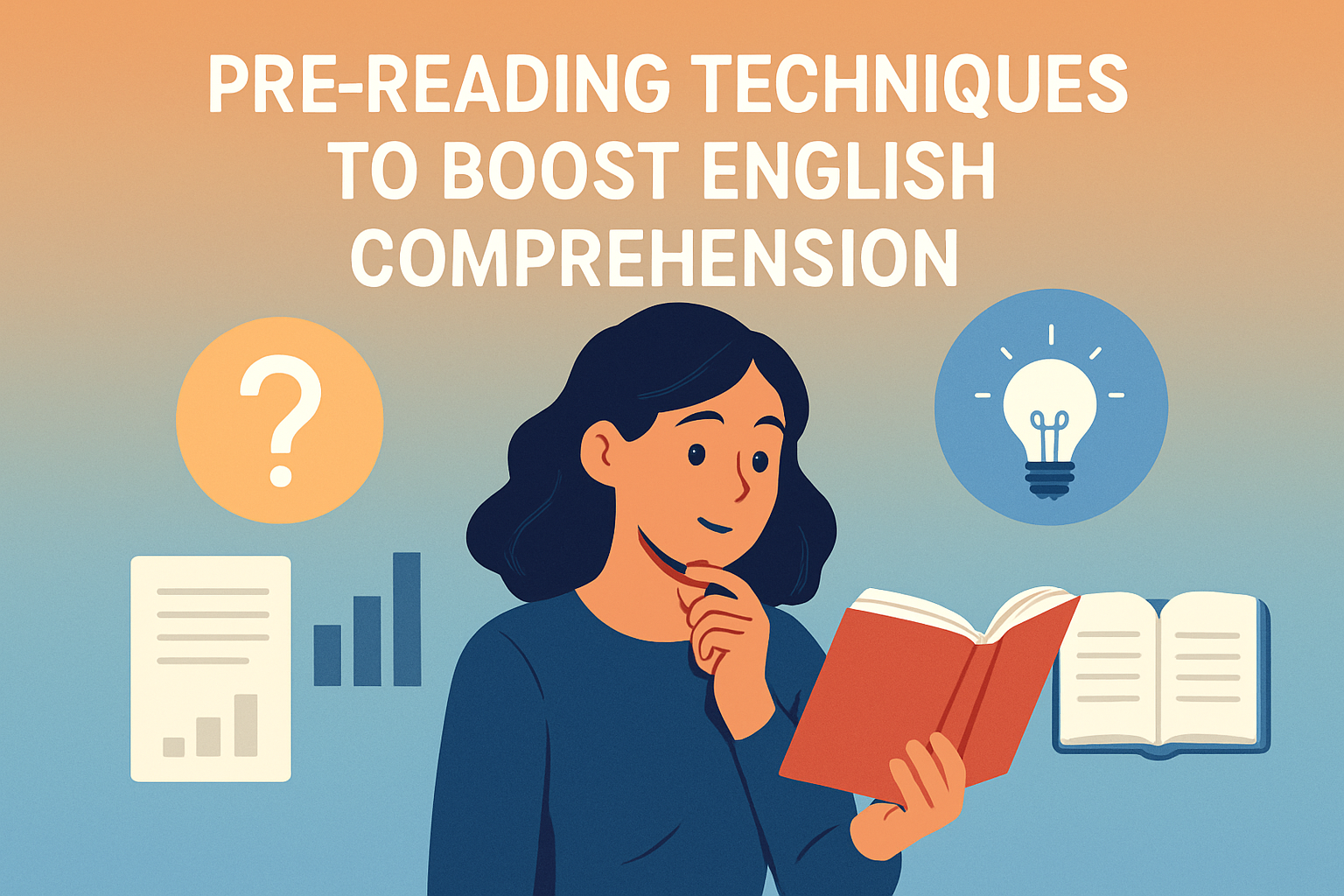
Reading is an essential skill that influences not just academic success but also personal growth and professional development. However, many learners overlook the significance of the pre-reading phase, a pivotal step that can markedly enhance comprehension and retention. Pre-reading techniques involve strategies that prepare the reader’s mind to better grasp and remember the material. Employing these methods can pave the way for a more engaged and effective reading experience. So why does this matter? In a world flooded with information, the ability to quickly and effectively understand text is more crucial than ever. These pre-reading strategies can be the difference between struggling through a reading passage and mastering it. Understanding and applying these techniques can revolutionize the way you approach texts, ultimately boosting not just your comprehension but your confidence as well.
The Concept of Activating Prior Knowledge
One of the most effective pre-reading techniques is activating prior knowledge. This involves recalling what you already know about the subject matter before diving into the actual reading. Why is this important? Your existing knowledge creates a framework that helps in processing and organizing new information. Suppose you are about to read an article on climate change. Before starting, take a few moments to jot down what you already know about the topic—say, the effects of greenhouse gases or global warming. This pre-existing knowledge will act as mental ‘hooks’ to which new information can latch onto, thereby enhancing comprehension.
Real-world application of activating prior knowledge can be seen in classrooms worldwide. Teachers often begin lessons by asking students what they know about the forthcoming topic. This practice not only gets students engaged but also primes their brains to interlink new information with existing knowledge, leading to improved retention and understanding.
Previewing the Text
Previewing is another valuable pre-reading strategy. It involves scanning the text to get a sense of the content, structure, and tone before you start reading in-depth. Think of it as a ‘sneak peek’ into what lies ahead. Open the article or book: look at headings, subheadings, images, and any introductory or concluding paragraphs. Even glancing at the first sentence of each section can provide a valuable roadmap to the material.
Consider the example of students preparing for exams. By previewing the chapters they need to study, they can prioritize sections that require extra focus. This foresight allows them to allocate their study time more efficiently, thereby improving overall comprehension and performance.
Setting a Purpose for Reading
Setting a clear purpose before you start reading can dramatically improve comprehension. Your purpose might be to gain a general understanding, analyze specific arguments, or find answers to particular questions. This technique aligns your focus with your goals, ensuring that you filter out unnecessary information and absorb what truly matters.
For instance, journalists often set a specific goal to extract key facts, insights, or quotes required for their stories. This approach prevents information overload and helps them retain pertinent details, enhancing both the efficiency and effectiveness of their work.
Questioning the Text
Formulating questions about the text before reading can be an insightful technique to drive engagement and comprehension. As you preview the text, jot down questions that come to mind about the subject matter. These questions act as guideposts during your reading, helping maintain focus and actively engage with the material.
In educational settings, teachers may encourage students to generate questions about reading assignments. This approach not only fosters curiosity but also propels deeper exploration of the material, leading to better comprehension and a more enriching learning experience.
Identifying Text Features
Understanding a text’s features and structure is critical for effective comprehension. Elements like headings, bold typography, images, and graphics provide cues to the text’s main points and organizational style. By noticing these features, you prepare your brain to categorize and prioritize information logically.
| Text Feature | Purpose |
|---|---|
| Headings | Indicate main topics and subtopics |
| Bold Text | Emphasizes key information |
| Images | Visual representation of ideas |
| Graphs | Display data and trends |
Professionals in various fields also employ this strategy. For instance, business analysts reviewing reports for essential insights will often scan for graphs or highlighted terms to swiftly grasp the document’s core message before diving into details.
Building Vocabulary Before Reading
Vocabulary plays a significant role in reading comprehension. Encountering unfamiliar words can disrupt your flow and understanding of the text. Therefore, reviewing potential challenging vocabulary before reading can mitigate this issue. Lists of keywords or glossaries often accompany academic articles or books; use them to familiarize yourself with new terms. This preparation primes your brain to recognize these words in context, reducing confusion during reading.
Think of how translators prepare for interpreting foreign language texts. They familiarize themselves with technical jargon or industry-specific terms beforehand, allowing for smoother and more accurate translations. This principle applies equally to reading comprehension: better vocabulary knowledge translates to better understanding.
Making Predictions
Making predictions is another pre-reading technique that can significantly boost comprehension. As you preview the text, try to anticipate what it will cover based on the title, headings, or any introductory information. This activity primes your brain to look for specific information and confirm or refute your hypotheses as you read.
Authors often leverage a similar technique when outlining their works. By predicting how their audience will engage with the material, they can create more coherent and persuasive narratives. Readers can reverse-engineer this process to enhance their comprehension and engagement.
Establishing the Context
Understanding the context in which a text was written adds layers of meaning and improves comprehension. Consider elements like the author’s background, the time period, and the primary audience. These factors influence the tone, style, and content of the text. Establishing context helps decipher nuances and appreciate the underlying messages or themes.
In a historical context, knowing the socio-political environment during a specific era can enhance your understanding of literary works from that period. This approach allows readers to grasp subtleties that might otherwise go unnoticed, enriching the reading experience.
Conclusion: Enhancing Reading Success
The importance of pre-reading techniques cannot be overstated. Activating prior knowledge, previewing texts, setting a reading purpose, questioning, identifying text features, building vocabulary, making predictions, and establishing context, each play a critical role in elevating one’s reading comprehension. These strategies transform passive reading into an interactive, insightful, and gratifying activity. As you integrate these techniques into your reading habits, you’ll notice a marked improvement in your ability to understand and retain information.
Ultimately, the key takeaway is that these pre-reading techniques aren’t isolated tricks but interconnected tools that build a holistic approach to reading comprehension. They empower readers to control their engagement with texts and guide them toward achieving their reading goals more efficiently. So, the next time you sit down to read, take a moment to prepare with these strategies. You’ll find yourself navigating through words with ease and clarity, ready to apply your newfound knowledge in practical, impactful ways.
Start incorporating at least one of these pre-reading techniques into your daily reading routine. Observe how it changes your comprehension and share your experiences with others. As you progress, gradually adopt additional techniques to further enhance your skills, unlocking new levels of understanding and achievement in your reading endeavors.
Frequently Asked Questions
1. What are pre-reading techniques, and why are they important?
Pre-reading techniques are strategies employed before actually diving into the main reading material. Think of them as a warm-up session for your brain, setting the stage for a more informed and engaged reading experience. These techniques are pivotal because they prime your mind, making it more receptive to absorbing and understanding the content. When you engage in pre-reading steps, you create mental scaffolding—this means you’re building a mental outline of what to expect, which can significantly boost comprehension and retention. Plus, these techniques can tailor your focus, helping you zero in on key concepts and details that might otherwise slip by unnoticed. In a world that often demands quick assimilation of information, developing robust pre-reading habits can not only bolster academic performance but also enhance your ability to synthesize information in personal and professional settings.
2. How do pre-reading techniques influence comprehension and retention?
Pre-reading techniques play a crucial role in enhancing both comprehension and retention, acting as a bridge between unfamiliar content and existing knowledge. By engaging in activities such as skimming, scanning, or predicting content, readers can activate prior knowledge—this is the existing information stored in one’s memory related to the topic at hand. Such activation lays the foundation for new, related information to stick, effectively weaving new knowledge into the already established cognitive framework. In essence, pre-reading allows readers to establish connections between what they already know and what they’re about to learn, leading to more profound comprehension. On the retention front, these strategies ensure that the reader is not merely passively absorbing text but is actively involved in the learning process, thus creating more robust memory traces. Over time, such active engagement sharpens focus, fostering an enduring understanding of the material that goes beyond just temporary memorization.
3. What are some common pre-reading techniques I can use to improve my English comprehension?
Several pre-reading techniques can be utilized to boost English comprehension. One popular method is skimming, where you glance over the text to get a general idea of the content without delving into details—this helps get an overview and can stimulate interest. Scanning is another technique that involves looking for specific information, such as key terms or phrases, allowing you to sort through material efficiently. Previewing involves examining the title, headings, subheadings, and any available summaries or graphics, providing a framework for understanding the main themes and ideas in advance. Predicating encourages readers to guess what the material may cover based on available clues, setting a purpose for engaging with the text more actively. These techniques, when practiced consistently, not only improve comprehension but also build confidence, preparing the reader to tackle even complex readings with ease.
4. How can pre-reading techniques be integrated into a daily reading routine?
Integrating pre-reading techniques into your everyday reading habits doesn’t have to be a cumbersome process. Begin with setting aside a few minutes prior to reading to engage in one or more pre-reading strategies. For instance, if you’re about to read an article, spend a couple of minutes skimming through it to catch the highlights and then preview the headings. You can then pause to predict what kind of information the material might offer based on your initial observations. As you become more comfortable with these techniques, you’ll find that they naturally become part of your routine, making them feel like second nature. Furthermore, you can tailor pre-reading strategies based on the material’s complexity and your familiarity with the subject. Remember, the goal isn’t to memorize but to engage your brain actively, thereby setting the groundwork for a focused and enlightened reading session.
5. How can educators encourage students to use pre-reading techniques to enhance learning?
Educators play a vital role in imparting the value of pre-reading strategies to students, helping them become more effective readers and learners. One way to do this is by integrating these techniques into the curriculum—introducing them as an essential skill rather than just an add-on. Teachers can model the techniques by conducting pre-reading exercises alongside the class before delving into new material. Utilizing instructional scaffolding, educators can provide prompts or guiding questions that encourage students to scan and skim for relevant info or make predictions about the reading content. Additionally, incorporating discussions on pre-reading skills in class enhances awareness and reinforces the importance of these strategies. By fostering a classroom environment that values and rewards the application of these techniques, educators help students cultivate strong pre-reading habits. Over time, students develop a deeper appreciation for the preparatory phase of reading, harnessing its power to facilitate meaningful understanding and long-term retention of knowledge.