Learning a new language is often seen as a daunting task, filled with endless vocabulary lists and grammar rules. But what if there was a more engaging way to learn English that not only enhanced language skills but also boosted confidence? Welcome to the world of drama and role-play. This method goes beyond traditional classroom techniques, offering learners a creative and interactive approach to mastering English. Engaging in drama and role-play exercises can transform the language learning journey from mundane to exciting, making it easier to grasp complex concepts and practice conversational skills in a realistic context.
In this article, we’ll explore the multiple benefits of integrating drama and role-play into your ESL learning routine. We will discuss how these techniques can improve various language skills, foster a deeper understanding of cultural nuances, and offer a fun, interactive way to practice English. By the end of this read, you’ll have a solid understanding of why drama and role-play are valuable tools in the ESL toolkit and how you can start incorporating them into your own learning adventure. So, let’s dive in and uncover how turning English lessons into mini-theatrical performances can be a game-changer!
Boosting Communication Skills
One of the most significant advantages of using drama and role-play in English learning is the improvement of communication skills. Unlike traditional classroom methods, which often focus on individual learning, drama and role-play require active participation and collaboration with others. This creates a dynamic environment where learners must think on their feet, listen actively, and respond appropriately.
Role-playing different scenarios—from a casual conversation at a coffee shop to a business meeting—provides a safe space to practice and refine both spoken and non-verbal communication. Learners get immediate feedback from their peers and instructors, helping them identify areas for improvement. Additionally, these activities often involve a variety of emotions and expressions, which aids in understanding the nuances of tone, pace, and body language.
Moreover, drama exercises can help break down the barriers of shyness and reluctance. When students step into a character, they often find it easier to express themselves, as they are temporarily freed from their own inhibitions. This newfound confidence can carry over into real-world situations, making it easier for learners to communicate effectively and naturally in English.
Enhancing Vocabulary and Grammar
Another significant benefit of drama and role-play is their capacity to enhance vocabulary and grammar. Traditional methods often rely on rote memorization, which can be tedious and ineffective in the long term. Drama and role-play, however, offer contextual learning opportunities where new words and grammatical structures are introduced organically.
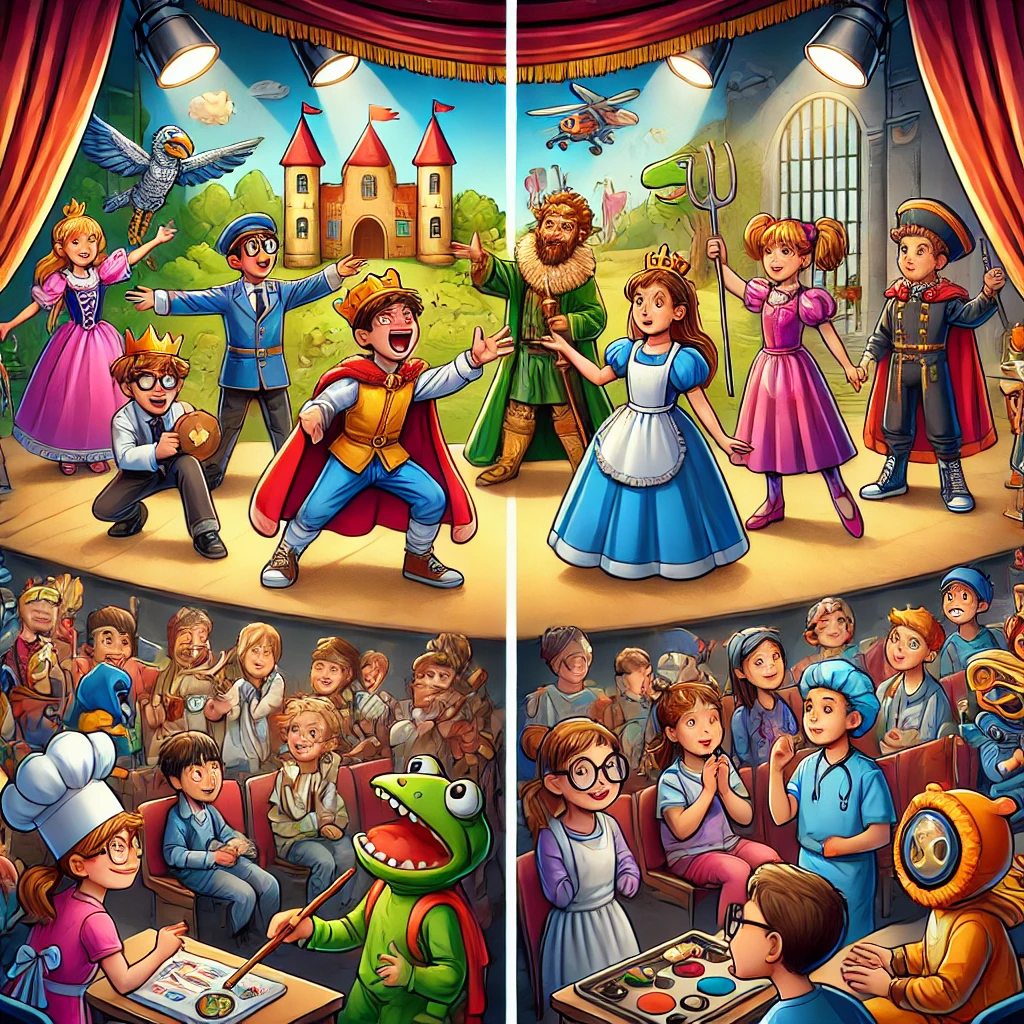
When engaging in a role-playing exercise, students encounter various thematic vocabulary related to the scenario. For instance, a role-play set in a hospital will naturally bring up medical terms, while a drama set in a marketplace will introduce commercial language. This contextual learning aids in better retention and understanding of words, as students see how they fit into real-life situations.
Grammar, too, becomes more manageable when taught through drama. Instead of dry lessons on the future tense or conditional sentences, learners can see these grammatical structures in action. They practice them in dialogue, making it easier to understand their practical applications. Over time, this helps internalize complex grammatical rules, making them second nature in both spoken and written English.
Fostering Cultural Understanding
Language and culture are deeply intertwined, and one cannot be fully understood without the other. Drama and role-play are excellent tools for fostering cultural understanding, an essential aspect of mastering English. Through these methods, learners are exposed not just to the language but also to the cultural contexts in which it is used.
For example, a role-play exercise based on a traditional American holiday can introduce learners to customs, traditions, and social norms they might not encounter in a textbook. Similarly, drama scripts often include cultural references that provide insight into the values and beliefs of English-speaking societies. This deeper understanding of culture helps learners use the language more appropriately and sensitively, enhancing their overall communication skills.
Moreover, engaging in drama often requires learners to adopt different perspectives, helping them understand and appreciate cultural diversity. This can be particularly beneficial in a globalized world where cross-cultural communication is increasingly important. Understanding cultural nuances helps prevent misunderstandings and fosters more meaningful interactions, both in academic settings and in everyday life.
Encouraging Creativity and Imagination
Drama and role-play go beyond conventional learning methods by encouraging creativity and imagination. These activities require learners to think outside the box, come up with original ideas, and solve problems creatively. This not only makes learning more engaging but also helps develop critical thinking skills that are invaluable in any language.
When students create their own role-play scenarios or write their own scripts, they use the language in innovative ways. This active involvement in the learning process makes lessons more memorable and impactful. Moreover, the creative freedom afforded by drama and role-play allows learners to experiment with language, making mistakes and learning from them in a stress-free environment.
This creative aspect is particularly beneficial for young learners, who often thrive in imaginative settings. However, adults too can find great value in using their creativity to learn English. Whether through improvisation exercises, scriptwriting, or dramatic performances, drama and role-play offer endless opportunities to use the language creatively, making learning enjoyable and effective.
Building Teamwork and Collaboration
Drama and role-play activities often involve group work, making them excellent for building teamwork and collaboration skills. In a world where collaboration is increasingly essential, learning to work effectively with others is a valuable skill in itself. These activities offer a practical, fun way to develop these abilities while practicing English.
Role-playing exercises and drama performances require students to work together to achieve a common goal, whether it’s putting on a play or acting out a scenario. This collaboration fosters a sense of community and mutual support, as learners must listen to each other, offer suggestions, and provide feedback. Such interactions help build strong interpersonal skills and improve social dynamics within the learning group.
Moreover, these activities often involve a diverse group of individuals, each bringing their unique perspectives and ideas. This diversity enriches the learning experience, exposing students to different ways of thinking and speaking. The collaborative nature of drama and role-play also means that learners are constantly communicating, negotiating, and problem-solving, all of which are essential skills in both personal and professional settings.
Conclusion
In conclusion, the benefits of practicing English with drama and role-play are numerous and far-reaching. These methods offer a dynamic, interactive approach to language learning that goes beyond traditional techniques. By boosting communication skills, enhancing vocabulary and grammar, fostering cultural understanding, encouraging creativity, and building teamwork, drama and role-play provide a comprehensive and enjoyable way to learn English.
Whether you are a teacher looking for innovative ways to engage your students or a learner seeking a more effective method to improve your English, incorporating drama and role-play into your routine can make a significant difference. These activities not only make learning more enjoyable but also more effective, helping you achieve your language goals more efficiently.
So, why not give it a try? Embrace the world of drama and role-play, and watch as your English skills flourish. With a little creativity and imagination, you can transform your language learning journey into an exciting adventure, full of discovery and growth.