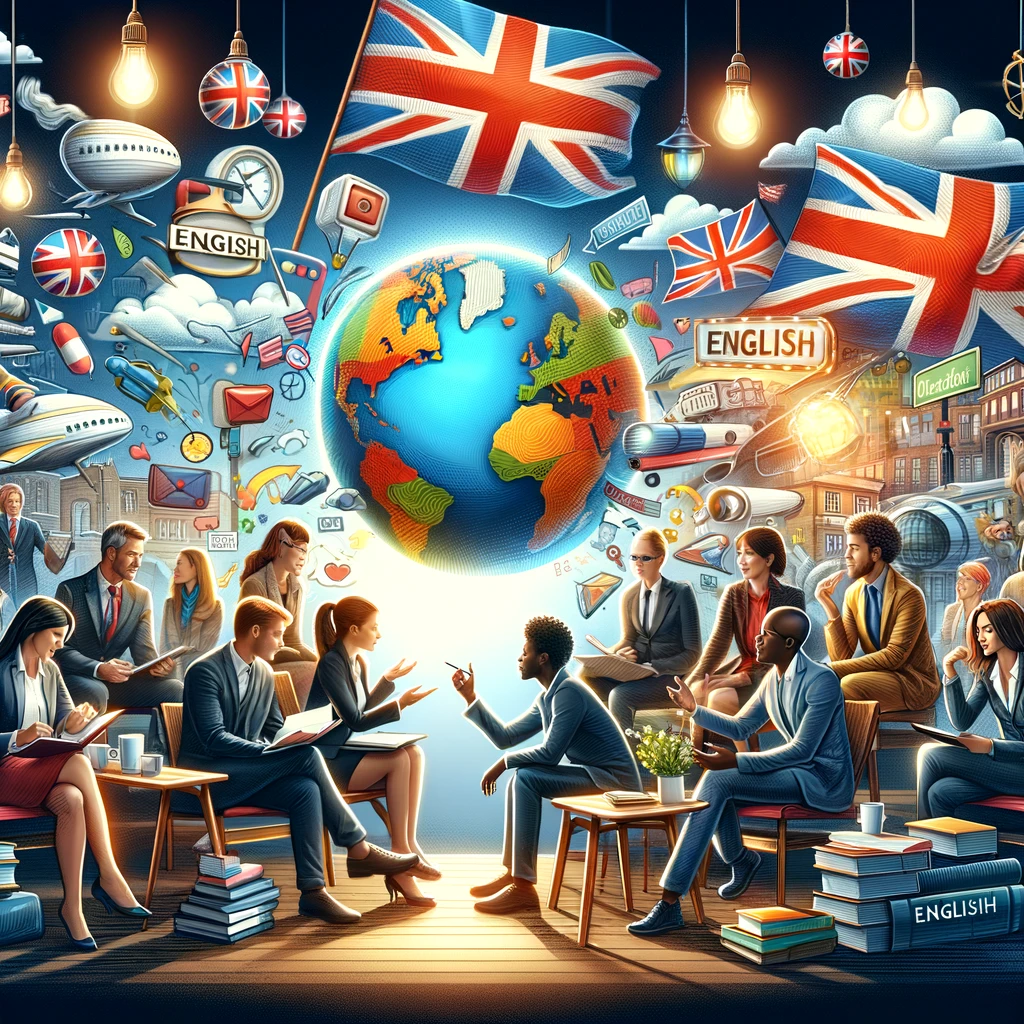
In today’s interconnected world, English has evolved far beyond its origins as the primary language of England. It has become a global lingua franca, serving as the primary means of communication across countries and cultures. This transformation didn’t happen overnight; it is the result of centuries of history, politics, economics, and technology. As an English as a Second Language (ESL) educator or learner, understanding the broader impact of English on global culture is crucial. This knowledge can provide valuable context and deepen appreciation for the language.
Introduction: The Rise of English
The journey of English from a regional dialect in medieval England to a global language today is a fascinating one. Initially, English started as the language of the Anglo-Saxons around the 5th century AD. With the Norman Conquest in 1066, English was heavily influenced by French, creating a blended lexicon rich in vocabulary. However, it wasn’t until the British Empire’s expansion from the 16th to the early 20th centuries that English began to take on its modern role on the world stage.
During the peak of the British Empire, English was introduced to vast areas of the globe, including North America, India, Africa, the Caribbean, and Australasia. This spread was largely driven by colonization, trade, and the establishment of administrative systems. When America gained independence and emerged as a global superpower in the 20th century, the spread of English was further cemented by economic and technological dominance.
Today, English is spoken as a first language by approximately 360 million people and as a second language by over a billion people worldwide. It is the official or de facto language in numerous countries and serves as the predominant language of science, technology, aviation, business, and international diplomacy. This widespread adoption makes English a key player in how global culture is shaped and disseminated.
English in Business and Commerce
One of the most significant areas where English has had a profound impact is in international business and commerce. The language of trade has always been a powerful force, and in the modern world, that language is overwhelmingly English. Major global corporations, from tech giants in Silicon Valley to international finance hubs like London and New York, conduct the bulk of their communications in English.
International business meetings, contracts, and negotiations often default to English, even when none of the participants are native speakers. This trend has led to the rise of a specialized form of English known as Business English, which includes specific jargon, terminology, and practices. As a result, fluency in English can be a significant career advantage, opening doors to multinational companies and opportunities around the globe.
The dominance of English in business has also influenced the education systems in non-English-speaking countries, prompting many to incorporate English language training at earlier stages of education. This necessity to be proficient in English for economic reasons further solidifies its place in global culture.
English and Technology
The tech boom of the late 20th and early 21st centuries has further embedded English as the global language, particularly in the realms of the internet and digital communication. English is the predominant language of the internet, with over half of the world’s online content being in English. This prevalence makes English not only a tool for global commerce but also a crucial medium for information sharing and connectivity.
Programming and software development are other areas where English is deeply entrenched. The majority of coding languages, such as Python, Java, and C++, are based on English, which means that learning English often comes hand-in-hand with learning to code. This relationship creates a symbiotic influence where technological advancement promotes English use, and proficiency in English facilitates technological growth.
Moreover, major social media platforms like Facebook, Twitter, and LinkedIn are predominantly English-speaking environments, which further incentivizes non-native speakers to learn the language to participate fully in the digital world. This cultural shift towards English-speaking online spaces affects everything from entertainment to politics, influencing how global culture is both consumed and created.

English in Popular Culture
English’s influence on global culture is perhaps most visible in the realm of popular culture. Hollywood movies, English-language music, and television shows dominate global entertainment. Icons like The Beatles, Rihanna, and television series like “Game of Thrones” and “Friends” have loyal followings in virtually every corner of the globe. This widespread consumption of English-language media perpetuates the language’s popularity and integrates it into the daily lives of people from diverse linguistic backgrounds.
In addition to entertainment, English is the primary language of influential platforms such as YouTube and Netflix, where content creators often reach global audiences. This dominance means that even non-native speakers regularly consume and engage with English media, which reinforces language learning in a practical, enjoyable context.
Moreover, the ubiquity of English in global pop culture has led to the adoption of English phrases and words into other languages, creating a sort of linguistic fusion. Terms like “internet,” “cool,” and “selfie” have become part of the lexicon in numerous languages, demonstrating the pervasive influence of English on everyday life.
English in Education
Given its significance in business, technology, and popular culture, it’s no surprise that English has become imperative in education systems worldwide. Many countries have integrated English into their national curricula, starting as early as primary school. English medium schools, where all subjects are taught in English, are also becoming increasingly popular, particularly in countries like India, Malaysia, and the Philippines.
Furthermore, English proficiency tests like TOEFL and IELTS are now standard requirements for entry into universities in English-speaking countries. The demand for high proficiency in English for academic purposes has fostered a global culture of English language learning, where students from various backgrounds strive to master the language to access better education opportunities.
This integration into educational systems extends beyond traditional schooling. Online learning platforms, massive open online courses (MOOCs), and international academic collaborations often use English as the mode of instruction. This educational emphasis ensures that future generations are well-equipped to operate in a globalized world, further embedding English into the fabric of global culture.
Challenges and Criticisms
Despite the numerous advantages brought by the widespread use of English, it’s important to acknowledge the challenges and criticisms that accompany its global dominance. One significant criticism is the risk of linguistic imperialism, where the prevalence of English could overshadow and potentially endanger local languages and cultures. This risk is particularly salient in multilingual societies where English is positioned as the language of prestige and progress.
There’s also the issue of accessibility. While English opens many doors, not everyone has adequate resources or opportunities to learn it, leading to disparities in education and economic opportunities. These challenges are often more pronounced in developing countries, where resources for comprehensive English education may be limited.
Additionally, the expectation for non-native speakers to achieve high levels of proficiency in English can be stressful and alienating. It can create a sense of linguistic inequality, where native speakers of English hold an unspoken advantage in international settings. These nuances highlight the need for a balanced approach to promoting English while valuing and preserving linguistic diversity.
Conclusion: The Future of English in Global Culture
As we look to the future, the influence of English on global culture shows no signs of waning. Its role as a key player in business, technology, education, and popular culture ensures that it will remain a vital means of communication for years to come. However, it is essential to approach this influence with an awareness of the accompanying challenges.
Efforts to promote multilingualism and support endangered languages are crucial in maintaining cultural diversity amidst the rise of English. It is possible to harness the benefits of a global lingua franca while also fostering a rich tapestry of linguistic and cultural identities. For educators and learners in the ESL community, this means nurturing a love for English while celebrating and respecting the multitude of languages that coexist with it.
In sum, English’s influence on global culture is a testament to its dynamic evolution and adaptability. By understanding its historical context, current applications, and future trajectory, we can better appreciate the language’s role in shaping our interconnected world.