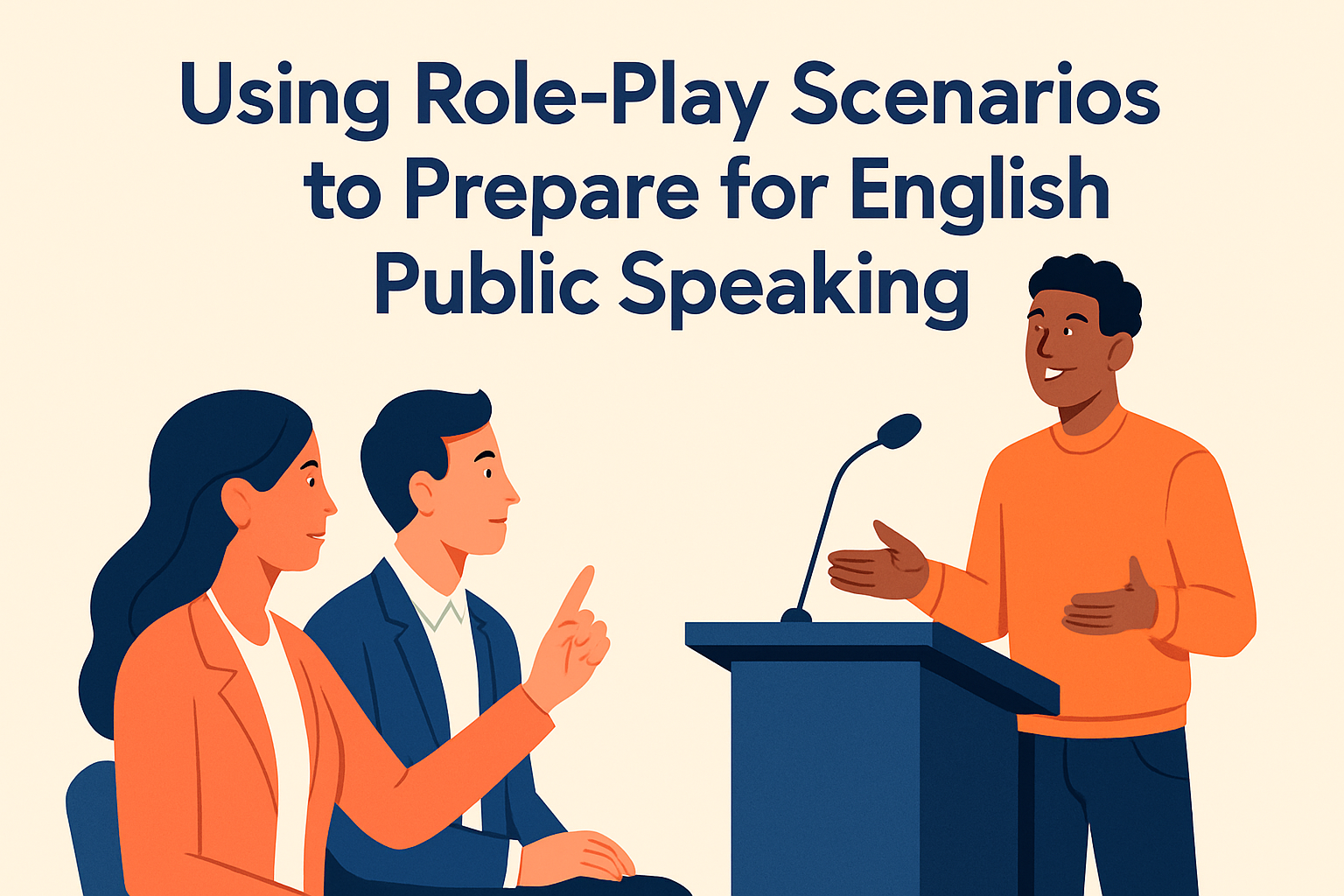
Introduction to Role-Playing in Public Speaking
Public speaking is a daunting task for many individuals, particularly for those who are not native English speakers. The fear of making mistakes, mispronouncing words, or failing to convey the intended message can inhibit one’s ability to speak confidently in public. Role-playing, an interactive method where individuals take on specific roles to simulate real-world scenarios, is an effective strategy to overcome these challenges. When applied to public speaking, it allows speakers to practice their delivery, adapt to different situations, and build their confidence.
The importance of role-playing in preparing for English public speaking cannot be overstated. It serves as a bridge between theoretical knowledge and practical application. Through role-play, speakers can experiment with various speech techniques, refine their language skills, and develop a more robust understanding of audience interaction—all within a risk-free environment. This approach is particularly beneficial for non-native speakers who must navigate the nuances of English pronunciation, grammar, and idiomatic expressions. By incorporating role-play into their preparation routine, speakers can significantly enhance their public speaking proficiency, leading to more effective communication and personal growth.
Role-Playing as a Tool for Building Confidence
One of the primary benefits of using role-playing in public speaking preparation is the boost in confidence it provides. Confidence is a key factor that influences a speaker’s ability to engage and persuade an audience effectively. By immersing themselves in various speaking scenarios, individuals can gradually overcome their fear of public speaking and develop the self-assurance needed to deliver impactful speeches.
Consider a case where a non-native English speaker, Maria, is tasked with giving a presentation at an international conference. Initially, Maria feels anxious and insecure about her English skills. However, by participating in role-play sessions, where she practices presenting in front of a mock audience, Maria is able to identify areas for improvement, receive constructive feedback, and gradually enhance her speaking abilities. Over time, these role-play scenarios help Maria build her confidence, enabling her to deliver her presentation with poise and clarity.
Through repeated practice in a supportive environment, role-playing allows speakers to confront their fears and gain the confidence needed to excel in real-world public speaking scenarios. By gradually increasing the complexity and diversity of the scenarios, individuals can broaden their comfort zone and become more adaptable speakers.
Enhancing Language Skills with Role-Playing
Role-playing is an excellent platform for improving language skills, particularly for individuals who are not native English speakers. It provides an opportunity to practice pronunciation, expand vocabulary, and improve grammar usage in a controlled environment, where mistakes can be corrected without judgment or pressure.
For example, a group of ESL students may engage in role-playing exercises where they simulate a business meeting, complete with introductions, discussions, and negotiations. These scenarios allow the students to practice using formal language, understanding idiomatic expressions, and responding to questions in English. To facilitate this, the instructor can emphasize the use of specific vocabulary and grammatical structures relevant to the scenario, encouraging students to integrate these elements into their speech.
By regularly participating in such role-play activities, ESL students can improve their language proficiency and become more confident in their ability to communicate effectively in English. They learn to navigate the complexities of the language, from pronunciation to syntax, ultimately leading to more articulate and impactful public speaking.
Simulating Real-World Scenarios
Role-playing enables the simulation of real-world scenarios, allowing speakers to practice responding to various situations they may encounter during public speaking engagements. This preparation equips them with the skills necessary to handle unexpected challenges and adapt their delivery in real-time.
Consider a corporate trainer who uses role-playing to prepare employees for client presentations. By recreating possible real-world scenarios such as technical difficulties, difficult audience questions, or time constraints, the trainer helps employees develop the ability to think on their feet and maintain composure under pressure. This experience enhances their problem-solving skills and ensures they are well-prepared for any eventuality during the actual presentation.
Role-playing not only prepares speakers for anticipated scenarios but also encourages them to strategize and respond to unforeseen circumstances effectively. By considering various outcomes and rehearsing appropriate reactions, speakers become more versatile and resilient, ensuring they can deliver their message with clarity and impact, regardless of the situation.
Developing Audience Interaction Skills
An essential aspect of public speaking is the ability to engage and connect with the audience. Role-playing offers a valuable opportunity to develop audience interaction skills, enabling speakers to build rapport and create a more engaging experience for listeners.
During role-play exercises, individuals can practice maintaining eye contact, using body language, and modulating their tone of voice to captivate the audience. For instance, a debate club may conduct role-play sessions where members take turns presenting arguments while others play the role of the audience, asking questions and providing feedback. This dynamic setting allows speakers to hone their ability to read audience cues, respond effectively, and adjust their presentation style accordingly.
By understanding the nuances of audience interaction through role-playing, speakers can cultivate a more natural and engaging presence on stage. They learn to connect with their audience on a deeper level, making their speeches not only informative but also memorable.
Role-Playing: A Comprehensive Approach to Public Speaking
The use of role-playing as a preparation tool for English public speaking is a comprehensive approach that integrates various elements of speech delivery, from language proficiency to audience engagement. By immersing themselves in diverse scenarios and practicing speaking skills in a supportive environment, individuals can significantly enhance their public speaking capabilities.
Below is an outline of a typical role-play session designed to improve public speaking skills:
- Introduction to the scenario and objectives
- Assignment of roles and preparation time
- Simulation of the scenario with audience interaction
- Feedback and discussion on strengths and areas for improvement
- Reflection on the experience and setting goals for future practice
This structured approach to role-playing ensures that speakers are well-prepared to address a range of public speaking challenges. By incorporating feedback and self-assessment into their practice routine, individuals can continuously refine their skills and develop into effective and confident speakers.
Conclusion: Embrace Role-Playing for Public Speaking Success
The practice of role-playing is an invaluable tool for individuals looking to improve their English public speaking abilities. By simulating real-world scenarios, building confidence, enhancing language skills, and developing audience interaction techniques, role-playing provides a comprehensive framework for preparing speakers for success.
The key takeaway from incorporating role-play into public speaking preparation is the opportunity it affords speakers to practice and refine their techniques in a supportive and risk-free environment. The insights gained through role-play empower individuals to grow as communicators, increasing their effectiveness and confidence in public speaking engagements.
If you’re seeking to enhance your public speaking skills, consider integrating role-playing into your practice routine. Start by identifying common scenarios you might encounter, gather a group of peers or join a public speaking club, and engage in role-play exercises that challenge and refine your abilities. By doing so, you’ll be well-equipped to deliver powerful and persuasive speeches that resonate with your audience.
Frequently Asked Questions
1. What are role-play scenarios, and how can they help with English public speaking?
Role-play scenarios are dynamic, interactive exercises that involve taking on specific roles to simulate real-life situations. These scenarios are particularly beneficial for preparing for English public speaking because they provide a safe space for practice. By immersing yourself in these scenarios, you actively engage in conversation and dialogue, which helps improve language skills, build confidence, and reduce anxiety. You get to practice your delivery, adapt to different audiences, and enhance your ability to think on your feet. Essentially, role-playing acts as a rehearsal for real-life public speaking events, allowing you to make mistakes, learn from them, and hone your speaking skills without the pressure of a live audience. It’s a powerful way to practice vocabulary, fluency, and expression, which are critical when speaking publicly in a non-native language.
2. How can I create effective role-play scenarios to improve my public speaking skills?
To create effective role-play scenarios, you should start by identifying specific speaking contexts you want to practice. These could be giving a presentation, speaking in a meeting, or delivering a speech at a public event. Once you have the context, outline the roles you or your peers will play. For instance, if simulating a business presentation, one person could be the presenter, while others take on roles such as challenging audience members or supportive team members. Develop a storyline or script that reflects realistic challenges and outcomes. Incorporate common challenges like time constraints, questions from the audience, or unexpected interruptions to make the scenario as realistic as possible. Additionally, it’s beneficial to set clear objectives for each role-play session, such as improving pronunciation, mastering technical vocabulary, or developing confidence. Use different scenarios regularly to keep the practice sessions diverse and comprehensive, thereby improving your adaptability in various public speaking situations.
3. What are some common challenges faced during role-playing, and how can they be overcome?
Common challenges include feeling self-conscious or awkward, difficulty staying in character, or focusing too heavily on mistakes rather than the learning process. To overcome these challenges, it’s important to create a supportive and non-judgmental environment where participants feel comfortable experimenting and making errors. Encourage a feedback culture where constructive criticism is shared positively. To stay in character, remind yourself of the learning goals and keep the scenarios as realistic as possible to maintain engagement. Practice regularly to build fluency and confidence over time. To avoid focusing excessively on mistakes, shift the focus towards gradual improvement and celebrate small wins. Feedback should focus on areas of improvement rather than dwelling on errors, helping to foster a growth mindset.
4. Can role-play scenarios be used effectively in both individual and group settings?
Absolutely! Role-play scenarios can be tailored to suit individual and group settings effectively. For individuals, role-play can involve self-assessment and peer feedback through recorded video practice or with a mentor acting as a mock audience. This individual approach allows for focused practice on specific aspects of public speaking like pronunciation, pacing, and body language. In group settings, multiple participants can play various roles, offering an opportunity to engage in dynamic dialogues and receive diverse forms of feedback from peers. Group scenarios can simulate more complex interactions, such as panel discussions or team meetings, and provide a range of perspectives and challenges, which are valuable for honing public speaking skills in a more holistic way. Both individual and group role-play sessions contribute to a well-rounded development of public speaking abilities.
5. How can I measure my progress and ensure continuous improvement in public speaking through role-play?
Measuring progress in public speaking through role-play can be done by setting specific, measurable goals and using various assessment methods. Start by defining what you want to achieve – whether it’s improved clarity, reduced filler words, or enhanced engagement with your audience. Regularly record your role-play sessions to objectively assess verbal and non-verbal communication skills. Reviewing these recordings allows you to track improvements and identify areas needing further practice. Additionally, seek feedback from peers, mentors, or language coaches who can offer constructive insights and point out both strengths and areas for growth. Keep a speaking journal to document your experiences, challenges faced, solutions implemented, and lessons learned from each session. Reflecting on this journey will help highlight your progress over time and motivate continuous learning. Remember, consistency is key, so integrate role-play sessions into your routine and adapt them to address any new challenges or objectives that arise as your skills develop.