

Catching a Cold
Vocabulary

cure (n,v)- something that makes you well after being sick
literally (adv)- really, actually, exactly
virus (n)- very, very small — that causes sickness
to get rid of (v)- to stop, to throw away
congestion (n)- stopped up (when your nose is congested you can’t breathe)
miserable (adj)- very terrible feeling
fever (n)- heat in your head and body
remedy– (n) cure, something that makes you well
liquid (n)- wet and runny like water, milk
to get over (v)- to finish
Many people catch a cold in the springtime and/ or fall. It makes us wonder… if scientists can send a man to the moon, why can’t they find a cure for the common cold. The answer is easy. There are literally hundreds of kinds cold viruses out there. You never know which one you will get, so there isn’t a cure for each one.
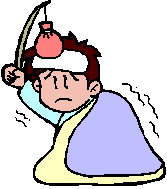
When a virus attacks your body, your body works hard to get rid of it. Blood rushes to your nose and brings congestion with it. You feel terrible because you can’t breathe well, but your body is actually “eating” the virus. Your temperature rises and you get a fever, but the heat of your body is killing the virus. You also have a runny nose to stop the virus from getting to your cells. You may feel miserable, but actually your wonderful body is doing everything it can to kill the cold.
Different people have different remedies for colds. In the United States and some other countries, for example, people might eat chicken soup to feel better. Some people take hot baths and drink warm liquids. Other people take medicines to stop the fever, congestion, and runny nose.
There is one interesting thing to note- some scientists say taking medicines when you have a cold is actually bad for you. The virus stays in you longer because your body doesn’t have a way to fight it and kill it. Bodies can do an amazing job on their own. There is a joke, however, on taking medicine when you have a cold. It goes like this:
If takes about 1 week to get over a cold if you don’t take medicine, but only 7 days to get over a cold if you take medicine.

Practice Quiz on Catching a Cold
To reinforce your understanding of the common cold, try this practice quiz. It features 7 questions that cover key aspects of how colds are transmitted, symptoms, prevention, and treatment. Assessing your knowledge through these questions will help solidify the information and prepare you for practical application in everyday life.
Check Your Understanding
True or False
1. There is a cure for the common cold.
True or False
2. There are 22 different cold viruses in the world.
True or False
3. Heat in your body kills viruses.
True or False
4. Congestion means your head feels hot.
True or False
5. Some people eat chicken soup to feel better when they have a cold.
True or False
6. Scientists always think taking medicine is good when you have a cold.
True or False
7. Bodies work hard to try to get rid of viruses.
True or False
Frequently Asked Questions about Catching a Cold
A cold is primarily caused by rhinoviruses that infect the upper respiratory tract. Other viruses like coronaviruses and respiratory syncytial virus can also cause colds. Transmission occurs through airborne droplets or by touching contaminated surfaces and then touching the face.
Preventing a cold involves practicing good hygiene. Regularly washing hands, avoiding close contact with people who are sick, and not touching your face with unwashed hands can significantly reduce the risk of contracting a cold.
No, antibiotics do not work against viruses, including those that cause colds. They are only effective against bacterial infections. Managing a cold involves rest, hydration, and over-the-counter remedies to alleviate symptoms.
A cold is most contagious during the first 3 to 4 days after symptoms appear, but it can sometimes remain contagious for up to two weeks. It’s important to stay home and avoid close contact with others during this time to prevent spreading the virus.
Cold weather itself does not cause a cold, but the viruses that cause colds tend to spread more easily in lower humidity, which is common during colder months. Additionally, people tend to spend more time indoors in close contact with others, which can increase the spread of viruses.
Answer Key:
- F
- F
- T
- F
- T
- F
- T