
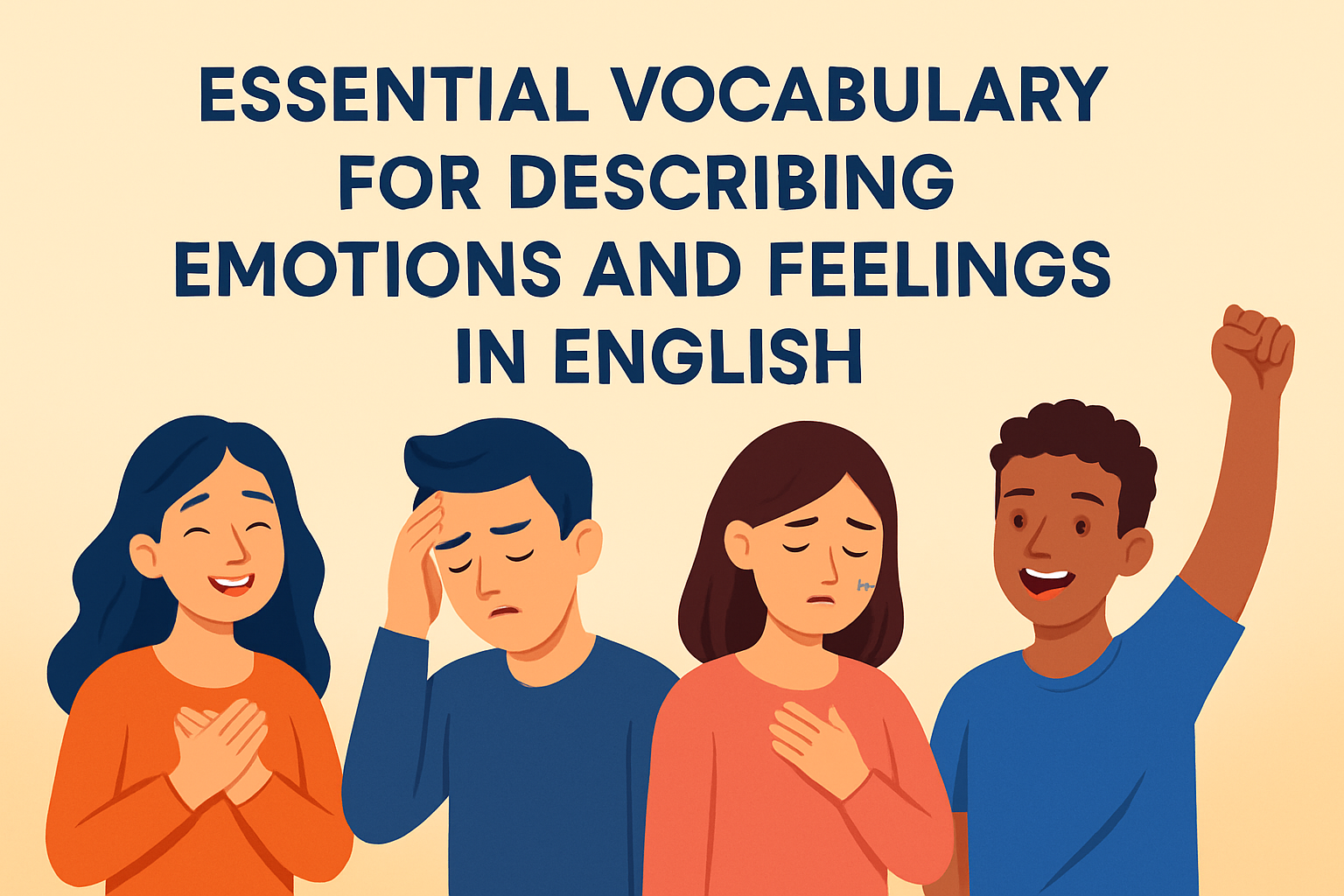
Emotions and feelings are an integral part of human life, weaving into every interaction, decision, and moment. Understanding, expressing, and interpreting emotions are essential skills for communication and empathy. English, a rich and nuanced language, offers an expansive vocabulary to describe an array of emotions. Grasping this vocabulary is crucial because it allows individuals to articulate their sentiments accurately, fostering better interpersonal relationships and enhancing self-awareness.
We often encounter situations where we want to express how we feel, whether it’s joy, anger, sadness, or any other emotion. However, without the right vocabulary, these expressions might fall short, leading to misunderstandings. By expanding our emotional vocabulary, we can communicate more effectively. This article explores the intricacies of describing emotions and feelings in English, offering you a guide to better express and understand the human experience.
Understanding Basic Emotions
Basic emotions are the foundational feelings that most people are familiar with. These include happiness, sadness, anger, fear, surprise, and disgust. Recognizing and naming these emotions is the first step in understanding the more complex web of human emotions. For example, happiness, an emotion characterized by feelings of joy, contentment, and satisfaction, is widely recognized worldwide.
Imagine you’re celebrating a friend’s birthday. The feeling of joy you experience when you see them smile and enjoy their time is a perfect example of happiness. Similarly, sadness is an emotional response to loss or disappointment. A common situation might be the feeling you have when you hear bad news or when things don’t go as planned. An understanding of these basic emotions paves the way for exploring and articulating more intricate emotional states.
The Nuances of Complex Emotions
Complex emotions are combinations of basic emotions, often molded by personal experiences, cultural context, and individual psychological make-up. For instance, the feeling of jealousy might be a mix of anger, fear, and sadness. When your colleague gets the promotion you were hoping for, you might find yourself feeling not just one emotion, but a complex mesh of envy and insecurity.
Embarrassment is another complex emotion. It often arises from social situations where you feel exposed or self-conscious. Perhaps you trip in front of your classmates; the immediate flush of heat and desire to hide is a mix of shame and discomfort. These complex emotions require a more nuanced vocabulary to articulate clearly and accurately.
Visualizing Emotions with a Simple Table
| Emotion | Basic Description | Example Situation |
|---|---|---|
| Happiness | Joy, contentment | Receiving a compliment |
| Sadness | Despair, sorrow | Experiencing a breakup |
| Anger | Irritation, fury | Being cut off in traffic |
| Fear | Anxiety, worry | Facing a spider |
| Surprise | Astonishment, shock | Browsing through old photos |
| Disgust | Revulsion, offense | Tasting spoiled milk |
Contextual Use of Emotional Vocabulary
Words are merely sounds or markings without context. How these words are used to describe emotions can significantly alter their meaning. Consider the word “bitter.” In a conversation about food, it might refer to taste, but in the realm of emotions, it conveys a deep-seated resentment or unhappiness.
For instance, the statement “He spoke with bitterness” suggests that the individual holds onto a sense of grievance or remorse. On the other hand, a phrase like “She felt a bitter relief” juxtaposes two seemingly opposing emotions, indicating a complex emotional state. Hence, understanding context enhances the precision with which we can express emotions.
Expressions and Idioms for Emotions
Idioms and expressions provide colorful and relatable ways to convey emotions. English is replete with expressions that capture the essence of what a person feels, oftentimes more vividly than direct descriptions. Consider the phrase “walking on air.” This idiom is used to describe a state of bliss or happiness, painting a clear picture of someone buoyant with joy.
Another common idiom is “crying over spilled milk,” which suggests feelings of regret and inconsolable sadness over something that cannot be changed. Utilizing idioms adds depth to emotional communication and can convey subtleties that straightforward vocabulary might miss.
- “Walking on air” – Extreme happiness or elation.
- “On cloud nine” – Blissfully happy.
- “Green with envy” – Deep envy or jealousy.
- “Frozen with fear” – Immobilized by fear.
- “A bitter pill to swallow” – An unpleasant truth.
Developing Emotional Intelligence Through Vocabulary
Emotional intelligence (EQ) refers to the ability to understand and manage your emotions and those of the people around you. A rich emotional vocabulary directly contributes to a higher EQ by allowing more precise communication and self-reflection.
An individual adept at describing emotions might say, “I feel overwhelmed with excitement and slight apprehension about my new job.” This explicit articulation showcases a higher level of self-awareness. It contrasts with a less skilled communicant who might simply state, “I’m feeling mixed about my job.” Enhanced emotional vocabulary fosters greater introspection and empathetic connections.
Expanding Your Emotional Vocabulary
Increasing one’s emotional vocabulary requires conscious effort and practice. It involves being more observant of personal emotions and those of others. Reading diverse genres, maintaining a journal of personal feelings, and engaging in discussions are practical steps toward this end.
For instance, try keeping a diary where you write down daily experiences and the associated emotions. Instead of writing “I felt bad,” delve deeper: “I felt anxious and regretted not preparing enough for the presentation.” Building this habit not only improves vocabulary but also enhances emotional awareness.
The Impact of Culture on Emotional Expression
Cultural background significantly affects how emotions are perceived and expressed. Certain cultures adopt a more reserved method of showcasing emotions, while others may be more open and explicit. For example, in Japanese culture, openly expressing emotions like anger is often discouraged.
Conversely, in Mediterranean cultures, showing emotions more openly is typically accepted. This cultural disparity highlights the importance of understanding cultural context when expanding and using your emotional vocabulary. Being culturally aware enriches communication and prevents misinterpretations.
Conclusion: Embracing Emotional Vocabulary for Better Communication
Harnessing a robust vocabulary to describe emotions and feelings benefits both personal and social communication. This understanding aids in self-expression, fostering deeper connections and empathy. Knowing the right words to articulate our emotions clarifies our interactions, ensuring feelings are conveyed accurately and misunderstandings are minimized.
By integrating this knowledge into daily life, you pave the way for more meaningful and empathetic experiences. Take time to learn new emotional vocabulary, reflect on personal feelings, and understand cultural contexts. As you continue to explore this realm, you’ll find not only an increase in your vocabulary but also an enrichment of your emotional intelligence.
Start today by observing your emotions and articulating them with precision in your conversations. You’ll discover a new level of communication that enhances personal insight and interpersonal relationships. The journey towards improved emotional expression is ongoing and rewarding for everyone willing to embark on it.
Frequently Asked Questions
1. Why is it important to have a rich vocabulary for describing emotions and feelings in English?
Having a rich vocabulary for describing emotions and feelings is crucial because it enhances our ability to communicate clearly and empathetically. When we can precisely articulate our emotions, we can convey our thoughts and experiences more effectively. This specificity helps in avoiding misunderstandings in everyday conversations and in professional environments. Furthermore, a richer vocabulary allows individuals to connect more deeply with others, as it enables them to express not only what they are feeling but also the intensity and nuances of those feelings, which can foster better understanding and stronger relationships. Additionally, understanding a wide range of emotional vocabulary can aid in interpreting the emotions of others, thereby strengthening empathy and emotional intelligence.
2. What are some examples of essential vocabulary for describing positive emotions in English?
When describing positive emotions, English offers numerous words that help capture the multitude of pleasant feelings one might experience. Examples include “joy,” which signifies a deep sense of happiness and delight; “exhilaration,” which refers to a state of extreme joy and excitement; and “contentment,” which describes a state of satisfaction and peaceful happiness. Other terms like “euphoria” indicate an intense, often overwhelming sense of happiness, while “gratitude” reflects a deep appreciation for kindness or favors received. Terms like “serenity” or “tranquility” describe peaceful, calm states associated with positive experiences. Using these terms, individuals can describe their emotional experiences more vividly and accurately, allowing for more meaningful interactions and self-reflection.
3. How can expanding one’s vocabulary for negative emotions be beneficial?
Expanding one’s vocabulary for negative emotions is beneficial because it allows for more precise expression and better psychological understanding. Recognizing and articulating negative emotions like “frustration,” “anxiety,” “despair,” or “resentment” can be incredibly empowering. It often enables individuals to process these emotions more effectively and communicate their needs or seek support from others. For instance, distinguishing between “irritation,” a mild annoyance, and “rage,” an intense form of anger, helps others understand the situation’s severity and respond appropriately. Moreover, accurately identifying emotions can aid in emotional regulation, helping individuals develop strategies to cope with and navigate their feelings more constructively. This enhanced self-awareness and expression supports healthier emotional management and promotes mental well-being.
4. Are there any cultural considerations when using emotional vocabulary in English?
Yes, cultural considerations play a significant role in using emotional vocabulary in English. Different cultures may have varied norms about which emotions are commonly expressed, how, and in what contexts. For instance, in some cultures, openly expressing emotions like anger or sadness might be considered impolite or inappropriate, while in others, it might be encouraged as a sign of authenticity and personal strength. Additionally, certain emotional terms may have cultural connotations or significance that differ from their literal meanings. Understanding these cultural nuances is essential for effective communication, especially in multicultural settings, as it helps prevent misinterpretations and fosters respectful, considerate interactions. Being aware of these differences helps individuals tailor their language to fit the social and cultural expectations of their audience, promoting more harmonious relationships.
5. What strategies can help improve one’s emotional vocabulary in English?
Improving one’s emotional vocabulary in English involves several strategies. One effective method is reading a variety of materials, such as literature, articles, and even poetry, to encounter new words and contexts for different emotions. Keeping an emotional dictionary or journal where you note down new words, their meanings, and examples of how to use them can also be beneficial. Engaging in discussions and conversations about emotions with others can help solidify understanding and practice using new vocabulary. Additionally, watching films, dramas, or interviews can expose you to how emotions are expressed in different contexts. Reflecting on personal experiences and trying to describe them in detail is a practical way to apply vocabulary actively. Finally, using language learning apps or participating in language workshops can offer structured learning focused on expanding vocabulary skills. These strategies combined can significantly enhance one’s ability to express and comprehend a wide array of emotions in English.





