
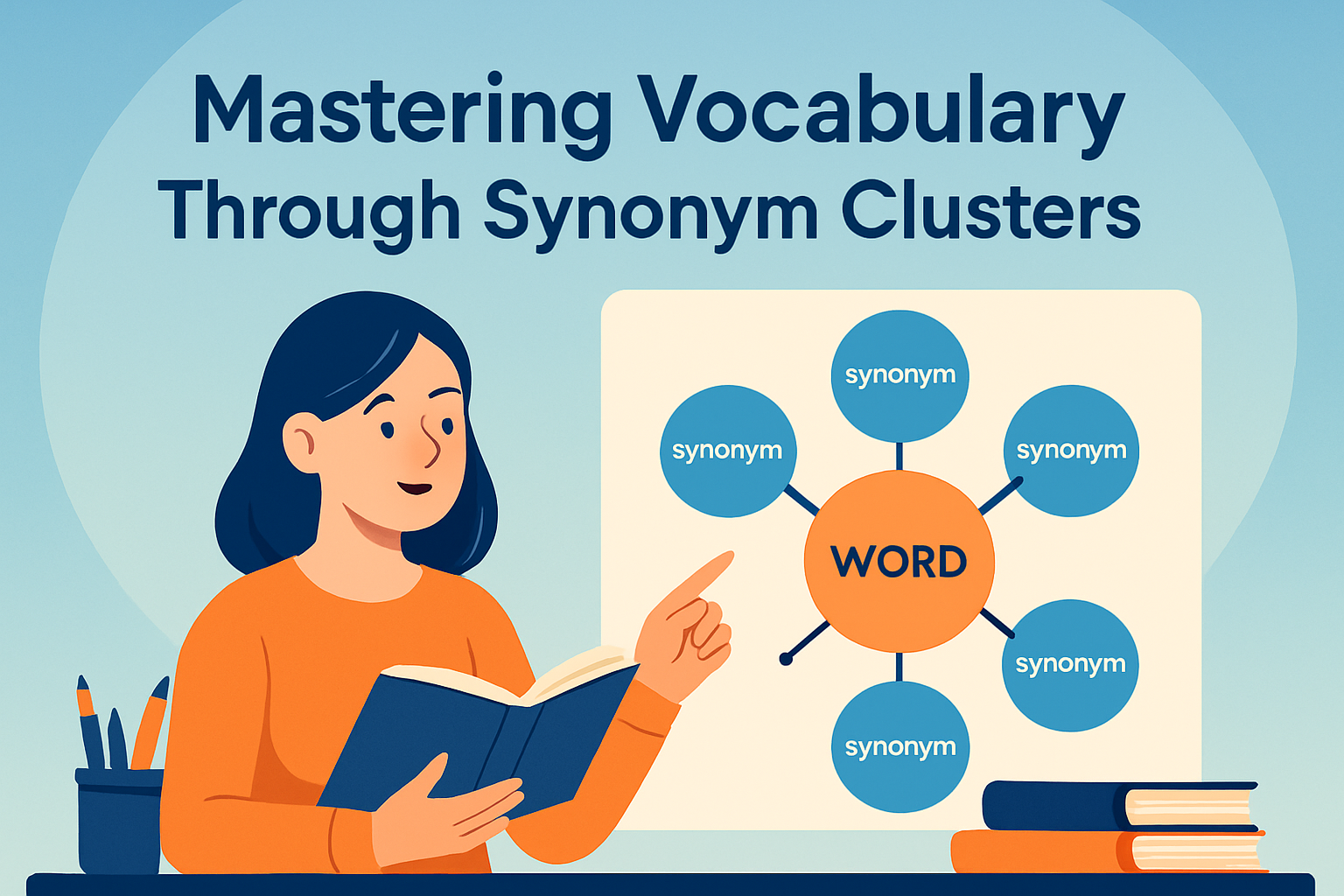
Language is the cornerstone of communication, a key to understanding one another. Within this realm, vocabulary plays a pivotal role. But vocabulary is more than just a collection of words; it embodies the nuances of expression and comprehension. Enhancing this vital component can be achieved through various means, one of which is through the study of synonym clusters. But what exactly is a synonym cluster? Simply put, it’s a collection of words with similar or related meanings. These clusters help us understand the subtle differences between words, enabling us to use language more effectively and expressively.
The significance of mastering vocabulary through synonym clusters extends beyond personal growth; it permeates professional and academic success. An enriched vocabulary aids in articulating ideas with clarity, precision, and engagement. Whether you’re writing an email, crafting a presentation, or simply chatting with friends, using the right words can make all the difference. Additionally, a robust vocabulary enhances comprehension skills, making reading more enjoyable and less of a chore. Given its importance, delving into the realm of synonym clusters can be a pathway to not just learning new words, but mastering them.
The Concept and Structure of Synonym Clusters
Synonym clusters are more than a mere list of words; they are structured groups where each word holds its unique significance and context. Take, for example, the word “happy.” While it’s a common emotion, we often use words like “joyful,” “elated,” “ecstatic,” and “pleased” interchangeably. However, each of these words represents a different degree and type of happiness. Understanding these differences is essential for accurate expression.
Let’s examine a real-world example to shed light on this: consider you are writing a formal thank you letter for a gift. Using “delighted” as opposed to “pleased” conveys a sense of deeper appreciation and excitement toward the gesture. Both convey positive emotions but understanding the nuanced preference enhances the meaning and impact of your appreciation.
The Benefits of Synonym Clusters in Writing and Communication
When writing or speaking, choosing the right word from a synonym cluster can prevent ambiguity and misinterpretation. For instance, if you’re drafting a report and need to describe a process, the words “efficient,” “effective,” and “productive” might come to mind. While all are positive, they highlight different aspects; “efficient” indicates minimal resource use, “effective” pertains to achieving the desired outcome, and “productive” relates to output quantity.
Consider the professional setting of a business meeting. Your ability to articulate thoughts using precise vocabulary can influence not only how you are perceived but also how your ideas are received. Let’s visualize this in a structured way:
| Word | Context | Example |
|---|---|---|
| Efficient | Resource management | The new system is efficient in reducing overhead costs. |
| Effective | Outcome achievement | Our strategy was effective in gaining market share. |
| Productive | Output level | Team meetings have become more productive over time. |
Linguistic Awareness and Cognitive Benefits
Exploring synonym clusters not only polishes your vocabulary but sharpens your cognitive abilities. It encourages critical thinking, as you assess situations to determine the most fitting words. This exercise enhances linguistic awareness, providing a nuanced understanding of language and helping you to appreciate literature, communication, and media at a deeper level.
In addition to cognitive enhancement, mastery in vocabulary through synonym clusters supports language learners. For individuals learning a second language, understanding these clusters is particularly beneficial. It aids in avoiding direct translations that often lead to misinterpretations, and instead fosters a deeper understanding of language in context.
Practical Methods to Learn Synonym Clusters
The path toward mastering vocabulary through synonym clusters can be paved with strategic methods. One effective approach is the practice of contextual learning. Engage with diverse reading materials such as literature, news articles, and academic journals. Not only will this expose you to a variety of words, but it will also help you see how words from synonym clusters are used in context.
Using an organized vocabulary notebook is another method. By clustering synonyms and noting definitions and usage, you create a personal glossary. This visualization enhances memory retention and provides a practical reference tool. Additionally, leveraging language apps and websites can aid this endeavor, offering exercises and games focused on synonym clusters.
Synonym Clusters in Everyday Conversations
Beyond academic and professional settings, synonym clusters enrich daily interactions. They’re tools for storytelling, humor, and even debate. Consider the simple phrase “angry.” Depending on the context, you might opt for “irritated” when describing mild annoyance, or “furious” for an intense emotion.
By choosing words that more accurately reflect your emotions and experiences, you enhance communication efficacy. You’re not only understood but heard in the way you intend. In friendships, relationships, and even social media interactions, mastering synonym clusters leads to more authentic and impactful exchanges. Here’s a list showcasing the variety in emotional expression:
- Irritated: a mild state of annoyance, often temporary.
- Annoyed: a slightly stronger expression, usually toward a repeated action.
- Frustrated: suggests being hindered in achieving a goal.
- Furious: indicates an intense, boiling over of anger.
Challenges and Overcoming Them
While synonym clusters offer immense benefits, mastering them isn’t without challenges. One major hurdle is context ambiguity. Not all synonyms are perfectly interchangeable, and using the wrong word can lead to confusion. To overcome this, immerse yourself in vocabulary practice, focusing on context clues found in sentences and paragraphs.
Another challenge is retention. Learning numerous words from clusters can be daunting. Techniques such as repetition, mnemonic devices, and active usage in writing and conversation can mitigate this issue. Consider setting small, attainable goals, such as learning one new synonym cluster weekly, to maintain steady progress without overwhelming yourself.
Summary and Call-to-Action
Mastering vocabulary through synonym clusters not only enhances your language skills but also empowers your communication across various platforms and contexts. This technique aids in the precise articulation of thoughts, bolsters cognitive faculties, and enriches relationships through deeper understanding and connection. By implementing practical strategies, such as engaging with diverse reading materials, utilizing organized vocabulary tools, and practicing synonyms in ordinary conversations, you embark on a journey of constant linguistic adaptation and growth.
The next step in your linguistic mastery is simple: choose a synonym cluster each week to explore. Immerse yourself in its context and contrast the nuances of each word. Experiment with these words in your writing and speech to solidify your understanding. The power to master vocabulary and thus optimize communication lies within your grasp.
Frequently Asked Questions
1. What is a synonym cluster and how can it improve my vocabulary?
Great question! A synonym cluster is essentially a group of words that share similar or related meanings. Think of it as a family of words, where each member carries its own unique shade of meaning but relates to a central concept. For instance, consider the cluster for the word “happy”: joyful, cheerful, elated, content, jubilant, etc. By familiarizing yourself with synonym clusters, you’re not just expanding your vocabulary; you’re gaining a deeper understanding of each word’s nuanced meaning. It’s like having a toolbox full of different-sized wrenches; each one serves a particular purpose but is related to the others. Using synonym clusters allows you to express yourself more precisely, tailor your message to your audience more effectively, and enhance your comprehension when reading or listening. It’s about lifting your communication skills to a whole new level.
2. How can I incorporate synonym clusters into my daily learning routine?
Integrating synonym clusters into your daily routine can be quite rewarding and enjoyable, and there are numerous ways to do it. One approach is to maintain a journal where you record newly encountered words, complete with their synonym families. You can organize your entries by theme, such as emotions, actions, or descriptive terms for more systematic learning. Another method is to incorporate synonym clusters into your reading habits. As you read, pick out a word you’re interested in, then challenge yourself to list its synonyms. There are also various apps and websites dedicated to vocabulary building; many of them feature tools or games that focus on synonyms. And don’t forget the classic flashcard technique! Create flashcards that feature a word on one side and its synonym cluster on the other. The key here is consistency; make it a habit to revisit and expand your synonym clusters regularly, and you’ll see a noticeable enhancement in your language skills.
3. Is it beneficial to learn obsolete or rarely used synonyms in a cluster?
Absolutely, diving into words that are not frequently used can be surprisingly advantageous. When you explore obsolete or lesser-known synonyms, you’re engaging with the rich tapestry of language history. It kind of feels like discovering hidden treasures because these words often carry specific connotations or cultural significance that can enrich your vocabulary arsenal. Especially in literary contexts or advanced writing, using an unusual synonym can catch your reader’s attention and add stylistic flair to your expression. That said, it’s important to balance your learning with practical usage. Focus on commonly used synonyms for everyday conversations and sprinkle in rare or archaic words when they can add depth or stylistic value. In any case, each word learned is a step forward in mastering language nuances.
4. Can the use of synonym clusters improve my writing skills?
Without a doubt! Incorporating synonym clusters into your writing has several powerful effects. First and foremost, it helps avoid redundancy. Instead of repetitively using the same word, you have a repertoire of choices at your disposal to convey the same idea but with variances that can speak volumes. For example, instead of the overused “very important,” you might substitute “crucial” or “paramount,” each offering a slightly different emphasis. Moreover, knowing diverse synonyms enhances the richness and texture of your writing. It allows for more expressive and engaging content that can capture your reader’s interest. Your writing becomes like a well-orchestrated musical piece, where every note, or word, is thoughtfully selected for maximum impact. Overall, synonym clusters enable you to refine your voice, articulate thoughts more dynamically, and tailor your writing to different contexts and audiences.
5. Are there any challenges to using synonym clusters effectively?
While synonym clusters are incredibly beneficial, there are some pitfalls to be mindful of. The primary challenge lies in selecting the appropriate synonym for your context. Words within a cluster are not always interchangeable. Each synonym carries its own connotations, historical usage, and subtle differences in meaning. Take, for instance, the word “big.” Its synonyms might include “large,” “huge,” “vast,” “immense,” and “colossal.” While related, “colossal” might imply an aspect of monumental size that “large” does not. Misusing these can lead to confusion or an unintended tone in your communication. It’s crucial to deepen your understanding of each word by considering its synonym cluster in context. Reading widely and actively observing how words are used in different mediums can help mitigate this challenge. Always consider the nuances and aim for precision, and over time, choosing the right synonym will become second nature.





