
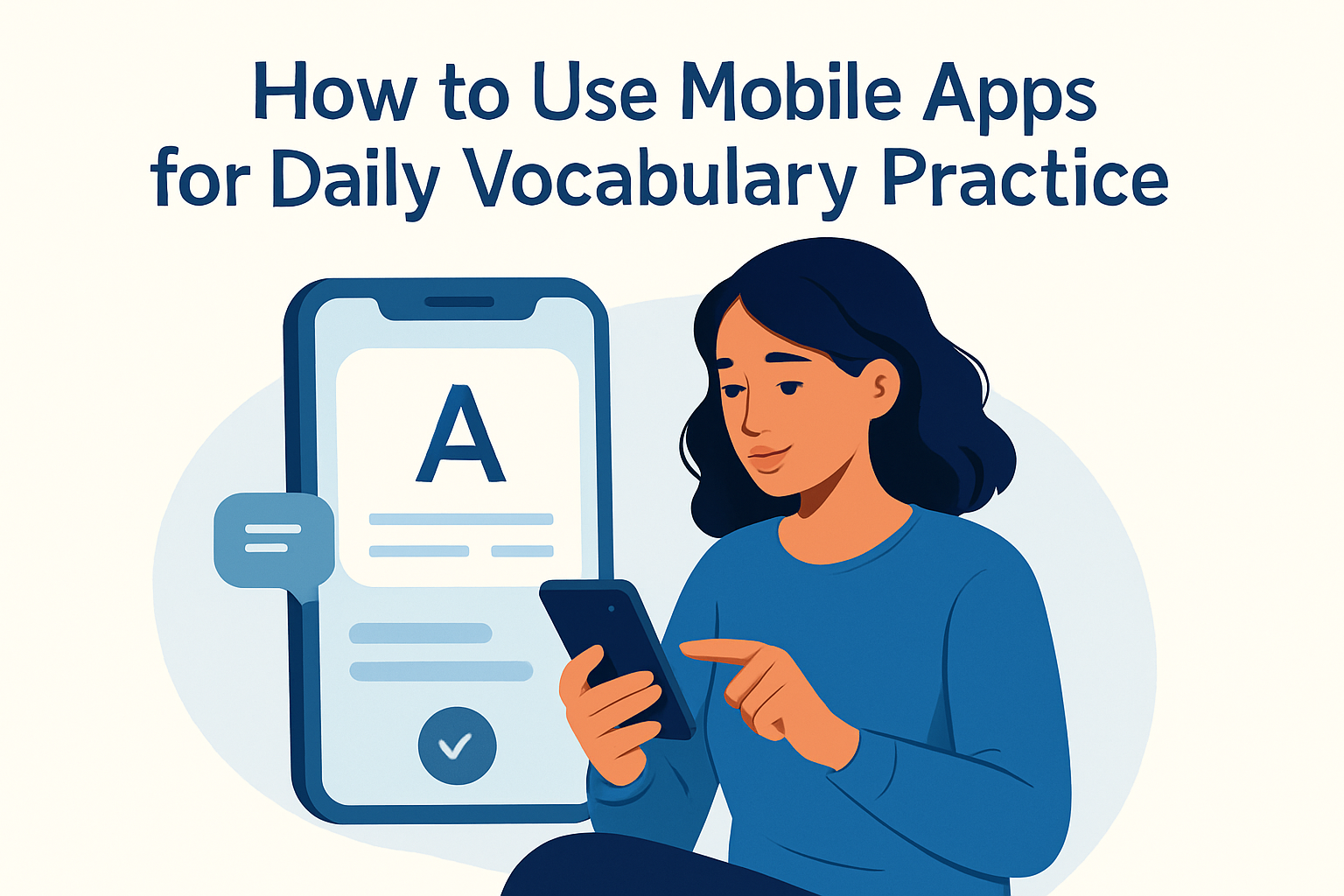
In the rapidly evolving digital era, learning a new language or expanding one’s vocabulary has become progressively more accessible and engaging. Mobile apps for daily vocabulary practice have emerged as an essential tool for language learners and enthusiasts alike, providing a convenient platform for continuous learning. These applications offer an interactive and user-friendly way to incorporate vocabulary building into your daily routine, transforming mundane language learning sessions into interesting and productive experiences.
The significance of vocabulary in language proficiency cannot be overstated. Vocabulary forms the building blocks of communication and plays a crucial role in fluency. It encompasses the words we must know to communicate effectively, both in speech and writing. By expanding your vocabulary, you not only enhance your ability to understand new topics but also improve your confidence and credibility in communication. Mobile apps allow you to strengthen this fundamental component in a structured, customizable, and engaging manner.
The ubiquity of smartphones has revolutionized our access to education. Unlike traditional methods, vocabulary apps provide immediate feedback, adaptability, and gamification elements, creating a personalized learning path that caters to individual needs. The convenience and flexibility offered by these apps motivate learners to practice regularly, which is paramount for vocabulary retention. As such, understanding how to effectively use mobile apps for vocabulary practice can be transformative, contributing significantly to personal development and self-improvement.
Choosing the Right Mobile App
Selecting an app that aligns with your learning objectives and style is a critical step toward successful vocabulary practice. There are numerous apps available catering to different needs, whether it’s industry-specific terminology or general language proficiency. Some popular ones include Duolingo, Memrise, and Anki, each with unique features and benefits.
For instance, Duolingo offers game-like lessons that focus not only on vocabulary but also on grammar and pronunciation. Users earn points and progress to higher levels as they practice, which provides motivation through competition and achievement recognition. On the other hand, Anki uses a spaced repetition system to ensure long-term retention of vocabulary, making it particularly useful for learners who need to memorize a large volume of new words adeptly.
Before committing to an app, consider the interface design, the exercises’ variety, and user reviews to ensure the application complements your learning habits. Test multiple apps, if possible, to determine which one feels the most intuitive and effective for you.
Incorporating Vocabulary Practice into Your Daily Routine
Once you have selected the appropriate app, integrating vocabulary practice into your daily schedule is essential to maximize learning outcomes. Consistency is key; set aside specific time slots each day dedicated to using the app, whether during your commute, in your lunch break, or before bedtime. The flexibility of mobile apps means they can seamlessly fit into your lifestyle.
For practical incorporation, consider the Pomodoro Technique, which involves practicing in short, focused intervals with breaks. This method not only boosts concentration but also helps prevent burnout. For example, you might engage in a 25-minute session of vocabulary exercises followed by a five-minute rest, thus maintaining a productive and sustainable practice routine.
Beyond daily dedicated practice times, try to integrate the new vocabulary into your daily life. Use new words in conversations, write them in journal entries, or even set up word-of-the-day challenges. This approach reinforces what you learn on the app and promotes natural language use.
Utilizing Technology Features for Enhanced Learning
Mobile vocabulary apps often come equipped with technologically advanced features designed to enhance the learning experience. These features can significantly augment your knowledge absorption and engagement.
For example, many apps incorporate artificial intelligence algorithms to create personalized learning plans. The apps monitor your progress and adapt the difficulty of exercises based on your performance, ensuring the material remains challenging but not overwhelming. This adaptive learning enhances efficiency by focusing practice on areas where improvement is needed most.
- Gamification: Apps use elements like points, badges, and leaderboards to drive motivation.
- Progress Tracking: Detailed analytics of your performance help you visualize improvements.
- Voice Recognition: Speech-based exercises validate pronunciation and reinforce listening skills.
By leveraging these cutting-edge features, you can enhance your learning retention, engagement, and overall enjoyment, making vocabulary practice an integral part of your daily routine.
Measuring Learning Progress and Adjusting Goals
Tracking your vocabulary improvement and adjusting learning goals accordingly is crucial for maintaining motivation and measuring effectiveness. Most vocabulary apps come with built-in tracking systems that provide insights into your progress through statistics and milestones.
For instance, apps like Memrise display a progress bar, showing how much vocabulary you’ve learned over a specific period. Using these insights, you can adjust your learning goals to ensure they remain realistic and achievable. If you find your progress stagnating, reassessing your objectives or approach can help reignite your motivation.
Being mindful of your pace helps sustain long-term learning commitment. Consistent goal reassessment prevents feelings of overwhelm and burnout, making it easier to see tangible benefits from your efforts. Keep challenging yourself, but allow room for flexibility to adapt your practice to life’s ever-changing dynamics.
Considering Real-World Applications of Improved Vocabulary
Beyond academic achievement, expanding your vocabulary through mobile apps can have significant real-world implications. A robust vocabulary enriches communication in professional settings, enhances writing skills, and boosts cognitive abilities, such as memory and creativity.
Take, for example, when applying for jobs. A well-developed vocabulary enables precise and persuasive expression during interviews and in written applications, increasing your chances of success. Similarly, in social contexts, using varied and rich vocabulary enhances your ability to engage in meaningful conversations, fostering better relationships.
| Real-World Benefit | Application |
|---|---|
| Professional Communication | Impresses colleagues, clear expression in presentations |
| Academic Excellence | Improved essay writing and reading comprehension |
| Cultural Enrichment | Better understanding when traveling or reading literature |
Linking vocabulary practice through mobile apps to these tangible benefits can act as a powerful motivator, reinforcing the value of your learning journey and its impact on your everyday life.
Summary: Maximizing Vocabulary Practice using Mobile Apps
Mobile apps have revolutionized the way we approach vocabulary learning, offering unparalleled convenience and flexibility. By selecting the right app and integrating it into your daily routine, you can achieve a consistent practice that supports language proficiency and expands your verbal repertoire.
Harnessing advanced technological features within these apps enhances engagement and retention while regular tracking and goal setting ensure you remain on the path of improvement. Remember, the true value of an enriched vocabulary extends beyond mere academic prowess; it equips you for success in various real-world scenarios, from professional advancement to personal growth.
As you embark on this learning journey, let these apps guide you towards a more articulate and expressive future. Dedicate time to this practice regularly, explore the different functionalities that each app offers, and take notice of the transformations in your communication skills. Start today, and let language empowerment redefine your approach to learning and interaction.
To begin your vocabulary enhancement adventure, download a recommended app and schedule your first session. Consistent practice, coupled with the effective use of these digital resources, promises a marked improvement in your language proficiency, opening new doors and opportunities in personal and professional domains alike.
Frequently Asked Questions
1. How can mobile apps improve my daily vocabulary practice?
Mobile apps can significantly enhance your daily vocabulary practice by offering a structured yet flexible approach to learning new words. These apps are designed with interactive features such as quizzes, flashcards, and games that make learning fun and engaging. With the convenience of having your learning tool on your smartphone, you can practice anytime and anywhere, transforming your idle time into productive brain workouts. Most apps also tailor vocabulary exercises based on your proficiency level, ensuring you’re always challenged but not overwhelmed. Additionally, many apps include audio pronunciation features that help improve your pronunciation, making it easier to remember and use new vocabulary in conversations. By tracking your progress over time, these apps provide insights into areas where you excel and those requiring more attention, enabling you to customize your learning path.
2. What features should I look for in a vocabulary app for effective learning?
When selecting a vocabulary app, look for features that align with your learning style and goals. An effective app should offer a range of tools like customizable flashcards, spaced repetition algorithms for improved retention, and various types of exercises to cater to different learning preferences. Consider apps that include audio pronunciations by native speakers, as this helps with the correct pronunciation and understanding of context. Interactive elements such as quizzes and games can make learning more enjoyable and engaging, which is key to maintaining consistency. Some apps offer the ability to create personalized vocabulary lists, enabling you to focus on words relevant to your interests. Look for apps with analytics or progress tracking to monitor your development and identify areas for improvement over time.
3. How do spaced repetition systems in vocabulary apps work?
Spaced repetition systems (SRS) are a cornerstone feature of many vocabulary apps that capitalize on the psychological spacing effect. SRS algorithms schedule the review of vocabulary items at increasing intervals based on your ability to recall them. Words you find difficult are presented more frequently, while those you remember effortlessly are spaced further apart. This technique helps transfer knowledge from short-term to long-term memory by reinforcing your recall just before you’re likely to forget it. Over time, this method optimizes learning efficiency and helps prevent the cramming of information. By using spaced repetition, your vocabulary practice becomes more strategic, ensuring sustained fluency and retention of the words learned.
4. Are there vocabulary apps suitable for all language proficiency levels?
Absolutely, many vocabulary apps are designed to cater to a wide range of proficiency levels, from beginners to advanced learners. These apps often categorize vocabulary according to difficulty, allowing users to progress at their own pace. For beginners, the focus might be on basic words and phrases, gradually introducing more complex vocabulary as the user’s ability increases. Intermediate learners might find features like contextual examples or idiomatic expressions valuable, helping them to understand how words are used in everyday language. Advanced learners can benefit from specialized content, such as industry-specific jargon or less common vocabulary. Look for apps that offer assessments or placement tests to determine your starting level and provide customized learning paths that suit your specific needs.
5. How often should I use vocabulary apps to see significant improvement?
Consistency is key to making significant vocabulary improvements with mobile apps. Ideally, you should aim to engage with the app daily, even if it’s just for a short period, like 10-15 minutes. The frequency of practice is often more important than the duration, as regular exposure reinforces learning and aids retention. Setting specific goals, such as learning a certain number of new words each week, can help maintain motivation and focus. Integrating app usage into your daily routine, such as during commutes or while waiting, ensures that practice becomes a habitual part of your day. Additionally, many apps allow for intermittent practice sessions, enabling you to fit learning around other responsibilities seamlessly. Over time, consistent, daily practice will lead to noticeable improvements in vocabulary and language skills.





