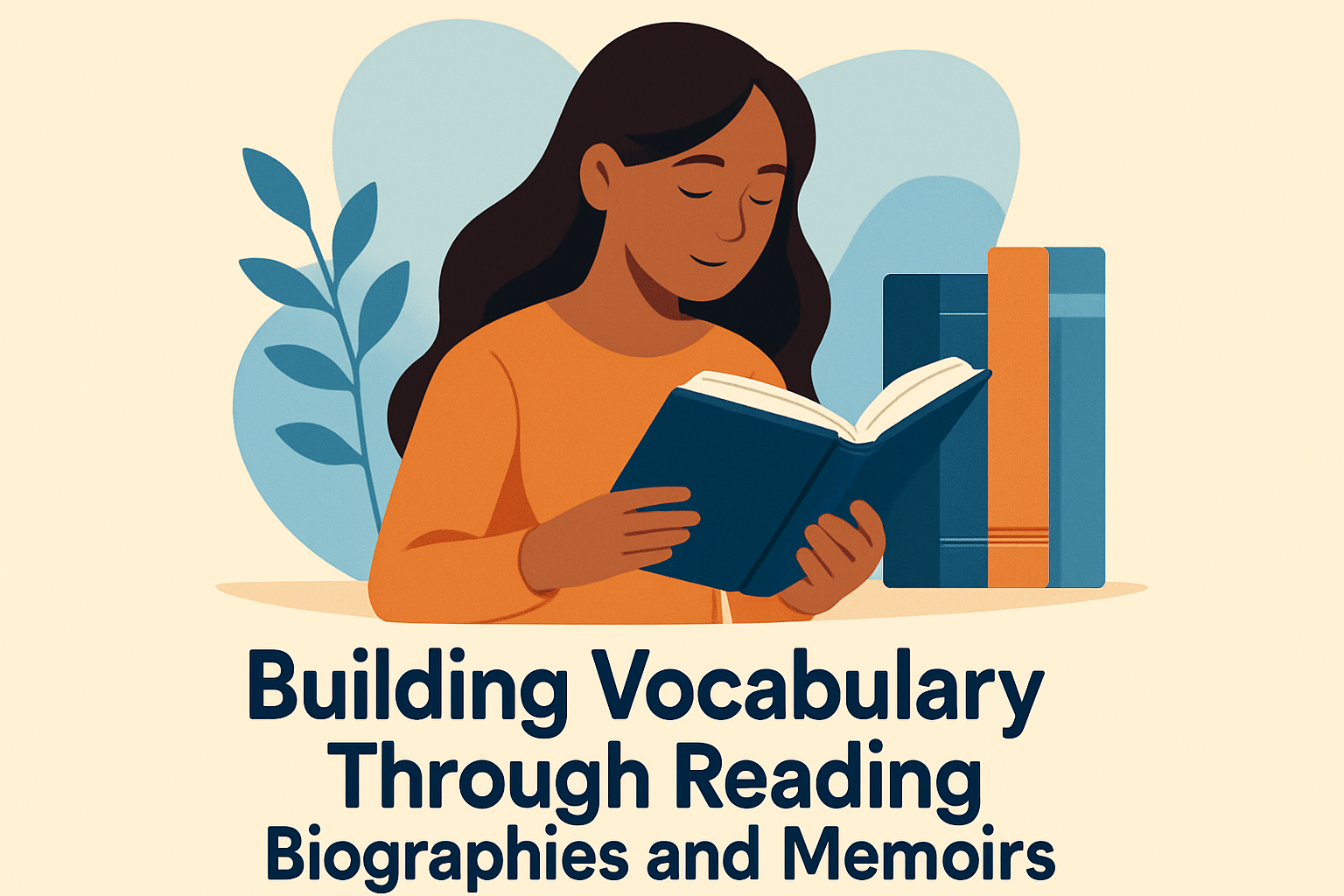
Vocabulary expansion is a pivotal component of effective communication and comprehension. It’s the foundation upon which both spoken and written language rests. One of the most engaging and insightful methods to build vocabulary is by reading biographies and memoirs. These genres not only provide an intimate look into the lives of individuals but also introduce readers to new words and phrases, as authors convey complex emotions, challenges, and triumphs. In this article, we will explore how biographies and memoirs can serve as powerful tools for vocabulary enhancement, making a substantial impact on readers’ language skills.
Biographies detail the life stories of individuals, often highlighting historical figures, celebrities, or ordinary people who have achieved extraordinary things. Memoirs, on the other hand, focus on specific aspects or periods of a person’s life, offering a firsthand account of experiences. By delving into these narratives, readers are exposed to a rich tapestry of vocabulary, reflective of the time, place, and societal circumstances surrounding the subjects’ lives. The aim here is not merely to grow one’s word bank, but to understand the nuances and contexts in which words are used, fostering a deeper appreciation for language.
The Rich Vocabulary of Historical Contexts
One of the unique features of biographies and memoirs is their ability to immerse readers in different historical contexts. Books that delve into the lives of historical figures provide readers with detailed insights into the language of the era, enhancing their vocabulary with terms and expressions that are often lost to time. For instance, reading a biography of Benjamin Franklin introduces readers to 18th-century terminologies, while a memoir from a World War II veteran might include military jargon and idioms from that period.
Take, for example, the biography of Abraham Lincoln, which can broaden one’s vocabulary with words related to Civil War era politics, law, and sociology. In these works, readers might encounter terms like “emancipation,” “habeas corpus,” or “abolitionist,” which enrich their understanding of historical discourse and legal language. Such words become valuable additions to a reader’s vocabulary, aiding in discussions about history, politics, or society.
| Term | Definition | Usage Example |
|---|---|---|
| Emancipation | The act of freeing someone from oppression or slavery | Lincoln’s Emancipation Proclamation was a landmark in American history. |
| Habeas Corpus | A legal principle that protects against unlawful detention | The suspension of habeas corpus during wartime was a controversial move. |
| Abolitionist | An individual who advocated for the ending of slavery | Many abolitionists risked their lives to fight for freedom. |
Understanding Personal Journeys Through Language
Memoirs often offer a distinctly personal perspective, providing insight into an individual’s thoughts, struggles, and triumphs. These personal narratives are rich with language that reflects the subject’s personal experiences, which can introduce readers to vocabulary specific to particular challenges and professions. For instance, a memoir detailing a person’s battle with illness might familiarize readers with medical terminology, while a memoir from a chef might offer a delicious array of culinary terms.
A compelling example is “When Breath Becomes Air” by Paul Kalanithi. This memoir of a neurosurgeon who faces terminal cancer provides readers with medical vocabulary, enriching their understanding of both the scientific and emotional aspects of his journey. Words such as “metastasis,” “protocols,” and “neuropathology” become part of the reader’s lexicon, demonstrating how language can be both technical and deeply emotive when framed within personal stories.
Exploring Diverse Cultures and Perspectives
Biographies and memoirs are windows into diverse cultures and perspectives, making them excellent tools for expanding cultural vocabulary. When readers engage with stories from individuals of different cultural backgrounds, they are exposed to language and expressions unique to those cultures, offering a more broadened worldview. This exploration not only enhances vocabulary but also fosters empathy and cultural sensitivity.
Consider the memoir “Becoming” by Michelle Obama, where readers journey through the cultural and social dynamics of life in Chicago’s South Side, Princeton, and the White House. With this story, readers gain access to cultural idioms and slang, learn about social justice terminologies, and chew on the rich language of political discourse. Such works inform readers about cultural nuances while also fortifying their vocabulary with diverse and global influences.
- Cultural Idioms: Learning phrases specific to a culture enhances understanding and communication.
- Social Justice Terms: The language of activism and change is essential for engaging in global conversations.
- Political Discourse: Understanding political jargon enriches discussions on governance and policy.
The Literary Style and Its Vocabulary Influence
Another pivotal aspect of reading biographies and memoirs is the literary style that authors employ to bring their stories to life. The genre allows for a personalized approach to writing, reflecting the subject’s unique voice and experiences. As such, readers are exposed to varied writing styles, enhancing their own ability to communicate effectively and eloquently.
For example, Maya Angelou’s memoir “I Know Why the Caged Bird Sings” adopts a poetic and lyrical style that is rich in descriptive language. Words and phrases in this memoir beautifully capture emotions, settings, and nuances of Angelou’s experiences. Such literary elegance introduces readers to language that is expressive and textured, enhancing vocabulary not just in terms of word count, but also in depth and breadth.
Challenges and Triumphs in Vocabulary Acquisition
While reading biographies and memoirs is a rewarding endeavor for vocabulary expansion, it is not without its challenges. Readers may encounter unfamiliar words frequently, which can be daunting. However, overcoming these challenges is precisely where the greatest learning occurs.
Take Barack Obama’s “Dreams from My Father,” which presents readers with complex political and social themes alongside vocabulary that is often dense and rich. Readers can benefit from approaching such works with a strategy: using context clues to decipher meanings, maintaining a vocabulary journal to track new words, and engaging with supplementary resources such as dictionaries or language apps.
The process of acquiring vocabulary through reading these genres mirrors the subjects’ own stories of overcoming obstacles and achieving understanding across their journeys. It’s this sense of triumph that readers can share, making the exercise both intellectually and emotionally fulfilling.
Conclusion: Embrace the Journey of Vocabulary Expansion
In summation, reading biographies and memoirs offers a multifaceted approach to vocabulary expansion. Through historical contexts, personal journeys, cultural explorations, and lyrical prose, readers enhance their language skills while gaining insights into the lives of fascinating individuals. This journey of discovery is one that promises not only richer vocabulary but also a deeper understanding of the world around us, encouraging readers to become more empathetic and informed global citizens.
For those seeking to fortify their vocabulary, the next step is simple: start reading. Choose a biography or memoir that piques your interest and delve into the world it offers. As you explore these narratives, remember to embrace both the challenge and the beauty of language. Keep a journal, engage actively with new words, and most importantly, enjoy the journey of becoming a more articulate, knowledgeable, and thoughtful person.
So, pick that one memoir or biography you’ve been considering and start your exploration today, knowing every page brings you closer to not just understanding a life story, but also building a lasting, enriched repertoire of vocabulary.
Frequently Asked Questions
1. How can reading biographies and memoirs enhance my vocabulary?
Reading biographies and memoirs is like standing in someone else’s shoes and seeing the world through their eyes. These genres offer a unique opportunity for vocabulary expansion because they are filled with rich and varied language. When authors capture the essence of a person’s life, they dive deep into descriptions, emotions, and historical contexts that naturally introduce new words and phrases. By reading these narratives, you encounter the vocabulary used to express complex emotional landscapes, professional jargon, and historical or cultural contexts. Furthermore, the diverse experiences portrayed in biographies and memoirs can expose you to terminologies related to different time periods, industries, and lifestyles, broadening your understanding and ability to communicate effectively.
2. What types of words will I likely encounter in biographies and memoirs?
Biographies and memoirs are treasure troves of varied vocabulary. You can expect to come across a mix of personal, emotional, and industry-specific language. This includes descriptive adjectives that paint vivid images of scenes or experiences, emotional language that conveys the subject’s internal struggles and triumphs, and specialized terminology related to the subject’s profession or field of interest. For instance, reading a biography about a scientist might introduce you to scientific concepts and terminology, while a memoir about an artist could expose you to artistic terms. Additionally, these works often contain historical language, giving you insights into words commonly used in specific eras or cultural settings. All this contributes to a more robust, nuanced vocabulary.
3. Are there specific strategies to effectively learn new vocabulary from these genres?
Absolutely! When you come across new words, take the opportunity to interact with them meaningfully. One approach is to maintain a vocabulary journal. Whenever you encounter an unfamiliar word, jot it down along with its context, definition, and a sentence of your own using the word. This reinforces understanding and retention. Another strategy is to pause and reflect on the passage where the new word appears. Consider what the word conveys about the subject’s life or experience. Additionally, discussing the book within a reading group or book club can help solidify your grasp of new vocabulary as you exchange interpretations and insights about how words shape narratives. Over time, these techniques can transform your reading experience from passive to active, ensuring that new vocabulary becomes a lasting part of your linguistic repertoire.
4. Can biographies and memoirs help improve my writing skills along with vocabulary?
Indeed, reading biographies and memoirs can greatly enhance your writing capabilities in addition to building your vocabulary. As you absorb the authors’ styles, you gain insight into how effective storytelling is constructed—how they weave descriptions, dialogue, and character development into a cohesive narrative. You’ll learn subtle nuances of tone, how to use first-person narratives to convey personal experiences, and the art of pacing a story to maintain reader engagement. By observing how accomplished writers manage these elements, you can begin to emulate their techniques in your writing, crafting more compelling and articulate essays, reports, or even your stories.
5. Do I need to read biographies and memoirs regularly to see improvements in my vocabulary?
While regular exposure is beneficial, it’s not the only factor that influences vocabulary growth. Consistency helps reinforce learning, so setting a regular schedule for reading biographies and memoirs, even just a few pages each day, can create a habit that nurtures ongoing improvement. However, quality is just as important as quantity. Engage deeply with the material, reflect on the language and its usage, and practice applying new vocabulary in context—whether that means discussing it with others, writing about it, or relating it to other areas of your life. Remember, the goal is not just to increase your vocabulary, but to enhance your understanding and application of language in varied contexts.