
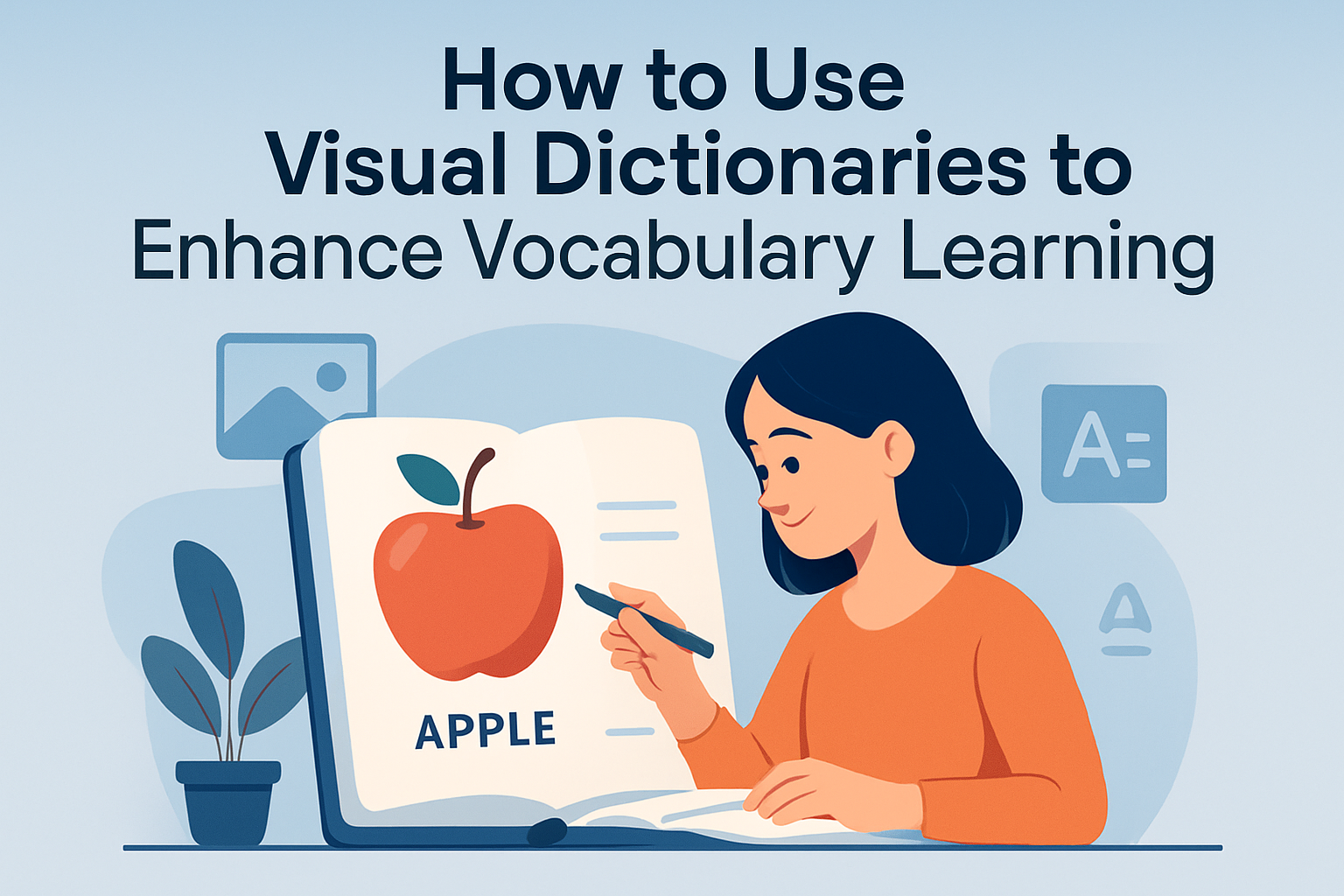
In today’s fast-paced and information-driven world, effective communication is more critical than ever. As the global economy continues to expand, individuals are often required to engage in conversations that span languages and cultures, making vocabulary acquisition indispensable. One of the most innovative solutions available to learners today is the visual dictionary. But what makes a visual dictionary stand out compared to traditional vocabulary-building tools, and why should it hold a place in every language learner’s toolkit?
A visual dictionary is a resource that combines imagery with words to facilitate language comprehension. Unlike traditional dictionaries, which provide definitions using text alone, a visual dictionary uses images to help users understand the context and meaning of words better. This method of learning is particularly beneficial for those who are visually inclined or those learning a new language, as it can bridge the gap between recognition and comprehension, often leading to better retention and recall.
Understanding the importance of visual dictionaries in language learning requires a foundational look into how brains process information. Human beings retain visual information more than textual data. When you see an image, it is typically stored as a memory map in the brain, linking the visual aspect with the term it represents. As a result, visual learners—those who comprehend and recall information better when presented in visual formats—can significantly benefit.
The Anatomy of a Visual Dictionary
Visual dictionaries often contain various sections or chapters dedicated to different themes or topics. These can range from everyday objects like kitchen utensils to more complex subjects like anatomy or technology. Each section is accompanied by images with their corresponding labels, providing immediate context and relevance.
For example, in a visual dictionary focusing on ‘The Human Body’, learners may find images of the human skeleton. Beside each bone is its name. This layout not only helps users associate the term with the visual representation but also connects it with information related to its function and location in a comprehensible manner.
To further illustrate this, consider the scenario where someone uses a visual dictionary to learn parts of a bicycle. A page dedicated to bicycles might show a detailed diagram of the vehicle, with lines pointing to labels such as “handlebars,” “pedals,” and “chain.” This visual context enables the learner to understand not just the words but the relationship between the bicycle’s parts and their usage, enhancing both recognition and contextual learning.
Innovative Methods of Employing Visual Dictionaries
For an effective learning experience, visual dictionaries should be used strategically. Simply flipping through pages will not maximize the potential benefits. The key lies in implementing creative ways to use this resource effectively.
Immersive Language Learning
One innovative method involves creating an immersive learning experience by using visual dictionaries in conjunction with real-life objects. This can serve as a real-world application of what has been learned through pictures, thereby reinforcing knowledge through experience. For anyone learning languages like French or Spanish, they can bring the visual dictionary to the kitchen and label utensils in the new language. This experience helps solidify linguistic associations.
Integrating Digital Tools
Modern learners often use digital tools, and many visual dictionaries are now available as interactive apps or online platforms. These digital resources often come with features such as pronunciation guides and quizzes that can facilitate better learning. Users can engage with these tools to test their knowledge and track their progress.
Let’s consider a student’s interaction with a visual dictionary app. In the study of botany, the student could explore various flower species, each represented with high-resolution images and detailed descriptions that speak to different language learning points—names of species, parts of a flower, and so on.
Moreover, some apps allow users to click on any part of an image to hear its pronunciation, thereby providing an auditory component. Not only does this approach make the learning process richer, but it also caters to different learning styles by involving both visual and auditory channels. This enriching experience adds layers to the simple task of vocabulary acquisition.
The Role of Visual Dictionaries in Language Classrooms
Another effective application for visual dictionaries can be found in classroom settings. Teachers can use these resources to create a more engaging and inclusive learning environment. By incorporating visuals, educators can cater to various learning styles, including those who primarily benefit from seeing and experiencing.
In a classroom setting, a history teacher might use visual dictionaries to illustrate historical artifacts. By aligning images with terminology, students can better grasp the material, leading to higher retention and engagement levels.
| Advantages | Direct Application |
|---|---|
| Visual learning enhances retention. | Using visual themes and objects aids memory. |
| Interactive learning through digital formats. | Integrating apps with quizzes encourages interaction. |
| Classroom application supports various learning types. | Teachers provide a richer vocabulary context with imagery. |
Potential Challenges and Remedies
While visual dictionaries offer substantial benefits, potential challenges do exist. One common issue might be an overwhelming amount of imagery without adequate context, creating cognitive overload. To mitigate this, users can focus on sections relevant to their learning goals. They can prioritize categories that align with their interests or current educational objectives, allowing more focused learning.
Furthermore, while images are incredibly effective, they aren’t universally comprehensive. In cases where supplementary explanations are necessary, users can pair their experience of visual dictionaries with more detailed written resources to enhance understanding. This combination ensures that complex concepts are not misunderstood or overlooked.
Case Study: Visual Dictionaries in Professional Environments
Visual dictionaries aren’t just beneficial for language learners and students; they are increasingly gaining traction in professional environments as well. In industries like healthcare, engineering, and culinary arts, precise vocabulary is crucial for accuracy and efficiency.
Consider a scenario in an international culinary school where students from various backgrounds gather to master the art of French cooking. Visual dictionaries focused on culinary art can provide the vocabulary needed to bridge language barriers. Chefs can explain recipes and kitchen procedures more clearly using imagery, making it easier for students to understand and follow complex instructions without needing to master a new language beforehand.
Through such examples, one can see how visual dictionaries are versatile teaching aids, adaptable to different contexts and environments while offering linguistic and professional advantages.
The Future of Vocabulary Learning with Visual Dictionaries
The dynamic nature of language learning continuously evolves, and so does the concept of visual dictionaries. Today’s technological advancements are paving the way for creating even more innovative formats. Visual dictionaries integrated with augmented reality (AR) could change the language learning landscape by overlaying digital information in physical spaces, offering an immersive learning experience.
Imagine holding an AR-enabled device over a landscape, which labels flora and fauna in various languages, providing context-aware pronunciation guides. This futuristic approach can make learning more interactive and enjoyable, potentially leading to a more profound and sustained engagement with language learning.
Conclusion: Maximizing the Benefits of Visual Dictionaries
Visual dictionaries, thus, serve as a powerful tool in vocabulary enhancement. By leveraging their unique combination of imagery and text, users can experience a richer and more engaging approach to language learning. Experiencing vocabulary in context, with the assistance of visual aids, allows for quicker recognition and recall. Whether used by individuals, schools, or professionals, these dictionaries offer diverse applications and can significantly transform traditional learning methods into more inclusive and effective experiences.
The key takeaway is to incorporate visual dictionaries into everyday study routines with an open approach to various applications, whether digital or tangible. This strategy not only can help learners rapidly expand their vocabulary but also facilitate a deeper understanding of language and its real-world applications.
For those eager to achieve greater fluency, the next step is simple: integrate visual dictionaries into your learning habits, explore multimedia opportunities, and make conscious efforts to connect imagery with words. Embrace this innovative approach and experience the transformative power of using visuals to unlock unlimited language potential.
Embark on this journey and embrace visual dictionaries to elevate your vocabulary learning. The world of words is at your fingertips—make it visual and vibrant!
Frequently Asked Questions
1. What is a visual dictionary, and how does it differ from traditional dictionaries?
A visual dictionary is an educational resource that combines imagery with language to enhance vocabulary learning. Unlike traditional dictionaries that primarily provide definitions and phonetic transcriptions, visual dictionaries incorporate detailed illustrations and photographs to clarify meanings and provide context for each word. This dual-input approach helps learners make associations between the word and its visual representation, which can significantly aid memory retention. Imagine looking up the word “harbor” and instantly seeing a picture of ships docked—it becomes much easier to mentally anchor the word when you have a visual context to accompany it. Visual dictionaries often classify words into categories and themes, such as animals, everyday objects, or professions, making it easier for learners to build interrelated vocabulary sets efficiently.
2. How can visual dictionaries improve vocabulary acquisition compared to other methods?
Visual dictionaries offer a unique advantage over traditional vocabulary learning methods by engaging multiple cognitive processes. When you learn a new word, the process typically involves understanding its definition, its pronunciation, and its application in context. Visual dictionaries enhance this process by incorporating imagery, which can help “lock in” the new information through visual cognition. This engaging format is particularly beneficial for visual learners who find it easier to memorize information when they can see it. Moreover, visual dictionaries can serve to bridge language barriers as learners can infer the meanings of words through pictures even if they are not familiar with the written text. For instance, a learner seeing a detailed illustration of a bicycle’s components labeled in the target language might quickly pick up terms like “handlebar,” “pedal,” or “chain” without needing complex explanations.
3. Who can benefit the most from using a visual dictionary?
Visual dictionaries are highly versatile tools and can benefit a wide range of users. Language learners at all levels, from beginners to advanced, will find visual dictionaries useful for building foundational vocabulary or refining specific language nuances. Younger learners, such as children, benefit significantly as they often relate better to visual stimuli, aiding in quicker vocabulary acquisition. For adults, especially those who are visual learners, these dictionaries provide a more engaging and less intimidating entry into a new language. Additionally, professionals working in multicultural environments can use visual dictionaries to quickly familiarize themselves with industry-specific terms, contributing to more effective cross-cultural communication. Moreover, individuals with learning disabilities such as dyslexia may also find that visual dictionaries better accommodate their learning needs, offering a practical alternative to text-only resources.
4. How can visual dictionaries be integrated into daily learning routines?
Incorporating visual dictionaries into daily learning routines can be both enjoyable and effective. One approach is to dedicate a set time each day for focused vocabulary building using a visual dictionary, selecting a specific category or theme to explore. A commonly successful method is to create a “word of the day” system, where you focus on one new word daily, immersing yourself in its use and visuals throughout the day. Additionally, visual dictionaries can be used to supplement other language-learning tools. For example, before starting a language lesson or reading a foreign text, glance through themed sections of a visual dictionary to refresh related vocabulary. Moreover, these dictionaries can be used as handy references during travels or work-related activities, providing quick visual cues when encountering new environments. The key is consistency and variety, ensuring that the integration of visual resources complements other learning strategies for a holistic language acquisition experience.
5. What are some practical tips for effectively using visual dictionaries?
To maximize the benefits of visual dictionaries, it’s important to approach them with strategic methods. Firstly, setting clear learning goals can help you make the most of this resource. For instance, decide whether you want to focus on travel vocabulary, culinary terms, or professional jargon, and tailor your exploration accordingly. Secondly, engaging actively with the content is crucial; don’t just passively view images—repeat and practice pronunciation, and attempt to use new words in sentences. This reinforces language retention and practical application. Additionally, leveraging digital versions of visual dictionaries can offer interactive elements like quizzes or audio pronunciations, further enhancing the learning experience. Furthermore, try to involve all senses in the learning process by crafting flashcards with visual elements or drawing your own versions of the words to deepen comprehension and memory. Remember, consistency and active involvement are the cornerstones of effective learning with visual dictionaries.





