
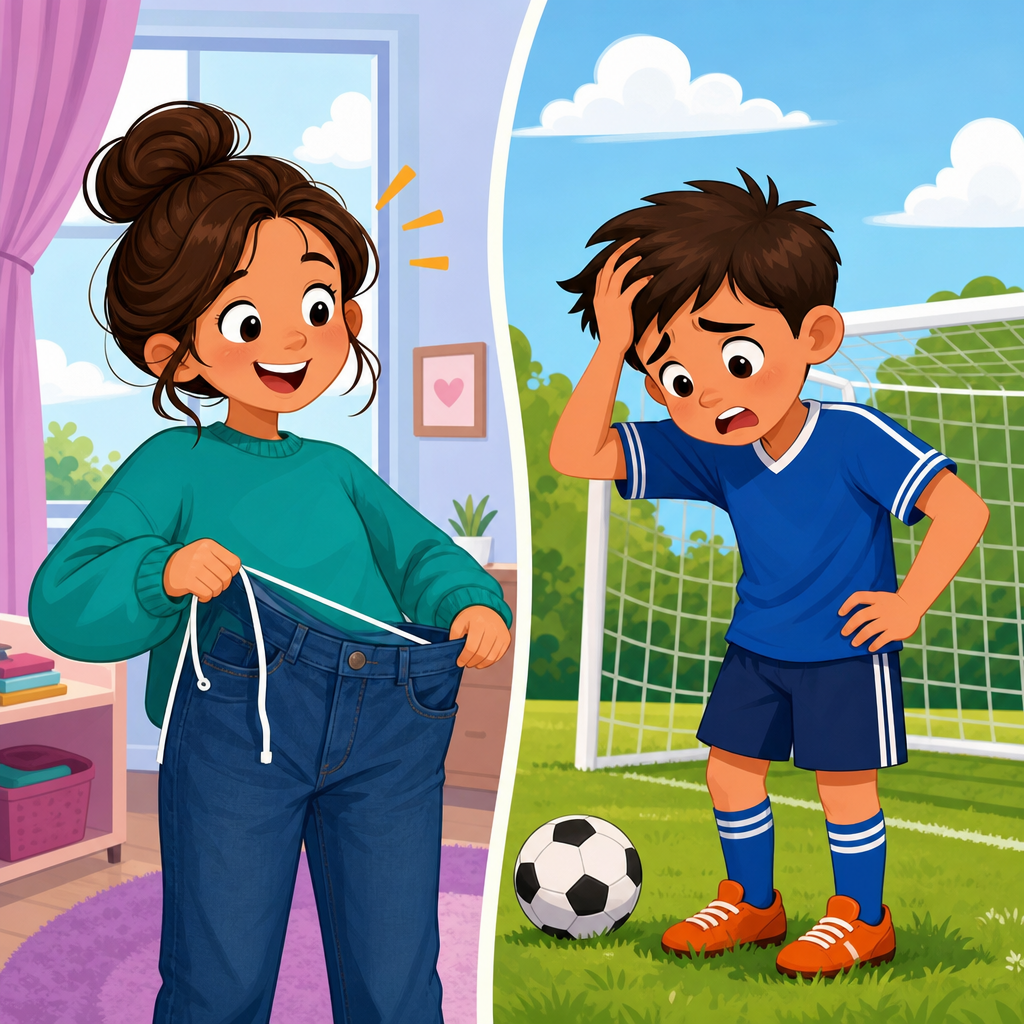
Loose and lose are two of the most commonly confused words in English, especially for ESL learners, because they look similar, sound related, and appear in everyday speech. The difference is simple once you see the pattern: loose is usually an adjective meaning not tight, while lose is usually a verb meaning to misplace something, fail to win, or no longer keep something. This distinction matters because a single extra “o” changes both grammar and meaning. I teach this pair often because it causes mistakes in emails, test answers, captions, and workplace writing, even among advanced learners. If you write “I always loose my keys,” a reader still understands you, but the sentence is wrong and can weaken credibility. As a vocabulary hub for miscellaneous word-confusion topics, this guide explains pronunciation, grammar, meaning, fixed expressions, common errors, and practice examples so learners can use both words correctly in real situations.
Loose vs lose: the core difference
The fastest way to remember loose vs lose is to ask what job the word is doing in the sentence. If the word describes a noun, use loose. If the word shows an action, use lose. For example, in “These shoes are loose,” loose describes shoes, so it is an adjective. In “Don’t lose your ticket,” lose tells you what action to avoid, so it is a verb. In practical teaching, this grammar-first method works better than spelling rules alone because learners can apply it even when they are writing quickly.
Loose commonly means not firmly fixed, not tight, free from restraint, or not exact. You can have a loose screw, loose clothing, loose pages, or a loose interpretation of a rule. Lose means to fail to keep, to be deprived of, to fail to win, or to become less of something. You can lose your wallet, lose a game, lose weight, or lose interest. These meanings are standard across major learner dictionaries such as Cambridge Dictionary, Oxford Learner’s Dictionaries, and Merriam-Webster, and they are consistent in business, academic, and conversational English.
Pronunciation and spelling patterns
Pronunciation causes much of the confusion. Loose is pronounced /luːs/, ending in an “s” sound. Lose is pronounced /luːz/, ending in a “z” sound. That final sound difference matters. When I coach learners, I ask them to touch their throat while saying both words. In loose, the final consonant is voiceless. In lose, the vocal cords vibrate because the final consonant is voiced. This physical check helps many speakers hear and produce the contrast more clearly.
Spelling adds another trap. Many learners assume the longer spelling with double “o” must be the verb, but English does not work that way here. Loose has more letters but is not the action word. Lose has one fewer “o” and is the verb. A useful memory device is: “You lose an o in lose.” Another reliable reminder is that loose ends with “se,” which often appears in adjectives and nouns, while lose is the common verb you need for actions such as losing money, time, or confidence. Mnemonics are not perfect, but they reduce repeated errors in early practice.
Grammar: adjective, verb, and related forms
Loose is most often an adjective, but it can also function as a verb in less common contexts. As an adjective: “My jacket is loose,” “The dog is loose,” and “There are loose papers on the desk.” As a verb, loose means to release, as in “to loose an arrow,” but this use is literary, technical, or old-fashioned in many contexts. Most learners do not need it for daily communication. If your goal is modern general English, focus on loose as an adjective first.
Lose is a verb, and its forms are lose, loses, losing, lost. Lost is both the past tense and past participle: “I lose my focus when I am tired,” “She loses points for spelling errors,” “They are losing money,” and “He lost his passport.” Learners sometimes write “losed,” but that form is incorrect. Because lose is irregular, memorizing lost early prevents a large number of downstream mistakes in speaking and writing.
| Word | Part of speech | Main meaning | Example |
|---|---|---|---|
| loose | usually adjective | not tight, free, not fixed | The handle is loose. |
| lose | verb | misplace, fail to keep, fail to win | Try not to lose your phone. |
| lost | verb/adjective | past form of lose; not found | I lost my keys. |
| loosely | adverb | in a loose way | The rope was loosely tied. |
Everyday meanings with clear ESL examples
ESL learners need examples tied to real situations, not just definitions. Use loose for clothing and physical fit: “These jeans are too loose after washing,” “Your helmet strap is loose,” and “One tooth feels loose.” Use lose for possession and results: “Please do not lose your boarding pass,” “Our team might lose today,” and “She does not want to lose her job.” In class, I also use paired examples because contrast helps memory: “My shoelaces are loose” versus “I do not want to lose my shoes.”
Some meanings are less obvious. Loose can describe ideas and organization, as in “a loose plan,” “a loose translation,” or “the essay has a loose structure.” Here, loose means not strict, not exact, or not tightly organized. Lose can describe reduction or emotional change: “He wants to lose weight,” “We could lose momentum,” and “I’m starting to lose patience.” These are high-frequency patterns in news articles, meetings, and everyday conversations, so learners should practice them early.
Common mistakes and how to avoid them
The most common mistake is using loose when the sentence needs a verb. Examples include “I loose my keys every week,” “If we play badly, we will loose,” and “You can loose access to the account.” All are incorrect; the right word is lose. The second common mistake is using lose where an adjective is needed: “My shirt is lose,” “The door handle feels lose,” or “There are lose wires under the desk.” In each case, use loose because the word describes a thing.
Another issue is pronunciation transfer. Some learners pronounce both words the same, especially if their first language does not strongly distinguish final /s/ and /z/. Minimal-pair drilling helps: loose/lose, ice/eyes, price/prize. Reading aloud also works when combined with immediate correction. In writing, grammar checkers such as Grammarly and Microsoft Editor catch some errors, but they do not fix everything, especially in short fragments. A better editing habit is to pause at the word and ask, “Is this describing something, or is it an action?” That quick check is usually enough.
Fixed expressions and useful collocations
Learning common phrases makes these words feel natural. Frequent collocations with loose include loose change, loose clothes, loose connection, loose hair, loose fit, loose screw, and on the loose. “The suspect is still on the loose” means not captured. “I only have loose change” refers to coins. “There is a loose connection” is common in electronics and maintenance. These combinations appear often enough that learners should memorize them as chunks.
Common collocations with lose include lose weight, lose time, lose money, lose control, lose interest, lose track of, lose touch, lose your temper, lose heart, and lose sight of. These are especially useful because they cover health, work, relationships, and emotions. For example, “We lost track of time during the meeting,” “She has not lost touch with her friends,” and “Do not lose sight of the main goal.” Corpus-based resources such as the British National Corpus and the Corpus of Contemporary American English show these patterns repeatedly, which is why teaching collocations improves fluency faster than teaching isolated words alone.
Practice sentences and quick self-test
Try this rule in context. Sentence one: “Your backpack strap is _____.” The answer is loose because the word describes the strap. Sentence two: “Be careful not to _____ your passport.” The answer is lose because it expresses an action. Sentence three: “After the diet, his pants became too _____.” Answer: loose. Sentence four: “If we do not defend well, we may _____ the match.” Answer: lose. Sentence five: “One page in the report is _____.” Answer: loose. Sentence six: “I always _____ focus when I am tired.” Answer: lose.
For stronger practice, write five original sentences about your own life using loose and five using lose. Then change the tense of the lose sentences: present, past, and continuous. For example, “I lose my train of thought,” “I lost my train of thought,” and “I am losing my train of thought.” This method builds automatic control over form and meaning. If you teach or tutor, ask learners to explain why each answer is correct. That explanation step reveals whether they truly understand the grammar or are only guessing.
Loose and lose are different in spelling, pronunciation, grammar, and meaning, but the distinction becomes easy when you use one reliable test. If the word describes a noun, choose loose. If it expresses an action such as misplacing, failing to win, or no longer keeping something, choose lose. Remember the sound difference too: loose ends with /s/, while lose ends with /z/. Those two checks solve most errors immediately. The most useful learning strategy is not memorizing abstract rules in isolation, but practicing high-frequency examples like loose clothes, loose connection, lose weight, lose control, and lose track of time.
As a vocabulary hub for miscellaneous confusion pairs, this page gives you a foundation you can reuse across many similar English problems. Small spelling differences often signal bigger grammar differences, and noticing that pattern will improve both accuracy and confidence. Review the examples, say the words aloud, and write your own sentences today. Then continue through the related vocabulary articles in this section to strengthen the word pairs that cause the most trouble in real English use.
Frequently Asked Questions
1. What is the difference between loose and lose?
The main difference is that loose and lose belong to different parts of speech and have different meanings. Loose is most commonly an adjective. It describes something that is not tight, not firmly fixed, or free to move. For example, you can say, “My shirt is too loose,” “The screw is loose,” or “Her hair came loose.” In each case, loose describes a condition or state.
Lose, on the other hand, is usually a verb. It means to misplace something, fail to keep something, fail to win, or no longer have something. For example: “I always lose my keys,” “Our team might lose the game,” and “You could lose your job if you are late every day.” In these examples, lose shows an action or result.
This is why the extra o matters so much. It is not just a spelling detail. It changes both the grammar and the meaning. A helpful shortcut is this: if you need a describing word, you probably want loose; if you need an action word, you probably want lose. That simple pattern helps ESL learners avoid one of the most common English spelling mistakes.
2. Why do ESL learners confuse loose and lose so often?
ESL learners confuse these two words for several very understandable reasons. First, the spellings are extremely similar. The only visual difference is one extra o, so it is easy to type the wrong word quickly, especially in texting, emails, or timed writing. Second, the words are related in sound, but their pronunciation does not match what many learners expect. English spelling is not always phonetic, and this pair is a classic example of that problem.
Another reason is that both words are common in everyday English. Learners hear and read them often, but not always in clear grammar patterns. For instance, someone may hear “Don’t lose it” and “The handle is loose” in different contexts without fully noticing that one is a verb and the other is an adjective. If a student is focused on meaning only, the grammar difference can be missed.
There is also interference from pronunciation habits. Many learners assume that the word with more letters should have a longer vowel sound, but English does not always work that way. As a result, students may write loose when they mean lose, especially because lose sounds like it should have a double o. That is why this pair needs focused practice. Once learners connect spelling, pronunciation, and grammar together, the confusion usually decreases very quickly.
3. How are loose and lose pronounced?
Pronunciation is one of the biggest reasons this pair causes trouble, so it is worth learning carefully. Loose is pronounced /luːs/. It ends with an s sound, like in “snake.” It rhymes with words such as goose, juice, and moose. You can hear the final sound clearly: “loose.”
Lose is pronounced /luːz/. It ends with a z sound, like in “zebra.” It rhymes with choose, news in some accents, and shoes in terms of the final voiced sound. The key difference is the last consonant sound: loose has /s/, while lose has /z/.
Here is a useful speaking tip: put your hand on your throat when you say both words. When you say lose, your throat vibrates at the end because /z/ is a voiced sound. When you say loose, there is no strong vibration at the end because /s/ is voiceless. This small physical trick can help students hear and produce the difference more clearly. If your pronunciation becomes more accurate, your spelling often improves too.
4. Can you give simple ESL examples using loose and lose correctly?
Yes, and this is one of the best ways to remember the difference. Start with loose as an adjective: “These pants are loose.” “One of my teeth feels loose.” “The dog got loose from the yard.” “There is a loose button on your jacket.” In all of these sentences, loose describes something that is not tight, not fixed, or free.
Now look at lose as a verb: “Do not lose your passport.” “I do not want to lose this match.” “She might lose interest in the class.” “We lose money when sales are low.” In each example, lose expresses an action, event, or change in condition. Someone misplaces, fails to keep, or no longer has something.
A very effective comparison is to place the words side by side: “If your shoes are too loose, you may lose them while walking.” That sentence shows both the grammar difference and the meaning difference in one line. Another example is: “The rope is loose, so do not lose your balance.” These paired examples are especially useful for ESL learners because they make the contrast memorable and practical.
5. What is the easiest way to remember when to use loose and when to use lose?
The easiest method is to remember a grammar rule first and a memory trick second. The grammar rule is this: loose usually describes a noun, and lose usually shows an action. If you can replace the word with another adjective such as tight, free, or not secure, then loose is probably correct. If you mean misplace, fail to win, or stop having, then lose is the word you need.
A simple memory trick is: loose has an extra o, and that extra space can remind you of something being “not tight” or having more room. By contrast, lose has only one o, and when you lose something, one thing is gone. Memory tricks are not perfect, but they can help under pressure.
For real improvement, combine the rule with short practice. Write your own sentences such as “My backpack strap is loose” and “I do not want to lose my backpack.” Read them aloud. Check whether the word is describing something or expressing an action. That habit builds accuracy faster than memorizing definitions alone. For most learners, once this pattern becomes automatic, the confusion between loose and lose drops significantly.





