
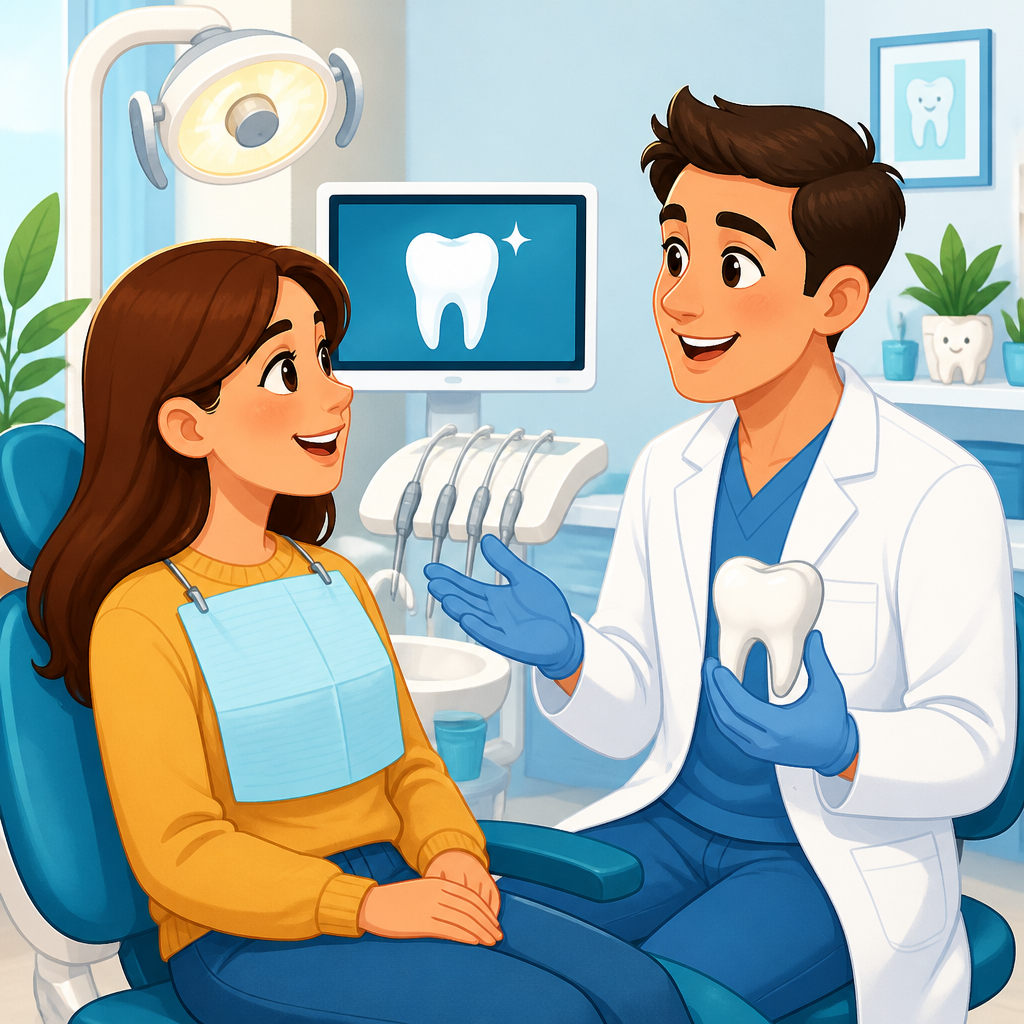
Talking to a dentist in English can feel stressful because you must describe pain clearly, understand instructions quickly, and make decisions about treatment while you are uncomfortable. In my work helping English learners prepare for medical conversations, dental visits are one of the most anxiety-producing situations because the vocabulary is unfamiliar and the timing is difficult. Unlike casual conversation, you may need to explain symptoms, allergies, insurance details, and your medical history in short, precise sentences. Learning how to talk to a dentist in English means building practical language for appointments, tooth pain, gum problems, X-rays, cleanings, fillings, and aftercare.
A dentist is a healthcare professional who diagnoses and treats problems affecting teeth, gums, jaw alignment, and oral tissue. A dental hygienist usually handles preventive care such as cleanings, polishing, and basic gum assessment. A dental assistant may help during procedures, prepare instruments, and review instructions. Knowing these roles matters because each person may ask different questions. You might hear, “What brings you in today?” from the receptionist, “Do your gums bleed when you brush?” from the hygienist, and “You have a small cavity on the upper left molar” from the dentist. If you understand who is speaking and why, the conversation becomes much easier to follow.
This topic matters because dental problems can worsen quickly when communication breaks down. A delayed explanation of swelling, sharp pain, or sensitivity can lead to a bigger infection, more expensive treatment, or unnecessary fear. Strong dental English helps you book visits, answer questions accurately, and give informed consent. It also helps you ask practical questions such as how long numbness will last, whether you can eat after treatment, and what side effects are normal. The goal is not perfect grammar. The goal is safe, confident communication that gets you the right care.
Essential phrases for checking in and explaining the reason for your visit
The first part of a dental appointment usually happens at the front desk. Reception staff may ask for your full name, date of birth, insurance card, and the reason for your visit. The most useful strategy is to prepare one clear opening sentence. Good examples include, “I’m here for a cleaning,” “I have a toothache on the lower right side,” or “I’m here for a follow-up after a filling.” These short statements immediately give the clinic the information they need. If the problem is urgent, say so directly: “I think it’s an emergency. My face is swollen, and the pain started last night.”
When the dentist or hygienist asks about symptoms, be specific about location, timing, and intensity. Instead of saying, “My tooth feels bad,” say, “I have sharp pain when I bite on the back left tooth,” or “My gums are sore and bleed when I floss.” Mention whether the pain is constant or comes and goes. Explain triggers such as cold drinks, hot coffee, sweets, chewing, or pressure. In real appointments, this precision changes the diagnosis. Sensitivity to cold may suggest enamel wear, exposed roots, or a cavity, while pain when biting can point to a cracked tooth, inflamed pulp, or a problem with a recent filling.
If you need support with appointment language before the dental visit itself, it helps to review broader medical phone phrases in this guide to booking a doctor’s appointment by phone. The same skills apply when you call a dental office to ask for the earliest available visit, describe urgent pain, or confirm cancellation policies. In practice, I advise learners to keep a note on their phone with key facts: which tooth hurts, when symptoms began, current medications, allergies, and the name of any recent dental treatment.
Useful dental vocabulary you will hear during the appointment
Dental English becomes easier when you group vocabulary by purpose. For anatomy, know tooth, gum, jaw, tongue, cheek, molar, premolar, canine, and incisor. For symptoms, know ache, throbbing pain, swelling, bleeding, tenderness, sensitivity, loose tooth, bad breath, chipped tooth, cracked tooth, and infection. For procedures, know cleaning, filling, crown, root canal, extraction, implant, X-ray, numbing injection, fluoride treatment, and deep cleaning. For oral health habits, know brushing, flossing, mouthwash, plaque, tartar, and grinding. Dentists use these terms routinely, and recognizing them reduces confusion immediately.
Some words sound simple but have specific meanings. Plaque is the soft bacterial film that forms on teeth every day. Tartar, also called calculus, is hardened plaque that can no longer be removed by brushing alone. A cavity is tooth decay that creates a damaged area in the enamel or deeper layers. A crown is a cap placed over a damaged tooth, while a filling repairs a smaller area of decay. A root canal treats infected or inflamed tissue inside the tooth. Patients often confuse these terms, so learning the distinction helps you understand both the problem and the proposed treatment.
| Situation | Plain English phrase | What it means clinically |
|---|---|---|
| Sharp pain with cold drinks | “Cold makes this tooth hurt.” | Sensitivity, decay, enamel wear, or exposed root |
| Pain when chewing | “It hurts when I bite down.” | Crack, high filling, gum inflammation, or infection |
| Bleeding gums | “My gums bleed when I brush.” | Gingivitis or periodontal disease |
| Swollen face | “My cheek is swollen and warm.” | Possible abscess needing urgent evaluation |
| Recent treatment problem | “The filling still feels too high.” | Bite adjustment may be needed |
How to answer common dentist questions clearly and accurately
Dentists usually follow a predictable pattern of questions, and preparing for them makes the visit smoother. Expect questions like, “When did the pain start?” “How severe is it from one to ten?” “Does anything make it better or worse?” “Do you have any allergies?” and “Are you taking any medications?” Answer in short, structured sentences. For example: “It started three days ago. The pain is about seven out of ten. Cold water makes it worse, and ibuprofen helps a little.” That format is efficient, medically useful, and easy to remember even when you are nervous.
You should also be ready for history questions that seem unrelated to the tooth itself. Dentists ask about pregnancy, diabetes, high blood pressure, blood thinners, recent surgeries, and heart conditions because these can affect bleeding, infection risk, anesthetic choices, and healing. If you do not understand a question, ask for repetition or clarification instead of guessing. Say, “Could you say that more slowly?” “Do you mean prescription medicine or any medicine?” or “I’m not sure I understood. Are you asking about allergies to antibiotics?” Clear follow-up questions protect you from giving incomplete information.
One communication habit I recommend from direct coaching sessions is repeating important information back to the provider. If the dentist says, “The decay is under the old filling, and we may need a crown instead of a new filling,” respond with, “So the damage is deeper than expected, and a crown may be stronger. Is that right?” This technique confirms understanding and signals that you are engaged in the decision. It also encourages the dentist to explain further if necessary. In healthcare communication, active confirmation is more reliable than passive listening.
How to discuss treatment options, cost, and pain management
Many patients understand the symptom discussion but struggle when the conversation shifts to treatment choices. This is where practical English matters most. If a dentist recommends a procedure, ask direct questions: “What are my options?” “What happens if I wait?” “How long will this procedure take?” and “Will I need more than one appointment?” These questions help you compare urgency, cost, and expected results. For example, a small cavity may be treated with a filling in one visit, but a cracked tooth with nerve involvement may require a crown, root canal, or extraction depending on the extent of damage.
Cost conversations should be simple and specific. Say, “Can you give me an estimate before we begin?” “What does my insurance cover?” “Is there a separate cost for X-rays?” or “Do you offer a payment plan?” In many clinics, front desk staff explain fees, while the dentist explains medical necessity. If you are not sure whether a recommendation is essential or optional, ask politely: “Is this treatment urgent, recommended soon, or mainly preventive?” That phrasing often gets a more useful answer than “Do I really need it?” because it invites a timeline rather than a defensive response.
Pain management is another area where plain English works best. You can ask, “Will you numb the area?” “How long will the anesthesia last?” “Will I feel pressure or pain?” and “What can I take after the procedure?” During treatment, speak up early if something feels wrong. Dentists expect this. Say, “I can still feel this,” “I need a short break,” or “My jaw is getting tired.” In my experience, patients who think they must stay silent often leave with more fear than necessary. Clear communication during the procedure improves both comfort and trust.
Understanding aftercare instructions and knowing when to call back
After treatment, the dentist or assistant usually gives instructions about eating, cleaning, medication, and warning signs. This part of the visit is easy to forget because you may still be numb or tired. Ask for the instructions in writing if possible, and repeat the key points aloud. Useful questions include, “When can I eat?” “Should I avoid hot drinks today?” “How should I brush near the area?” and “What symptoms are normal?” For example, mild soreness after a deep cleaning may be expected, but increasing swelling, fever, bad taste, or severe pain can indicate a complication.
You also need language for follow-up calls. If a problem develops, say, “I had a filling yesterday, and the tooth still hurts when I bite,” “The bleeding has not stopped,” or “The numbness has lasted longer than you said.” Be factual and include timing. Dental teams decide urgency partly from your description. Mention fever, swelling under the jaw, difficulty swallowing, or pus immediately because these can indicate serious infection. Good dental English is not about sounding advanced. It is about giving accurate information quickly, understanding your options, and leaving the clinic knowing exactly what to do next. Before your next appointment, practice five sentences you are likely to need, and you will speak more calmly and confidently.
Frequently Asked Questions
What should I say when I arrive for a dental appointment in English?
When you arrive, keep your English simple, clear, and practical. You do not need perfect grammar to communicate effectively. Start with a basic check-in phrase such as, “Hi, I have an appointment at 2:00 under the name Maria Gomez,” or “Hello, I’m here for my dental appointment.” If you are a new patient, the receptionist may ask you to fill out forms about your medical history, medications, allergies, insurance, and emergency contact information. It helps to know vocabulary like “medical history,” “allergy,” “current medications,” “dental insurance,” and “contact information.” If you do not understand a question, say, “Could you please explain that?” or “I’m still learning English, so could you speak a little more slowly?” Those sentences are very useful because they reduce pressure and help the staff adjust their language. You may also need to say whether you are there for a cleaning, a checkup, a toothache, or a specific problem. For example: “I’m here for a cleaning,” or “I’m here because I have pain in my lower right tooth.” If paperwork feels stressful, prepare in advance by writing down your symptoms, medications, allergies, and insurance details so you can show them if needed.
How can I describe tooth pain or dental symptoms clearly in English?
The best way to describe dental pain is to be specific about the location, type of pain, severity, and timing. Start with where the problem is: “The pain is on the top left side,” “It hurts in my back tooth,” or “My lower right molar is sensitive.” Then explain what the pain feels like. Useful words include “sharp,” “dull,” “throbbing,” “constant,” “sudden,” “sore,” “sensitive,” and “swollen.” For example, you can say, “I have a sharp pain when I bite,” “It throbs at night,” or “My tooth is very sensitive to cold drinks.” Dentists also want to know when the pain started and what makes it better or worse. You might say, “The pain started three days ago,” “It gets worse when I chew,” or “It feels better after I take pain medicine.” If you have other symptoms, mention them clearly: “My gums are bleeding,” “My face is swollen,” “I have bad breath,” “My filling fell out,” or “My jaw hurts when I open my mouth.” A simple pattern that works well is: where + what it feels like + when it happens. For example: “My upper left tooth has a dull ache, and it gets worse when I drink something hot.” This kind of description helps the dentist understand your problem faster and make better treatment decisions.
What are the most important English phrases to understand during a dental visit?
There are several common phrases that patients hear during dental appointments, and understanding them can make the visit much less intimidating. A dentist might say, “Open wider,” “Bite down,” “Rinse your mouth,” “This may feel a little sensitive,” or “Let me know if it hurts.” These are routine instructions, so it is helpful to recognize them immediately. You may also hear treatment-related language such as “cavity,” “plaque,” “gum inflammation,” “infection,” “root canal,” “crown,” “filling,” “X-ray,” “numbing injection,” and “deep cleaning.” If the dentist says, “You have a cavity,” that means there is tooth decay. If they say, “Your gums are inflamed,” it usually means irritation or gum disease. You should also be ready for questions like, “How long has this been happening?” “Are you allergic to any medications?” “Are you taking blood thinners?” or “Do you have dental insurance?” If something is not clear, do not guess. Say, “Can you repeat that, please?” “What does that mean?” or “Can you explain my treatment options in simpler English?” These are smart, responsible questions. In a dental setting, understanding details matters because you may need to consent to treatment, follow care instructions, or make decisions quickly while you are already feeling uncomfortable.
How do I ask questions about treatment, cost, and insurance in English?
You should feel comfortable asking direct questions before agreeing to treatment. In fact, this is one of the most important communication skills for a dental visit. If the dentist recommends a procedure, you can ask, “What exactly do you need to do?” “Why do I need this treatment?” “Is it urgent, or can it wait?” and “Are there other treatment options?” These questions help you understand the diagnosis and whether you have choices. If you are worried about pain, ask, “Will it hurt?” “Will I get anesthesia?” or “How long will recovery take?” Cost is another major concern, so use clear phrases such as, “How much will this cost?” “Does my insurance cover this?” “Can you give me a written estimate?” and “Do you offer a payment plan?” If you are speaking with the front desk rather than the dentist, you can say, “Could you please explain the charges?” or “Can you tell me what my insurance is expected to pay and what I need to pay myself?” It is also helpful to confirm follow-up details by asking, “Will I need another appointment?” or “What happens if I wait?” These questions are especially important for English learners because dental conversations often move quickly. Asking for a slower explanation is completely appropriate and can prevent confusion about treatment decisions and financial responsibility.
What should I do if I feel nervous or cannot understand the dentist well in English?
If you feel anxious, say so early and directly. Dental professionals are used to nervous patients, and letting them know can improve the entire conversation. You can say, “I’m a little nervous,” “Dental visits make me anxious,” or “English is not my first language, so I may need you to repeat some things.” These sentences are powerful because they set expectations and invite support. If you do not understand something, pause the conversation rather than pretending. Use phrases like, “Could you speak more slowly?” “Could you say that another way?” “Can you write that down for me?” or “Can you show me which tooth you mean?” Many patients, not only English learners, need visual explanations during dental visits. If possible, bring a list of your symptoms, medications, allergies, past dental treatment, and questions. This can reduce stress and help you communicate even if you forget words in the moment. After the appointment, make sure you understand the aftercare instructions. Repeat them back by saying, “So I should take this medicine twice a day and avoid hot drinks today, right?” This confirmation technique is extremely useful because it helps you catch misunderstandings before you leave. The goal is not to sound perfect in English. The goal is to communicate clearly enough to protect your health, understand your options, and feel more confident during the visit.





