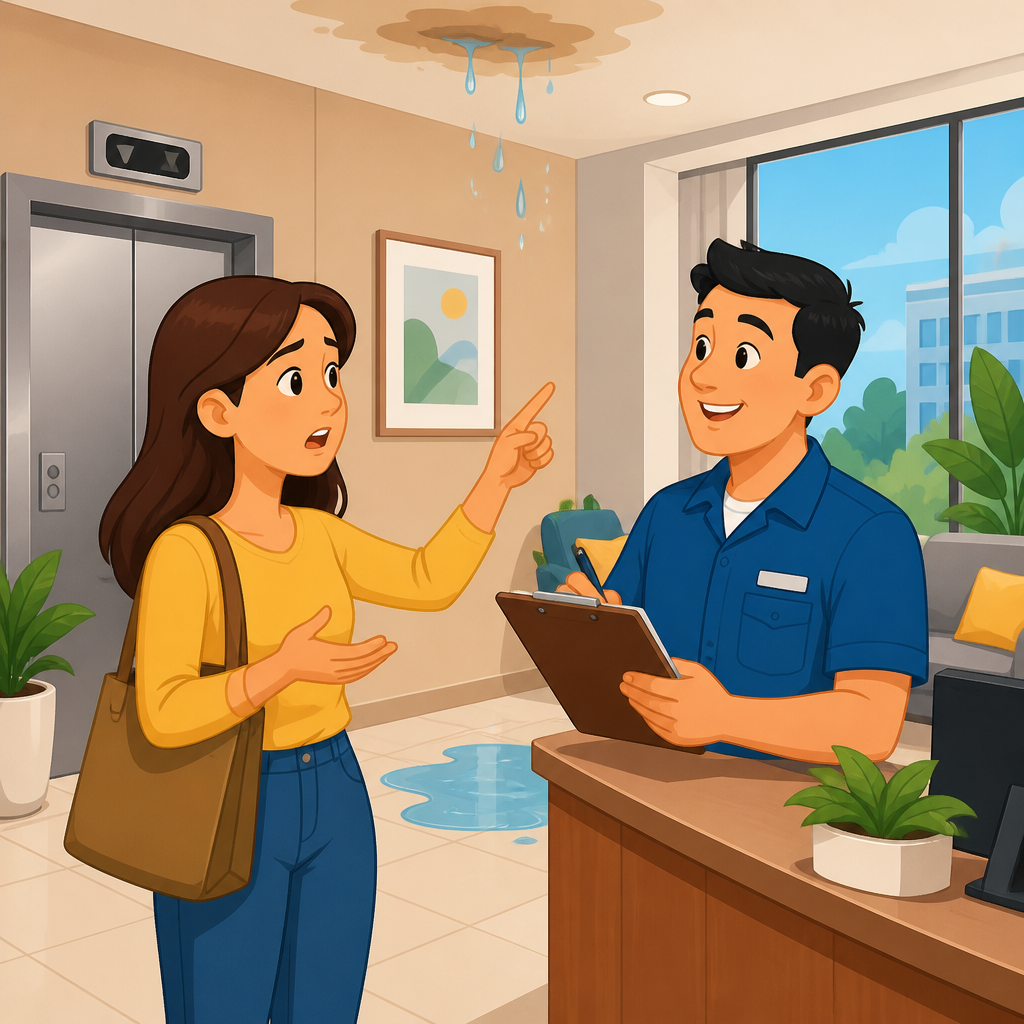
English for reporting a maintenance problem in your building is the practical language you use to tell a landlord, property manager, superintendent, concierge, or maintenance team that something in your apartment or shared building needs repair. In real life, this includes leaks, broken heaters, faulty locks, mold, power outages, pest issues, noisy ventilation, or elevators that stop working. The goal is not simply to “speak English correctly.” The goal is to describe the problem clearly, give the right details, show urgency when necessary, and get action quickly.
This skill matters because housing problems affect safety, comfort, cost, and legal rights. A small drip under a sink can become water damage. A weak electrical smell can signal a fire risk. A broken front door lock can become a security issue the same day. I have helped adult English learners prepare these conversations, and the biggest challenge is rarely grammar. It is knowing which words are useful, what order to present information in, and how to sound firm without sounding aggressive. When tenants know the right phrases, maintenance requests are faster, clearer, and easier to document.
Key terms are straightforward. A maintenance problem is any issue that requires repair or inspection. A unit is your apartment. Common area means shared spaces such as hallways, laundry rooms, lobbies, parking garages, stairwells, and elevators. Urgent usually means the issue affects safety, security, water, electricity, heat, or access. Non-urgent issues are still important, but they do not usually require an immediate response. If English is not your first language, learning a small set of reliable phrases can make phone calls, emails, and front-desk conversations much easier.
What information to give first when you report a problem
The fastest maintenance reports follow a simple structure: identify yourself, give your location, name the problem, explain how serious it is, and say when it started. This order works well on the phone, in person, by email, or through a tenant portal. A clear opening sounds like this: “Hello, this is Maria in apartment 4B. I’m calling to report a leak under my kitchen sink. The water is spreading onto the floor, and it started this morning.” That sentence gives the maintenance team four essential facts in one short message.
Specific details prevent delays. Instead of saying, “Something is wrong with the bathroom,” say, “The toilet keeps running and won’t flush properly,” or “The shower drain is blocked and the water is not going down.” Instead of “The heat is bad,” say, “The radiator is cold even though the thermostat is set to 72 degrees.” These details help staff decide whether to send a plumber, electrician, HVAC technician, or locksmith. They also help them bring the right tools and parts on the first visit.
Useful vocabulary falls into a few patterns. For plumbing, use leak, drip, clogged, backed up, overflowing, no hot water, low water pressure, and water damage. For electricity, use outlet, breaker, flickering lights, sparks, burning smell, power is out, and appliance not working. For doors and security, use key, lock, buzzer, intercom, won’t close, won’t latch, and jammed. For building systems, use elevator stuck, laundry machine out of order, air conditioning not cooling, heater not turning on, and smoke detector beeping. Accuracy matters more than advanced vocabulary.
Useful phrases for phone calls, emails, and in-person requests
The best reporting language is polite, direct, and complete. On the phone, start with a brief greeting and move to the issue quickly: “Hi, I’m calling from apartment 12C to report a maintenance problem.” Then add one strong description sentence: “There is water leaking from the ceiling in my bedroom.” If the issue is urgent, say so clearly: “This seems urgent because the ceiling is wet near a light fixture.” That last phrase changes the response because electricity and water together create a safety hazard.
Written requests need the same content, but the format should be easier to scan. A strong subject line is “Urgent maintenance request: leak in bathroom ceiling, unit 12C.” In the message, include what happened, when it started, what you already checked, and how they can reach you. For example: “The leak began around 7 p.m. I placed a bucket under it, but the water is still dripping. Please call or text me before entering.” If your building uses a portal such as AppFolio, Buildium, or Yardi, short and factual entries work best because maintenance teams often read them on mobile devices.
In person, especially with a front-desk worker or superintendent, your goal is confirmation. After you explain the issue, ask a closing question: “Could you please submit that as an urgent request?” or “Can you tell me when someone may come to inspect it?” I often recommend repeating the key point once: “Just to confirm, this is apartment 12C, and the leak is in the bathroom ceiling.” Repetition may feel simple, but it reduces misunderstandings, especially in noisy lobbies or fast conversations. For more practical speaking patterns in stressful situations, see the main guide at 5 Minute English.
How to describe urgency, timelines, and access clearly
Many learners know the problem vocabulary but struggle with urgency. The difference between urgent and routine language changes the response you receive. If the issue affects safety, use direct phrases such as “There is a strong gas smell,” “The front door lock is broken,” “The toilet is overflowing,” or “We have no heat.” If the issue is inconvenient but not dangerous, say, “This is not an emergency, but it does need repair,” or “The bedroom window does not close properly.” This balance helps you sound credible.
Time phrases are equally important. Maintenance teams need to know whether a problem is new, recurring, or worsening. Good examples include “It started last night,” “This has been happening for three days,” “It was repaired before, but the problem came back,” and “The noise gets worse when the air conditioner turns on.” Those details help technicians diagnose the cause. In my experience, recurring problem language is especially useful because it signals that a quick surface fix may not be enough.
Access language prevents missed visits. If you will be home, say, “I’m available after 3 p.m.” If the building has permission rules, say, “You may enter if management has a key,” or “Please call me before anyone enters the unit.” If pets are inside, mention that too: “I have a dog, so please text me first.” These details sound small, but they save time and reduce failed service calls. In large apartment buildings, missed entry is one of the most common reasons a maintenance issue remains unresolved for days.
| Situation | Best phrase to use | Why it works |
|---|---|---|
| Water leak | “There is active water leaking under the sink.” | Shows the problem is happening now |
| No heat | “The heater is not working, and the apartment is very cold.” | Explains impact, not just the device |
| Broken lock | “My apartment door will not lock from the outside.” | Highlights a security risk |
| Recurring issue | “This was fixed last week, but the same problem returned.” | Signals a deeper cause may exist |
| Need appointment | “I am available between 2 and 5 p.m. tomorrow.” | Helps schedule access quickly |
Follow-up language when the problem is not fixed
Reporting the issue once is not always enough. Good follow-up English is calm, factual, and documented. Start by referring to the earlier request: “I’m following up on the maintenance request I submitted on Tuesday about the bathroom leak.” Then explain the current status: “The issue has not been fixed yet,” or “Someone inspected it, but the leak is continuing.” This wording is much stronger than simply saying, “No one helped me,” because it gives a date and a specific unresolved condition.
When a problem becomes more serious, update the description. For example: “Since my last report, the water has spread to the wall,” or “The smell is now stronger in the hallway.” If you have photos, mention them: “I attached photos taken this morning.” Many property managers treat photo evidence seriously because it creates a time record and helps prioritize work orders. In professionally managed buildings, maintenance teams often triage requests based on risk, scope, and potential liability, so better evidence can lead to faster action.
You should also know the difference between firm language and emotional language. “I need an update today because the leak is damaging the floor” is effective. “This is ridiculous and nobody cares” may express frustration, but it often slows cooperation. If you need escalation, use clear terms: “Could you please escalate this request?” “May I speak with the property manager?” or “Please confirm when the repair is scheduled.” These phrases are standard, respectful, and difficult to ignore.
Common mistakes and better alternatives
The most common mistake is being too vague. “It’s broken” does not tell staff what is broken, where it is, or what the impact is. A better sentence is “The kitchen faucet handle is loose, and I cannot turn the water off completely.” Another mistake is overusing emergency language for minor issues. If every request is “urgent,” staff may trust you less later. Save urgent wording for real risks involving water intrusion, heat loss in winter, electrical danger, security failure, blocked toilets when there is only one bathroom, or loss of essential services.
Another frequent problem is missing documentation. After a phone call, send a short email or portal message repeating the issue. Written records matter in every building, whether management is excellent or disorganized. Finally, avoid long stories before the key facts. Start with the problem, then add background if needed. Clear English for reporting a maintenance problem in your building is simple: identify the issue, describe the impact, state the timeline, and ask for the next step. Practice three or four model sentences now, and you will handle the real situation with more confidence and much better results.
Frequently Asked Questions
1. What should I say first when reporting a maintenance problem in my building?
Start with a clear, direct explanation of the issue. In most situations, the best approach is to identify yourself, state your apartment or unit number, and describe the problem in simple, specific language. For example, you might say, “Hello, this is Maria in apartment 5B. My kitchen sink is leaking under the cabinet,” or “I’m calling from unit 12A because the heater is not working.” This kind of opening helps the landlord, superintendent, concierge, or maintenance team understand the problem immediately without needing to ask basic follow-up questions.
It also helps to include when the problem started and whether it is getting worse. You can say, “The leak started this morning,” “The power has been out in only my bedroom since last night,” or “The front door lock has been sticking for the past three days.” If the issue affects safety, health, or access, mention that right away. For example, “There is water coming through the ceiling and spreading quickly,” “I smell gas near the stove,” or “The elevator is not working and my elderly parent cannot use the stairs.” The goal is not to use complicated vocabulary. The goal is to communicate the facts clearly, calmly, and in an organized way so the repair process can begin faster.
2. How can I describe a maintenance problem clearly in English if I do not know many technical words?
You do not need specialized repair vocabulary to report a maintenance issue effectively. The most important thing is to describe what you see, hear, smell, or experience. Instead of worrying about the exact name of a part or system, explain the symptoms. For example, you can say, “Water is dripping from the ceiling above the window,” “The bathroom fan makes a loud buzzing noise,” “The radiator is cold even though the heat is on,” or “The key turns, but the door does not open easily.” These descriptions give maintenance staff enough information to understand the problem and decide what tools or inspections may be needed.
A useful formula is: what the problem is, where it is, when it started, and how serious it is. For example: “There is a bad smell coming from the kitchen sink since yesterday, and the water is draining very slowly.” Or: “The hallway light outside my apartment has been flickering all week, and now it does not turn on at all.” You can also use simple adjectives such as broken, leaking, blocked, noisy, loose, cracked, wet, cold, hot, dark, unsafe, or damaged. If you are unsure, it is completely acceptable to say, “I’m not sure what the part is called, but…” and then describe the issue. Clear everyday English is often more useful than technical language when reporting building maintenance problems.
3. What details should I include so the maintenance team can respond quickly and correctly?
Include practical details that help the building staff assess urgency and avoid delays. First, give your full name, apartment number, and the best way to contact you. Then describe the exact location of the problem, such as “under the bathroom sink,” “in the bedroom near the window,” “in the shared laundry room,” or “at the main entrance of the building.” After that, explain what is happening, when it began, and whether it is constant or intermittent. For example, “The toilet has been running continuously since last night,” or “The lights in the hallway go off randomly every few hours.”
You should also mention any actions you have already taken. For instance, “I turned off the water valve,” “I reset the circuit breaker, but it did not help,” or “I cleaned the filter, but the ventilation is still very noisy.” If the problem creates a health or safety risk, say so clearly. Mold, exposed wires, gas smells, flooding, broken locks, elevator failures, and loss of heat in winter are examples of issues that may need urgent attention. Finally, if access is limited, tell them your availability: “I will be home after 6 p.m.” or “The concierge can let someone into the unit before noon.” These details reduce back-and-forth communication and make it easier for the repair team to act efficiently.
4. How do I report an urgent maintenance problem in a way that sounds serious but professional?
When a maintenance issue is urgent, your language should be firm, specific, and calm. Avoid vague statements like “Something is wrong” or “Please fix this soon” without explaining why it is urgent. Instead, say exactly what is happening and what risk it creates. For example: “There is water leaking heavily from the ceiling and it is spreading across the floor,” “I smell gas in the kitchen and have turned off the stove,” or “The building entrance lock is broken and the door will not close securely.” This kind of wording communicates urgency without sounding emotional or unclear.
If necessary, explicitly say that the issue is urgent or a safety concern. You can say, “This is an urgent repair request,” “This may be a safety issue,” or “This needs immediate attention because there is no heat in the apartment.” If you have already taken protective steps, mention them: “I moved furniture away from the leak,” “I shut off the electricity in that room,” or “I am keeping the area clear until someone arrives.” In a phone call, email, text, or maintenance portal message, it is helpful to ask for confirmation and an estimated response time. For example: “Please confirm that you received this message and let me know when someone can come.” Professional, direct language shows that you understand the seriousness of the issue and helps building management prioritize the repair appropriately.
5. What are useful English phrases for following up if the problem has not been fixed yet?
Following up is an important part of reporting building maintenance problems, especially if the first message did not lead to a repair. A good follow-up should be polite but clear. Start by referring to your earlier request and restating the problem. For example: “I’m following up on the maintenance request I submitted on Monday about the leaking pipe under my kitchen sink,” or “I previously reported that the heater in apartment 8C is not working, and the issue has still not been resolved.” This reminds the recipient of the history and shows that the problem is ongoing.
You should also explain whether the situation has stayed the same or worsened. You might say, “The leak is now affecting the floor,” “The mold area has gotten larger,” or “The elevator is still out of service, which is making access difficult.” Then ask for a clear update: “Could you please let me know when this will be repaired?” “Is there an appointment scheduled?” or “Can someone inspect this today?” If the issue is serious, it is acceptable to be more direct while remaining respectful: “This problem is affecting habitability and needs prompt attention,” or “Because the lock is still broken, I need an urgent update on next steps.” Strong follow-up language helps you advocate for yourself and makes it more likely that your request will receive proper attention.