
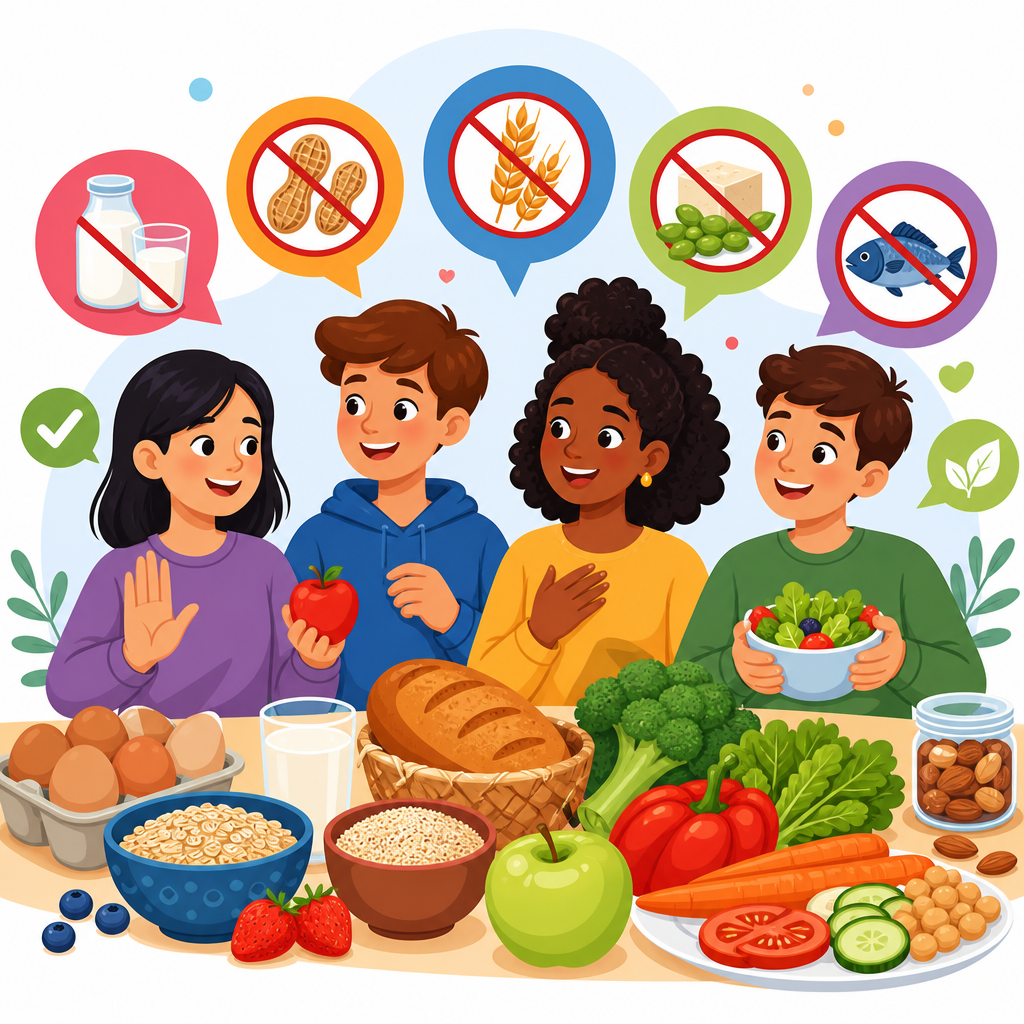
Vocabulary for food allergies and dietary needs matters because a single misunderstood word can turn an ordinary meal into a medical emergency, an uncomfortable social moment, or a frustrating travel experience. In practical English, this vocabulary includes the terms people use to describe allergies, intolerances, ingredient restrictions, religious food rules, lifestyle choices, and the level of risk involved in preparing and serving food. I have taught survival English for restaurants, grocery stores, and host-family situations, and the same pattern appears every time: learners often know food names, but they do not know how to state a restriction clearly, ask follow-up questions, or understand a server’s reply. That gap creates real consequences.
A food allergy is an immune system reaction to a specific food protein. Even a small amount can trigger symptoms such as hives, swelling, vomiting, wheezing, or anaphylaxis, which is a severe, potentially life-threatening reaction that requires immediate treatment, usually with epinephrine. A food intolerance is different. It does not involve the same immune response and may cause digestive symptoms such as bloating, cramps, or diarrhea. Dietary needs is the broader term. It covers allergies and intolerances, but also medical diets, vegetarian and vegan eating, religious restrictions such as halal or kosher, and texture or ingredient limits recommended by a clinician.
Learning this vocabulary improves safety, independence, and confidence. It helps a traveler explain a peanut allergy in a busy café, a parent check labels for milk powder, or a student clarify that “gluten-free” is not the same as “low carb.” It also helps listeners respond responsibly. If someone says “severe shellfish allergy,” the correct response is not “just pick it out.” The correct response is to discuss ingredients, shared equipment, and contamination risk. That precision is why this topic deserves a focused deep dive.
Core Terms You Must Understand and Use Correctly
The most important words are allergy, allergic, reaction, intolerance, sensitivity, ingredient, contains, may contain, cross-contact, contamination, substitute, and safe. In food service training, I emphasize that these terms are not interchangeable. “I am allergic to nuts” is stronger and clearer than “nuts are bad for me.” “Does this contain sesame?” is better than “Is this okay?” because it names the risk directly. “Cross-contact” means an allergen was transferred from one food or surface to another, such as fries cooked in oil that also cooked breaded shrimp. Many restaurants still say “cross-contamination,” but allergy specialists often prefer “cross-contact” because the issue is allergen transfer, not bacteria.
Several food words appear often on labels and menus. Dairy usually refers to milk-based ingredients, including butter, cream, cheese, yogurt, and whey. Gluten is a protein found in wheat, barley, and rye. Shellfish usually includes shrimp, crab, lobster, mussels, clams, and oysters, while fish refers to finned fish such as salmon or tuna. Tree nuts include almonds, walnuts, cashews, pistachios, pecans, and hazelnuts. Peanuts are legumes, not tree nuts, but many people avoid both because both can trigger severe reactions and are often handled in the same kitchen.
People also need language for severity. Useful phrases include “mild reaction,” “severe allergy,” “trace amounts,” “airborne exposure,” “shared fryer,” and “prepared on the same surface.” A person with celiac disease may ask whether oats are certified gluten-free because standard oats are often processed near wheat. A person with an egg allergy may ask whether a glaze, dressing, or mayonnaise contains egg. These details matter because allergens are often hidden in sauces, broths, spice blends, desserts, and processed snacks.
How to Ask About Ingredients, Preparation, and Risk
The safest questions are direct and specific. Start with the allergen, then ask about ingredients, then ask about preparation. For example: “I have a severe sesame allergy. Does this dish contain sesame oil, tahini, or sesame seeds?” Then continue: “Is it made on a separate surface?” This sequence works because it helps staff move from recipe knowledge to kitchen procedure. In my experience, vague questions produce vague answers. A server may say a dish is “nut-free” because no nuts are visible, while pesto, mole, marzipan, or a dessert topping may still contain nuts.
When ordering, useful verbs include contain, include, use, fry, grill, bake, marinate, garnish, and substitute. Useful nouns include stock, broth, dressing, sauce, seasoning, batter, and topping. Many hidden-allergen situations come from these words. Wheat may appear in soy sauce, breading, and thickened soups. Milk may appear in mashed potatoes, chocolate, caramel, and deli meats. Egg may appear in aioli, pasta, meatballs, and pastries. Soy may appear in marinades, vegetable protein, and many packaged foods. Clear vocabulary helps uncover those risks before the first bite.
| Need | Best question | Why it works |
|---|---|---|
| Peanut allergy | Does this contain peanuts or peanut oil? | Names both the whole food and a common hidden ingredient. |
| Milk allergy | Is there any milk, butter, cream, whey, or cheese in this? | Covers major dairy forms instead of asking only about milk. |
| Gluten-free diet | Is this made with wheat, barley, rye, or regular soy sauce? | Targets the grains and a frequent hidden source. |
| Shellfish allergy | Is this cooked in the same fryer or pan as shrimp or other shellfish? | Checks cross-contact, not just ingredients. |
If the answer is uncertain, the next phrase should be simple: “Please check with the kitchen.” If staff still cannot confirm, the safest response is to choose another dish or leave. That may feel inconvenient, but uncertainty is meaningful information. Clear food vocabulary supports the same practical communication skills used in other daily situations, including housing and contracts; for broader everyday survival English, this main guide is useful: English for Renting an Apartment: Words You Need Before You Sign.
Menu, Label, and Packaging Vocabulary That Prevents Mistakes
Reading labels requires a different set of terms. On packaged food, look for ingredient list, allergen statement, facility, manufactured on shared equipment, certified, and advisory label. In the United States, the Food Allergen Labeling and Consumer Protection Act requires plain-language labeling for major allergens including milk, egg, fish, crustacean shellfish, tree nuts, peanuts, wheat, soy, and, since 2023, sesame. In the European Union, labeling rules require clear identification of 14 allergens, including celery, mustard, lupin, and sulfites. Knowing that laws vary by country is important because the vocabulary on labels may change even when the food looks familiar.
Some phrases are legally useful but medically imperfect. “May contain” means there is a possibility of accidental presence. “Processed in a facility that also handles nuts” is broader and does not tell you the actual level of risk. “Dairy-free” may still require scrutiny if the concern is severe milk allergy and the product is made on shared lines. “Plant-based” does not automatically mean egg-free or milk-free. “Non-dairy” in some products has historically included milk-derived casein. That is why strong readers scan both the front-of-package claim and the full ingredient list.
Menu vocabulary also deserves attention. Vegan means no animal products, but it does not guarantee freedom from allergens such as soy, wheat, sesame, or nuts. Vegetarian usually means no meat or fish, though definitions vary. Halal and kosher refer to religious standards, not allergy safety, although they can overlap with some dietary choices. “Free from” is more promising than “made without,” but neither replaces checking. In bakeries especially, flour dust and shared tools can make display labels less reassuring than they seem.
Useful Phrases for Restaurants, Travel, Schools, and Home Cooking
Context changes the best wording. In restaurants, the strongest sentence is often: “I have a severe allergy to ___, and even small amounts can make me sick.” That tells the listener the issue is medical and immediate. On airplanes, travelers may need to ask whether snacks contain the allergen and whether the crew can note the allergy, though airline policies vary and no airline can promise a completely allergen-free cabin. In schools, parents and students often need vocabulary such as emergency plan, epinephrine auto-injector, school nurse, allergy-aware table, and ingredient disclosure.
At home or with hosts, social language matters too. Polite but firm phrases work best: “Thank you for cooking. Before I eat, can I ask what oil and sauce you used?” or “I cannot eat food that touched shrimp.” These sentences avoid blame while stating a non-negotiable safety limit. For grocery shopping, useful terms include label change, reformulated, expired, and precautionary statement, because a brand that was safe last month may add sesame flour, milk powder, or another allergen in a new version.
Medical and advocacy organizations reinforce this precision. Food Allergy Research & Education advises people to read every label every time. The U.S. Food and Drug Administration explains that labels and manufacturing practices can change without notice. In practical English lessons, I tell learners to memorize a short script and repeat it exactly under stress. When someone is rushed, hungry, or embarrassed, memorized wording is more reliable than improvised language. That is especially true for teens ordering with friends, business travelers in unfamiliar cities, and anyone speaking English as a second language.
Common Confusions and How Better Vocabulary Solves Them
The biggest confusion is treating all dietary restrictions as preferences. If a customer says, “I am gluten-free,” staff may assume a lifestyle choice and not understand the seriousness of celiac disease or a wheat allergy. If the customer says, “I have celiac disease, so I need food without wheat, barley, or rye and without shared-fryer exposure,” the message becomes actionable. Another common problem is assuming removal makes food safe. Taking croutons off a salad does not make it safe for someone avoiding gluten if the crumbs remain or if the chicken was marinated with soy sauce.
Hidden ingredients create another layer of confusion. Sesame may appear as tahini. Milk may appear as whey, casein, ghee, or lactose-containing ingredients. Egg may appear in wash, meringue, albumin, or some pasta. Peanut may show up in satay sauce, candies, or peanut oil. Shellfish may appear in sauces, dumpling fillings, or seafood stock. Strong vocabulary lets people ask the right second question: “What is in the sauce?” That follow-up is often where the real risk appears.
The key takeaway is simple: precise food allergy and dietary vocabulary protects health, reduces misunderstandings, and makes everyday English more useful in the real world. Learn the difference between allergy, intolerance, and preference. Practice naming specific allergens, hidden ingredients, and preparation risks. Ask direct questions about sauces, oils, fryers, and shared surfaces. Read labels carefully, and remember that menu claims are only a starting point. If you use this vocabulary confidently, you can order, shop, travel, and eat with far more safety and control. Start by memorizing three clear sentences you can use today, then practice them until they feel automatic.
Frequently Asked Questions
What is the difference between a food allergy, a food intolerance, and a dietary preference?
A food allergy is an immune system reaction to a specific food protein. Even a very small amount can trigger symptoms, and in some cases the reaction can be severe or life-threatening. Common examples include allergies to peanuts, tree nuts, shellfish, eggs, milk, soy, wheat, and sesame. In everyday English, this is why the phrase “I’m allergic to…” must be taken seriously and understood clearly by restaurant staff, hosts, teachers, and travel companions.
A food intolerance is different because it usually does not involve the immune system. Instead, it often affects digestion. For example, a person with lactose intolerance may get stomach pain, gas, or diarrhea after consuming dairy, but they are not having the same type of reaction as someone with a milk allergy. This difference matters because the vocabulary people use changes the level of urgency. “I have an intolerance” often means discomfort is likely, while “I have an allergy” means exposure could be dangerous.
A dietary preference is a personal choice rather than a medical condition. Examples include vegetarian, vegan, low-carb, or avoiding sugar. Preferences should still be respected, but the risk level is not usually the same as with an allergy. In practical communication, it helps to use precise wording. Saying “I don’t eat meat,” “I avoid dairy,” or “I’m vegan” gives useful information, but it does not automatically mean there will be a medical reaction if a mistake happens. Clear vocabulary helps people avoid confusion, especially in restaurants, grocery stores, and social situations.
Which food allergy and dietary restriction words are most important to know in restaurants and while traveling?
The most useful vocabulary includes words for common allergens, preparation risks, and restriction types. Essential allergy words include peanuts, tree nuts, shellfish, fish, eggs, milk, dairy, soy, wheat, sesame, and gluten. It is also important to know the difference between “contains,” “may contain,” and “made in a facility that also processes.” These phrases appear on labels and menus and can signal different levels of possible exposure.
For dining out, key practical expressions include “I’m allergic to…,” “Does this contain…?,” “Can you check the ingredients?,” “Was this fried in the same oil?,” and “Is there any cross-contact?” Cross-contact means an allergen accidentally gets into another food through shared surfaces, utensils, fryers, cutting boards, or gloves. That term is especially important because a dish may not list an allergen as an ingredient but still become unsafe during preparation.
For dietary needs beyond allergies, useful words include vegetarian, vegan, halal, kosher, gluten-free, dairy-free, nut-free, egg-free, pescatarian, and plant-based. Travelers also benefit from knowing how to describe severity: “It’s a serious allergy,” “Even small amounts are dangerous,” or “I cannot eat food that touched…” These phrases are more effective than vague wording. In real-world English, especially under stress, direct and specific language is safest.
How can someone explain a food allergy or dietary need clearly in English?
The best approach is to be simple, direct, and specific. Instead of saying “I can’t really have that,” say “I have a peanut allergy,” “I’m lactose intolerant,” or “I do not eat pork for religious reasons.” Clear statements reduce misunderstanding. If the situation involves a true allergy, it also helps to explain the seriousness: “Even a small amount can make me very sick,” or “I need to avoid cross-contact.” These short sentences are easy for restaurant staff or hosts to understand quickly.
When asking questions, focus on ingredients and preparation. Useful examples include “Does this dish contain dairy?”, “Is there soy sauce in this?”, “Was this cooked separately?”, and “Can you use clean utensils?” If the person you are speaking to seems unsure, ask them to confirm with the kitchen, manager, or product label. In many situations, the problem is not unwillingness to help but incomplete understanding of the vocabulary.
It is also smart to avoid soft or indirect wording when safety is involved. Phrases like “I’m trying to avoid nuts” or “I don’t usually eat gluten” may sound less serious than the reality. If it is a medical need, say so. If it is a preference, say that too. Accurate language builds trust and helps others respond appropriately. In restaurants, schools, hotels, and even family dinners, this kind of practical English can prevent mistakes and make communication smoother for everyone involved.
What does “cross-contact” mean, and why is it such an important term for people with food allergies?
Cross-contact happens when a food allergen is accidentally transferred to another food that would otherwise be safe. This can happen through shared knives, cutting boards, pans, serving spoons, countertops, gloves, grills, toasters, or fryers. For example, french fries may seem safe for someone avoiding wheat, but they may become unsafe if they are fried in the same oil as breaded foods. Similarly, a salad may contain no nuts as ingredients, but it could still be risky if prepared with the same utensils used for nut-containing dishes.
This term is crucial because many people understand ingredients but forget preparation methods. A server may honestly say, “There are no peanuts in this dish,” but if the sauce was stirred with a spoon used for a peanut dish, that answer is incomplete for someone with a severe allergy. That is why vocabulary around handling and preparation is just as important as vocabulary around ingredients.
In practical English, people should know how to ask about cross-contact directly. Good examples are “Is this prepared separately?”, “Do you use shared equipment?”, “Are the fries cooked in a shared fryer?”, and “Can the kitchen avoid cross-contact?” These questions are especially important in busy restaurants, bakeries, buffets, and street food settings. Understanding and using this term can dramatically improve food safety and reduce the risk of accidental exposure.
Why does accurate food allergy and dietary vocabulary matter so much in everyday life?
Accurate vocabulary matters because food decisions often happen quickly, in public, and with limited information. A single misunderstood word can lead to a medical emergency, embarrassment at a social event, or a stressful travel experience. If someone says “allergy” when they mean “preference,” others may become less responsive over time. On the other hand, if someone uses weak or vague language for a severe allergy, the danger may be underestimated. Precision protects health and improves communication.
This vocabulary also helps people navigate many everyday situations beyond restaurants. In grocery stores, it helps with reading labels and recognizing hidden ingredients. In schools and workplaces, it supports safe meal planning and respectful communication. In travel, it becomes essential when dealing with unfamiliar menus, language barriers, and different cooking practices. Terms such as allergy, intolerance, dairy-free, gluten-free, halal, kosher, vegetarian, and cross-contact give people a shared framework for discussing food clearly.
Just as important, strong food-related vocabulary reduces social friction. It allows people to explain their needs without sounding rude, defensive, or apologetic. It helps hosts ask better questions, helps servers give more accurate answers, and helps families make safer choices together. In survival English for restaurants and grocery shopping, these are not just words to memorize. They are practical tools that support safety, confidence, independence, and respect in real life.





