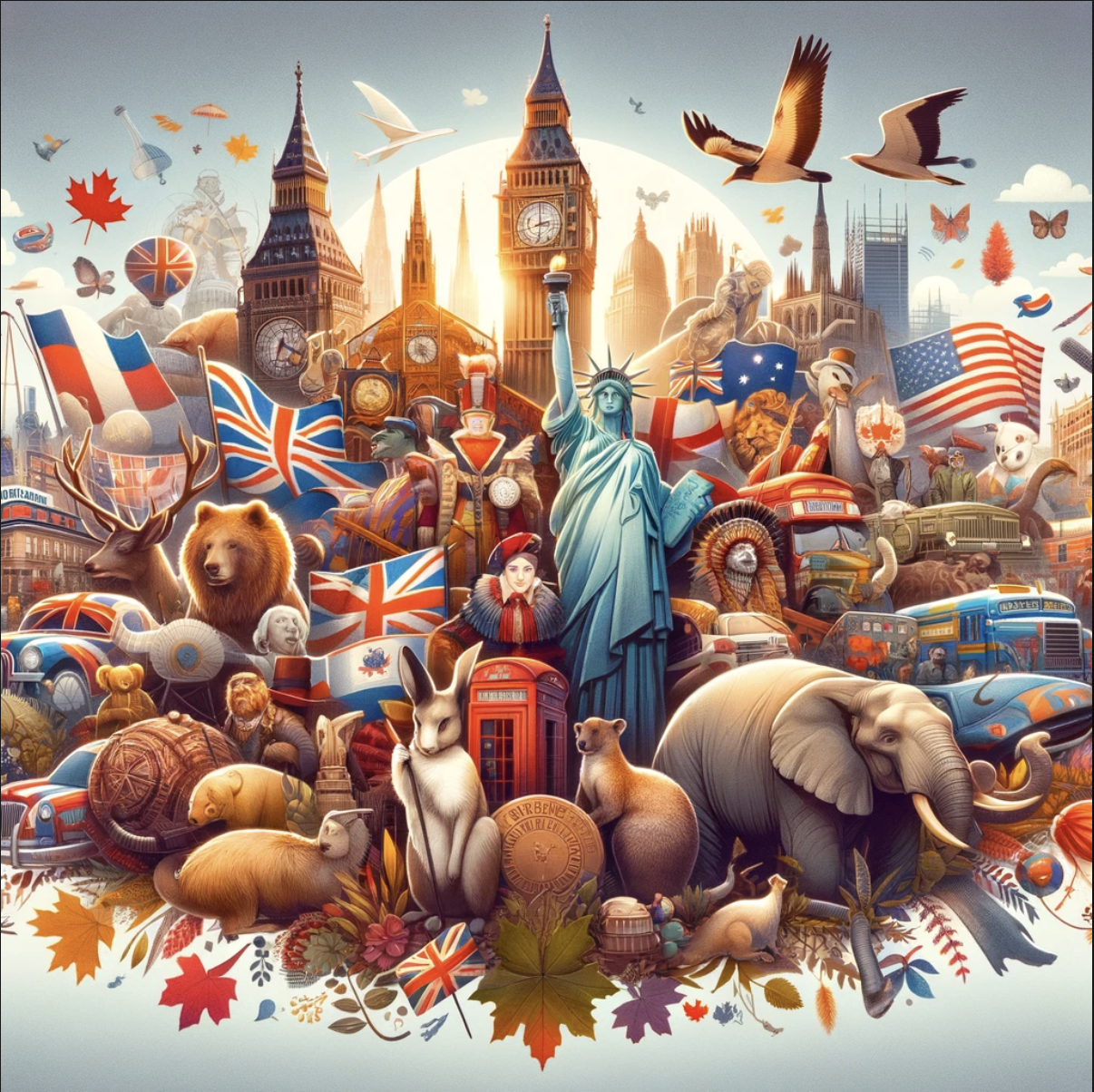
English idioms have meanings that are not always clear from their individual words. Some have documented histories, while others attract memorable stories that are difficult to verify. Learn the present-day meaning separately from an origin claim, and check historical evidence before treating a story as fact.
Breaking the Ice
Let’s start with “breaking the ice,” a phrase used to describe the act of overcoming initial social awkwardness. Historically, this phrase has maritime origins. In colder regions, the shipping industry was often impeded by the formation of ice. Smaller ships, known as ice-breakers, would precede larger ones, literally breaking the ice to clear a path. Over time, this concept found its way into social interactions, symbolizing the act of clearing the way for conversation.
Spill the Beans
“Spill the beans” means to reveal a secret. The ancient-Greek bean-voting story is not established here as the origin of the English expression. Michael Quinion’s research traces early twentieth-century American uses and a developing meaning. Example: “Please don’t spill the beans about the surprise party.”
Mad as a Hatter
Mad as a hatter is an informal expression for behaving irrationally or eccentrically. Its history is often linked to mercury exposure in hat-making, but that explanation is disputed. In an Oxford University Press discussion, etymologist Anatoly Liberman challenges the connection. Treat it as a proposed origin rather than an undisputed account. The expression can sound insulting; “acting strangely” is a more direct description.
The Whole Nine Yards
“The whole nine yards” means everything or the full extent of something. Its precise origin remains disputed. Accounts involving ammunition belts, cloth or concrete mixers should not be presented as established explanations. World Wide Words discusses documented variants and competing theories. Example: “We planned the music, food and decorations—the whole nine yards.”
Biting the Bullet
“Biting the bullet” means accepting or facing something difficult or unpleasant. Accounts often connect it with enduring physical pain in military settings, but that does not establish that all patients before anaesthesia were given bullets to bite. For ordinary usage, focus on the figurative meaning: “I bit the bullet and dealt with the difficult paperwork.”
Dead as a Doornail
The phrase “dead as a doornail” is used to describe something that is unequivocally dead or devoid of life. Its origins can be traced back to medieval construction methods. When building doors, carpenters would hammer nails through and then flatten the protruding end to prevent them from being pulled out, rendering the nail ‘dead’ as it could no longer be used. Shakespeare used this phrase in several of his plays, cementing its place in the English language.
Turn a Blind Eye
“Turn a blind eye” means to ignore something deliberately. The expression is associated with a story about Nelson at Copenhagen in 1801, but earlier related wording exists. The historical examples collected by Word Histories show why a famous anecdote should not be treated as proof that Nelson coined the expression.
Let the Cat Out of the Bag
Let the cat out of the bag means to reveal a secret: “I let the cat out of the bag about the surprise visit.” The livestock-market story is one hypothesis, not an established medieval origin. MIT’s idiom guide explicitly describes the origin as unclear. Keep the known meaning separate from a possible explanation of the image.
Saved by the Bell
“Saved by the bell” is commonly understood as being rescued from an unwanted situation at the last moment. This phrase is often thought to be connected to the fear of being buried alive. In the 18th and 19th centuries, coffins were sometimes equipped with bells, which a mistakenly buried person could ring to be rescued. However, there is no concrete evidence supporting this theory. The phrase more likely comes from boxing, where a boxer saved by the ringing of the bell signaling the end of a round.
More Than You Can Shake a Stick At
“More than you can shake a stick at” is an American phrase used to indicate abundance. It likely originates from farmers controlling their sheep or cattle by shaking a stick. If there were more animals than they could control with the stick, it signified abundance.
Paint the Town Red
Lastly, “paint the town red” refers to a night of celebration and revelry. The most popular story behind this phrase comes from the Marquis of Waterford and his friends, who, in 1837, went on a spree in the English town of Melton Mowbray, painting buildings and street signs red. While the truth of this story is debated, it certainly captures the essence of the phrase.
Caught Red-Handed
Caught red-handed means caught in the act of doing something wrong. Related red-hand forms occur in Scots legal writing. The Dictionary of the Older Scottish Tongue records both being caught in the act and having evidence of the crime in one’s possession. The modern idiom does not require literal blood. Example: “They caught him red-handed copying the answers.”
Resting on Laurels
The phrase “resting on laurels” refers to someone relying on past achievements and not striving for further success. Its origin dates back to ancient Greece. Victorious athletes and poets were often crowned with wreaths made from leaves of the laurel tree, a symbol of honor and accomplishment. Over time, ‘resting on one’s laurels’ came to mean basking in the glory of past achievements without further effort.
Kick the Bucket
“Kick the bucket” is a colloquial way of saying someone has died. There are several theories about its origin. One popular explanation relates to how pigs were slaughtered in the Middle Ages. They were hung from a beam (known as a ‘bucket’) and the pig would kick during the process. Another theory suggests it comes from a method of suicide in which a person standing on a bucket with a noose around their neck would kick the bucket away.
At Loggerheads
Being “at loggerheads” means to be in a serious disagreement with someone. This phrase originates from the 17th century, where a ‘loggerhead’ was a tool with a long handle and a bulbous end, used in heating liquids like tar. It later came to symbolize stubborn and hot-headed individuals who are involved in disputes, akin to clashing heads.
Bite the Bullet
“Bite the bullet” is another form of the expression discussed above: accept a difficult or unpleasant task. The repeated story about surgical patients biting bullets is not sufficient evidence for a precise origin. Example: “We need to bite the bullet and revise the whole draft.”
Butter Someone Up
“Butter someone up” means to flatter or please a person to obtain a favour. Dictionary.com’s idiom entry relates the image to lavish praise. The claim that the English phrase was adopted from an Indian butter-throwing ritual is not established by that reference. Example: “He tried to butter up his sister before asking to borrow her bicycle.”
Cat Got Your Tongue?
“Cat got your tongue?” asks why someone is not speaking. It can sound teasing or impatient, so use it with care. Its origin is unknown. The Phrase Finder investigation rejects both the tongue-punishment and naval-whip stories as unsupported. A neutral alternative is “Would you like to say something?”
Go the Whole Hog
To “go the whole hog” means to do something completely or thoroughly. This phrase is believed to originate from America. In the early 19th century, at a time when people were more likely to buy a portion of an animal, such as a side of bacon, choosing to purchase the whole animal was seen as going to extremes, hence ‘the whole hog’.
Hair of the Dog
“Hair of the dog” refers to drinking more alcohol in an attempt to relieve a hangover. It is an expression, not sound treatment advice: NIAAA’s hangover guidance explains that more alcohol can prolong the problem. Historical stories about using dog hair should not be read as medical advice either.
Under the Weather
Under the weather means feeling unwell. Its nautical history should not be reduced to the story that sick sailors simply went below deck. David Wilton’s historical research discusses sheltered anchorage and later figurative uses. Those records support a more careful account than a direct claim about seasick sailors. Example: “I am a little under the weather today.”
Fly off the Handle
To “fly off the handle” means to suddenly become very angry. This phrase comes from the 19th century American frontier, where poorly made axe heads would sometimes fly off their handles unexpectedly. This analogy was then applied to sudden outbursts of anger.
Pull Out All the Stops
“Pull out all the stops” means to do everything you can to make something successful. This phrase comes from the world of organ music. Organs have stops that control the flow of air to the pipes. Pulling out all the stops increases the volume and range of the instrument, allowing the organist to maximize the musical impact.
Ringing in My Ears
When something is “ringing in your ears,” it means that a comment or idea is persistently in your thoughts. This phrase likely originates from the physical sensation of tinnitus, where a person experiences a ringing in their ears, often after exposure to loud noise. The metaphorical use implies that an idea or comment is as hard to ignore as the persistent ringing sound.
A Red Herring
A red herring is a misleading clue or distraction. Historical accounts describe using the smell of herring to give hounds a trail to follow; that is different from training them to ignore it. Research with dated examples distinguishes that practice from stories about disrupting a hunt and records figurative uses before Cobbett’s familiar 1807 account. Do not present one hunting anecdote as the complete proven origin.
Close, But No Cigar
“Close, but no cigar” is said when someone almost achieves success but ultimately falls short. This phrase likely comes from the early 20th century, when cigars were common prizes at carnivals. Participants in games would often come close to winning but would not receive a prize (a cigar) unless they were completely successful.
Crocodile Tears
Displaying “crocodile tears” means expressing insincere sorrow. This phrase originates from an ancient belief that crocodiles shed tears while consuming their prey. This myth was popularized in medieval bestiaries and was thought to symbolize the hypocritical display of false sadness.
A Stone’s Throw
To say something is “a stone’s throw” away means it is a short distance from where you are. This phrase dates back to ancient times, where throwing a stone was a common way to measure a short distance. It conveys the idea of a distance that is close enough to throw a stone to.
On Tenterhooks
Being “on tenterhooks” means to be in a state of anxious suspense. This phrase comes from a device called a tenter, a wooden frame used to stretch cloth after it was made. The cloth was hooked onto the tenter by hooks, and left to dry and stretch. Being on tenterhooks thus came to represent being in a state of tension and anxiety, much like the stretched cloth.
White Elephant
A white elephant is a possession or project whose cost or trouble outweighs its usefulness. The story that Thai kings routinely ruined disliked courtiers by giving them sacred elephants should not be taught as documented royal practice. Historical research on the expression traces the ruinous-gift story in Western writing. Example: “The unused building became a white elephant because it was so expensive to maintain.”
Burning the Midnight Oil
“Burning the midnight oil” means working late into the night. This phrase comes from the days before electricity when people used oil lamps for light. Burning oil late into the night indicated working late or studying hard.
A Leap in the Dark
Taking “a leap in the dark” means doing something without knowing what the result will be. This phrase probably originates from the physical act of jumping into an area where you can’t see what’s there, symbolizing a risk or a venture into the unknown.
The Whole Kit and Caboodle
The whole kit and caboodle means everything or the entire group. Its word history includes kit and boodle, both used for a collection or whole lot; boodle is related to Dutch boedel. Dated examples and a discussion of the variants show a more complicated history than a direct Dutch-to-English explanation of caboodle alone. Example: “We packed the books, games and the whole kit and caboodle.”
The Real McCoy
The real McCoy means the genuine thing. The boxer and inventor stories do not establish its origin. A published antedating report by Fred Shapiro identifies a Scottish newspaper use of real Mackay from 1848. That report supplies earlier evidence, rather than proof of a particular person’s coinage. Example: “The signed letter was the real McCoy, not a reproduction.”
A Feather in One’s Cap
A feather in one’s cap is an achievement or distinction to be proud of. Feathered headwear has carried meanings in different societies. University of Cambridge research discusses its significance in Renaissance Europe. A documented headwear custom can help explain the image without identifying who coined the English expression. Example: “Winning the school poetry competition was a feather in her cap.”
Burning Bridges
To “burn one’s bridges” means to make a decision that cannot be reversed, often with negative consequences. This military term refers to the practice of destroying a bridge after crossing it, so the enemy can’t follow. It symbolizes a point of no return.
As The Crow Flies
“As the crow flies” is used to describe the shortest distance between two places, in a straight line. This navigational term comes from the belief that crows fly straight to their destinations, unlike humans who follow roads and paths.
Don’t Throw the Baby Out with the Bathwater
“Don’t throw the baby out with the bathwater” means not to discard something valuable while getting rid of something unwanted. It is a proverb of German origin. World Wide Words discusses a recorded German example from 1512. The story about a baby being washed last in dangerously dirty shared bathwater is folklore, not the documented explanation.
Barking Up the Wrong Tree
“Barking up the wrong tree” means to pursue a mistaken or misguided line of thought or course of action. This phrase comes from hunting dogs who might have chased their prey up a tree. If the dog continued to bark at the base of the wrong tree, it was barking up the wrong tree.
To Steal Someone’s Thunder
“To steal someone’s thunder” means to take the credit for someone else’s idea. This phrase reportedly originates from the 18th-century playwright John Dennis, who invented a new technique for creating the sound of thunder for his play. When the technique was used in another play, he reportedly said that they had stolen his thunder.
A Baker’s Dozen
“A baker’s dozen” means thirteen, one more than a standard dozen. This term dates back to medieval England, where bakers could be severely punished for selling underweight bread. They would add an extra loaf to a dozen to be sure they weren’t short.
To Turn a Blind Eye
Turn a blind eye means to ignore something deliberately. The Nelson telescope anecdote is associated with the expression, but association is not proof that he coined it. The earlier wording discussed in the historical investigation matters when evaluating that claim. Example: “The manager turned a blind eye to the repeated delays.”
Putting the Cart Before the Horse
“Putting the cart before the horse” is used to indicate doing things in the wrong order. This phrase has a straightforward origin: in a time when carts were commonly used for transportation, it was essential to hitch the horse to the cart correctly. Putting the cart before the horse would render it ineffective, just as doing things in the wrong sequence leads to inefficiency or failure.
Eat Humble Pie
To “eat humble pie” means to face humiliation and apologize for a serious error. This phrase dates back to medieval times. ‘Umbles’ were the entrails of a deer, considered a lowly food. When a lord hosted a feast, the high-ranking guests would receive the best cuts of meat, while those of lower status would eat ‘umble pie,’ a pie filled with these less desirable parts.
Toeing the Line
Toeing the line means following a group’s rules or standards. The literal image is of toes at a line, as when preparing for a race or fight. Research on dated variants discusses toe the mark and related expressions; it does not establish the Navy-muster account as the sole origin. Write toe, referring to a foot, rather than tow. Example: “Everyone on the team is expected to toe the line.”
A Stitch in Time Saves Nine
“A stitch in time saves nine” suggests that it’s better to deal with a problem right away, to prevent it from becoming much bigger. The origin of this saying is quite literal: a single stitch to repair a small tear in a piece of cloth will prevent the need for more stitching later.
A Penny for Your Thoughts
“A penny for your thoughts” is a way of asking someone what they are thinking about. This phrase dates back to the 16th century when a penny was a significant amount of money, suggesting that the speaker is willing to pay for the chance to hear the other person’s thoughts.
Red Tape
“Red tape” refers to excessive bureaucracy or adherence to official rules and formalities. This term originated in the 16th century from the practice of binding important official documents with red tape in England. Cutting through the red tape was a literal act necessary to access these documents.
To Read the Riot Act
Read someone the Riot Act means to give a stern warning. Its historical legal background involved a formal proclamation to an unlawful assembly, not merely any group of twelve people. An 1881 parliamentary answer describes the conditions, including twelve or more unlawfully assembled people remaining together for an hour after being ordered to disperse. In ordinary modern usage, the phrase is figurative: “She read us the Riot Act about missing deadlines.”
Letting the Cat Out of the Bag
Letting the cat out of the bag describes revealing information that was meant to stay secret. Compare it with spilling the beans: either can describe disclosing a surprise. The cat-for-pig market story remains a hypothesis, so it should not be repeated as a verified medieval explanation. Learn the meaning and a complete example even when the exact historical source is uncertain.
To Hit the Nail on the Head
“To hit the nail on the head” means to describe exactly what is causing a situation or problem. This phrase likely originates from the trade of carpentry, where hitting a nail on its head was crucial for efficient and effective work. It’s a straightforward metaphor for getting something exactly right.
To Go Overboard
“To go overboard” means to do something excessively. This phrase comes from a nautical term. Originally, it literally meant to fall off a boat or ship into the water. Metaphorically, it has come to mean doing something too much or excessively.
Conclusion
Use an idiom’s meaning and context to decide whether it suits your sentence. A familiar origin story is not automatically a verified one. The linked investigations above distinguish documentary evidence from popular explanations; other historical accounts in this collection still need individual source checking.
Practise idiom meaning and evidence
Answer using the revised explanations above. These questions check meaning and source awareness.
- Someone reveals a surprise-party plan. Which expression fits: “spill the beans” or “burn the midnight oil”?
- What does “the whole nine yards” mean in a description of a complete party plan?
- Does a famous story about a phrase automatically prove who coined it?
- Rewrite “Cat got your tongue?” as a more neutral invitation to speak.
- Should “hair of the dog” be treated as a recommendation to drink alcohol for a hangover?
Show answers and explanations
- “Spill the beans.” It means to reveal a secret.
- Everything or the full extent. It does not mean that the party has a literal measurement of nine yards.
- No. Historical examples and reliable evidence are needed; an anecdote alone is insufficient.
- One possible answer is “Would you like to say something?” It invites a response without teasing.
- No. The expression describes an attempted remedy, not an effective treatment recommendation.