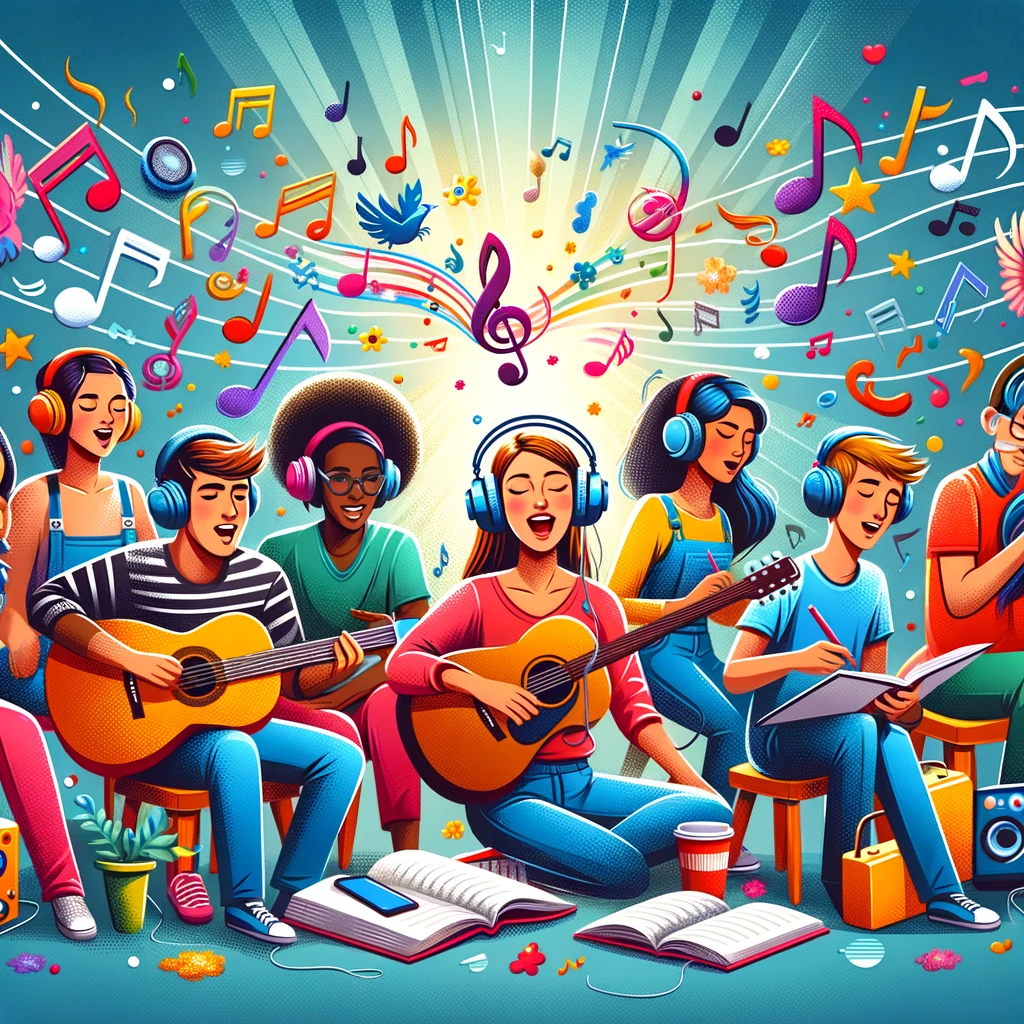
Music and language are two universal elements that connect people across cultures and geographical boundaries. Learning a new language, like English, can sometimes be a daunting task, but integrating music into this learning journey can transform it into a delightful and effective experience. This article delves into how music can be used as a tool to enhance English language skills, offering practical tips and insights into the benefits of this enjoyable learning approach.
The Rhythmic Connection Between Music and Language
Music and language share a rhythmic foundation, making music a natural ally in language learning. The rhythm in songs helps in grasping the flow and intonation of English, which is essential for both speaking and understanding the language. Through repeated listening, learners can internalize the rhythm and melody of English, which often reflects the natural cadence of spoken language.
The Power of Lyrics
Lyrics are the heart of a song and a treasure trove for language learners. They often contain everyday vocabulary, idiomatic expressions, and cultural references, providing learners with a context-rich resource. By analyzing and understanding song lyrics, learners can expand their vocabulary, improve their understanding of idiomatic expressions, and gain insights into cultural nuances.
Engaging with Authentic Content
Songs provide authentic language exposure, which is crucial for developing a real-world understanding of English. Unlike scripted language learning materials, song lyrics often use colloquial language and slang, offering a glimpse into how English is used in casual settings. This exposure is invaluable for learners aiming to become fluent and culturally competent.
The Role of Repetition and Memory
The repetitive nature of music makes it an excellent memory aid. Choruses and verses that repeat help in reinforcing new words and phrases. Singing along with a song can significantly enhance memorization, making it easier for learners to recall vocabulary and grammar structures in conversations.
Practical Tips for Learning English Through Music
1. Choose Songs That Match Your Interests and Language Level
Selecting songs that align with your musical preferences and language proficiency is crucial. For beginners, simple, slow-paced songs with clear lyrics are ideal. As proficiency grows, more complex songs with faster tempos and richer vocabulary can be introduced.
2. Listen Actively and Sing Along
Active listening involves focusing on the lyrics, trying to understand their meaning, and singing along. This practice improves pronunciation and fluency. It also helps in developing an ear for the language, aiding in better comprehension of spoken English.
3. Use Lyric Videos and Karaoke Versions
Lyric videos and karaoke versions of songs are excellent tools for language learners. They allow you to read the lyrics while listening, ensuring a deeper understanding of the words and their pronunciation. Singing karaoke can be a fun way to practice speaking and improve confidence in using English.
4. Analyze and Translate Lyrics
Take time to analyze and translate the lyrics into your native language. This exercise helps in understanding the meaning of the words and phrases within the context of the song, enhancing comprehension and vocabulary.
5. Create Vocabulary Lists from Songs
Identify new words and phrases from songs and create vocabulary lists. Regularly review these lists and try to use the new vocabulary in sentences or conversations to reinforce learning.
6. Discuss Songs in Language Learning Groups
Participating in discussions about songs in language learning groups or forums can be beneficial. These discussions offer opportunities to share interpretations of the lyrics, learn from others, and practice using new vocabulary in a social setting.
Benefits of Learning English Through Music
Improved Pronunciation and Listening Skills
Music helps in improving pronunciation and accent by exposing learners to the natural rhythm and intonation of English. It also sharpens listening skills, as learners try to decipher words and meanings from the song.
Enhanced Vocabulary and Grammar
Songs are rich in vocabulary and often use a variety of grammatical structures. Engaging with songs can expand a learner’s vocabulary and provide them with a practical understanding of grammar in use.
Cultural Insights and Contextual Learning
Songs reflect the culture and social context of their origin. Learning English through music offers insights into English-speaking cultures, idiomatic expressions, and slang, providing a broader understanding of the language beyond the textbook.
Motivation and Enjoyment
Music adds a layer of enjoyment to the learning process, making it less monotonous and more engaging. The pleasure derived from listening to and understanding a favorite song in English can be a significant motivational boost.
Memory Retention and Recall
The repetitive and rhythmic nature of music aids in memory retention. Learners are more likely to remember words and phrases from songs, which can be recalled easily in conversations.
Social Interaction and Confidence
Discussing and sharing songs with fellow learners or native speakers can enhance social interaction and build confidence in using the language. It also provides a common ground for cultural exchange and language practice.
Incorporating music into the English learning process offers a multifaceted approach that combines enjoyment with effective language acquisition techniques. It caters to various learning styles, enhances retention, and provides authentic exposure to the language. By choosing the right songs, actively engaging with the lyrics, and using music as a tool for vocabulary and grammar enhancement, learners can significantly improve their English language skills in an enjoyable and fulfilling way.
As we embrace the melodies and rhythms of English through music, we not only learn a language but also connect with its culture, people, and emotions. Music, in its universal appeal, thus becomes a bridge that not only enhances language skills but also enriches our understanding of the world.
Enhancing Language Skills Beyond the Classroom
Learning English through music extends the classroom experience into everyday life. Incorporating music into daily routines allows learners to continually engage with the
language in a relaxed and enjoyable setting. Whether it’s listening to music during a commute, singing along while doing chores, or watching music videos in leisure time, each interaction with English songs provides a valuable opportunity for language immersion.
Building Confidence Through Lyrics
Understanding and singing English songs can significantly boost a learner’s confidence. As learners master the lyrics of their favorite songs, they gain the assurance to use English in real-life situations. This confidence is key in overcoming the fear of making mistakes, encouraging learners to practice speaking more frequently and naturally.
The Role of Music in Accent Reduction
For many English learners, reducing their accent is a crucial goal. Music can play a significant role in this aspect. By mimicking the pronunciation and intonation of native singers, learners can improve their accent. This practice not only helps in understanding the nuances of English pronunciation but also aids in developing a more natural speaking rhythm.
Incorporating Music into Formal Education
Educators can leverage the power of music in teaching English. Incorporating songs into lessons can make them more interactive and enjoyable, thereby increasing student engagement. Activities like filling in the blanks in song lyrics or rewriting parts of a song can enhance listening skills, vocabulary, and grammar in a creative way.
Tailoring Music to Different Learning Styles
Music accommodates various learning styles. Auditory learners benefit from listening to songs, while kinesthetic learners can engage through dancing or clapping to the rhythm. Visual learners can focus on lyric videos or create visual associations with the words. This flexibility makes music an inclusive educational tool.
The Role of Technology in Learning English Through Music
Advancements in technology have made accessing English songs easier than ever. Streaming platforms, language learning apps with music-based lessons, and online communities dedicated to learning English through music are readily available. These resources provide learners with a vast array of songs from different genres and eras, catering to diverse tastes and learning needs.
Online Communities and Collaborative Learning
Online forums and social media groups dedicated to learning English through music provide platforms for collaborative learning. Here, learners can share their favorite songs, discuss lyrics, and practice English with peers from around the world. This collaborative environment fosters a sense of community and makes learning more interactive and supportive.
Challenges and How to Overcome Them
While learning English through music is beneficial, it comes with its set of challenges. Dialects, fast-paced lyrics, and cultural references in songs can sometimes be confusing for learners. To overcome these challenges, it is important to start with simple songs and gradually move to more complex ones. Seeking help from teachers or native speakers for clarification and context can also be helpful.
Balancing Entertainment and Education
While music is an enjoyable way to learn, it’s important to balance the entertainment aspect with educational goals. Setting clear objectives, such as learning a certain number of new words per week from songs, can help maintain this balance. Regularly reviewing and practicing the learned vocabulary ensures that the entertainment aspect of music does not overshadow its educational value.
Final Thoughts
Music offers a dynamic and enjoyable approach to learning English. It bridges the gap between formal education and real-world language use, making the learning process more effective and enjoyable. By embracing music as a tool for language learning, students can enhance their language skills, gain cultural insights, and most importantly, develop a lifelong love for both music and the English language.
In conclusion, learning English through music is not just about mastering a language; it’s about connecting with a global community through the universal language of music. It’s a journey that enriches both the mind and the soul, making the process of language acquisition a truly enjoyable and fulfilling experience.