
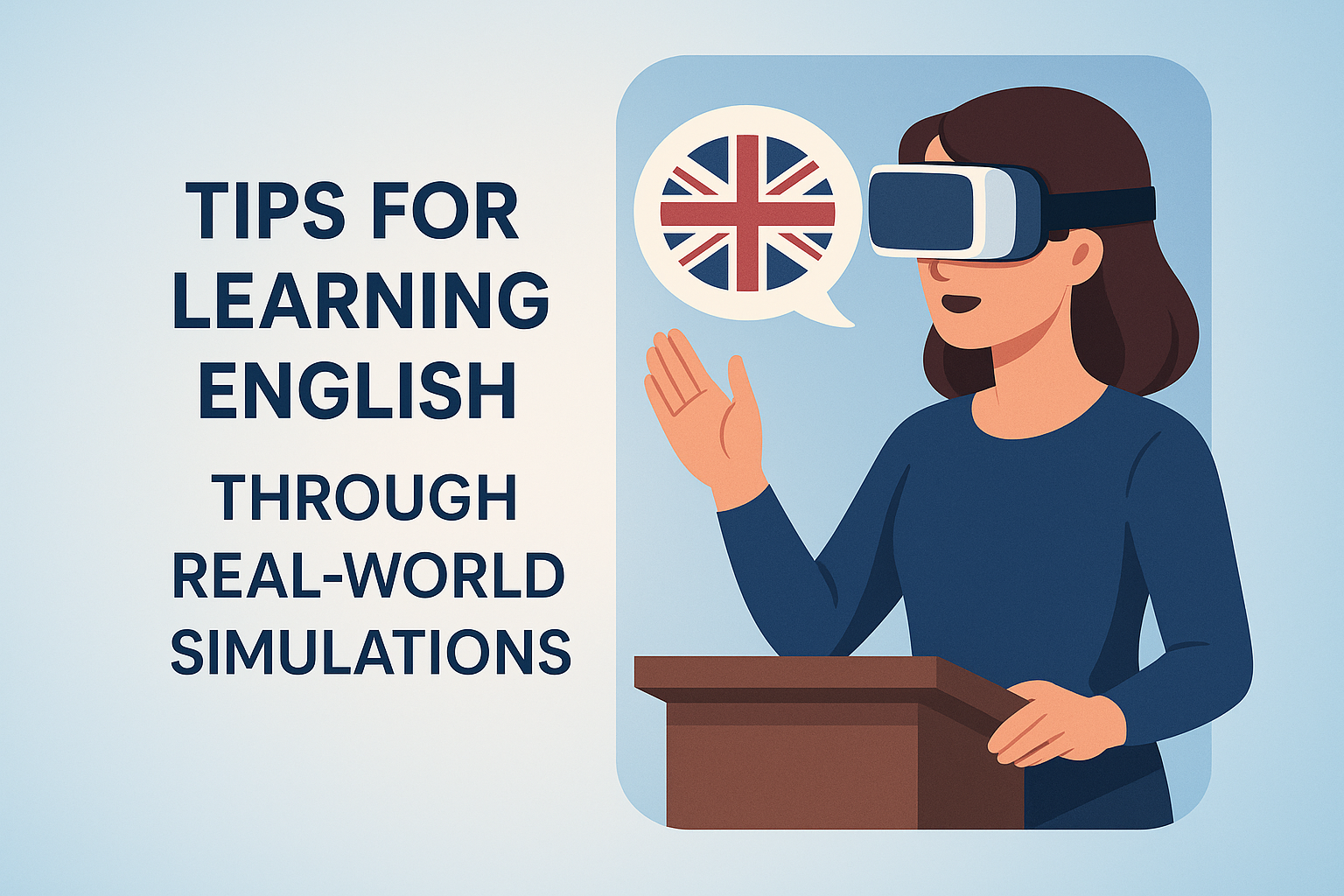
In today’s globalized world, learning English has become more of a necessity than a luxury. The ability to communicate effectively in English opens doors to opportunities in education, employment, travel, and cultural understanding. However, for many, mastering English can be a daunting task. While classrooms offer a structured environment for learning, real-world simulations provide a dynamic and engaging approach to language acquisition. This article will delve into the concept of learning English through simulations, discussing what it entails, its benefits, and how it can be implemented effectively.
Real-world simulations involve creating scenarios that mimic real-life situations, allowing learners to practice language in a context that mirrors actual communication. This method goes beyond traditional rote learning and encourages experiential learning, where individuals actively engage and interact. This approach is significant as it not only helps learners gain fluency and confidence in using English, but also enhances their ability to think critically and respond appropriately in diverse situations.
Understanding Real-World Simulations
Real-world simulations refer to structured activities that replicate authentic scenarios where English is typically used. These simulations permit learners to practice language skills in interaction-rich settings, bridging the gap between theoretical knowledge and practical application. Unlike traditional learning methods that emphasize grammar and vocabulary in isolation, simulations integrate linguistic skills with real-life contexts.
A practical example of a real-world simulation is a mock job interview. In this scenario, learners are assigned roles of interviewers and interviewees. They prepare questions and responses, allowing the interviewee to demonstrate language proficiency, comprehension, and conversational fluency. This exercise provides a safe environment for learners to practice and refine their skills, receiving feedback that aids improvement.
Role of Simulations in Improving Conversational Skills
Improving conversational skills can be one of the most challenging aspects of learning a new language. Real-world simulations target this area by providing learners with the opportunity to engage in meaningful dialogues. By simulating conversations that occur in everyday life, learners become familiar with colloquialisms, intonation, and the nuances of spoken English.
Consider a simulation of a shopping experience where learners assume the roles of shopkeepers and customers. This setup encourages the use of relevant transactional language, such as making inquiries, negotiating prices, and expressing preferences. The interactive nature of the simulation compels participants to listen actively and respond appropriately, thereby refining both their verbal and listening skills.
Enhancing Cultural Understanding Through Simulations
Language and culture are inextricably linked, and understanding cultural nuances is crucial for effective communication. Real-world simulations offer a platform for learners to explore and appreciate cultural contexts within language use. By embedding cultural elements into simulations, learners develop a broader understanding of social norms, values, and customs inherent in different English-speaking communities.
For instance, a simulation involving a virtual tour of a culturally significant location, such as a museum or historical site, can be enlightening. Learners can practice describing the site or artifacts, incorporating cultural insights and historical facts. This activity not only enriches the learning experience but also fosters cultural awareness and sensitivity, equipping learners with the ability to navigate conversations in diverse cultural settings.
Building Confidence with Simulation-Based Learning
Confidence is a pivotal component of effective communication. Real-world simulations build confidence by providing a non-threatening environment where learners can practice without the fear of harsh judgment or failure. Frequent practice through simulations allows learners to become more comfortable with their language abilities, fostering a positive learning cycle.
In a simulated press conference, for example, learners preparations and ask questions, tackling complex topics in a structured manner. This exercise cultivates courage and self-assurance as learners become accustomed to articulating ideas and responding on the spot, reflecting the reality of many English-speaking environments.
Developing Critical Thinking and Problem Solving
The ability to think critically and solve problems is enhanced through simulation-based learning. In scenarios that require negotiation, decision-making, or conflict resolution, learners must employ analytical skills alongside language proficiency to navigate situations effectively. Such simulations enhance both cognitive and communicative competencies.
An enlightening example involves a simulation of an emergency meeting where participants must collaborate to address a crisis situation. Whether it involves communicating solutions or negotiating differing opinions, the necessity to articulate thoughts clearly and compellingly encourages learners to develop strategic thinking abilities alongside English language skills.
| Simulation Type | Skills Developed |
|---|---|
| Mock Job Interview | Fluency, Confidence, Comprehension |
| Shopping Experience | Colloquial Language, Listening, Transactional Language |
| Virtual Cultural Tour | Cultural Understanding, Expression, Description |
| Simulated Press Conference | Articulation, Confidence, Quick Thinking |
| Emergency Meeting | Critical Thinking, Problem Solving, Negotiation |
Implementation of Effective Simulation-Based Learning
For simulation-based learning to be effective, it requires careful planning and execution. Educators and learners must collaborate to create scenarios that are relevant, engaging, and suitably challenging. Incorporating varied simulation activities ensures that different language skills and levels are addressed.
Embracing technology plays a vital role in enhancing simulations. Virtual reality and online platforms afford opportunities for more immersive experiences. By utilizing digital tools, learners can engage in simulations with peers globally, fostering a diverse learning environment that transcends geographical limitations.
Leveraging Feedback for Continuous Improvement
Feedback is essential in simulation-based learning, providing insight into areas of strength and avenues for improvement. Constructive critique from instructors and peers helps learners refine their language use and strategize personal development plans. By receiving feedback regularly, learners can create targeted goals and measure progress effectively.
A balanced feedback approach ensures that both positive reinforcement and areas needing improvement are addressed. This dual focus not only maintains motivation but also encourages a proactive approach to learning and continuous personal development in the realm of English proficiency.
Summarizing the Benefits of Real-World Simulations
In summary, real-world simulations offer a transformative approach to learning English, fostering skills that traditional methods often overlook. By engaging in simulations, learners gain practical experience using English in a variety of contexts, enhancing fluency, confidence, and cultural understanding. These simulations enable the holistic development of language, equipping learners not only with the ability to communicate effectively but also to think critically and solve problems.
The benefits are clear: simulations prepare learners for real-life situations, improve conversational prowess, increase cultural awareness, and build self-confidence. Additionally, they develop critical thinking abilities and problem-solving techniques that are invaluable in ensuring communicative competence. Learners leave a simulation-based learning environment more empowered to use English effectively in personal, academic, and professional spheres.
For those eager to start their journey with simulation-based language learning, the next step is to explore resources and seek out opportunities for engagement. Consider enrolling in courses that emphasize experiential learning or connect with language learning communities that encourage practice through simulations. Immerse yourself in real-world scenarios and embrace the challenge of learning English dynamically and efficiently.
In a world where English is a global lingua franca, mastering the language through innovative approaches like real-world simulations offers unparalleled advantages for both personal growth and professional success.
Frequently Asked Questions
1. What are real-world simulations in the context of learning English?
Real-world simulations are immersive learning experiences designed to mimic situations or scenarios one might encounter in everyday life. In the context of English language learning, these simulations can take the form of role-playing exercises, interactive games, or virtual environments that require communication in English. The idea is to practice English in a way that feels natural and practical, moving away from rote memorization to active use of the language.
For instance, a real-world simulation might involve acting out a scene at a restaurant, where students take turns being customers and waitstaff, negotiating orders, and handling payments. Another example could be a business meeting simulation, where learners practice professional vocabulary and etiquette in a corporate setting. These activities help students hone their speaking and listening skills, enhance their vocabulary, and build confidence in their ability to communicate in real English-speaking environments.
2. How do real-world simulations benefit English learners compared to traditional classroom settings?
Real-world simulations offer several unique advantages over traditional classroom learning. Firstly, they provide contextual learning; students engage with the language in scenarios that mirror situations they might face outside the classroom. This contextual approach aids in better retention and understanding as students learn by doing, rather than passively receiving information.
Secondly, simulations often require problem-solving and critical thinking, helping learners develop these essential skills alongside language acquisition. They also encourage flexibility in language use—learners must adapt their speech in real-time, responding to the dynamics of the situation, which is a skill not easily taught in traditional rote learning environments.
Moreover, simulations can be highly motivating and enjoyable, reducing anxiety and the fear of making mistakes. By participating in engaging, interactive activities, students tend to become more invested in their learning, leading to increased practice time and ultimately, better outcomes in their English proficiency.
3. What are some effective real-world simulation activities for learning English?
There are myriad simulation activities that can be tailored to suit various learning objectives and proficiency levels. Role-playing is a classic and versatile method. For beginners, simple scenarios like shopping at a grocery store or making a hotel reservation can be very effective. Intermediate learners might engage in simulations such as debating current events or participating in a travel planning session.
Advanced learners may benefit from complex tasks such as corporate negotiations, scientific presentations, or creative projects like scriptwriting and performance. In addition to in-person simulations, digital platforms now offer virtual reality environments where learners can explore and interact with virtual worlds in English.
Another exciting option is joining English-speaking clubs or groups online, allowing learners to simulate real conversations with native speakers from different parts of the world, thus gaining varied perspectives and exposure to different accents and slang.
4. How can technology enhance real-world simulations for learning English?
Technology plays a crucial role in facilitating and enhancing real-world simulations. With the advent of virtual reality (VR) and augmented reality (AR), learners can immerse themselves in rich, interactive environments. For example, VR headsets can transport learners to a bustling cityscape where they must navigate transportation, order meals, and interact with locals—all in English.
Platforms like language learning apps use gamification to create simulation-like experiences, where learners take on challenges, earn rewards, and practice specific language skills in context. Online forums, social media, and video conferencing tools like Zoom or Skype provide learners with access to global communities, offering opportunities for real-time conversation and interaction with others.
These technologies not only make learning more engaging but also provide a flexible and accessible way to practice English from anywhere, any time, effectively breaking geographical barriers and fostering a global learning environment.
5. What challenges might learners face in real-world simulations, and how can they overcome them?
While real-world simulations provide numerous benefits, learners might face certain challenges such as language anxiety, fear of making mistakes, or difficulty keeping up with the pace of fluent speakers. It’s important for learners to view mistakes as learning opportunities and embrace a growth mindset, where every error is a step towards improvement.
To overcome these challenges, learners should start with simpler simulations to build their confidence gradually. Practicing with peers or supportive instructors who can offer constructive feedback is also helpful. Keeping a reflective journal to note down experiences, challenges faced, and areas needing improvement can be a powerful tool for personal growth.
Finally, consistent practice is key. By regularly engaging in simulations, learners can desensitize themselves to the initial discomfort and gain fluency over time. Seeking out diverse simulation experiences can also prepare learners for a range of real-life scenarios, ultimately making them more adaptable and competent English communicators.





