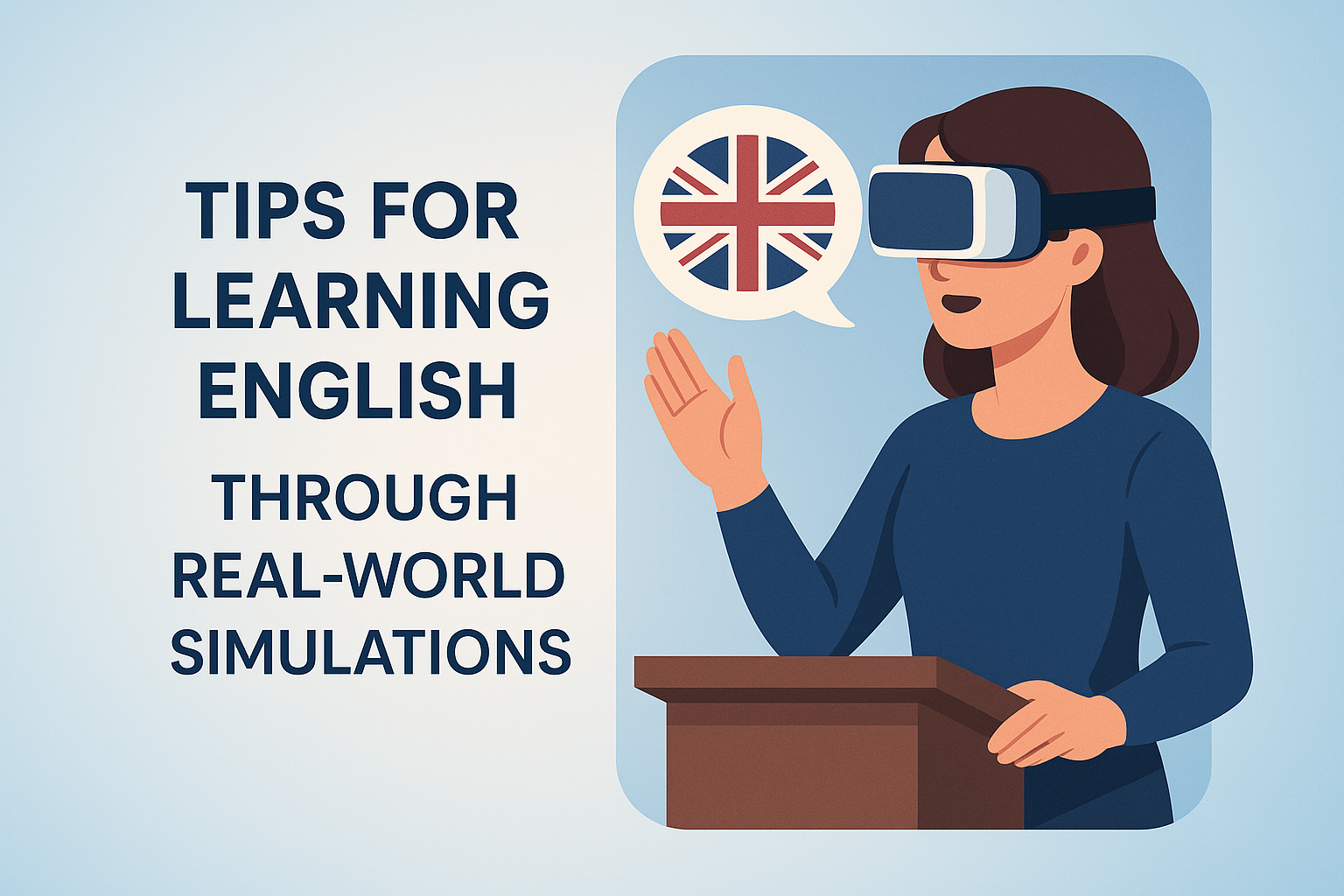
A real-world English simulation is a planned practice task with a situation, roles, and a communication goal. For example, two learners can act as a customer and shop assistant to check a price, ask about an item, and confirm a purchase. Prepare useful phrases, complete the task, review specific difficulties, and try again with one change.
A simulation gives learners a reason to exchange information. It can support practice, but taking part does not by itself demonstrate improved fluency, confidence, or general problem-solving ability. Check what participants actually communicated and use that evidence to plan the next attempt.
Understanding Real-World Simulations
Simulations can take place inside a classroom as well as outside it. A role-play may assign an imagined identity; a simulation may add a task, information, rules, or materials. The terms overlap in teaching practice. Neither requires expensive equipment or excludes grammar and vocabulary study.
A practical example of a real-world simulation is a mock job interview. In this scenario, learners are assigned roles of interviewers and interviewees. They prepare questions and responses, allowing the interviewee to demonstrate language proficiency, comprehension, and conversational fluency. This exercise provides a safe environment for learners to practice and refine their skills, receiving feedback that aids improvement.
Role of Simulations in Improving Conversational Skills
Improving conversational skills can be one of the most challenging aspects of learning a new language. Real-world simulations target this area by providing learners with the opportunity to engage in meaningful dialogues. By simulating conversations that occur in everyday life, learners become familiar with colloquialisms, intonation, and the nuances of spoken English.
Consider a simulation of a shopping experience where learners assume the roles of shopkeepers and customers. This setup encourages the use of relevant transactional language, such as making inquiries, negotiating prices, and expressing preferences. The interactive nature of the simulation compels participants to listen actively and respond appropriately, thereby refining both their verbal and listening skills.
Enhancing Cultural Understanding Through Simulations
Language and culture are inextricably linked, and understanding cultural nuances is crucial for effective communication. Real-world simulations offer a platform for learners to explore and appreciate cultural contexts within language use. By embedding cultural elements into simulations, learners develop a broader understanding of social norms, values, and customs inherent in different English-speaking communities.
For instance, a simulation involving a virtual tour of a culturally significant location, such as a museum or historical site, can be enlightening. Learners can practice describing the site or artifacts, incorporating cultural insights and historical facts. This activity not only enriches the learning experience but also fosters cultural awareness and sensitivity, equipping learners with the ability to navigate conversations in diverse cultural settings.
Building Confidence with Simulation-Based Learning
Agree on a manageable task and allow preparation time. Learners can use fictional details, ask to pause, or rehearse privately before performing for a group. Do not assume that every learner finds role-play comfortable or that repeated exposure alone resolves anxiety.
For a simulated press conference, give one learner a short factual brief and another three questions. The spokesperson can say “I do not have that information” rather than invent an answer. Afterward, check whether the answers matched the brief and whether a clarification question was used when needed.
Developing Critical Thinking and Problem Solving
A decision-making scenario can combine language practice with reasoning about a defined problem. Give participants the same facts or complementary information, then ask them to explain a choice. Successful completion of that task is evidence about that attempt, not proof of a general increase in cognitive ability.
Use a low-stakes planning problem: a club has one room and two events scheduled at the same time. Give each group a timetable and ask them to agree on a revised schedule. Check whether they stated the conflict, proposed options, confirmed a time, and named the next action. This is language rehearsal, not emergency-response training.
| Simulation Type | Communication to practise |
|---|---|
| Mock Job Interview | Answer a question; give a relevant example; ask for clarification |
| Shopping Experience | Ask for an item; confirm the price and quantity |
| Virtual Cultural Tour | Describe an exhibit using checked information |
| Simulated Press Conference | Answer from a brief; acknowledge missing information |
| Emergency Meeting | State a scheduling conflict; compare options; confirm an agreement |
Implementation of Effective Simulation-Based Learning
For simulation-based learning to be effective, it requires careful planning and execution. Educators and learners must collaborate to create scenarios that are relevant, engaging, and suitably challenging. Incorporating varied simulation activities ensures that different language skills and levels are addressed.
Technology is optional. Printed role cards and a timetable can be enough. A video call can support remote practice when participants have access; virtual reality may introduce cost, accessibility, and usability barriers. Choose the simplest format that lets learners complete the communication task.
Leveraging Feedback for Continuous Improvement
Feedback is essential in simulation-based learning, providing insight into areas of strength and avenues for improvement. Constructive critique from instructors and peers helps learners refine their language use and strategize personal development plans. By receiving feedback regularly, learners can create targeted goals and measure progress effectively.
Give feedback on one successful communication move and one improvement. For example: “You confirmed the price clearly. Next time, ask about the delivery date before agreeing.” Repeat the task with a different item so that the learner applies the feedback rather than only memorizing the first exchange.
Summarizing the Benefits of Real-World Simulations
The useful feature of a simulation is a clear reason to speak and listen. Choose a task that matches the learner’s needs, prepare essential language, and review whether the intended information was exchanged. Combine this with other study and practice rather than treating one activity as a complete language course.
Record a small set of observations: Was the task completed? Were names, amounts, dates, or locations confirmed accurately? Did each person ask for clarification when needed? These checks describe the session and help select the next task; they do not certify proficiency.
For those eager to start their journey with simulation-based language learning, the next step is to explore resources and seek out opportunities for engagement. Consider enrolling in courses that emphasize experiential learning or connect with language learning communities that encourage practice through simulations. Immerse yourself in real-world scenarios and embrace the challenge of learning English dynamically and efficiently.
Start with one short scenario you expect to use. After feedback, change one condition—such as the time, price, or available item—and repeat. Keep notes on the language you needed so that the next practice has a clear purpose.
A five-minute role-card task
Customer: You need two notebooks and want to know whether delivery is available before Friday. Ask the price, quantity, and delivery question before agreeing.
Assistant: Each notebook costs £3. Delivery costs £2 and is available Thursday. Give the information when asked and confirm the total.
Check: The total is £8 including delivery. Both people should confirm two notebooks, Thursday delivery, and the final price. If a detail was missed, repeat with a different quantity.
For further teaching ideas, see the British Council role-play guidance.
What is a real-world English simulation?
It is a planned practice task with a situation, roles, and a communication goal, such as checking a price or arranging a meeting.
Do I need virtual reality or an app?
No. Role cards, a menu, a timetable, or a short brief can provide enough information for a useful task. Choose a format participants can access.
How can I prepare?
Read the role, identify the information you need, prepare a few useful phrases, and agree on how to pause or ask for help.
How should I review the activity?
Check whether the task was completed and important details were confirmed. Note one effective phrase and one improvement, then repeat with a changed condition.
Does completing a simulation prove fluency?
No. It shows what happened in that practice attempt. Wider proficiency needs evidence from different tasks and situations over time.