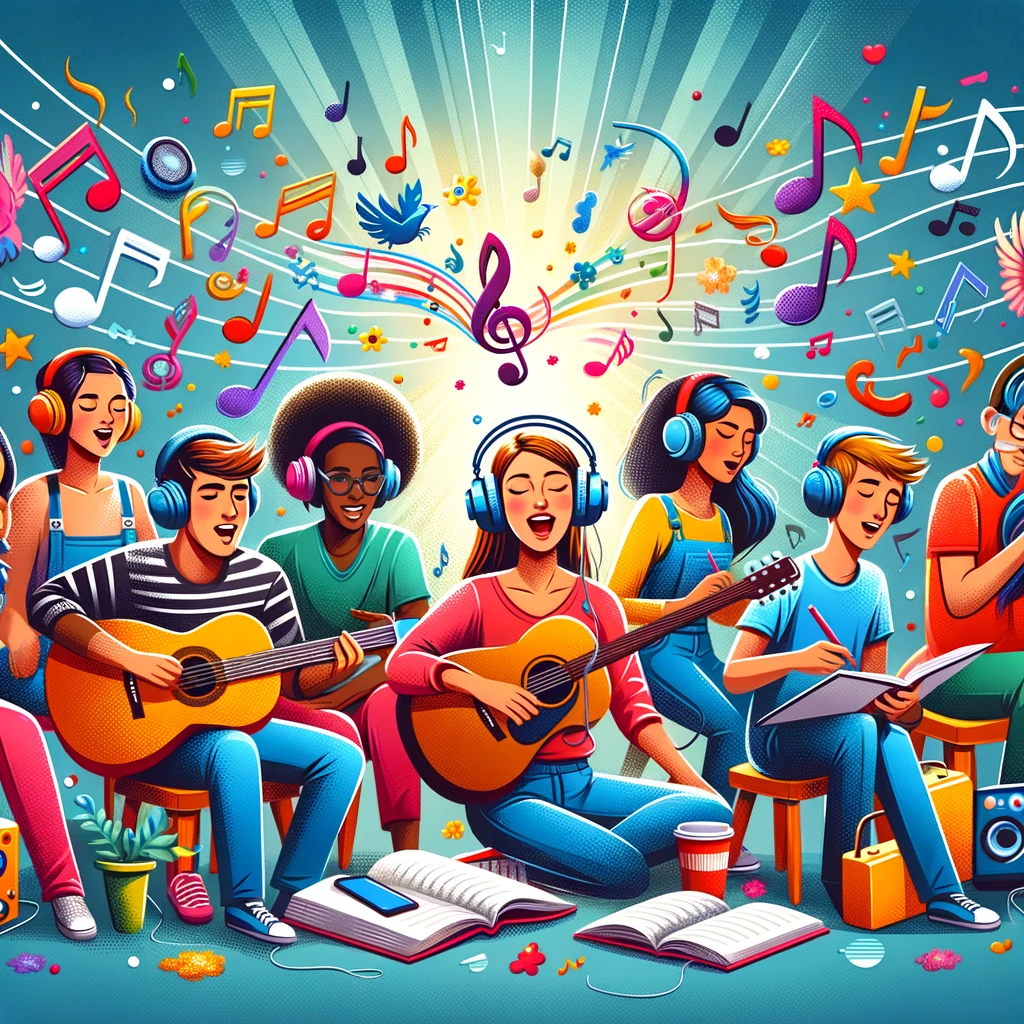
Music is more than just a collection of harmonious sounds; it’s a universal language that transcends boundaries and cultures. In the context of language learning, particularly English, it serves as an invaluable tool for enhancing listening skills. But why is music so effective in this role? To fully appreciate its potential, it’s important to understand a few key terms. “Listening skills” refer to the ability to correctly interpret and understand spoken English, which is crucial for effective communication. Music, with its diverse range of genres, accents, and emotional expressions, offers a rich auditory tapestry that can greatly enhance these listening abilities.
Improving listening skills is not only about comprehending words; it’s about grasping the nuances, the intonation, and the emotional undertones that native speakers convey in their speech. Why does this matter? In an increasingly interconnected world, mastering English is often a prerequisite for global communication. Whether you are engaging in business, traveling, or simply broadening your cultural horizons, strong English listening skills are essential. Music is a multifaceted and enjoyable medium that can make this learning process both effective and enjoyable. By diving deeper into how music can be utilized to enhance English listening skills, we can unlock a powerful method for language improvement that is accessible to learners of all levels.
The Cognitive Connection Between Music and Language
The cognitive connection between music and language is a well-researched area that demonstrates how both domains share similarities in structure and processing. Neurologically, listening to music activates multiple areas of the brain that are also involved in linguistic comprehension, such as syntax and rhythm processing. This overlap means that the skills you develop through music can positively influence your language abilities.
An excellent real-world example of this is how musical training enhances the ability to discern pitch changes, critically important in tonal languages but also beneficial in understanding the subtleties of stress and intonation in English. According to a study from Northwestern University, musicians often exhibit superior auditory processing skills, experiencing advantages in grasping language structure and comprehending speech in noisy environments. For English learners, this translates into a better ability to distinguish words in songs, understand rapid speech, and even pick up on regional accents.
Using Lyrics to Improve Vocabulary and Comprehension
Lyrics are the backbone of any song and serve as a powerful tool for learning English. By actively engaging with the lyrics of your favorite songs, you can significantly enhance your vocabulary and comprehension skills. Songs often introduce new vocabulary in context, making it easier for learners to remember and use the words correctly. Additionally, lyrics provide a practical application of grammar and language structures, reinforcing what might have been studied in more formal settings.
For instance, imagine listening to The Beatles’ classic “Let It Be.” The repetitive chorus not only makes it easier to remember the words but also subtly reinforces grammatical structures such as verb conjugations and sentence patterns. Listening to such songs repeatedly helps in internalizing these language principles and expanding one’s vocabulary effortlessly.
Building Listening Habits with Music
To successfully use music as a language learning tool, it’s essential to establish consistent listening habits. Making music a part of your daily routine can significantly improve your listening skills over time. The saying “practice makes perfect” holds true when it comes to language learning, and incorporating music into this practice makes the process enjoyable and less daunting.
Consider designing a routine that involves listening to a diverse selection of songs from various English-speaking countries. Each day could have a specific theme or focus, such as pop music from the United States, rock from the United Kingdom, or even country from Australia. By regularly exposing yourself to these different styles, your brain will become adept at identifying a wide range of accents, pronunciations, and linguistic nuances.
- Day 1: Pop music from the United States
- Day 2: Rock music from the United Kingdom
- Day 3: Country music from Australia
- Day 4: Soul music from Canada
- Day 5: Folk music from Ireland
Utilizing Technology and Online Resources
In today’s technologically advanced world, numerous online platforms and resources can assist you in using music to enhance your English listening skills. Streaming services like Spotify and Apple Music provide access to a vast library of songs across various genres and languages. Additionally, many platforms offer synchronized lyrics, allowing you to follow along as the song plays.
Websites like LyricsTraining provide interactive exercises designed to test your comprehension as you fill in missing lyrics from songs. These engaging activities are excellent for reinforcing vocabulary and understanding speech in context. Furthermore, online communities and forums can offer recommendations for curated playlists that focus specifically on language learning, helping you discover new music and connect with other language learners.
Real-Life Application Through Implicit Learning
One of the most powerful aspects of using music for language learning is implicit learning—acquiring skills and knowledge unconsciously. When you listen to songs in English, you’re not only enjoying the music, but you’re also simultaneously picking up language patterns, pronunciations, and even cultural references without active effort. This passive form of learning complements traditional study methods by providing real-life application and exposure.
For instance, exposure to songs like Tracy Chapman’s “Fast Car” or Bob Dylan’s “Blowin’ in the Wind” introduces you to storytelling through music, teaching you how to infer meaning and context. These songs often contain idiomatic expressions and colloquial phrases that are typical in everyday English conversations, giving you an edge when engaging with native speakers.
Summarizing the Path to Mastery Through Music
In summary, using music as a tool to improve English listening skills is a multifaceted approach that combines enjoyment with educational value. The cognitive connection between music and language reinforces learning outcomes, while lyrics provide a rich source of vocabulary and grammatical structure. Establishing listening habits and utilizing technology ensure ongoing exposure and practice, making use of implicit learning to absorb language naturally.
The primary takeaway is clear: music is a powerful motivator and educator. It transforms the often monotonous process of language learning into an engaging and immersive experience. By integrating music into your English learning journey, you are not just enhancing your listening skills but also continually enriching your cultural understanding and appreciation.
The next step is simple: Start incorporating music listening into your language learning routine today. Choose a song, read its lyrics, sing along, and immerse yourself in the world of English through music. As you progress, expand your playlist and explore new genres, each offering unique linguistic opportunities. Remember, the key to mastering English listening skills through music lies in enjoying the process and remaining curious about the sounds and stories that music brings to life.
Frequently Asked Questions
1. How does music help improve English listening skills?
Music is a fantastic tool for enhancing English listening skills because it offers a rich and engaging listening environment. Songs often contain a mix of vocabulary, grammatical structures, and different accents or pronunciations, which provides a dynamic way to expose learners to the English language. Listening to music helps train your ear to recognize language patterns and sounds, which is critical for understanding spoken English in everyday contexts. Moreover, music is a memorable and enjoyable medium, making it easier to recall words and phrases over time.
When you listen to music, you’re not just passively receiving information; you’re actively engaging with it. Melodies and rhythms help reinforce memory retention, while repetition of chorus and verses aids in familiarization with sentence structures and phonetics. Singers also often emphasize certain words and phrases, making it easier for listeners to catch the nuances in speech. Pairing songs with lyrics or translation can also help learners make connections between spoken words and their meanings, greatly enhancing comprehension and retention.
2. Can listening to music really help me with different English accents?
Absolutely! Music can open the door to a world of diverse English accents. Musicians from various regions sing with their natural accents, providing a listening experience that spans the globe. For instance, listening to British rock, Australian indie, or American country music can give you exposure to varying pronunciations, vowel sounds, and intonations. This diverse exposure is invaluable for training your ear to adapt to different English-speaking environments.
Understanding different accents is crucial for effective communication, particularly in English, which is spoken with a myriad of regional and cultural variations. By listening to songs from artists of different backgrounds, you naturally become more attuned to these differences, making it easier to comprehend speakers of various English dialects. This can be particularly helpful if you’re planning on traveling to or working in English-speaking countries where accents can significantly differ from the standardized versions you might encounter in language learning materials.
3. What types of music are best for learning English?
While any genre can be beneficial, it’s often recommended to start with music that has clear lyrics and a moderate tempo, which makes it easier to understand and follow along. Pop, folk, acoustic, and certain genres of rock often have lyrics that are easier to discern, making them good options for beginners. Moreover, these genres often showcase storytelling elements, which enrich learning by adding context and meaning to the words being sung.
As your skills progress, you might want to branch out into genres like rap or hip-hop, where the complex lyrics and faster pace can offer a more challenging listening experience. These genres are rich in slang, idiomatic expressions, and cultural references, providing an immersive way to learn colloquial language and enhance vocabulary. The key is to explore and find music you enjoy because the more fun and engaging the experience, the more likely you are to stick with it and reap the benefits.
4. How can I use music to practice English actively?
Using music to practice English goes beyond mere listening. It invites you to actively engage with the content through several creative methods. Start by listening to a song multiple times, first without any aid and then while following the lyrics. This will help you improve your listening comprehension and word recognition skills. Try to focus on different elements each time, such as vocabulary, pronunciation, or the general theme of the song.
Sing along with the music to practice speaking and pronunciation. This can greatly improve your confidence in using the language aloud. You can also try writing down the lyrics from memory or paraphrasing the song in your own words to enhance your understanding of the song’s meaning and structure. Additionally, discussing the themes or story in a song with friends or in a language class can provide further opportunities to practice critical listening and speaking skills.
5. Are there any drawbacks to using music for learning English?
While music is an incredibly powerful tool for learning English, it’s not without its challenges. One potential drawback is that song lyrics often contain artistic language use, including slang, idioms, or poetic expressions, which might not always reflect everyday spoken English. This can sometimes lead to confusion if learners try to apply song lyrics too literally in real-world scenarios.
Additionally, the pronunciation in songs can be stylized to fit the rhythm or melody, which might distort the natural intonation or stress patterns used in regular speech. However, this should not deter you from using music as part of a well-rounded language learning strategy. By balancing music with other learning resources, such as podcasts, news, or conversation practice, you can ensure that your exposure to English is diverse and well-rounded.
Ultimately, the benefits of using music to enhance your English listening skills far outweigh these minor drawbacks, offering a fun, engaging, and effective way to boost your language abilities.