Use local guidance, individual preferences and clear questions rather than national stereotypes. Etiquette depends on the setting, relationship and people involved. This guide gives English phrases for asking about greetings, meals, meetings and other situations when you are unsure what is expected.
Understanding Cultural Diversity
English-speaking countries, including the United States, the United Kingdom, Canada, Australia, and New Zealand, are characterized by their cultural diversity. Expectations also vary within each country by community, organisation, family and situation. English is used in many other countries too; these five are examples, not a complete list.
United States: Ask About Individual Preferences
Do: Introduce yourself and ask how the other person prefers to be addressed. For example: “Hello, I’m Sam. What would you like me to call you?”
Don’t: Make assumptions about an individual’s behaviour, beliefs or preferences from their nationality or appearance.
United Kingdom: Follow the Setting
Do: Use clear requests and acknowledgements such as “Could you help me, please?” and “Thank you.” Adjust the level of formality to the actual situation.
Don’t: Assume that everyone wants the same distance or physical contact. Notice the other person’s response and respect their stated preferences.
Canada: Use Names and Ask Clearly
Do: Listen to how people introduce themselves. If you are unsure about a name, ask: “Could you help me pronounce your name correctly?”
Don’t: Treat a national label as a reliable guide to someone’s personal views. Ask and listen rather than assigning an opinion to them.
Australia: Check Local Expectations
Do: Check how people address each other in the setting. A useful question is “Would you prefer your first name or your title?”
Don’t: Ignore local instructions about access, photography or participation. Ask the host or organiser if you are unsure.
New Zealand: Follow Local Hosts and Protocols
Do: Follow local hosts’ guidance and instructions at community and cultural sites. Ask before taking photographs or joining an activity.
Don’t: Assume that every Māori marae follows identical protocols. Te Ara explains that marae have their own kawa and tikanga and advises asking local people about their expectations.
Social Interactions
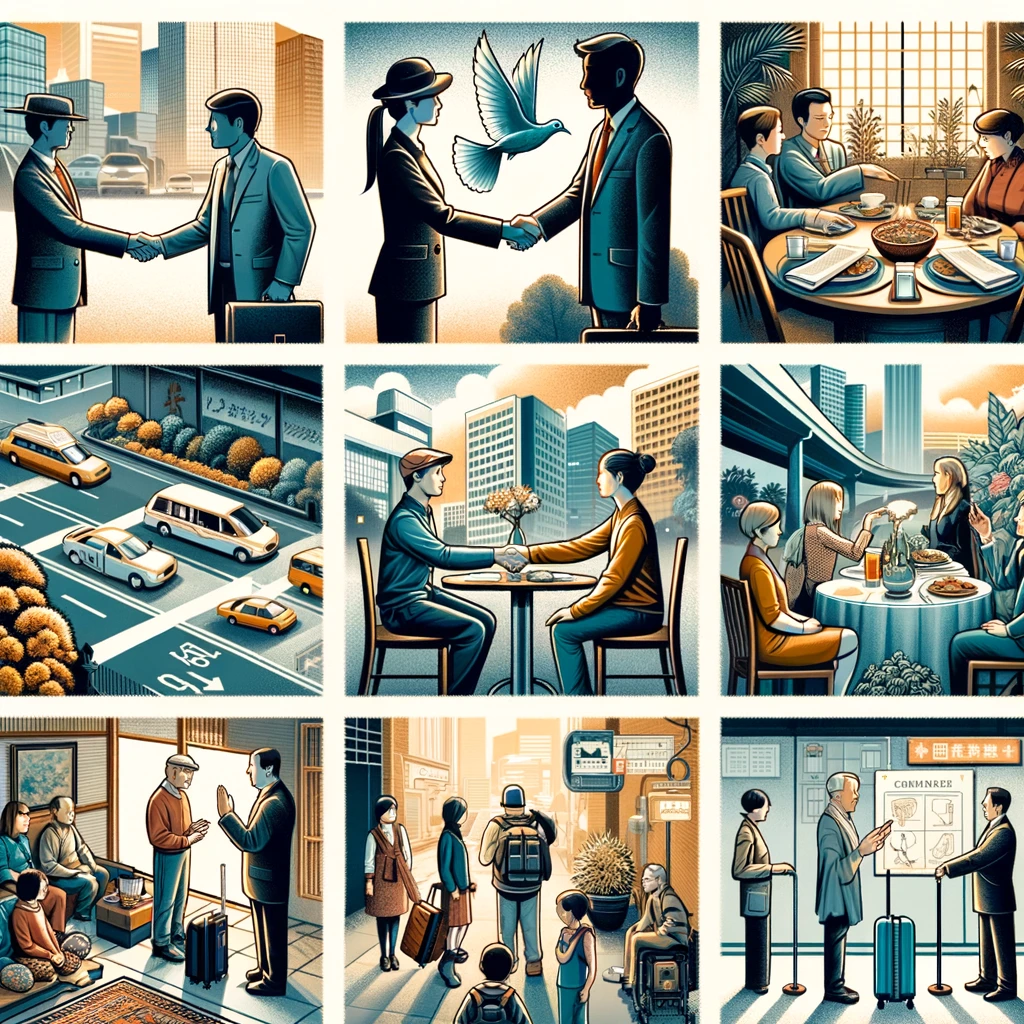
Social norms in English-speaking countries might differ in various contexts, like greetings, dining etiquette, and public behavior.
Greetings
Do: Begin with a verbal greeting. Physical greetings are optional and depend on the people and setting; you can ask “Would you prefer a handshake?”
Don’t: Assume physical contact is acceptable in all situations. Respect personal boundaries and be mindful of different comfort levels.
Dining Etiquette
Do: Follow the host’s guidance about when to begin eating. If uncertain, ask “Shall we wait for everyone?” or “Is it all right to start?”
Don’t: Assume that every household uses the same table customs. Ask about an unfamiliar practice and give others time to answer.
Public Behavior
Do: Respect public spaces. Maintaining cleanliness and order in public areas is a common expectation.
Don’t: Be overly loud or disruptive. This can be seen as disrespectful in many English-speaking societies.
Business Etiquette
Understanding business etiquette is vital for ESL learners and professionals. Practices in the workplace can vary, but there are some general rules to follow.
Do: Confirm the meeting time, time zone and expected arrival arrangements. If you will be late, tell the organiser promptly.
Don’t: Assume that small talk is compulsory or that everyone wants it. Follow the other person’s cues and the meeting agenda.
Language Nuances
Language in English-speaking countries is not just about vocabulary and grammar; it’s also about understanding idiomatic expressions and humor.
Do: Be aware of different accents and slang. English varies widely across these countries, and being attuned to these differences can aid understanding.
Don’t: Take idiomatic expressions or sarcasm literally. Humor and idiomatic language can be challenging for ESL learners, but they are an integral part of the culture.
Navigating the cultural landscapes of English-speaking countries as an ESL learner or visitor involves understanding and respecting their diverse etiquettes. While this guide covers some essential do’s and don’ts, the most important thing is to approach each interaction with openness and respect. By doing so, you not only enrich your own experience but also contribute positively to the multicultural fabric of these societies.
Respecting Individuality and Freedom
People’s preferences and boundaries vary. Respect a stated boundary even when it differs from what you expected.
Do: Respect individual choices and opinions. Whether it’s about lifestyle, religion, or political views, showing respect for different perspectives is essential.
Don’t: Impose your beliefs or stereotypes on others. Avoid making generalized statements about groups of people or sensitive topics.
Understanding Informality and Formality
The balance between informality and formality can vary greatly.
Do: Match the level of formality to the organisation and relationship. Ask “How should I address you?” rather than guessing from the country.
Don’t: Misinterpret informality for disrespect or lack of seriousness. In countries like the U.S. and Australia, a relaxed approach doesn’t necessarily imply a lack of professionalism or respect.
Gift-Giving Etiquette
Gift-giving depends on the occasion, relationship and any workplace rules. Ask before assuming that a gift is expected.
Do: Ask your host “Would you like me to bring anything?” Check food preferences or dietary needs before bringing food or drink; alcohol is not a suitable gift for everyone.
Don’t: Give overly expensive or personal gifts in a business context, as it may be seen as inappropriate or even a bribe.
Tipping Practices
Tipping is another area where practices vary significantly.
Do: Check local guidance and the bill for the particular service. Ask “Is service included?” if you are unsure.
Don’t: Assume that one rule applies to every country or venue. Tourism Australia says tips are not expected in most Australian venues. Check the context instead of making assumptions about workers’ wages.
Navigating Conversational Topics
Conversations can be a minefield of cultural sensitivities.
Do: Engage in light, non-controversial topics like the weather, sports, or cultural interests when meeting someone new.
Don’t: Dive into personal or sensitive topics like religion, politics, or money in initial conversations unless the other party initiates.
Understanding Humor
Humor can be vastly different and sometimes difficult to grasp for ESL learners.
Do: Ask for clarification if you are unsure whether a remark is serious: “Do you mean that literally, or are you joking?”
Don’t: Assume that a hurtful comment must be accepted because someone calls it a joke. You can say “I’m not comfortable with that comment” or ask to change the subject.
Technology and Communication
In this digital age, the way we communicate, especially in English-speaking countries, has its own set of etiquettes.
Do: Be mindful of digital etiquette. This includes not using your phone during meals or meetings and being aware of the appropriate times to call or text.
Don’t: Overlook the importance of face-to-face communication, especially in business settings. While technology is convenient, personal interactions are still highly valued.
Healthcare Etiquette
Routine appointments, payment arrangements and emergency access are different matters. Ask the provider about routine booking and charges rather than inferring the rules from social etiquette.
Do: For a routine appointment, ask “How do I book?”, “Is an interpreter available?” and “What information should I bring?” Check coverage and charges with the provider or insurer.
Don’t: Assume that having no insurance makes hospital emergency care unavailable. In the US, CMS explains that covered hospital emergency departments must offer an appropriate medical screening examination regardless of insurance, followed by stabilising treatment or an appropriate transfer when an emergency condition requires it. Payment and coverage are separate questions.
Useful phrases when you are unsure
- Names: “How would you like me to address you?”
- Local customs: “Is there anything I should know before we go in?”
- Permission: “Is it all right if I take a photograph?”
- Meals: “Would you like me to bring anything?”
- Clarification: “Could you explain what you mean?”
- Boundaries: “I’d prefer not to discuss that, if that’s all right.”
Practise four situations
Write one question or response for each situation. Several answers can work; the aim is to ask clearly and respect the other person.
- You are invited to a meal and want to know whether to bring food. What could you ask?
- You want to photograph a cultural event. What should you ask before taking the picture?
- You cannot tell whether a comment is a joke. How could you ask for clarification?
- You are unsure whether to use a teacher’s title or first name. What could you ask?
See possible answers and explanations
- “Would you like me to bring anything?” This asks the host instead of assuming a particular gift or food is expected.
- “Is it all right if I take a photograph?” Wait for permission and follow any conditions.
- “Do you mean that literally, or are you joking?” This checks the meaning instead of guessing.
- “How would you like me to address you?” The person can state their own preference.
Practise recognising meaning and tone with the listening scripts and activities. For language that expresses uncertainty, see doubt and uncertainty expressions.
Sources for the specific examples
- Te Ara: basic marae etiquette.
- Tourism Australia: key facts, including tipping.
- US Centers for Medicare & Medicaid Services: emergency-room rights under EMTALA.
Parting Thoughts
Navigating the cultural landscapes of English-speaking countries is a journey of learning and adaptation. The key is to observe, ask when in doubt, and always approach situations with respect and an open mind. Remember, cultural etiquette is not just about avoiding mistakes; it’s about building bridges of understanding and respect across diverse communities. As you travel or interact with people from these countries, keep in mind that each interaction is an opportunity to learn and grow in your cultural intelligence.