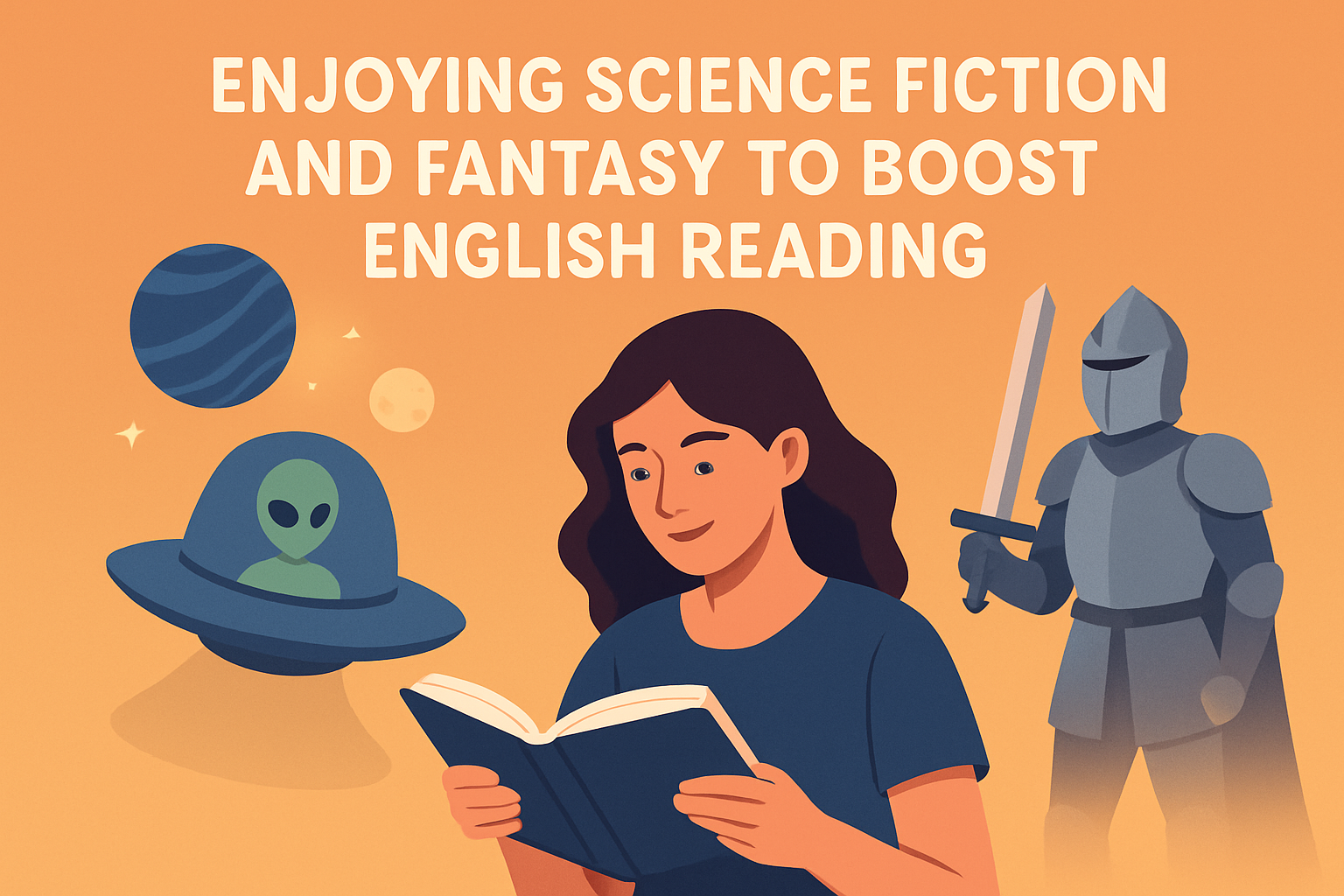
In recent years, there’s been a notable increase in the popularity of science fiction and fantasy genres in the literary world. These genres transport readers to worlds beyond imagination, where they can explore intricate plots, complex characters, and unique settings. But beyond mere entertainment, immersing oneself in science fiction and fantasy literature can be incredibly beneficial for enhancing English reading skills. This article will delve into how these genres can act as powerful tools for language development, define key terms within these genres, and explain their growing significance in today’s society. Moreover, we’ll discuss the multifaceted advantages they offer to those looking to improve their English reading abilities.
Science fiction (often abbreviated as sci-fi) and fantasy are genres that encompass a wide range of speculative literature. Science fiction typically involves futuristic settings, advanced technology, time travel, parallel universes, and extraterrestrial life, pushing the boundaries of what is currently possible or scientifically understandable. Fantasy, on the other hand, usually deals with magical elements, mythical creatures, and fantastical worlds that operate under their own set of rules. These genres encourage creative thinking and provide a limitless landscape for imagination. They are crucial for readers who seek to expand their vocabulary, comprehension, and critical thinking abilities, as they often introduce new concepts and complex themes.
The significance of improving English reading skills cannot be overstated. In a globally connected world where English often serves as the lingua franca, being proficient in reading English is essential for academic success, career advancement, and social interactions. Engaging with science fiction and fantasy can make the process of learning English more enjoyable and engaging, facilitating deeper understanding through context and narrative immersion. Now, let’s explore how these genres can be particularly advantageous for boosting English reading skills.
The Linguistic Richness of Science Fiction and Fantasy
Science fiction and fantasy novels are often brimming with rich and complex language. Authors in these genres are known for their imaginative storytelling and innovative world-building, which necessitates the use of diverse and vivid vocabulary. This complexity challenges readers to decipher meaning and infer definitions from context, which is an excellent exercise in language comprehension. Moreover, many novels in these genres include appendices or glossaries to explain unique terms and references, further aiding language learning.
For example, “The Lord of the Rings” by J.R.R. Tolkien is a cornerstone of fantasy literature that offers readers not only an epic story but also a deep dive into a meticulously crafted world with its own languages, histories, and cultures. Tolkien’s use of language is both poetic and intricate, providing valuable exposure to varied sentence structures and stylistic elements. This exposure can be beneficial for non-native speakers who aim to improve their reading fluency and comprehension.
Expanding Vocabulary and Phrases
Readers of science fiction and fantasy often encounter a plethora of unique words and phrases, many of which are invented to suit the worlds the authors create. This exposure encourages readers to expand their vocabularies, as it requires them to understand and remember these new terms. Additionally, the imaginative settings and scenarios described in these books often introduce idiomatic expressions and figurative language that might not be encountered in more conventional texts.
Consider the “Dune” series by Frank Herbert. This science fiction masterpiece is known for its extensive use of specialized terminology relating to its universe. Readers must learn and understand new words such as “Kwisatz Haderach” and “Bene Gesserit,” which enhances their ability to comprehend complex texts—a skill that translates easily to understanding equally challenging academic or informational texts.
Cultural and Conceptual Understanding
Beyond language skills, science fiction and fantasy literature provide insights into different cultures, social structures, and philosophical ideas. By exploring these themes, readers can develop a broader understanding of diverse perspectives and ideologies, which is often explored through the lens of speculative futures or alternate realities. This exposure encourages critical thinking and empathy, assisting readers in understanding complex material.
The book “Ender’s Game” by Orson Scott Card, for instance, not only entertains but also presents ideas about leadership, ethics, and the consequences of war. As readers follow Ender’s journey, they are prompted to engage with these themes, developing a critical eye that benefits both their comprehension skills and their ability to analyze texts.
Providing Context and Motivation
Motivation is a key factor in learning a new language, and science fiction and fantasy literature often inspire keen interest and engagement. When readers are genuinely curious about the outcome of a narrative or the fate of the characters, they are more likely to read with attention and investment, which fosters better comprehension and retention of new vocabulary and concepts.
For instance, the “Harry Potter” series by J.K. Rowling is a global phenomenon that has motivated millions of readers to improve their English reading skills. Fans of the series are driven by a desire to understand the story in its original language, leading them to learn English and consequently improve their reading proficiency.
| Book Series | Genre | Key Benefit |
|---|---|---|
| The Lord of the Rings | Fantasy | Rich Language and Syntax |
| Dune | Science Fiction | Expanded Vocabulary |
| Ender’s Game | Science Fiction | Cultural and Conceptual Insights |
| Harry Potter | Fantasy | Motivation and Engagement |
Developing Creative Thinking and Problem-solving Skills
Science fiction and fantasy genres often present readers with complex problems that require out-of-the-box thinking. This type of literature encourages readers to consider multiple possibilities and viewpoints, honing their creative and analytical thinking skills. The narratives often include mysteries that need to be solved, which can improve a reader’s ability to think critically and logically.
Books like “The Hitchhiker’s Guide to the Galaxy” by Douglas Adams offer whimsical yet thought-provoking scenarios that challenge readers to understand and solve narrative dilemmas. Such reading experiences expand the mind’s capacity for imaginative thought and problem-solving, skills that are vital in both educational and professional settings.
Fostering a Lifelong Love for Reading
One of the most significant advantages of reading science fiction and fantasy is cultivating a lifelong love of reading. When readers find stories that captivate their interests, they are more likely to continue reading beyond mere educational or professional requirements. This sustained engagement with literature can lead to deeper proficiency in English, as readers continually expose themselves to new material and contexts.
The allure of series like “A Song of Ice and Fire” by George R.R. Martin lies not just in their intricate plots but also in the emotional and intellectual engagement they provoke. Such books hook readers, drawing them into expansive worlds and encouraging continuous exploration of the genre and language.
Conclusion: Embrace Science Fiction and Fantasy for Language Learning
Science fiction and fantasy offer a unique and effective pathway to improving English reading skills. These genres push the boundaries of language, engage readers with complex narratives, and provide endless opportunities for vocabulary expansion and cultural understanding. They encourage readers to challenge their minds, think creatively, and nurture a genuine interest and enjoyment in reading. This combination of factors makes science fiction and fantasy ideal companions for anyone looking to boost their English reading skills.
If you’re looking to improve your English reading proficiency, consider diving into a science fiction or fantasy book today. Whether it’s the intricate landscapes of Middle-earth or the engaging corridors of Hogwarts, there’s a world out there waiting to enhance your language skills while keeping you entertained. Start your journey now and discover the joys of learning through literature.
Frequently Asked Questions
1. How does reading science fiction and fantasy help improve English reading skills?
Reading science fiction and fantasy can significantly enhance English reading skills by immersing readers in richly developed narratives that often incorporate expansive vocabulary and diverse linguistic styles. These genres frequently use descriptive language to build vivid worlds, encouraging readers to engage with complex, nuanced text. The intricate plotlines and multi-dimensional characters found in these stories also help readers to improve their comprehension and analytical skills, as they must follow and interpret various subplots and character dynamics.
Moreover, science fiction and fantasy works often include dialogue that reflects different dialects, speech patterns, and cultural references, providing a diverse linguistic experience. This exposure helps readers to grasp context, tone, and nuance effectively, enriching their understanding of the language. Overall, the immersive storytelling and creative use of language in these genres make them excellent tools for boosting English reading capabilities.
2. Can science fiction and fantasy be engaging for readers of all ages?
Absolutely! Science fiction and fantasy have an incredible range, catering to readers of all ages, from young children to adults. For younger readers, there are many fantasy and science fiction stories that introduce fantastical elements in a way that is both enjoyable and easily digestible, often incorporating morals or lessons that aid in cognitive development. As readers mature, these genres offer more complex narratives and themes that challenge their critical thinking and expand their worldviews.
For adults, the appeal lies in the genres’ ability to explore profound philosophical, scientific, and socio-political themes, often presented through fascinating speculative scenarios. Whether it’s pondering ethical dilemmas in futuristic societies or exploring epic tales of heroism in magical realms, the variety in science fiction and fantasy ensures there’s something for everyone, keeping readers of all ages engaged and coming back for more.
3. What are some classic and modern titles in these genres that can help improve reading skills?
For classic science fiction, works such as “Dune” by Frank Herbert, “1984” by George Orwell, and “The Left Hand of Darkness” by Ursula K. Le Guin offer rich narratives and sophisticated language that can challenge even the keenest readers. In the realm of fantasy, J.R.R. Tolkien’s “The Lord of the Rings” series and C.S. Lewis’s “The Chronicles of Narnia” provide epic storytelling with layered themes and intricate world-building.
Modern titles such as “The Hunger Games” by Suzanne Collins, “Mistborn” by Brandon Sanderson, and “The Expanse” series by James S.A. Corey continue to push the boundaries of these genres, offering relatable characters grappling with complex moral situations that are both challenging and rewarding for readers looking to improve their English reading skills. Each of these works not only tells a compelling story but also encourages readers to expand their vocabulary and gain new perspectives on language and storytelling.
4. How do science fiction and fantasy books inspire creativity and imagination among readers?
Science fiction and fantasy books have an unmatched ability to ignite readers’ creativity and imagination. These genres often depict worlds with entirely different rules from our own, encouraging readers to think outside the box and imagine the unimaginable. By immersing themselves in unfamiliar landscapes and situations, readers can explore extraordinary ideas, technologies, and societies, which can stimulate imaginative thought processes.
Moreover, these genres frequently experiment with the very fabric of reality, combining elements of magic, advanced technology, and alternative futures. This intertwining of the fantastical and the real allows readers to question the status quo and envision new possibilities, fostering a mindset that values creativity as a powerful tool. Additionally, the character-driven narratives found in these genres allow readers to see how different personalities navigate unique challenges, providing plenty of inspiration for creative storytelling.
5. Are there specific strategies for using science fiction and fantasy to actively boost reading comprehension?
Certainly! One effective strategy is to actively engage with the text by taking notes or keeping a reading journal. This practice can help readers track complex plots and character developments in science fiction and fantasy, enabling them to gain a deeper understanding of the material. Discussing these books with peers or joining a book club can also be beneficial, as it provides the opportunity to exchange interpretations and insights, further enhancing comprehension.
Additionally, readers can focus on identifying themes and motifs that recur throughout the genres, such as the hero’s journey in fantasy or ethical dilemmas in science fiction. Understanding these patterns can improve the reader’s ability to anticipate plot developments and analyze characters’ motivations, strengthening overall reading comprehension. Finally, expanding one’s reading repertoire to include a variety of authors and subgenres within science fiction and fantasy can introduce different writing styles and perspectives, further honing one’s ability to process and understand complex texts.