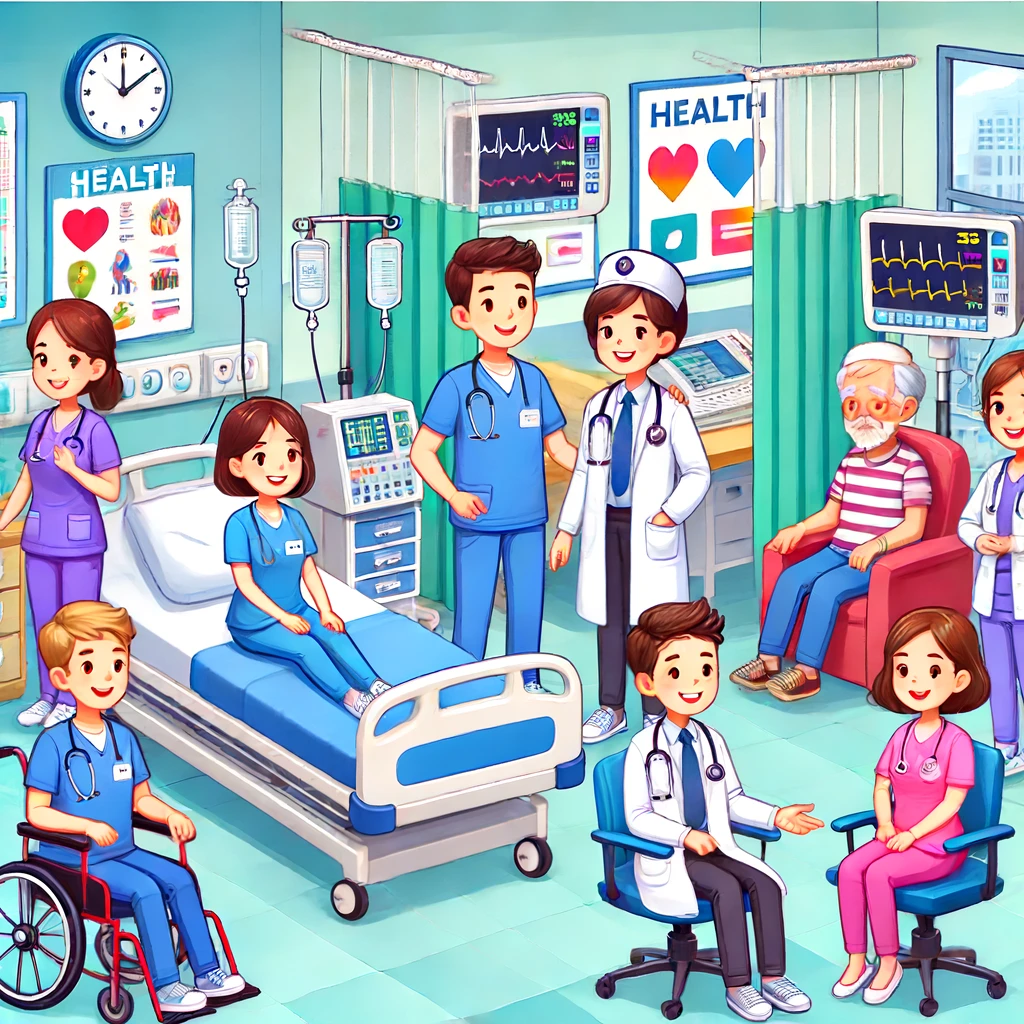
Working in healthcare is a demanding task that requires not only technical knowledge but also strong communication skills. For healthcare professionals whose first language isn’t English, this can pose a particular challenge. Effective communication is key in ensuring that patients receive the best care possible, that healthcare team members work cohesively together, and that interactions are clearly understood by all parties involved.
Whether you are a nurse, doctor, technician, or allied health professional, learning basic English phrases tailored for healthcare can make a significant difference in your ability to provide quality care and improve patient outcomes. This article aims to introduce you to some essential English phrases that will be useful in various healthcare contexts.
From admitting patients and discussing medical histories to providing instructions and explaining treatment plans, the ability to communicate effectively in English is a vital part of your role. We will cover key phrases and scenarios that are likely to arise in your daily professional activities, helping you build confidence and competence in your English language skills.
Admitting Patients: First Impressions Matter
The admission process is often the first point of interaction between healthcare professionals and patients. Making a good first impression is crucial as it sets the tone for the patient’s experience. During admissions, you will need to gather information and ensure that the patient feels comfortable and informed.
Some key phrases for admitting patients include:
- “Can you please fill out this form?” – A fundamental request to collect patient information.
- “Do you have any allergies?” – Important for patient safety and care.
- “What brings you here today?” – Initiates the conversation about the patient’s concerns.
- “Let me check your blood pressure/temperature.” – Prepares the patient for basic initial checks.
- “Please take a seat in the waiting area.” – Directs the patient to where they need to go next.
Using these phrases can help make the patient feel attended to and ensure that you obtain the necessary information for further treatment.
Discussing Medical History: Build a Full Picture
Understanding a patient’s medical history is a critical step in diagnosing and treating them effectively. This often involves in-depth conversations where clear and precise English can ensure that you get accurate information. Here are some useful phrases:
- “Can you tell me about your medical history?” – Opens up the discussion.
- “Have you ever had surgery before?” – Inquires about past procedures that could impact current care.
- “Are you currently taking any medication?” – Crucial for avoiding contraindications.
- “Do you have any chronic illnesses?” – Helps in understanding long-term health issues.
- “When was your last check-up?” – Provides insight into recent health monitoring activities.
Using these questions can help you get comprehensive medical information, which is essential in assessing the patient and planning their treatment.
Providing Instructions: Clarity is Key
As a healthcare professional, you’ll often need to give clear instructions to patients to help them manage their health. This includes guidance on medication, lifestyle changes, and follow-up visits. Clear communication ensures that patients understand what is required of them, thereby improving compliance and outcomes.
Consider these phrases:
- “Take this medication three times a day after meals.” – Specifies dosage and timing.
- “You need to rest and drink plenty of fluids.” – General post-illness advice.
- “Please come back for a follow-up visit in two weeks.” – Scheduling future appointments.
- “Avoid strenuous activities for the next few days.” – Post-procedure advice.
- “Make sure to keep the wound clean and dry.” – Important for wound care.
By articulating your instructions clearly, you lower the risk of misunderstandings that could negatively affect the patient’s health.
Explaining Treatment Plans: Comprehensive Care
Explaining treatment plans is another area where effective communication is vital. Patients need to be fully informed about their options to make educated decisions about their care. Here are some phrases that can help make treatment plans clear:
- “You have a couple of treatment options.” – Introduces the discussion on choices.
- “We recommend starting with physical therapy.” – Suggests a course of action.
- “This treatment involves medication and lifestyle changes.” – Outlines what the treatment entails.
- “There may be some side effects, such as dizziness or nausea.” – Prepares the patient for possible outcomes.
- “Do you have any questions about the treatment?” – Invites the patient to seek clarification.
Effective communication about treatment options is essential in ensuring that patients feel informed and empowered in their healthcare journey.
Responding to Patient Concerns: Empathy and Reassurance
Patients will have concerns and questions about their health and treatment. Responding to these effectively requires empathy, clarity, and reassurance. Building trust is an integral part of patient care and effective communication is at the heart of that process. Here are some key phrases:
- “I understand your concern, and I’m here to help.” – Shows empathy and willingness to assist.
- “Can you describe your symptoms in more detail?” – Seeks more information for clarity.
- “I will consult with the specialist and get back to you.” – Reassures the patient about seeking further guidance.
- “You’re in good hands. We will take care of you.” – Provides reassurance and comfort.
- “Let’s take one step at a time.” – Encourages a measured and calm approach.
These phrases can help in building a good rapport with patients, ensuring they feel heard and cared for.
Conclusion: The Significance of Effective Communication in Healthcare
Effective communication in healthcare is not just about understanding and being understood; it forms the foundation of patient care and safety. For non-native English-speaking healthcare professionals, mastering basic English phrases tailored for the medical field can profoundly impact their ability to provide care and build trust with patients.
From admitting patients and discussing their medical histories to providing instructions, explaining treatment plans, and responding to concerns, every opportunity to communicate clearly and empathetically is an opportunity to enhance patient care. Utilizing the key phrases outlined in this article can serve as a practical guide to improving your English language skills in a healthcare context.
Remember, communication in healthcare is a continuous learning process. As you grow in your role, you’ll discover that the effort you put into improving your language skills will pay off in high dividends, through better patient outcomes and a more cohesive healthcare team environment.
Keep working on your English language proficiency, and don’t hesitate to continually refine your communication skills. As you do so, you’ll notice a significant improvement in both your professional interactions and your overall confidence in your role.