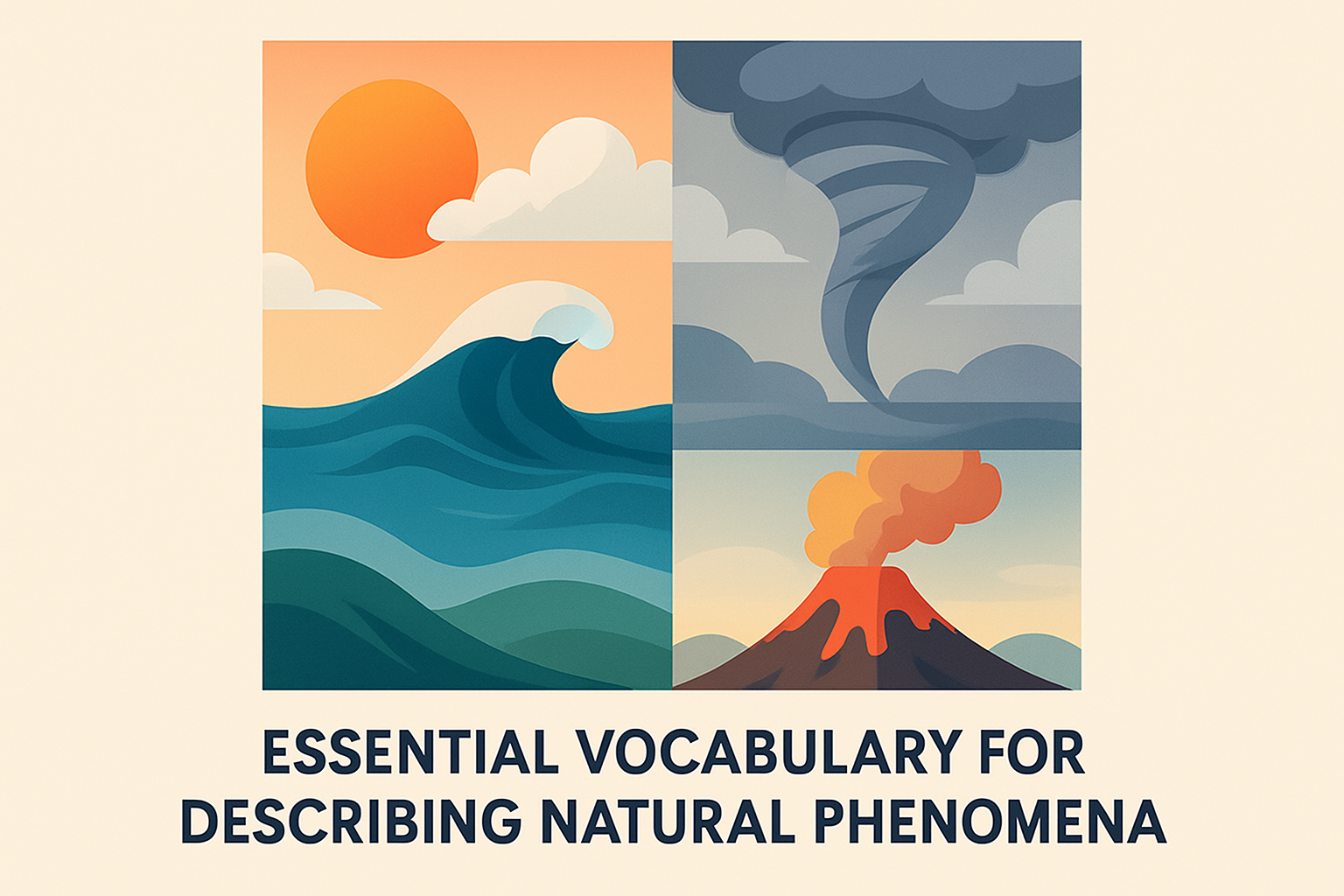
Describing natural phenomena is a fascinating endeavor that bridges the gap between scientific understanding and everyday observation. By defining these occurrences, we can communicate our experiences, predict changes, and appreciate the wonders of our environment. Whether it’s a sudden storm, the gradual erosion of a coastline, or the burst of color in a sunset, having a precise vocabulary allows us to share what we observe with others effectively. Understanding this vocabulary is essential not only for scientists and educators but also for anyone keen on appreciating the natural world more deeply. By gaining clarity on these terms, we enhance our ability to engage in informed discussions about climate, geology, weather, and ecosystems.
This article explores the key terms and concepts necessary for describing natural phenomena accurately. We will delve into various natural occurrences, offering real-world examples and explaining their significance. By grasping these terms, you will better appreciate the complexity of nature and communicate your observations with precision. Ultimately, this insight empowers us to predict potential changes in our environments and make informed decisions affecting conservation efforts or even personal safety. Let’s embark on a journey to enrich our vocabulary and understanding, comprehending the natural world more profoundly.
Weather Phenomena
Weather phenomena encompass diverse atmospheric events that involve temperature, humidity, wind, and visibility. Common descriptors include terms like fog, hail, and blizzard, each depicting specific conditions. For instance, fog, a thick cloud of tiny water droplets suspended in the atmosphere, can obscure visibility significantly, often affecting transportation and outdoor activities. Meanwhile, a blizzard combines heavy snowfall with strong winds, drastically reducing visibility and creating dangerous travel conditions.
Understanding the language of weather goes beyond just these terms. It’s crucial to note the difference between meteorological terms such as a ‘hurricane’ and a ‘tornado.’ While both involve powerful winds, a hurricane is a large-scale storm that forms over warm ocean waters, whereas a tornado is a smaller but intensely concentrated vortex typically formed over land during severe thunderstorms.
- Fog: A dense cloud of water droplets near the ground.
- Hail: Ice pellets formed in thunderstorms.
- Blizzard: Severe snowstorm with strong winds.
- Hurricane: Large storm system over oceans.
- Tornado: Small, violent wind vortex over land.
By understanding these terms, individuals can describe the nuances of weather conditions, making informed decisions and preparations ahead of predicted changes, whether it’s a weekend camping trip or a coastal evacuation.
Geological Phenomena
Geological phenomena refer to processes and features of the Earth’s crust, involving tectonic activities, erosion, and natural formations. Terms such as “earthquake,” “volcano,” and “tsunami” are crucial to our understanding of geological dynamics. An earthquake, typically caused by the movement of tectonic plates, can lead to significant changes in the landscape, affecting infrastructure and communities near fault lines.
Volcanoes, while sometimes dormant, are powerful geologic features capable of erupting, which can result both in beautiful landscapes and destructive magmatic flows. Tsunamis are massive ocean waves often triggered by underwater earthquakes or volcanic eruptions and can travel across vast distances, inundating coastal areas with little warning.
| Phenomenon | Description |
|---|---|
| Earthquake | Sudden ground shaking due to seismic activity |
| Volcano | Mountainous vent releasing lava and ash |
| Tsunami | Large ocean wave system from seismic activities |
These geological phenomena hold great significance in academic study and practical awareness. Understanding the dynamics of these events allows us to prepare and react appropriately, whether it involves studying seismic risks for urban planning or recognizing early tsunami warning signs to evacuate coastal regions promptly.
Hydrological Phenomena
Hydrological phenomena revolve around the Earth’s water cycle and its various manifestations such as rivers, lakes, storms, and ocean currents. Describing them accurately requires familiarity with terms like “flood,” “drought,” and “drainage basin.” Floods, often caused by prolonged rain or rapid snowmelt, can lead to widespread water damage and pose serious challenges to infrastructure and community livelihoods.
Droughts, the opposite of floods, occur when an area experiences a prolonged period of insufficient rainfall, leading to water shortages that affect agriculture, wildlife, and human populations. Understanding these phenomena is vital in regions where agriculture depends heavily on predictable rainfall patterns.
Additionally, understanding “drainage basin” helps in grasping where water naturally collects and flows within a given area. Proper comprehension and management of drainage basins can mitigate flood risks and efficiently manage water resources.
The phenomena mentioned highlight the importance of managing water resources and preparing for extreme conditions to protect human life, property, and ecosystems.
Ecological Phenomena
Ecological phenomena include interactions between various living organisms and their environments. This encompasses seasonal changes, migration, and ecological succession. Seasonal changes, such as spring blossoming or autumn foliage, signify periodic transformations in an ecosystem and affect the behaviors and cycles of regional flora and fauna.
Migration is a fascinating phenomenon where species move from one habitat to another, often across large distances, to exploit different ecological niches. Birds, for instance, migrate to exploit seasonal abundance of food or favorable climates, demonstrating nature’s incredible adaptability.
Ecological succession describes how ecosystems evolve over time, moving from a barren landscape to a richly biodiverse environment following disturbances like fires or hurricanes. Understanding these processes is critical for conservation efforts aiming to preserve biodiversity and maintain healthy ecosystems.
Thus, insights into ecological phenomena are crucial for conservationists, biologists, and anyone interested in the well-being of our planet, as they detail the adaptive mechanisms and resilience of nature amidst human-induced and natural changes.
Celestial Phenomena
Celestial phenomena involve events taking place in outer space that are visible from Earth, such as eclipses, meteor showers, and auroras. Witnessing a solar or lunar eclipse offers a stark reminder of the cosmic dance within our solar system, where celestial bodies align to produce spectacular visuals.
Meteor showers occur when Earth’s orbit intersects with debris from comets, creating a dazzling sky display of shooting stars. Auroras, also known as Northern or Southern Lights, occur when solar wind particles interact with Earth’s magnetosphere, creating vivid displays of light commonly seen near polar regions.
Understanding these celestial events not only enhances our appreciation of the universe but also fosters an understanding of astrophysical concepts. It allows stargazers, scientists, and enthusiasts alike to predict and observe these natural phenomena, broadening our context of the cosmos.
Mastering these terms and phenomena is essential for those captivated by the vast expanses of outer space, reminding us of our place in the universe and the marvels that lie beyond our planet.
Conclusion: Embrace the Language of Nature
In summary, building a robust vocabulary for describing natural phenomena enriches our interaction with the environment. By decoding the complexities of weather, geological, hydrological, ecological, and celestial phenomena using precise terms, we strengthen our ability to communicate, comprehend, and prepare for these events. With this knowledge, we deepen our appreciation for the world and enhance our capacity to make educated choices that influence our daily lives and collective future.
Ultimately, learning these terms is a step towards more profound engagement with nature, rewarding us with heightened awareness and understanding. Take this newfound knowledge as an invitation to explore, question, and share the wonders around us. As a next step, consider a nature walk, a visit to a planetarium, or volunteering in conservation efforts. Each small action extends a bridge to the vast, intricate world we share, encouraging continual discovery and mindfulness about the natural phenomena that shape our existence.
Frequently Asked Questions
1. Why is having a precise vocabulary for describing natural phenomena important?
Understanding and having a precise vocabulary for describing natural phenomena is crucial for several reasons. Firstly, it enables us to accurately communicate our observations and experiences with others. Whether sharing the excitement of watching a meteor shower or discussing the implications of a volcanic eruption with scientists, having the right words helps convey exact meanings. Secondly, such vocabulary is essential for education and learning. It aids students and researchers in grasping complex concepts and contributes to academic growth. Lastly, a precise vocabulary fosters a deeper appreciation of nature’s wonders. By naming and describing occurrences like bioluminescent algae or auroras, we not only identify them but also learn their underlying processes. Recognizing the beauty and intricacy of natural phenomena broadens our understanding of the world, enriching our connection to the environment.
2. What are some essential terms one should know when describing weather-related natural phenomena?
Weather-related natural phenomena often involve terms that are critical for accurate description and understanding. Key terms include “precipitation,” which refers to any form of water – liquid or solid – falling from the atmosphere, encompassing rain, snow, sleet, and hail. “Humidity” measures the amount of water vapor present in the air, affecting comfort levels and weather conditions. “Fronts” are boundaries between two different air masses, often causing significant weather changes. Understanding “barometric pressure” is vital, as it indicates atmospheric pressure and plays a crucial role in weather patterns. “Cumulonimbus” describes a type of cloud forming towering columns and is associated with thunderstorms and severe weather events. Being familiar with these terms enhances our ability to interpret weather forecasts and communicate conditions effectively. Additionally, it allows us to prepare for and respond to weather-related challenges in a more informed manner.
3. How can understanding vocabulary related to geological phenomena assist in disaster preparedness and response?
Understanding the vocabulary associated with geological phenomena is integral to disaster preparedness and response. Terms like “fault lines” describe fracture zones between rocks where earthquakes commonly occur. This knowledge aids in identifying high-risk areas and preparing for potential seismic activity. The term “tsunami,” often associated with underwater earthquakes or volcanic eruptions, focuses on the resulting large sea waves capable of causing extensive coastal damage. Recognizing the implications of this term is crucial for developing evacuation plans and minimizing risk. “Landslides” denote the movement of rock, earth, or debris down slopes, and understanding them helps in assessing slope stability and warning systems. When people comprehend these terms, they can better understand and interpret warnings or advisories. Furthermore, it equips communities and authorities with the knowledge to implement effective response strategies and mitigate the impact of such geological occurrences.
4. What vocabulary should be known when discussing changes in the natural environment, such as erosion and climate change?
When discussing changes in the natural environment, a rich vocabulary helps in articulating the dynamics and implications of these processes. “Erosion” refers to the process by which soil, rock, and other surface material are worn away, typically by wind, water, or ice. Recognizing the word “sedimentation” aids in understanding how eroded materials are deposited, changing landscape features over time. The term “deforestation” is crucial in conversations about habitat loss and biodiversity, describing the large-scale removal of forest cover. “Climate change” is a significant term encompassing global warming, temperature changes, and variations in precipitation patterns, impacting ecosystems and human societies. Knowing and using these terms encourages informed discussions around conservation efforts, policy-making, and sustainable practices aimed at mitigating environmental degradation and adapting to ongoing changes.
5. How can the vocabulary of celestial phenomena enhance our understanding of the universe and solar system?
The vocabulary related to celestial phenomena is fundamental to exploring and comprehending our universe and solar system. Terms like “galaxy” describe an immense system of stars, dust, and gas bound together by gravity, providing context for our Milky Way’s position in space. Understanding “nebula” introduces regions with clouds of gas and dust, often serving as the birthplace of stars. The concept of “exoplanets,” planets outside our solar system, enriches our knowledge of potentially habitable worlds. “Supernova” signifies the explosive death of a star, impacting surrounding space with elements essential for cosmic cycles. Learning these terms opens the door to understanding astronomical processes and phenomena, fostering curiosity and exploration. This vocabulary allows us to engage with the broader astronomical community and appreciate the vastness and complexity of space, encouraging ongoing scientific research and discovery. Ultimately, it enhances our comprehension of humanity’s place in the cosmos.