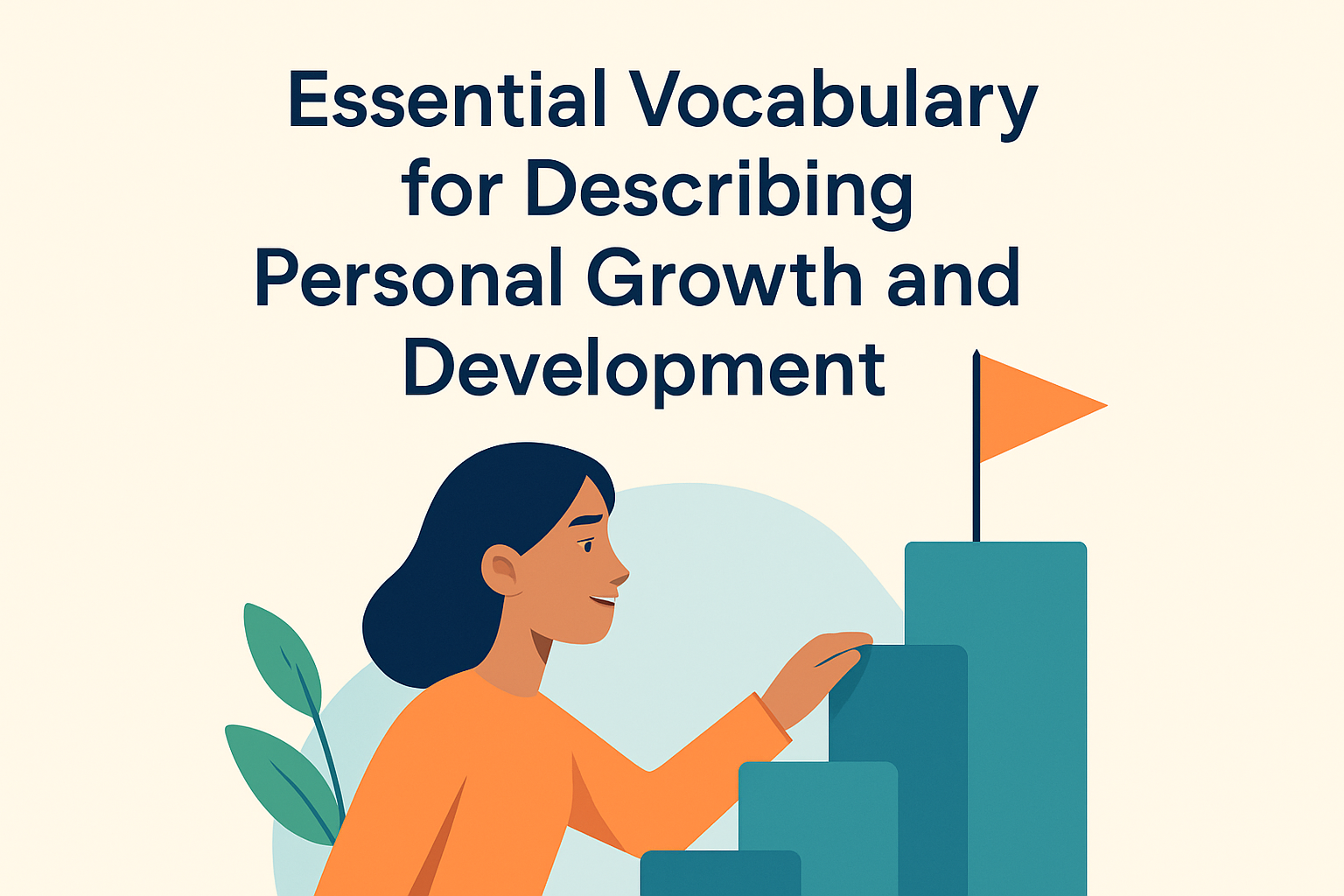
Personal growth and development refer to the continuous process of improving oneself and enhancing one’s capabilities across various aspects of life. This process encompasses emotional, physical, intellectual, and social growth, leading to profound changes and improvements. Understanding the vocabulary associated with personal growth is crucial. These terms provide the necessary framework to articulate goals, document progress, and celebrate achievements. As individuals strive to navigate and master life’s complexities, being armed with the appropriate language to describe personal growth can provide direction and clarity.
Effective communication of personal development endeavors can motivate individuals to take charge of their lives and inspire others around them. Beyond this, clear articulation of personal growth concepts can promote self-awareness and facilitate the setting of realistic goals. Personal growth vocabulary encompasses terms that represent an array of self-improvement facets, including emotional intelligence, resilience, and mindfulness, among others. For individuals committed to self-improvement, mastering such vocabulary is indispensable.
Understanding Emotional Intelligence
Emotional intelligence (EI) is the ability to perceive, control, and evaluate emotions in oneself and others. It plays a pivotal role in personal growth by facilitating interpersonal relationships and enhancing decision-making. Effective communication, empathy, and self-regulation are core components of emotional intelligence, which can lead to improved personal and professional interactions.
An example of emotional intelligence can be seen in a workplace scenario where a manager observes that a team member is unusually quiet. Instead of jumping to conclusions, the manager uses emotional intelligence to approach the individual with empathy, asking if they need support. This understanding fosters a supportive environment, aiding both personal and team-wide development.
- Self-awareness: Recognizing one’s emotions and their effects
- Self-regulation: Managing one’s emotions effectively
- Motivation: Channeling emotions toward achieving goals
- Empathy: Understanding the emotions of others
- Social skills: Managing relationships to move people in desired directions
The Role of Resilience in Personal Growth
Resilience is the capacity to recover quickly from difficulties or setbacks. It is an essential trait that empowers individuals to confront challenges, adapt to change, and emerge stronger than before. Developing resilience involves fostering a positive mindset, self-belief, and the ability to view failures as opportunities for learning and growth.
Consider a student who fails an important exam. Instead of succumbing to disappointment, they perceive it as a learning moment, analyzing what went wrong and how to improve. This resilience not only aids in their academic growth but also prepares them for future challenges in life.
| Aspect | Characteristics |
|---|---|
| Emotional Resilience | Emotional stability, mental endurance |
| Cognitive Resilience | Growth mindset, problem-solving skills |
| Physical Resilience | Physical endurance, health management |
The Power of Mindfulness
Mindfulness is the practice of maintaining a moment-by-moment awareness of thoughts, feelings, bodily sensations, and surrounding environment. It is characterized by acceptance, meaning that individuals pay attention to their thoughts and feelings without judging them. Mindfulness enhances focus, reduces stress, and contributes significantly to personal development.
In real-world application, a professional feeling overwhelmed by work might pause to practice mindful breathing, allowing them to center their emotions and regain focus. This simple act of mindfulness can turn stressful situations into manageable experiences, enabling ongoing personal growth.
- Present Moment Awareness: Staying focused on the present rather than being lost in thoughts about the past or future.
- Mindful Breathing: Using breath as an anchor to maintain present awareness.
- Non-Judgment: Observing experiences without categorizing them as good or bad.
- Acceptance: Embracing thoughts and feelings without resistance.
Building Growth Mindset
A growth mindset is the belief that abilities and intelligence can be developed over time. This contrasts with a fixed mindset, where individuals believe their traits are static. Embracing a growth mindset encourages people to embrace challenges, persist in the face of setbacks, and view effort as a path to mastery.
A practical example of the growth mindset is an athlete learning a new skill. Despite initial difficulty, they persist by practicing regularly, accepting feedback, and celebrating small achievements along the way. This dedication results not only in skill enhancement but also in personal development, proving the effectiveness of a growth mindset.
Key aspects of a growth mindset include:
- Embracing Challenges: Viewing challenges as opportunities to grow rather than threats.
- Persistence: Continuing in the face of adversity and setbacks.
- Learning from Criticism: Using feedback to improve rather than feeling discouraged.
- Value of Effort: Recognizing that effort leads to mastery and success.
The Importance of Self-Reflection
Self-reflection is the thoughtful consideration and evaluation of one’s own thoughts, feelings, and actions. It allows individuals to gain insight into their behaviors and motivations, leading to personal growth and informed decision-making. Regular self-reflection can cultivate self-awareness, promote learning, and inspire proactive changes.
An individual practicing self-reflection might review their day’s events before bedtime, considering moments of success and areas needing improvement. This introspection enables them to identify patterns, set goals for change, and recognize their personal development achievements over time.
Conclusion: Embracing Personal Growth Vocabulary
Understanding and utilizing the vocabulary associated with personal growth and development are invaluable for anyone seeking to improve themselves continually. By familiarizing oneself with terms such as emotional intelligence, resilience, mindfulness, growth mindset, and self-reflection, individuals arm themselves with the tools to articulate their goals and achievements effectively. This not only fosters self-awareness and inspiration but also guides them in setting realistic objectives.
These concepts set a foundation for transformative growth, personally and professionally, serving as guiding lights through life’s challenges. Embrace these terms, integrate them into daily life, and take active steps in your personal growth journey. Begin incorporating these powerful words into conversations and self-assessments today, and witness the profound impact on your life’s evolution.
Your path to personal growth and development starts with the language you use. Start today, and watch yourself transform over time. Engage with these concepts regularly to continuously ignite your journey toward becoming your best self.
Frequently Asked Questions
1. What are some key terms I should know when discussing personal growth and development?
Understanding the vocabulary related to personal growth can significantly enhance your ability to articulate your journey and set realistic goals. Here are some essential terms:
- Self-awareness: Recognizing your emotions, motivations, and values is crucial for personal growth. It involves reflecting on your behaviors and thoughts to make more informed choices.
- Resilience: This term refers to your ability to bounce back from setbacks. Developing resilience allows you to face challenges confidently and adapt to change.
- Mindfulness: Being fully present in the moment, aware of your thoughts and feelings without judgment, mindfulness can enhance both emotional and intellectual growth.
- Goal-setting: Clearly defining objectives you want to achieve is a critical component of personal growth, helping to focus your efforts and measure progress.
- Growth mindset: Embracing the belief that talents and abilities can be developed through dedication and hard work fosters a love of learning and resilience essential to great accomplishment.
2. How does vocabulary aid in documenting and celebrating personal growth milestones?
Having a solid grasp of personal growth vocabulary is essential to track your development effectively. Here’s how vocabulary aids this process:
- Precision in tracking progress: With specific terms, you can accurately document your journey. For example, distinguishing between ‘self-awareness’ and ‘self-reflection’ helps identify exact areas of growth.
- Clear articulation of achievements: Vocabulary equips you to express your successes definitively, enhancing the celebration of milestones. Words like ‘accomplishment’ or ‘milestone’ allow you to vocalize what you’ve achieved comprehensively.
- Enhanced goal formulation: When setting goals, precise language shapes clearer objectives. Expressions like ‘SMART goals’ (Specific, Measurable, Achievable, Relevant, Time-bound) aid in crafting actionable plans.
- Inspiring and motivating stakeholders: When you articulate your progress using specific and impactful language, it can inspire those around you, fostering an environment that supports your continued growth.
3. Can understanding personal growth vocabulary help boost my emotional intelligence?
Absolutely! Emotional intelligence involves understanding and managing your emotions and those of others. Familiarity with personal growth vocabulary can enhance this skill in several ways:
- Improved self-awareness: Knowing terms like ’emotional regulation’ and ’empathy’ helps you better understand and discuss your emotions, a core aspect of emotional intelligence.
- Informed emotional management: Vocabulary such as ‘stress management’ or ‘coping strategies’ provides frameworks for handling emotions effectively, thereby enhancing interpersonal skills.
- Enhanced communication: Using precise language when discussing emotional topics can prevent misunderstandings and facilitate more meaningful interactions.
- Greater empathy: Words help you develop a more nuanced understanding of others’ emotions, promoting empathy and better responses to others’ needs.
4. How does social growth fit into personal development, and what terms should I know?
Social growth is a pivotal aspect of personal development, as it focuses on enhancing interpersonal skills and building meaningful relationships. Essential vocabulary includes:
- Communication skills: This encompasses listening, speaking, and non-verbal communication, fundamental to effective interactions.
- Collaboration: Working well with others toward common goals, collaboration is critical in both professional and personal spheres.
- Conflict resolution: The ability to manage and resolve disputes constructively strengthens relationships and fosters a supportive environment.
- Networking: Building and maintaining professional relationships can lead to personal and career growth opportunities.
- Inclusion and diversity: Embracing differences and fostering an inclusive environment enriches personal interactions and broadens perspectives.
5. What role does intellectual growth play in personal development, and what vocabulary is relevant here?
Intellectual growth is about expanding your knowledge and cognitive skills, which is integral to personal development. Key vocabulary terms include:
- Critical thinking: This involves analyzing facts objectively to form a judgment, essential for problem-solving and decision-making.
- Lifelong learning: The continuous pursuit of knowledge for personal and professional development, lifelong learning fosters a dynamic and informed mindset.
- Cognitive flexibility: The ability to adapt your thinking to new situations and challenges is crucial for maintaining intellectual growth in a rapidly changing world.
- Problem-solving: Developing strategies to navigate and address various challenges enhances both personal and professional competence.
- Creativity: Encouraging innovative thinking and the generation of new ideas, creativity fuels intellectual curiosity and exploration.