In our fast-paced world, effective communication has proven to be an indispensable skill. One might possess a firm command over the grammar and vocabulary of the English language, yet the essence of impactful exchanges often goes beyond mere words—they hinge on one’s ability to listen actively. Active listening entails more than just hearing words; it is an intricate skill set that involves engaging both cognitively and emotionally with the speaker’s message. Such a transformative approach to listening can significantly enhance mutual understanding, boost personal and professional relationships, and resolve conflicts more efficiently. Active listening, therefore, is a quintessential element of communication, especially in environments dominated by English conversations.
But why does active listening matter so much? Firstly, it creates a space for genuine dialogue, wherein the speaker feels heard and understood. Active listening facilitates empathy, allowing a listener to not only grasp the speaker’s point of view but to also demonstrate compassion. Moreover, in diverse cultural contexts where English serves as a lingua franca, a commitment to active listening can bridge cultural divides, avert misunderstandings, and foster inclusivity. Realistically, mastering the art of active listening can transform daily interactions from mundane to insightful, making it a vital skill for any English speaker.
Understanding Active Listening
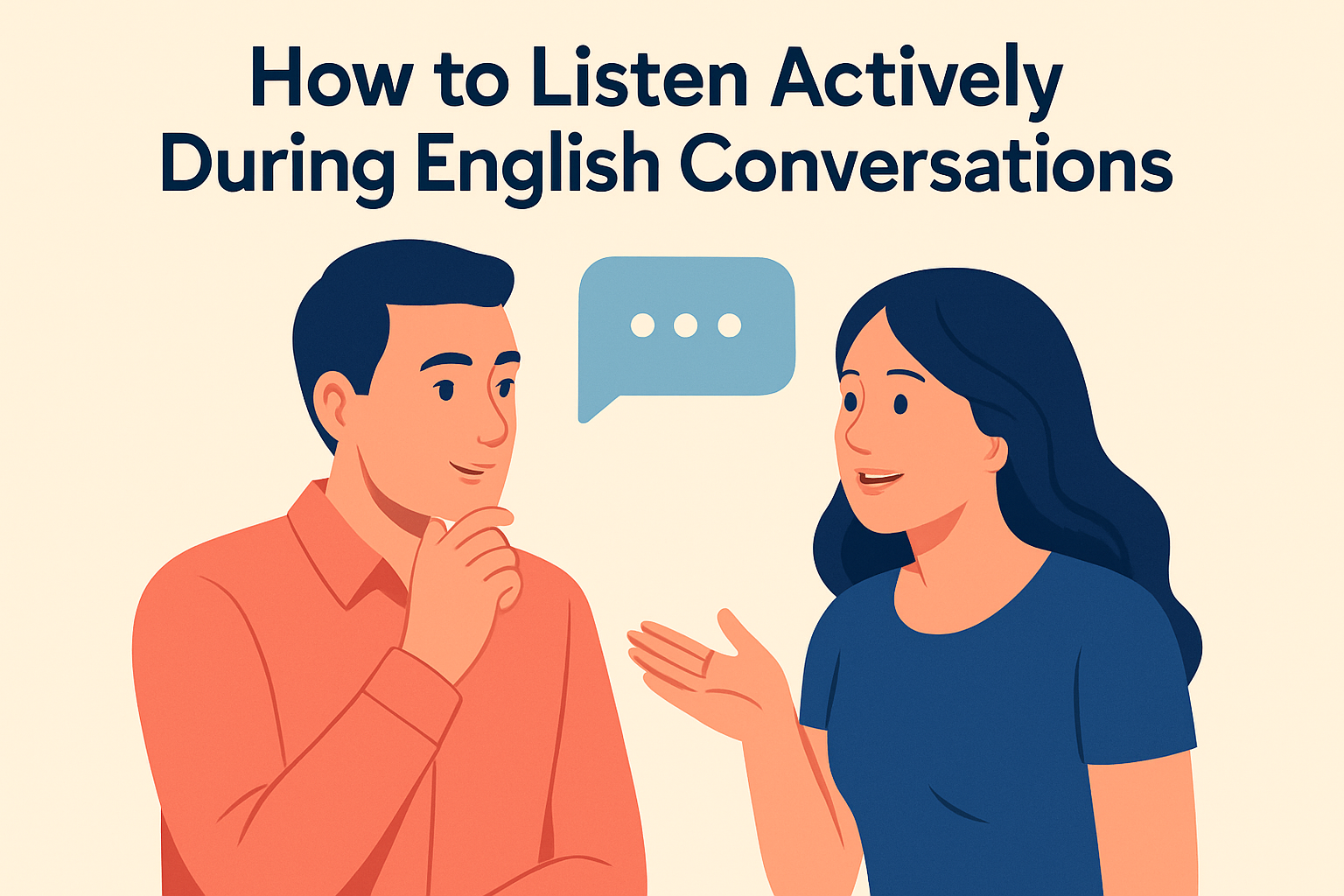
Active listening is a dynamic process that requires full engagement from the listener. It is not a passive activity but involves a conscious effort to understand, interpret, and evaluate what is being said actively. Consider the example of a group meeting at work. As people take turns sharing, a person practicing active listening would not only pay attention to the speaker but would also look out for non-verbal cues, such as body language and tone. Furthermore, they might nod in acknowledgment or ask clarifying questions to ensure complete comprehension. This type of engagement often leads to a more productive conversation because it confirms the listener’s interest and understanding.
In practical terms, active listening involves several key components: maintaining eye contact, harnessing non-verbal cues, refraining from interrupting, providing feedback, and responding appropriately. Each component plays a vital role in ensuring the speaker feels valued and understood.
The Importance of Non-verbal Communication
Non-verbal cues are invaluable in active listening. They complement verbal communication and often reveal more than words can convey. Consider a situation during a multilingual conference attended by professionals from different backgrounds. For an English speaker to be an active listener, they must tune into non-verbal signals such as facial expressions, gestures, posture, and eye contact. These signals can provide context and meaning beyond the spoken word, helping the listener to understand the speaker’s emotional state and the emphasis of the message being shared.
Techniques for Enhancing Active Listening
Enhancing active listening skills involves adopting several proven techniques. These techniques are geared towards improving the listener’s engagement with the speaker. One such technique is ‘paraphrasing,’ where the listener repeats what the speaker has said in their own words, clarifying and confirming understanding. For instance, suppose a colleague shares a complicated idea during a brainstorming session. An effective listener might respond, “So, what I’m hearing is that you’re proposing a quarterly review system to track progress more efficiently. Is that correct?” Such paraphrasing not only confirms understanding but also allows opportunities for correction if necessary.
- Paraphrasing
- Reflection
- Nod and Acknowledge
- Clarifying
- Summarizing
Another helpful technique is ‘reflection,’ which involves the listener empathizing with the speaker’s emotions. For example, if a friend expresses frustration about a delayed project, the active listener might say, “It sounds like you’ve been feeling really anxious about the setbacks on this project.” This act of mirroring the speaker’s feelings helps convey empathy and support.
Additionally, frequent ‘nodding and acknowledgment’ encourages the speaker to keep sharing. When a listener nods or provides verbal affirmations like “I see” or “That’s interesting,” it reassures the speaker of the listener’s attention, fostering a sense of valued communication.
Creating an Environment for Active Listening
The environment where a conversation takes place can significantly affect active listening. Ideally, conversations should occur in places free from distractions and noise to maintain focus. Consider a clinician consulting with a patient. A consultation room designed for optimal comfort and privacy fosters an environment conducive to active listening. Reducing background noise and minimizing interruptions ensure both the clinician and the patient can focus on the exchange, promoting more effective communication and trust.
Addressing Potential Barriers
While active listening is immensely beneficial, barriers can impede these efforts. Distractions, preconceived notions, and lack of interest are some obstacles that can hinder effective listening. Imagine a classroom with a teacher explaining a complex topic. A student preoccupied with thoughts about an upcoming exam might miss crucial information. Conversely, a listener who dismisses the speaker’s perspective may lose valuable insights. Overcoming these barriers requires mindfulness, open-mindedness, and a willingness to engage in the conversation genuinely.
It is crucial to recognize these barriers and actively work to overcome them. Techniques like taking deep breaths, ensuring good posture, and mentally as well as physically preparing oneself for the conversation can all aid in minimizing such distractions.
Active Listening in Professional Settings
Active listening holds substantial value within professional environments. It is a key ingredient for teamwork, leadership, and customer relations. In a corporate setting, active listening can be the difference between a successful negotiation and a missed opportunity. Imagine negotiations between two corporate entities over potential collaboration. Active listening ensures that each party fully understands the terms being discussed, reducing the likelihood of misunderstandings and building a strong foundation for future relationships.
| Skill | Description |
|---|---|
| Teamwork | Active listening improves collaboration by ensuring everyone is on the same page and feels valued. |
| Leadership | Leaders who listen actively inspire trust and loyalty among team members. |
| Customer Relations | Active listening in customer service helps in understanding and addressing customer needs effectively. |
Moreover, in customer service, active listeners engage with clients more effectively, leading to enhanced customer satisfaction and loyalty. By addressing customer concerns attentively and promptly, companies can cultivate lasting relationships and positive brand perceptions.
Benefits Beyond the Workplace
Active listening is equally vital in personal interactions, from friendships to family relationships. Picture a scenario where a spouse is sharing concerns about household responsibilities. The partner who listens actively not only hears the concerns but also affirms them, contributing to stronger, trust-based relationships.
Active listening supports conflict resolution, empowering individuals to approach conversations from a place of understanding rather than aggression. In friendships, it nurtures better understanding and care, fostering a more supportive and meaningful interpersonal network.
Strategies for Practicing Active Listening
Becoming an active listener takes practice and dedication. Some strategies to consider include setting specific times for focused conversation, removing potential distractions, and mentally preparing beforehand. Additionally, practicing mindfulness and empathy can cultivate a habit of active listening.
For example, imagine preparing for a family meeting. Setting aside a specific hour dedicated to listening attentively can be tremendously beneficial. Before the meeting, one might switch off personal devices, thus minimizing distractions. Acknowledging any preexisting bias and intentionally cultivating an open mind serves as a basis for a fruitful and engaging discussion.
Conclusion: Mastering the Art of Active Listening
In conclusion, the advantages of active listening during English conversations cannot be overstated. Whether in professional or personal settings, actively listening allows for deeper connection and understanding, promoting harmony and successful outcomes. As an art, active listening requires practice, commitment, and an open heart.
To master this vital skill, commit to integrating the techniques discussed in real-life scenarios. Make a conscious effort to listen actively in your next conversation—whether with work colleagues, family, or friends. Observe the difference in comprehension, empathy, and connection that follows. Over time, these transformative experiences will reinforce the importance of active listening as a core communicative skill, making each conversation more meaningful and effective.
Remember, the first step to becoming a great communicator is being a great listener. By honing your active listening skills, you pave the way for improved relationships, personal growth, and professional success.
Frequently Asked Questions
1. What is the fundamental difference between hearing and active listening in English conversations?
Hearing and active listening might seem similar on the surface, but they diverge significantly in crucial ways. Hearing is a passive physiological process, where sound waves hit the eardrum and are deciphered by our brains. It’s what happens when you accidentally catch snippets of a conversation while multitasking. On the other hand, active listening in English conversations requires conscious effort and attention to not just the words themselves but also the underlying meaning, tone, and context. It involves giving full attention to the speaker, understanding their message, responding thoughtfully, and remembering key points. Active listening transforms a basic sensory function into a dynamic interaction that fosters understanding and connection.
2. What are some strategies for improving active listening skills during English conversations?
Mastering active listening in English calls for dedication and practice. Start by eliminating distractions: turn off notifications, ensure your phone is away, and focus your entire attention on the speaker. Engage with what the speaker is saying by using verbal and non-verbal cues such as nodding or making affirming noises like ‘uh-huh’ to show you’re present and interested. Next, ask open-ended questions. This encourages deeper discussion and shows that you’re engaged and probing beneath the surface. Reflect back what you’ve heard by paraphrasing or summarizing points; this not only confirms your understanding but also demonstrates attentiveness. Finally, be genuinely empathetic. Place yourself in the speaker’s shoes to grasp their emotions and perspectives. Through these strategies, your active listening in English will not only improve but also enrich your interpersonal interactions.
3. Why is active listening considered an emotional and cognitive skill?
Active listening is both emotional and cognitive because it requires engagement on multiple levels. Cognitively, it demands that you process information, recognize facts, remember details, and critically evaluate the content within the context provided. You need to actively make connections between the speaker’s message and your existing knowledge. Emotionally, active listening involves empathy and an understanding of the speaker’s emotional state. By tuning into their emotions, you’re able to respond more effectively and build rapport. It requires patience, self-awareness, and the ability to manage your own emotional responses during the conversation. The combination of these cognitive and emotional skills makes active listening more than just a mechanical activity—it becomes a bridge that facilitates meaningful communication and interpersonal understanding.
4. How does active listening impact the quality of English conversations?
Active listening has a profound impact on the quality of English conversations by enhancing comprehension, reducing misunderstandings, and fostering more meaningful exchanges. When both parties in a conversation engage in active listening, it encourages openness and trust. Speakers feel valued and respected, knowing that their thoughts and feelings are being heard and considered, which can lead to more honest and in-depth discussions. Additionally, active listening can help clarify any ambiguities before they escalate into bigger issues. It also aids in problem-solving and decision-making, as all parties have a clearer understanding of the situation and can collaborate more effectively. Overall, active listening transforms ordinary exchanges into empowering, constructive, and fulfilling dialogues.
5. Can cultural differences affect active listening practices in English conversations?
Yes, cultural differences can significantly influence how active listening is practiced and perceived in English conversations. Cultures vary in their communication styles, norms, and expectations, which can impact listening behaviors. For example, some cultures place high importance on verbal affirmation and feedback, considering frequent ‘uh-huhs’ and interjections as signs of politeness and engagement, while others might perceive interruptions as rude. Similarly, eye contact, personal space, and even the extent of empathetic response can differ across cultures. It’s essential to be mindful of these cultural nuances and adapt your active listening techniques accordingly when engaging with individuals from diverse backgrounds. This cultural sensitivity not only enhances communication but also respects and honors the unique perspectives and traditions of each person you interact with.