Improving English listening skills is a critical aspect of language mastery. As a non-native English speaker, enhancing your listening comprehension can open doors to meaningful conversations, career opportunities, and cultural understanding. In today’s digital age, audio books and eBooks present an effective and accessible way to boost your listening skills. By combining audio and textual elements, these tools create a rich learning experience that goes beyond traditional methods. Audio books provide the advantage of hearing the correct pronunciation and intonation of words, while eBooks serve as a textual reference to understand spelling, syntax, and context. This combination is not only beneficial for learning but also engages the learner in a more interactive way. Understanding how to utilize these resources effectively can profoundly impact your language learning journey, making it both enjoyable and efficient.
The Advantages of Audio Books for English Listening
Audio books are a powerful resource for improving English listening skills because they allow learners to experience the natural flow of spoken language. Unlike the static text of a traditional book, an audio book gives insight into rhythm, pronunciation, and the pace of spoken English, which is vital for developing an ear for the language.
One compelling real-world example of the effectiveness of audio books can be seen in immersive learning programs where students listen to chapters of a story and then discuss them in interactive group sessions. This method closely mimics real-life conversational practice by allowing learners to hear and process complex sentence formations and vocabulary within a narrative structure.
Furthermore, audio books require no screen time, making them perfect for those who wish to improve their listening skills during a commute, workout, or while performing other tasks. By taking advantage of time that would otherwise be unproductive, learners can maximize their exposure to English in a manner that fits seamlessly into their daily routine.
Maximizing Comprehension with eBooks
While audio books offer the advantage of exposing learners to the sounds of English, eBooks provide the textual reference necessary to understand spelling, grammar, and context. By following along in an eBook while listening to its audio counterpart, learners can connect spoken words with their written form, enhancing comprehension and retention.
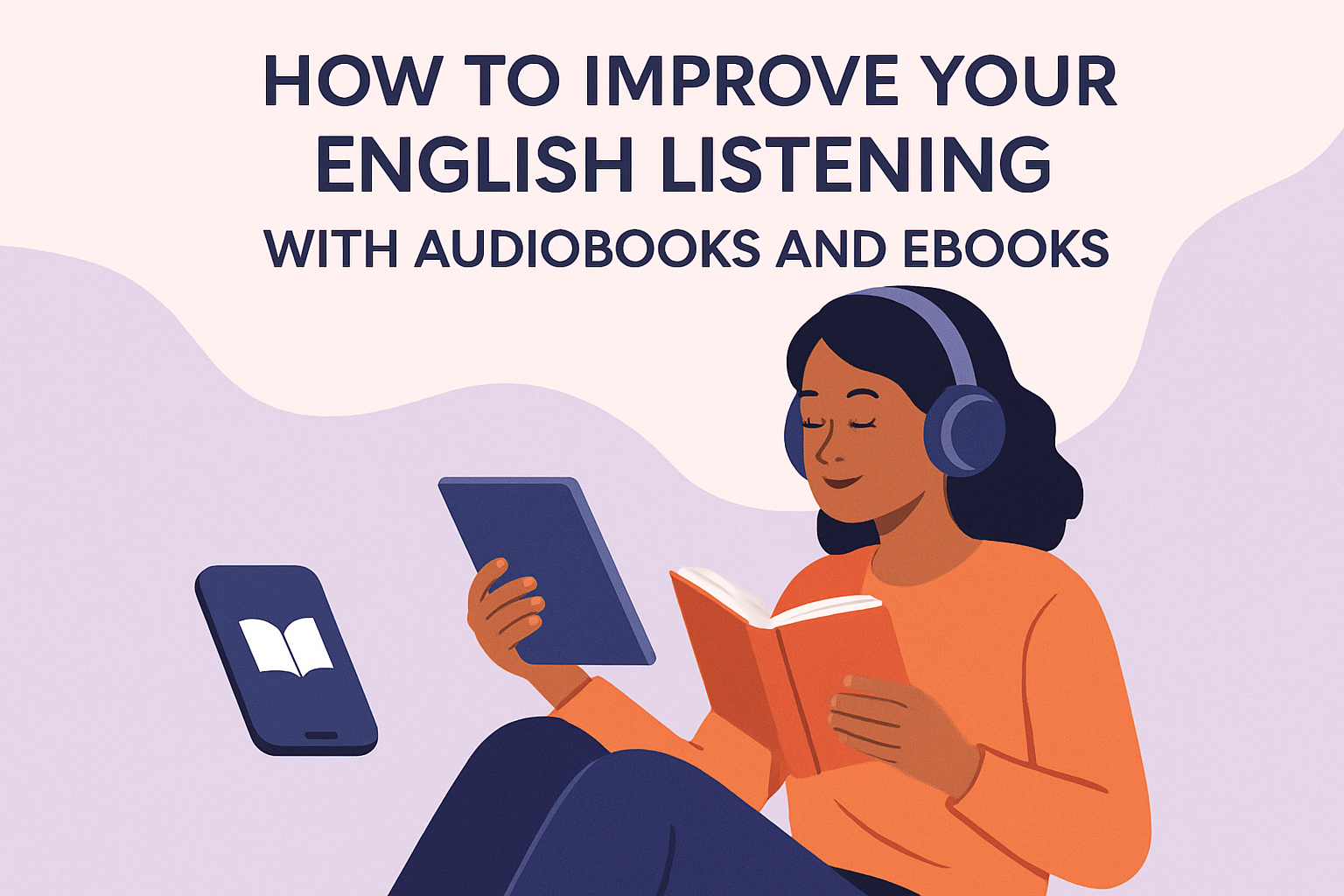
Consider an example where a language learner uses an eBook on a tablet while simultaneously listening to the corresponding audio book. This dual engagement opens opportunities to pause and re-read difficult sections, look up unfamiliar vocabulary, or take notes, all of which contribute to a deeper understanding of the material.
The interactive nature of eBooks, which often include features such as dictionaries, note-taking, and text highlighting, further aids in learning. These features allow learners to break down complex passages and focus on areas that may need additional practice, thereby enabling a tailored study approach that can be adjusted to suit individual learning needs.
Practical Applications: Combining Audio Books and eBooks
To fully leverage the potential of audio books and eBooks for improving English listening skills, it’s important to combine them strategically. Here are some practical steps to implement:
- Select a book that matches your current language proficiency level. Choose genres that interest you to maintain motivation.
- Start by listening to the audio book without the eBook. Aim to grasp the general meaning before delving into details.
- On a second pass, read the eBook while listening. Use its features to annotate, highlight, and look up unfamiliar words.
- Engage with the content by summarizing chapters, discussing them with fellow learners, or participating in online forums.
- Regularly practice speaking aloud by mimicking passages from the audio book, thus reinforcing pronunciation and fluency.
For instance, if you are interested in a mystery novel, you might start by listening to the suspenseful audio to gauge the storyline. On a second listen, the eBook will help clarify plot intricacies and character dialogues, offering a multi-dimensional understanding of the work.
Visualizing Improvement Through Consistency and Structure
To see measurable improvements in your listening skills, consistency and a structured approach are key. Setting realistic goals and tracking progress can make the language learning journey more tangible and rewarding. The following table illustrates a weekly study plan that balances audio book and eBook usage:
| Day | Audio Focus | eBook Focus | Activity |
|---|---|---|---|
| Monday | Chapter 1 Listening | Read Chapter 1 | Take notes and highlight |
| Wednesday | Chapter 2 Listening | Interactive Exercises | Vocabulary Building |
| Friday | Chapter 3 Listening | Discussion with Peers | Oral Practice |
Regular review sessions should be incorporated into your schedule to revisit and reinforce past content, ensuring information retention and skill improvement. This structured approach can help maintain focus and avoid overwhelm by breaking down larger learning goals into manageable tasks and milestones.
Technology’s Role in Language Learning
Leveraging technology in language learning offers the added advantage of flexibility and personalization. Various apps and platforms provide a plethora of audio books and eBooks to choose from, depending on your interests and proficiency level. Being able to switch between devices and access your library on-the-go can further enhance learning engagement and commitment.
A real-life example is how platforms like Audible and Kindle synchronize your audio and eBook progress through a feature like ‘Whispersync,’ enabling you to seamlessly transition between reading and listening. This synchronization allows you to start reading on one device and continue listening where you left off on another, adding to the convenience and continuity of your language learning experience.
Conclusion: Take the Next Step in Your Language Journey
The integration of audio books and eBooks into your language learning strategy presents an effective method for improving English listening skills. By exposing yourself to the rhythm, pronunciation, and context of spoken word alongside visual textual reference, you pave the way for a comprehensive understanding of English.
The key takeaways to remember are that audio books provide a natural flow of speech, while eBooks offer a clear reference for language structure. By combining these tools, you can enhance your listening comprehension, vocabulary acquisition, and pronunciation. Establish a routine with structured plans and utilize technology to customize and sustain your learning journey.
Are you ready to transform your English listening skills? Begin today by selecting an audio book and eBook that excites you, and watch your proficiency grow. Embrace these digital resources and harness your potential to become more fluent and confident in the English language.
Frequently Asked Questions
1. How can audio books improve my English listening skills?
Audio books are a fantastic resource for improving English listening skills because they immerse you in the natural flow and rhythm of the language. When you listen to audio books, you are exposed to authentic pronunciation, accents, and intonations, which can significantly enhance your auditory comprehension. This exposure helps you to recognize different speech patterns and understand how English is naturally spoken. Moreover, listening to a variety of genres and authors can introduce you to diverse vocabularies and language styles, broadening your comprehension abilities. Regular listening helps in better identifying speech nuances and makes understanding spoken English more instinctive over time.
Additionally, audio books make it possible to multitask while learning, whether you’re commuting, exercising, or relaxing at home. This flexibility can help integrate language acquisition into your daily routine seamlessly. Plus, the repetitive nature of some stories – particularly those that you enjoy and listen to more than once – can help reinforce language structures and common phrases, further aiding your auditory understanding.
2. What should I consider when selecting audio books to improve my listening skills?
When selecting audio books to enhance your English listening skills, consider your current language comprehension level. Choose materials that slightly challenge your abilities without being too difficult to understand, as this balance helps keep you engaged and motivated. Pay attention to the narrator’s voice and style; a clear and engaging narrator can make a significant difference in your comprehension and enjoyment of the book.
It’s also helpful to pick genres that interest you. When you are genuinely interested in the content, you’re more likely to focus and absorb the information. You might also consider exploring different genres and authors to expose yourself to various vocabulary and language use. If you’re looking for more structure, consider books with accompanying text or those designed specifically for language learners, as they may include additional resources or focus on language acquisition strategies.
3. How can eBooks enhance the learning experience when combined with audio books?
eBooks complement audio books by providing a visual element to your listening practice, enhancing the learning integration. Reading along with an audio book enables you to see how words are spelled and helps reinforce vocabulary and grammar in context. This dual exposure can significantly aid retention and understanding, helping you associate spoken words with their written form and improving both listening and reading skills simultaneously.
Using eBooks alongside audio books also supports different learning styles, catering to both auditory and visual learners. You have the flexibility to slow down or re-read passages you find challenging, allowing a deeper engagement with the material. It also offers the opportunity to pause the audio to reflect, take notes, or look up unfamiliar words, gradually expanding your language proficiency.
4. Can I improve my listening skills using any device with audio book and eBook capabilities?
Yes, improving your English listening skills using audio books and eBooks is highly flexible, owing to the accessibility of these resources on various devices. You can use smartphones, tablets, computers, and e-readers to access countless audio books and eBooks. Many digital platforms and applications provide seamless integration of audio and text, enabling you to switch between listening and reading modes easily.
This digital accessibility allows you to customize your language learning environment according to your preferences and routines. For instance, you can listen to audio books during your commute using a smartphone, and later, when you have more time, read the accompanying eBook at home on a larger screen. This versatility ensures that you can regularly practice and improve your listening skills, fitting it into different facets of your daily life, thereby enhancing consistency in your learning habits.
5. How can I track my progress in improving my listening skills with audio books and eBooks?
Tracking your progress in listening skills improvement is crucial to recognizing advancements and areas needing attention. One effective way is to keep a language learning journal where you can record words and phrases that are new to you, along with their meanings and examples used in the audio book. This practice not only helps in vocabulary retention but also in noticing patterns and structures over time.
You might also consider assessing your comprehension by periodically selecting a passage you’ve previously listened to and playing it back without the text. See how much you understand without relying on the written word. Many audio book platforms offer progress tracking features, such as noting the time spent listening or providing summaries of books completed, which can serve as tangible indicators of your dedication and improvement journey. Engaging in discussions or book clubs can be another interactive way to measure your progress, as sharing insights and reflecting on what you’ve learned reinforces your comprehension leap.