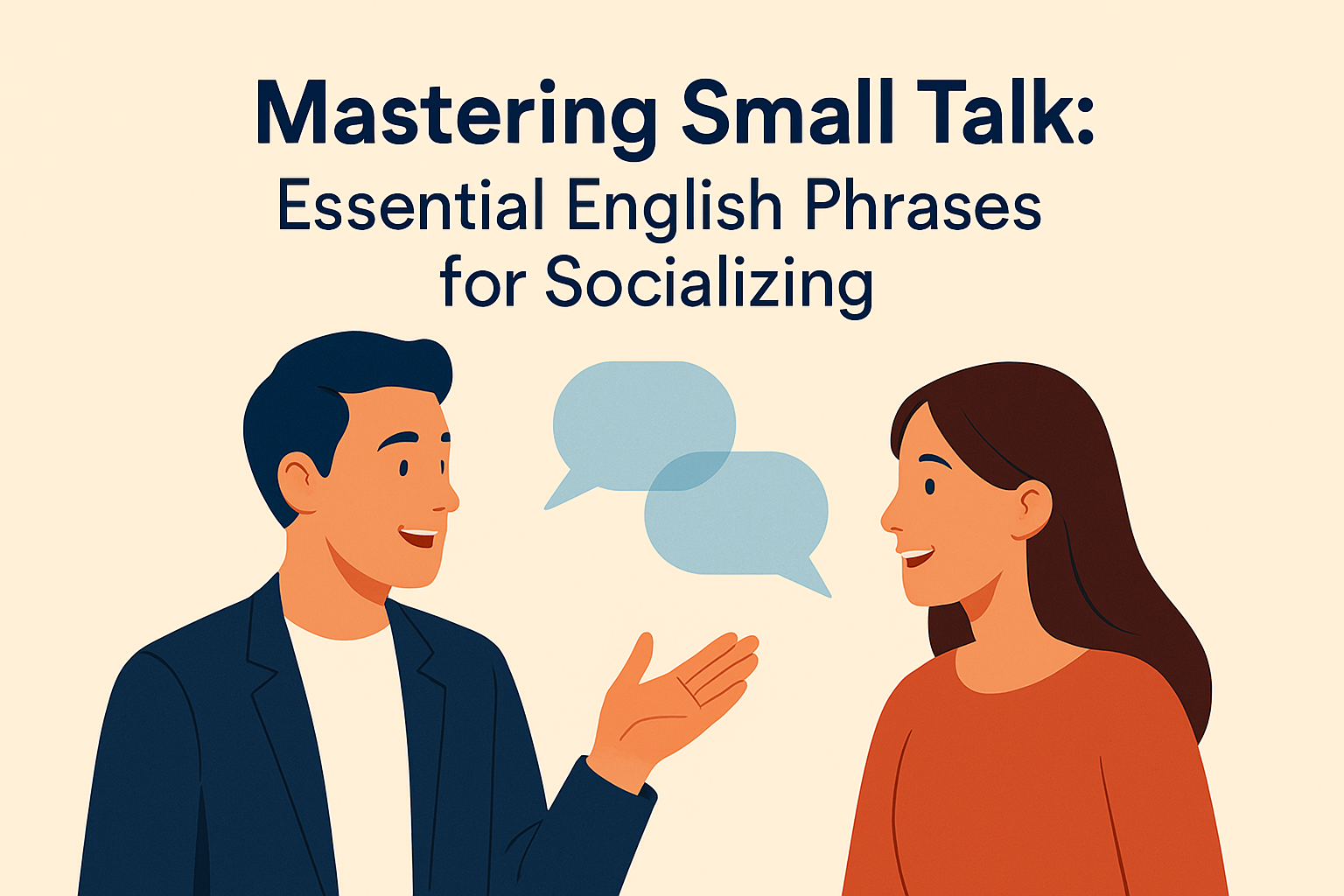
Learning English as a second language is a journey filled with excitement and challenges. Whether you’re a beginner or have some experience, becoming comfortable with using English in social situations can be daunting. Imagine you are at a party, a friend’s gathering, or simply talking to a colleague in the hallway. Doesn’t it feel great to be confident in those moments? This article is designed to help you navigate social situations, providing you with tips and advice on how to use English effectively. Our focus will be on practical, everyday conversations that will help you engage with others confidently. So, let’s dive into the world of social interactions and learn how you can become more fluent and comfortable!
Starting a Conversation
The first step to using English in social situations is learning how to start a conversation. This can be intimidating, but with a few simple strategies, you’ll be able to break the ice with ease. Begin with a greeting or a compliment. A simple “Hello” or “Hi” can go a long way. Compliments such as “I like your shirt” or “That was a great presentation” are great conversation starters. Follow up with a question that invites the other person to share more, like “How did you find that article?” or “What do you like to do in your free time?”.
Open-ended questions are particularly useful as they require more than a yes or no answer. For example, instead of asking, “Do you like music?” you can ask, “What kind of music do you enjoy?” This encourages a more dynamic conversation. Practice these strategies in safe environments, such as class discussions or with friends who are also learning English.
Remember, everyone feels nervous in new social situations. The more you practice, the more confident you will become. So take a deep breath and go for it. Soon, starting conversations in English will become second nature.
Maintaining a Conversation
Once you’ve started a conversation, the next challenge is to keep it going. Listening is crucial here. Pay attention to what the other person is saying and show genuine interest. Nodding, smiling, and using phrases like “I see,” “Really?” or “That’s interesting” can show that you’re engaged.
Asking follow-up questions also helps maintain the flow of conversation. If your conversation partner mentions something they’re passionate about, ask for more details, such as “Why do you enjoy that?” or “Can you tell me more about it?” Sharing your own experiences related to the topic is another way to keep the conversation lively.
Additionally, paraphrasing or summarizing what the other person has said demonstrates active listening. For example, if someone is talking about their travel experience, you might say, “So you traveled to Spain last summer and enjoyed the food and culture?”.
Be aware of body language as well. Non-verbal cues like eye contact, nodding, and leaning slightly towards the person show that you’re engaged. Avoid distractions, like checking your phone, which can interrupt the conversation flow.
Dealing with Misunderstandings
Misunderstandings can happen, especially when you’re still learning a new language. It’s important to remain calm and not be too hard on yourself. If you don’t understand something, don’t hesitate to ask for clarification. Phrases like “I’m sorry, could you repeat that?” or “I’m not sure I understand, can you explain it differently?” are very useful.
If someone misunderstands you, try rephrasing what you said. Simplify your sentences and use different words. For example, if someone didn’t understand “I am exhausted from studying all night,” you might say, “I am very tired because I studied until late.” Context can also help others understand you better.
Sometimes, using hand gestures or visual aids can clarify meanings. Don’t be afraid to use them as they can actually enhance communication.
Additionally, laughing off small mistakes can help ease tension and make conversations more enjoyable. Most people will appreciate your effort to communicate in their language and will be patient with you.
Ending a Conversation
Knowing how to gracefully end a conversation is as important as knowing how to start one. Be polite and express gratitude for the interaction. Simple phrases such as “It was great talking to you,” “I enjoyed our chat,” or “Thank you for the interesting conversation” can be very effective.
If you need to leave, you can give a reason, like “I have to go meet someone” or “I have a class soon.” To keep the door open for future conversations, you can say, “Let’s catch up again sometime” or “Feel free to reach out if you want to chat.”
Using positive body language as you exit helps too. A smile, a handshake, or even a wave can convey that you appreciated the interaction.
Building Confidence
Building confidence is key to using English comfortably in social situations. Practice speaking as much as you can. Join English-speaking groups, participate in language exchange programs, or find a conversation partner. The more you practice, the more natural it will feel.
Reading and listening to English through books, podcasts, and movies can also help you become more familiar with the language. Pay attention to common phrases and expressions and try using them in your conversations.
Don’t be afraid to make mistakes. It’s a natural part of learning. Each mistake is an opportunity to improve. Over time, these experiences will help build your confidence.
Keep a positive mindset. Celebrate small victories, like successfully starting a conversation or making someone laugh with your English joke. Each step you take brings you closer to fluency.
Conclusion
Navigating social situations in English may seem challenging at first, but with practice and persistence, you can do it. Start by learning how to initiate conversations and then focus on keeping them going. Be prepared to handle misunderstandings with patience and creativity. Learn the art of ending conversations politely and keep building your confidence by practicing regularly. Remember, everyone makes mistakes, and each interaction is an opportunity to improve. By using the tips and strategies outlined in this article, you’ll find yourself becoming more comfortable and fluent in English social conversations. So go out there, practice, and enjoy engaging with others. You’ve got this!