Introduction to Interactive Audio Exercises
In our fast-paced digital age, honing listening skills has emerged as a key focus for individuals seeking to improve communication, language learning, and overall cognitive abilities. Interactive audio exercises, a modern pedagogical tool, have become increasingly popular for enhancing listening skills. But what exactly are interactive audio exercises, and why do they matter?
Interactive audio exercises are designed to actively engage listeners through audio content while incorporating interactive elements such as quizzes, feedback loops, or call-and-response activities. This approach extends beyond passive listening, encouraging learners to take part actively and reflect on what they hear. They are used extensively across various educational domains, from language acquisition to professional training, adapting to the diverse needs of learners.
The importance of improving listening skills cannot be overstated. Effective listening underlies successful communication. Whether one is learning a new language, aiming to excel in academic settings, or striving to improve conversational aptitudes, having sharp listening skills is crucial. Interactive audio exercises promote active engagement, provide immediate feedback, and often simulate real-world scenarios, making them invaluable for skill development. The ability to comprehend and interpret audio content proficiently empowers individuals across both personal and professional landscapes.
Understanding the Mechanics of Interactive Audio Exercises
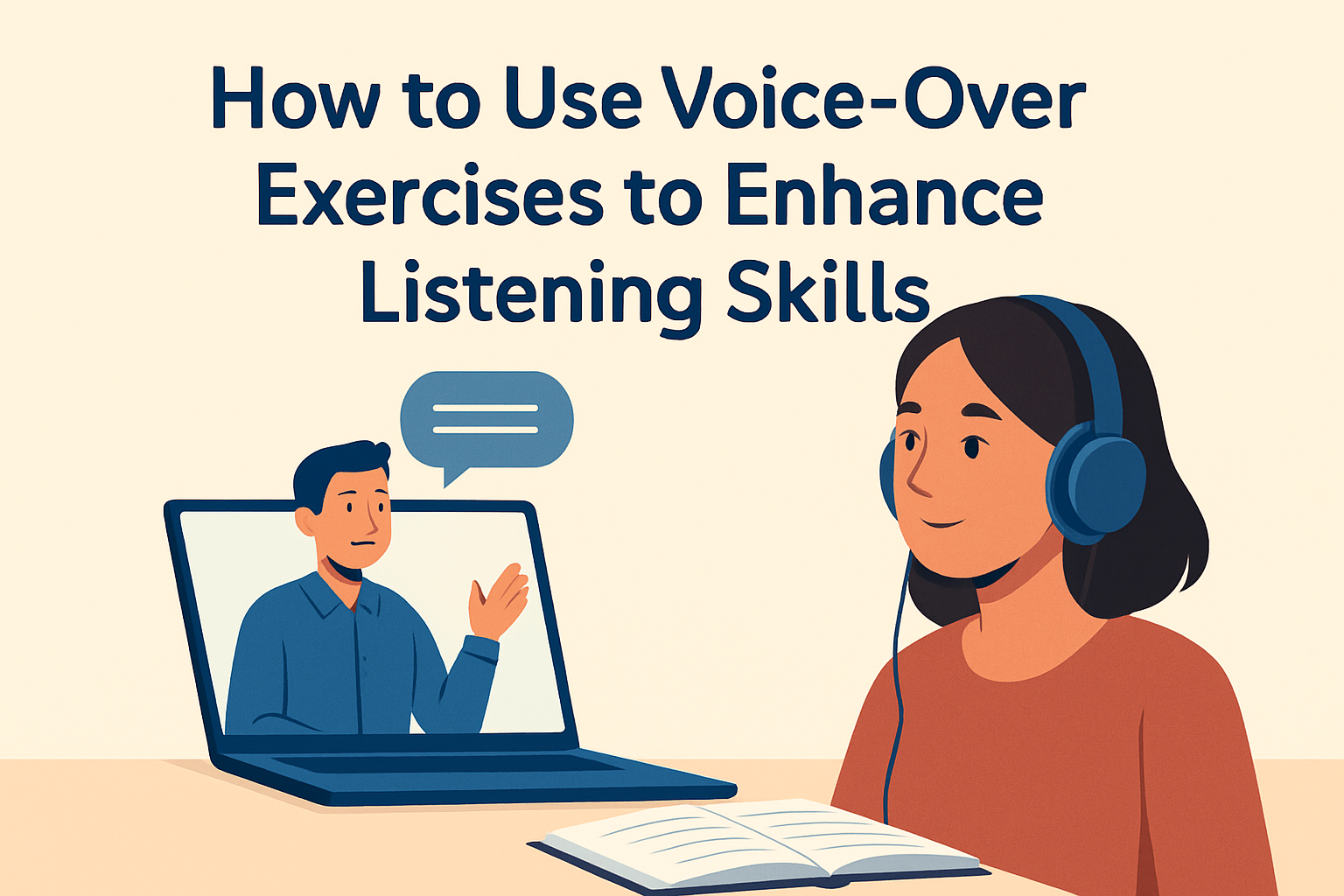
Interactive audio exercises work by elevating the core principles of audio learning with interactivity. This means participants are not merely passive recipients of information but active participants. For example, in language learning applications such as Duolingo, learners listen to sentences in the target language and then respond through speaking or typing the answer. Immediate feedback creates a loop that supports the retention of information more effectively than traditional methods.
A real-world example is the use of interactive audio exercises in corporate training. A company might implement an audio-based compliance training module where employees listen to scenarios and must identify correct procedures. This method not only reinforces the material but also assesses understanding in real-time, ensuring that the training is impactful.
Utilizing Interactive Audio Exercises in Language Learning
Language learning is one of the most significant beneficiaries of interactive audio exercises. Traditional methods of learning a language often emphasized rote memorization and extensive reading. However, modern methodologies recognize the importance of listening as a foundational skill. Interactive audio exercises cater to this need by simulating real-life conversations and allowing learners to engage with the language dynamically.
For example, using applications like Rosetta Stone, learners are exposed to audio conversations and asked to participate. Consider an English learner practicing with a dialog that prompts them to guess the correct response based on what they’ve heard—a method designed to enhance listening comprehension and conversational skills simultaneously.
Best Practices for Incorporating Interactive Audio Exercises
To fully realize the potential of interactive audio exercises, certain best practices should be followed. Firstly, consistency is key. Regular, scheduled sessions using these exercises help build a learning habit and reinforce the material over time.
Secondly, integrating exercises into daily life can further enhance learning outcomes. For example, someone learning a new language might listen to interactive podcasts during their commute and respond to prompts aloud. This casual yet consistent engagement makes learning less of a chore and more of an integrated part of daily routines.
- Set specific, achievable goals for each session.
- Use a variety of audio content to build a well-rounded skill set.
- Regularly review progress and adjust the difficulty of exercises as needed.
- Pair interactive exercises with other methods like reading for a comprehensive approach.
Evaluating the Effectiveness of Interactive Audio Exercises
Ensuring that interactive audio exercises are effective requires continuous evaluation. This may be done qualitatively, through personal reflections and assessments, or quantitatively, by tracking progress and outcomes over time. For instance, language learners can record their speaking sessions and listen back to identify areas for improvement.
An excellent real-world example comes from educational professionals who utilize interactive audio exercises to teach critical listening skills. By assessing students’ progress via quizzes and tasks within the exercise, educators gain insights into individual learning curves, allowing them to tailor instructions to meet specific needs better.
| Aspect | Method | Outcome |
|---|---|---|
| Consistency | Regular Weekly Sessions | Improved Retention |
| Engagement | Real-Life Scenarios | Enhanced Comprehension |
| Feedback | Immediate Corrections | Faster Learning Curve |
Interactive Audio Exercises in Non-Language Learning Contexts
Interactive audio exercises are not limited to language learning contexts. They are powerful tools in professions requiring high levels of auditory perception, such as music, medical fields, and customer service. In music education, for instance, students might engage in ear training exercises that require them to identify notes, intervals, or rhythms through interactive audio.
A practical application in the medical field could include scenarios where medical trainees listen to patient recordings and must diagnose conditions based on auditory cues, thus sharpening critical listening skills crucial in medical diagnostics.
Technological Advancements and Future Directions
The landscape of interactive audio exercises continues to evolve with technological advancements. With the introduction of artificial intelligence, these exercises have become more personalized, adapting to the rhythm and progress of each learner. Future developments will likely see even more intuitive systems that analyze a learner’s progress and adjust challenges accordingly.
Virtual reality (VR) and augmented reality (AR) are beginning to play roles in this space, with immersive environments that augment interactive audio exercises further. Imagine language learners practicing dialogues in a virtual marketplace or medical students diagnosing patients in a simulated hospital ward—these futuristic applications hold immense potential for enhancing listening skills in contextually rich scenarios.
Conclusion and Next Steps
Interactive audio exercises present a compelling opportunity for enhancing listening skills across various disciplines. They blend engagement with practical application, providing an immersive learning experience. Whether you are a language learner, a corporate professional, or a student in any field, these exercises allow for efficient and impactful learning.
By integrating interactive audio exercises into your daily activities and maintaining consistency, you can improve your listening comprehension and overall communication abilities. The key takeaway is that active, engaged listening using interactive methods can lead to significant skill enhancement and personal growth.
If you are ready to take your listening skills to the next level, explore available tools and platforms that offer interactive audio exercises tailored to your interests and learning goals. Start small, track your progress, and experience the enhancement in your listening skills firsthand. The journey begins with just one session—dive in and listen actively!
Frequently Asked Questions
1. What are interactive audio exercises, and how do they work?
Interactive audio exercises are educational tools designed to improve listening skills by actively engaging the listener. They typically involve audio recordings that simulate real-life scenarios, language practice sessions, or bespoke exercises tailored to specific learning outcomes. These exercises often incorporate elements like quizzes, fill-in-the-blank tasks, and comprehension questions that listeners must answer after hearing the audio segment. The interactive component helps reinforce learning by requiring the listener to pay close attention and respond actively. This active engagement contrasts with passive listening, where the learner simply listens without interacting with the material, leading to improved retention and understanding.
2. How can interactive audio exercises benefit language learners?
For language learners, interactive audio exercises offer a dynamic way to build proficiency. They expose learners to new vocabulary, pronunciation, and intonation in context, enhancing both listening comprehension and speaking skills. Listening to native speakers through interactive exercises helps learners grasp the nuances of the language, such as slang, colloquial expressions, and various dialects. Moreover, because these exercises often simulate real conversations, learners can practice understanding different accents and speeds of speech, which is essential for effective communication in practical settings. The interactive nature compels learners to engage with the content actively, allowing for immediate application of new language skills, which leads to faster learning and greater language retention.
3. In what ways do interactive audio exercises enhance critical listening skills?
Interactive audio exercises are specifically designed to bolster critical listening skills, which involve analyzing and evaluating what is being heard. By engaging with exercises that require interpreting tone, emotion, intent, and context, listeners develop an ability to discern subtle cues in communication. This includes recognizing biases, detecting assumptions, and understanding the underlying message behind spoken words. Because interactive exercises often present audio in rich, diverse scenarios, they challenge listeners to move beyond surface-level comprehension, cultivating a deeper understanding and appreciation of more complex audio content. This enhances cognitive abilities, such as concentration and analytical thinking, which carry over into other areas of life and learning.
4. Can interactive audio exercises be tailored to accommodate different learning styles?
Absolutely, one of the most significant advantages of interactive audio exercises is their adaptability to various learning styles. For auditory learners, these exercises are particularly effective as they align naturally with their strongest mode of learning — listening. Visual learners can also benefit if the exercises include written components or accompanying visuals, such as transcripts or illustrations. Kinesthetic learners, who thrive on moving and doing, often find that interacting with exercises through responses or actions enhances their learning experience. By customizing the content and style of these exercises, educators and learners can create a comprehensive and inclusive learning environment that accommodates and engages all types of learners effectively.
5. How can teachers integrate interactive audio exercises into their curriculum?
Teachers looking to integrate interactive audio exercises into their curriculum can do so by incorporating them into lesson plans as supplements to traditional teaching methods. To start, they can identify key learning outcomes and select or create audio content that aligns with the curriculum goals. Interactive activities can serve as warm-ups, main lesson components, or supplementary enrichment exercises. Teachers might also use them for assessments, providing another means to gauge students’ progress. Furthermore, they can enhance student engagement by allowing students to create their own audio content, promoting creativity and solidifying learned concepts. Platforms with user-friendly interfaces that allow for easy sharing and interaction are ideal for classroom settings. With thoughtful integration, interactive audio exercises can transform a traditional learning environment into an interactive and immersive experience.