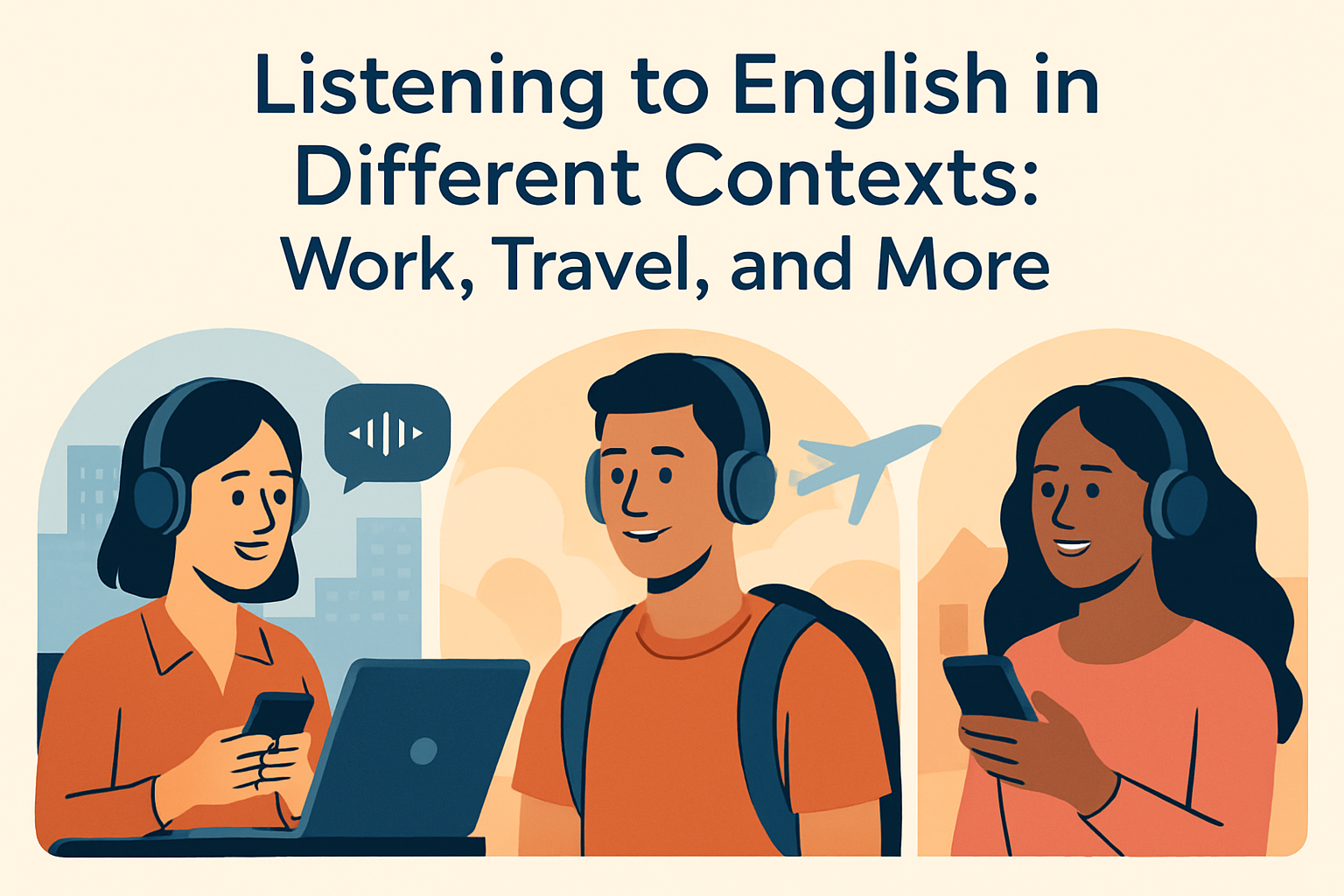
Listening to English in various contexts plays a pivotal role in grasping the language’s nuances and enhancing communication skills. For non-native speakers, it might seem challenging, but understanding English in different scenarios is essential. This article will delve into the importance of listening skills in English across different settings like work, travel, and beyond. We define “context” as the circumstances or setting in which communication occurs. Listening, in the realm of language learning, refers to the active process of making meaning out of spoken English.
This topic matters immensely as English dominates global communication, being a primary language for business, travel, education, and even technology. By improving their listening skills in various contexts, individuals can open doors to new opportunities, minimize misunderstandings, and build significant connections across cultures and industries. Furthermore, effective listening skills in English can lead to personal development, confidence building, and enhanced empathy in our interconnected world.
Listening in the Workplace Environment
Understanding English in a workplace setting is integral to professional success. This aspect of listening often involves assimilating technical jargon and industry-specific terms, which can be daunting for non-native speakers. Workplace communication may occur in meetings, during presentations, or casual interactions, each requiring a distinct approach to listening.
For example, consider a scenario where a non-native speaker participates in a virtual international meeting. To succeed, they need active listening skills to comprehend ideas, follow discussions, respond appropriately, and perhaps even pick up on subtle cues like intonation and pace. If they fail to do so, misunderstandings might occur, resulting in errors or missed opportunities.
Companies often offer training programs to improve English listening skills. These may involve audio-visual tools, role-playing as both speaker and listener, or real-time translation aids. The key takeaway is that effective listening in the workplace fosters collaboration and efficiency, enables stakeholders to act on shared information, and enhances overall business success.
Listening While Traveling
Traveling presents another significant context in which English listening skills are crucial. English often serves as a lingua franca, bridging gaps between travelers and locals who speak different languages. Whether navigating airports, asking for directions, or checking into hotels, accurate listening is essential.
Imagine a tourist arriving in a foreign country. They rely heavily on their ability to listen to English announcements at the airport, follow instructions, or comprehend guides explaining local history. Successfully navigating such situations enhances the travel experience and ensures safety and enjoyment. Failure to do so might lead to missed flights, misunderstandings, or even critical safety issues.
Practice makes perfect. Travelers can boost their English listening skills by listening to travel podcasts, watching English news channels, or even engaging in conversation with fellow travelers. By doing so, they sharpen their ability to quickly adapt to different dialects, accents, and contexts encountered globally.
Listening for Educational Purposes
Another area where English listening is critical is the educational domain. Students worldwide learn various subjects in English, especially those attending institutions in English-speaking countries. Classroom lectures, virtual classes, seminars, and conferences are common environments where listening plays a pivotal role.
A student attending a physics class in an English-speaking university must be able to listen to the professor’s explanations, understand terminology, and follow complex discussions. Effective listening enables them to engage, ask questions, and participate actively, which enhances learning outcomes.
| Listening Context | Challenges | Strategies |
|---|---|---|
| Workplace | Technical jargon, fast pace | Use of audio-visual aids, role-playing |
| Travel | Different dialects, unfamiliar accents | Listening to podcasts, practicing with locals |
| Education | Complex terminology, large groups | Active participation, asking questions |
Real-world examples, such as international student exchange programs, illustrate the value of sharpening listening skills. Students who adapt and master listening in English can better integrate into local cultures, form friendships, and succeed academically.
Enhancing Listening for Everyday Communication
Beyond specific environments, everyday communication is an excellent arena to refine English listening skills. From understanding friends in social gatherings to following podcasts and consuming media, daily life provides abundant opportunities to practice listening.
Consider a non-native speaker who enjoys listening to English songs. This regular exposure helps familiarize them with various accents, idiomatic expressions, and colloquial language. It offers a relaxed and enjoyable method of language acquisition. They might hum along to English tunes and unconsciously pick up phrases and contextual usage at their own pace.
Engaging in conversation, attending community events, or participating in online discussion forums are additional ways to practice listening daily. The advantage of these informal contexts is reduced pressure, where mistakes are natural and part of the learning process.
Listening in Media and Entertainment
Media and entertainment play a substantial role in language exposure. English movies, television series, radio shows, and online content are available at the touch of a button, providing convenient platforms for listeners at all skill levels.
Watching Movies: Engaging with English-language films allows individuals to expose themselves to various accents and slang. Subtitles can support initial learning stages by providing textual aid while sharpening listening skills for seasoned learners.
Listening to Podcasts: A robust selection of English podcasts covering diverse subjects is readily available. This format promotes active listening and can be catered to a listener’s specific interests, improving vocabulary and comprehension in a targeted way.
From entertainment media to news outlets, content consumption not only familiarizes listeners with English but also keeps them informed about global happenings. They are empowered to express opinions on current issues confidently, reflecting their improved understanding.
Listening Strategies and Tips
Listening in English can be daunting, but employing strategic approaches can significantly enhance proficiency. Here are some effective listening strategies and tips:
- Active Listening: Focus entirely on the speaker, maintaining eye contact and engaging through nods or verbal acknowledgments.
- Predicting: Anticipate incoming information based on context or prior knowledge, preparing the mind to absorb content.
- Note-Taking: While listening, jot down significant points to help consolidate understanding and recall.
- Repetition: Re-listen to audio content or ask speakers to repeat themselves, reinforcing comprehension.
- Evaluation: Post-listening evaluation, where listeners assess their understanding and look up unfamiliar words or phrases, proves invaluable.
These practices solidify listening acumen, making individuals more attuned to English in diverse contexts.
Listening to Accents and Dialects
The diversity of English accents and dialects can initially perplex learners, but understanding these variations enriches language appreciation and competency. From the Queen’s English of the UK to diverse dialects of North America, Australasia, Africa, and South Asia, listeners are exposed to a plethora of sounds and structures.
Real-world preparation is key. Engaging with different English-speaking communities in person or through digital media extends learners’ exposure. Virtual apps mimicking accents offer interactive tools for learners to practice their listening skills effectively.
For example, global business professionals aiming to understand the Australian accent might benefit from collaborations with Australian colleagues or through localized media consumption, which helps acclimate them to a unique pronunciation and slang. Developing comfort with different spoken forms of English boosts confidence in navigating complex global dialogues effectively.
Conclusion and Call to Action
In conclusion, honing English listening skills across varied contexts such as the workplace, travel, education, daily communication, and media consumption is indispensable for anyone looking to thrive in an English-speaking world. Understanding spoken English in its numerous formats not only aids in comprehension but also strengthens interaction, builds relationships, and fosters a deeper connection with diverse cultures.
By applying the strategies and knowledge shared in this article, you can embark on a journey of improving your English listening skills. Actively immerse yourself in different listening contexts, challenge your understanding, and employ the techniques discussed to build proficiency. As you develop these skills, you will unlock new personal, academic, and professional opportunities, empowering you to communicate effectively and confidently in an interconnected world.
Frequently Asked Questions
1. Why is listening to English in different contexts important for non-native speakers?
Listening to English across various contexts is crucial for non-native speakers because it helps them grasp the language’s nuances and enhances their overall communication skills. Language, especially English, can vary significantly depending on the setting. For instance, the formal language used in a business meeting is different from the casual conversation you might have when traveling or in social settings. By exposing themselves to English in different situations, learners can become familiar with various dialects, accents, slang, and idiomatic expressions.
Understanding English in multiple contexts also improves the ability to engage participating in diverse conversations, whether professional or personal. When non-native speakers listen to English in various settings, they build a mental library of phrases and vocabulary that can be applied appropriately. This capability is deeply beneficial, as it contributes to more effective and nuanced communication, ensures better participation in discussions, and improves comprehension in practical scenarios like understanding instructions, attending meetings, or enjoying leisure activities.
2. How can listening to English improve workplace communication for non-native speakers?
Listening to English in the workplace is particularly important as it directly influences the efficiency and productivity of professional communication. Work environments often contain specialized jargon, technical terms, and unique conversational protocols that can vary from one industry to another. By attuning their ears to English in professional settings, non-native speakers learn to identify these nuances and comprehend specific language use pertinent to their job roles.
Effective listening in a workplace context can enhance understanding during meetings, presentations, and collaborative projects. This understanding fosters better interpersonal relationships, smoothens workflow, and minimizes the risk of miscommunication. As non-native speakers become more adept listeners, they can respond more accurately, offer meaningful input, and contribute more productively to team efforts. Additionally, strong listening skills are indispensable for career advancement, as they reflect an individual’s ability to learn from and adapt to dynamic business environments.
3. What are some effective strategies for improving listening skills while traveling?
Traveling presents a unique opportunity to enhance listening skills in English due to its abundant real-life interactions. Here are some strategies that can greatly help:
One effective strategy is engaging locals in conversation. Simple exchanges in restaurants, public transport, or while asking for directions can greatly help build confidence. Paying attention to how locals express themselves, including their sentence structure and choice of words, provides insights into natural language usage that can be difficult to capture in a classroom setting.
Another strategy involves immersing oneself in multimedia forms associated with travel. This includes listening to guided audio tours, podcasts about local culture, or even watching travel vlogs in English. These resources often showcase authentic language use, with speakers addressing varied topics ranging from historical narratives to local customs and traditions.
Non-native speakers should also actively focus on understanding different accents while traveling, as people from various English-speaking regions may pronounce words differently. This broadened auditory experience prepares them to understand English in a global context, which is particularly beneficial in today’s interconnected world.
4. How does listening to different dialects and accents benefit language learning?
Listening to diverse dialects and accents greatly enriches language learning by familiarizing learners with the range of linguistic variations and intonation patterns present in English. Unlike textbooks or formal teaching materials, real-world communication involves a multitude of English accents, from British and American to Australian, Indian, and beyond. This diversity can initially be intimidating, but it provides invaluable learning benefits.
First and foremost, exposure to different accents enhances comprehension skills. Learners develop the ability to decode faster speech and understand regional variations in pronunciation, which improves their confidence in cross-cultural or international settings. Awareness of dialects also aids in recognizing unique regional expressions, idioms, or slang, broadening the learner’s linguistic repertoire.
Moreover, a broad understanding of different accents helps minimize misunderstandings and fosters inclusivity, making communication with speakers from varied backgrounds more seamless. In professional settings, this skill can improve interactions with international colleagues, partners, or clients, proving advantageous in a globalized business context.
5. What are the challenges non-native speakers face when listening to English in different contexts, and how can they overcome them?
Non-native speakers often encounter several challenges while listening to English in diverse contexts, including unfamiliarity with accents, difficulty in understanding fast-paced speech, and a lack of comprehension of cultural references or idiomatic expressions. Additionally, background noise in social settings or technical jargon in work environments can further complicate understanding.
To overcome these challenges, learners should first focus on building a strong foundation in the basics of the language, including common vocabulary and grammar. Regular practice through active listening is crucial. This can be achieved by engaging with various media forms, such as watching English-language films or series with subtitles, listening to news broadcasts, or participating in language exchange programs that encourage conversational practice.
Furthermore, making use of technology can be a boon. Language learning apps, online courses, and podcasts offer targeted listening exercises that cater to different skill levels and contexts, enabling learners to improve at their own pace. It also helps to develop patience and persistence, as proficiency in listening is an incremental process. Seeking feedback from native speakers or instructors can provide constructive insights into areas that require improvement.
Ultimately, overcoming these challenges involves consistent effort, a willingness to learn from mistakes, and an openness to embracing the myriad forms that the English language can take across different scenarios.