
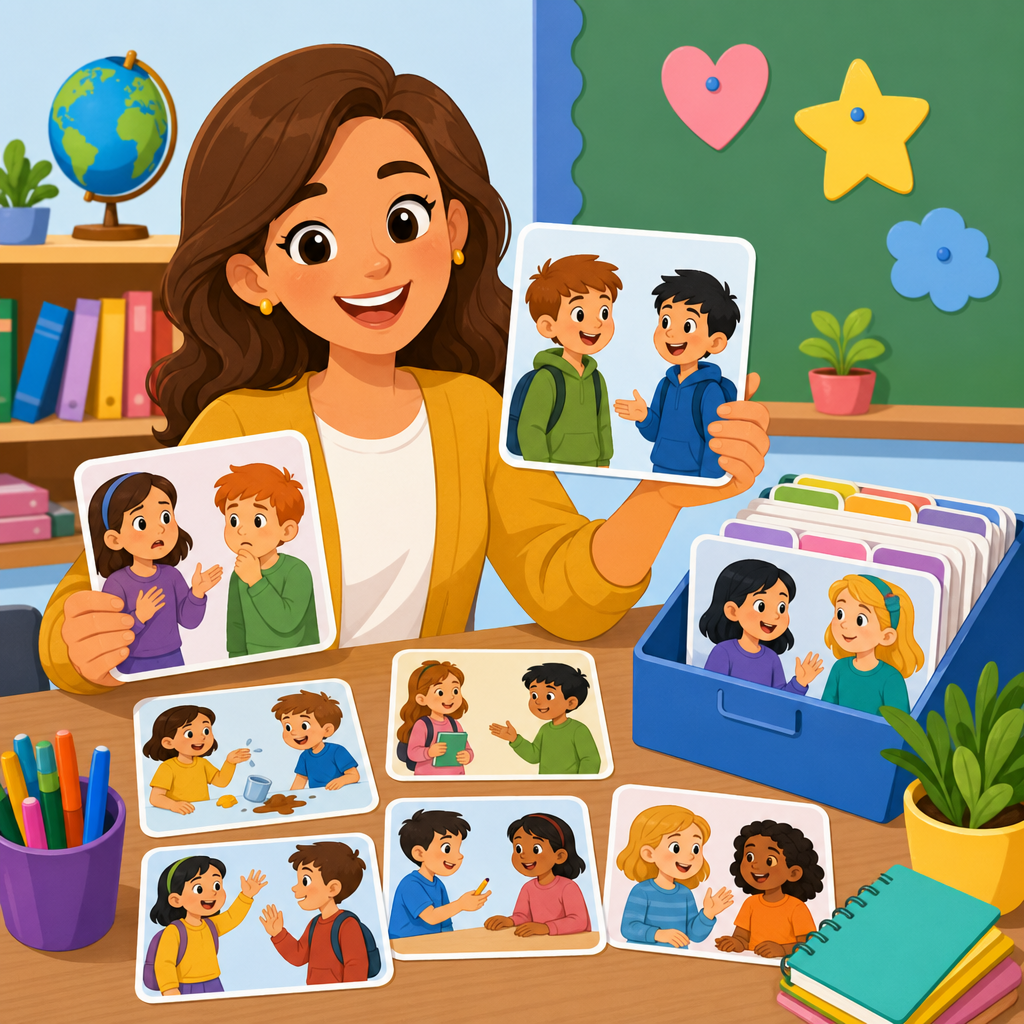
Role-play cards for everyday situations at A2 level give teachers a practical way to build speaking confidence, functional language, and classroom interaction without overwhelming learners. In simple terms, role-play cards are short prompts that assign a situation, a goal, and often a useful phrase set, such as asking for help in a shop, making a doctor’s appointment, or apologizing for being late. A2 refers to elementary learners on the Common European Framework of Reference, students who can manage routine tasks and short social exchanges but still need support with vocabulary, accuracy, and turn-taking. I have used these cards in mixed-ability classes, private lessons, and exam preparation groups, and they consistently increase speaking time because learners know exactly what to say, why they are speaking, and what the outcome should be.
This topic matters because A2 students often understand more than they can produce. They may know grammar points like present simple, past simple, or countable and uncountable nouns, yet freeze in real conversation. Well-designed role-play cards bridge that gap by turning passive knowledge into usable language. They also fit naturally within a wider bank of learning tips and resources: printable worksheets, conversation starters, listening tasks, vocabulary games, and review activities. As a miscellaneous hub, this article covers the broad classroom uses of everyday role-play cards, the situations worth practicing, how to scaffold tasks, and how to adapt them for online teaching, homework, assessment, and internal resource collections.
At A2, the goal is not theatrical performance. The goal is successful communication in familiar situations. Students should be able to ask basic questions, answer with relevant detail, and use polite forms such as “Could you help me?” or “I’d like a ticket to London, please.” The most effective cards focus on predictable, high-frequency contexts: shopping, travel, school, work, health, food, directions, family plans, and simple problem solving. When teachers match the task to learner needs, role-play becomes one of the most efficient speaking resources in the classroom.
What effective A2 role-play cards include
The best role-play cards are short, concrete, and realistic. Each card should state who the student is, where the conversation happens, what information they need, and one or two language targets. For example, a card for a customer in a café may include: “You want a sandwich and a tea. Ask about the price. Ask if they have orange juice.” The partner card for the server should include prices and one unavailable item. That small information gap creates a genuine reason to speak. In my classes, cards with too much text slow students down, while cards with four clear prompts produce much better interaction.
Strong cards also control difficulty. A2 learners benefit from sentence stems, model questions, and visual cues. A doctor’s appointment card may include “What’s the problem?” “How long have you felt like this?” and “You should…” because these chunks support fluency. This is especially important for multilingual groups where pronunciation, confidence, and processing speed vary. Cards should recycle recently taught grammar and vocabulary rather than introduce too much new language at once. If the class has just studied comparatives, a shopping role-play can ask students to compare two products. If they are reviewing transport vocabulary, a train station role-play is more useful than an unfamiliar business meeting scenario.
Teachers also need clear success criteria. For A2 speaking practice, I usually expect three things: students ask at least two questions, respond with full short answers, and complete the task outcome. The outcome may be buying the item, booking the room, choosing the restaurant, or solving a simple mistake on a bill. This makes the activity measurable and easy to reuse in lesson plans, substitute teaching folders, and internal resource libraries.
Everyday situations worth covering in a miscellaneous hub
A strong miscellaneous collection includes situations students are likely to face outside class and scenarios that reinforce core classroom language. The most practical sets cover shopping, ordering food, asking for directions, making appointments, visiting a pharmacy, talking to a teacher, borrowing something, using public transport, checking into a hotel, returning an item, and discussing weekend plans. These are not random topics. They align closely with CEFR A2 “can do” statements around routine exchanges, transactional language, and simple social interaction.
To build a reusable hub, organize cards by communicative function, not only by theme. For instance, “asking for information” can include tourist offices, train stations, and school reception desks. “Making requests” can include borrowing notes, asking a neighbor for help, or requesting a different table in a restaurant. “Solving a problem” can include a lost ticket, a wrong order, a broken phone charger, or a missed class. This structure helps teachers link the hub to related materials such as question formation practice, polite requests worksheets, travel vocabulary lists, or listening tasks with service encounters.
| Situation | Key language | Typical outcome |
|---|---|---|
| In a shop | How much is it? Can I try this on? | Buy, compare, or return an item |
| At a doctor’s office | I have a headache. Since yesterday. | Describe symptoms and get advice |
| At a station | What time does it leave? One ticket, please. | Ask for times, prices, and platform details |
| In a restaurant | I’d like… Could we have the bill? | Order food, change an item, pay |
| Asking directions | How do I get to…? Is it far? | Understand and repeat simple directions |
These categories make planning faster because teachers can identify a language objective first, then choose a setting. That approach is more effective than pulling random speaking prompts from the internet with no connection to current learning goals.
How to use role-play cards in class without losing structure
Role-play works best when teachers stage it carefully. Start with input: teach or review the target vocabulary, model the exchange, and check comprehension. Next, give students planning time. Even one minute to underline key phrases improves fluency. Then run the first round with support on the board, such as question stems or a mini dialogue. After that, remove some support and repeat with a new partner. This gradual release is essential at A2. If students jump straight into free speaking, stronger learners dominate and quieter students rely on yes or no answers.
Pairing matters too. I often pair a confident speaker with a more hesitant learner for the first round, then switch to similar-level pairs once the structure is familiar. Time limits also help. Two-minute role-plays keep energy high and prevent students from overthinking every sentence. After the task, conduct quick feedback on communication first and correction second. If a student successfully asked for a refund but said “I want change this,” praise the successful request, then reformulate the grammar. This keeps speaking practice meaningful rather than punitive.
Teachers can extend one card set in several ways: swap roles, add a problem, insert a missing item, or require one follow-up question. A restaurant card can become more challenging when the waiter says the main dish is unavailable. A travel card becomes richer when the train is delayed and the student must ask about another option. These small twists create natural repetition, which is where real learning happens.
Adapting cards for online lessons, homework, and assessment
Role-play cards are not limited to face-to-face classrooms. In online lessons, send private prompts through chat, shared slides, or breakout room documents. Keep text large and simple, and include icons when possible. For homework, students can record both sides of a conversation on a phone, complete an audio pair task in a learning platform, or write key questions before the next lesson. I have found that short recorded role-plays are especially useful for shy learners because they can rehearse, notice pronunciation issues, and try again.
For assessment, role-play cards are one of the fairest A2 speaking tools when criteria are transparent. Use a simple rubric: task completion, clarity, vocabulary range, and interaction. Avoid scoring students as if they were giving a formal presentation. Everyday speaking should reward understandable language, appropriate politeness, and the ability to keep the exchange going. Standardized exam formats from providers such as Cambridge English and Trinity College London also use structured interactive tasks, so classroom role-plays can support broader exam readiness without turning every lesson into test practice.
This miscellaneous hub should connect naturally to adjacent resources. Teachers looking for role-play cards often also need printable flashcards, everyday vocabulary lists, pronunciation drills for polite questions, low-prep speaking games, and error correction strategies. Building those links around the hub improves usability for teachers and creates a coherent resource pathway: teach the language, practice it in controlled form, use it in role-play, then recycle it in review.
Common mistakes and what experienced teachers do instead
The biggest mistake is making the cards too advanced. A2 learners do not need abstract debates or long negotiation tasks. They need short, useful exchanges with familiar language. Another common problem is unclear purpose. If students do not know whether they are booking, complaining, choosing, or asking for advice, the conversation collapses. Experienced teachers solve this by writing one visible objective for every role-play and by checking that students understand the situation before they start.
A second mistake is correcting every error during the interaction. That interrupts fluency and reduces confidence. Instead, note patterns and give delayed feedback. A third issue is neglecting listening. Real role-play is not memorized speech; students must react. Cards should therefore include unpredictable details such as price changes, unavailable items, or conflicting schedules. Finally, remember that some learners need emotional support as much as language support. Simple praise, partner rotation, and repeated formats help hesitant students become willing speakers.
Role-play cards for everyday situations remain one of the most dependable A2 teaching resources because they are flexible, low-cost, and closely tied to real communication. Used well, they help students turn textbook language into practical speaking skills for shops, stations, restaurants, schools, and daily problem solving. For teachers building a miscellaneous resource hub, these cards deserve a central place because they connect naturally to vocabulary, grammar review, listening practice, homework tasks, and speaking assessment. Start with five high-frequency situations, add clear prompts and outcomes, and reuse the cards across units. When students can handle everyday exchanges with more confidence and less hesitation, the resource is doing exactly what it should.
Frequently Asked Questions
What are role-play cards for everyday situations at A2 level?
Role-play cards for everyday situations at A2 level are simple speaking prompts designed to help elementary learners practice realistic communication in English. Each card usually gives students a clear situation, a purpose, and sometimes a few useful phrases or questions to support them. For example, a card might ask one student to buy a train ticket, return an item to a shop, make a doctor’s appointment, ask for directions, or apologize for arriving late. These are familiar, high-frequency situations that learners may face in daily life, so the language feels practical and immediately useful.
At A2 level, students can usually understand and use basic expressions, ask and answer simple questions, and manage short social exchanges when the topic is familiar. Role-play cards match this level well because they provide structure without requiring advanced grammar or long, abstract discussion. Instead of asking learners to invent everything from nothing, the cards narrow the task and reduce pressure. This gives students a manageable way to practice key functions such as requesting, offering, clarifying, apologizing, inviting, and giving basic information.
For teachers, these cards are an efficient classroom tool because they combine speaking, listening, and interaction in one activity. They help move learners from controlled practice into more communicative use of language while still keeping the task accessible. In short, A2 role-play cards turn everyday language into short, achievable speaking tasks that build confidence and fluency step by step.
Why are role-play cards effective for building speaking confidence in A2 learners?
Role-play cards are especially effective for building speaking confidence because they lower the cognitive load for learners. Many A2 students want to speak but hesitate because they are unsure what to say, how to begin, or which phrases are appropriate. A role-play card gives them a starting point, a clear objective, and a context they can understand. That structure reduces uncertainty, which is often one of the biggest barriers to speaking.
They also create a safe practice environment. Instead of speaking as themselves in an open-ended discussion, students are playing a simple role in a defined situation. This can make them feel less exposed and more willing to try. A learner may feel nervous saying, “I need help with this problem,” in a free conversation, but feel much more comfortable saying it as part of a shop, school, or travel scenario. That small emotional distance can make a big difference in participation.
Another reason role-play cards work so well is repetition with variation. A2 learners need to reuse functional language many times before it becomes more automatic. Through role-play, students can practice the same core phrases in different situations, such as “Can you help me?”, “I’m looking for…”, “Could I…?”, or “I’m sorry, but…”. This repeated exposure supports fluency development and helps learners respond more naturally over time.
Finally, role-play cards make speaking purposeful. Students are not just producing language for the sake of an exercise; they are trying to solve a problem, get information, make a request, or complete an interaction. That sense of purpose increases engagement and makes classroom speaking feel more authentic. When learners succeed in these short exchanges, they begin to feel that they really can use English in everyday life, and that is a powerful confidence boost.
What kinds of everyday situations should teachers include on A2 role-play cards?
The best everyday situations for A2 role-play cards are familiar, practical, and language-rich without being too complex. Teachers should choose scenarios that reflect real-life communication needs and allow learners to use common vocabulary and functional phrases. Strong examples include shopping, ordering food or drinks, asking for directions, making an appointment, talking to a receptionist, returning a product, booking a hotel room, buying a ticket, borrowing something, introducing yourself, inviting a friend somewhere, or explaining a simple problem.
It is important to match the scenario to what A2 learners can realistically handle. Situations should involve short exchanges, clear goals, and predictable language patterns. For example, “Call to make a dentist appointment” is usually more suitable than “Discuss treatment options with a specialist.” “Ask for a different size in a clothes shop” is more appropriate than “Negotiate a formal customer complaint.” The situation should stretch learners slightly, but not overwhelm them with too many steps or unfamiliar expressions.
Teachers should also think in terms of communication functions, not just topics. A strong set of role-play cards includes opportunities to ask for help, request information, confirm details, apologize, give reasons, make suggestions, agree and disagree politely, and respond to problems. This approach ensures that students are practicing transferable language they can use across many different contexts.
Variety matters as well. A balanced toolkit should include personal, public, and service-based interactions. Some cards can focus on social exchanges, like meeting a new classmate or inviting a friend to the cinema. Others can focus on practical tasks, like asking for a bus timetable or speaking to someone at a pharmacy. By covering a range of everyday situations, teachers help A2 learners build a more complete foundation in spoken English.
How should teachers use role-play cards in the classroom to get the best results?
To get the best results, teachers should treat role-play as a guided speaking process rather than simply handing out cards and asking students to perform immediately. A clear lead-in is very helpful. Before the role-play begins, the teacher can introduce the situation, review key vocabulary, model useful expressions, and check that learners understand the goal of the interaction. At A2 level, this preparation is essential because it gives students the language tools they need to participate successfully.
Pairing and task design also matter. In most cases, role-play works best in pairs because each student gets more speaking time. One student can take the role of the customer, patient, visitor, or caller, while the other acts as the shop assistant, receptionist, doctor’s assistant, or friend. Clear role separation helps students focus and makes the exchange easier to follow. Teachers can also include prompts such as “Ask about price,” “Explain the problem,” or “Offer two options” so the interaction has enough substance without becoming confusing.
Scaffolding should be built into the activity. Teachers might first do a controlled model dialogue, then a guided role-play with phrase support, and finally a freer version where students change details or add their own ideas. This gradual release helps learners move from memorized language to more independent speaking. Visual supports, sentence starters, substitution tables, and mini phrase banks are all useful at A2 level.
Monitoring is another key part of successful use. While students are speaking, the teacher should listen for communication problems, useful language, and recurring errors, but avoid interrupting too much. The main goal during the role-play is fluency and interaction. Afterward, the teacher can give feedback on pronunciation, grammar, and natural expressions, using examples from the activity. A short reflection stage is also valuable. Students can discuss what phrases were useful, what was difficult, and how they could improve next time.
For even stronger results, teachers can recycle the cards regularly. Role-play should not be a one-time activity. When students revisit similar situations over several lessons, they begin to internalize the language and respond more confidently. Repetition, preparation, and thoughtful feedback are what turn simple role-play cards into a highly effective speaking tool.
How can teachers adapt A2 role-play cards for different learners and lesson goals?
One of the biggest strengths of role-play cards is how easy they are to adapt. Teachers can make them simpler or more challenging depending on the class, the lesson objective, and the confidence level of the learners. For students who need more support, cards can include sentence starters, key vocabulary, model questions, or even a short sample dialogue. This reduces pressure and helps learners focus on meaning and pronunciation rather than struggling to generate every sentence from scratch.
For stronger A2 learners, teachers can increase the challenge by adding a problem, a misunderstanding, or an extra task. For example, instead of simply ordering food, a student might need to ask about ingredients because of an allergy, change the order, or respond when an item is unavailable. Instead of asking for directions, the student may need to confirm the route, ask for repetition, and check how long the journey takes. These small adjustments create richer interaction while staying within the same everyday context.
Teachers can also adapt role-play cards for different lesson goals. If the focus is functional language, the cards can target specific expressions such as polite requests, apologies, or suggestions. If the focus is grammar, the scenario can encourage use of forms like “can,” “could,” “would like,” present continuous for plans, or simple past for explaining a problem. If the focus is pronunciation, teachers can highlight stress, intonation, and polite question forms before students begin. This flexibility makes role-play cards useful across many parts of a speaking curriculum.
Another effective adaptation is changing the interaction pattern. Although pair work is common, teachers can use role-play cards in rotating partner activities, group tasks, information-gap exercises, or speaking assessment practice. Cards can also be used for homework preparation, online speaking lessons, or quick warm-up and review tasks in class. Because the format is compact and practical, it fits easily into different teaching styles and course structures.
<p





