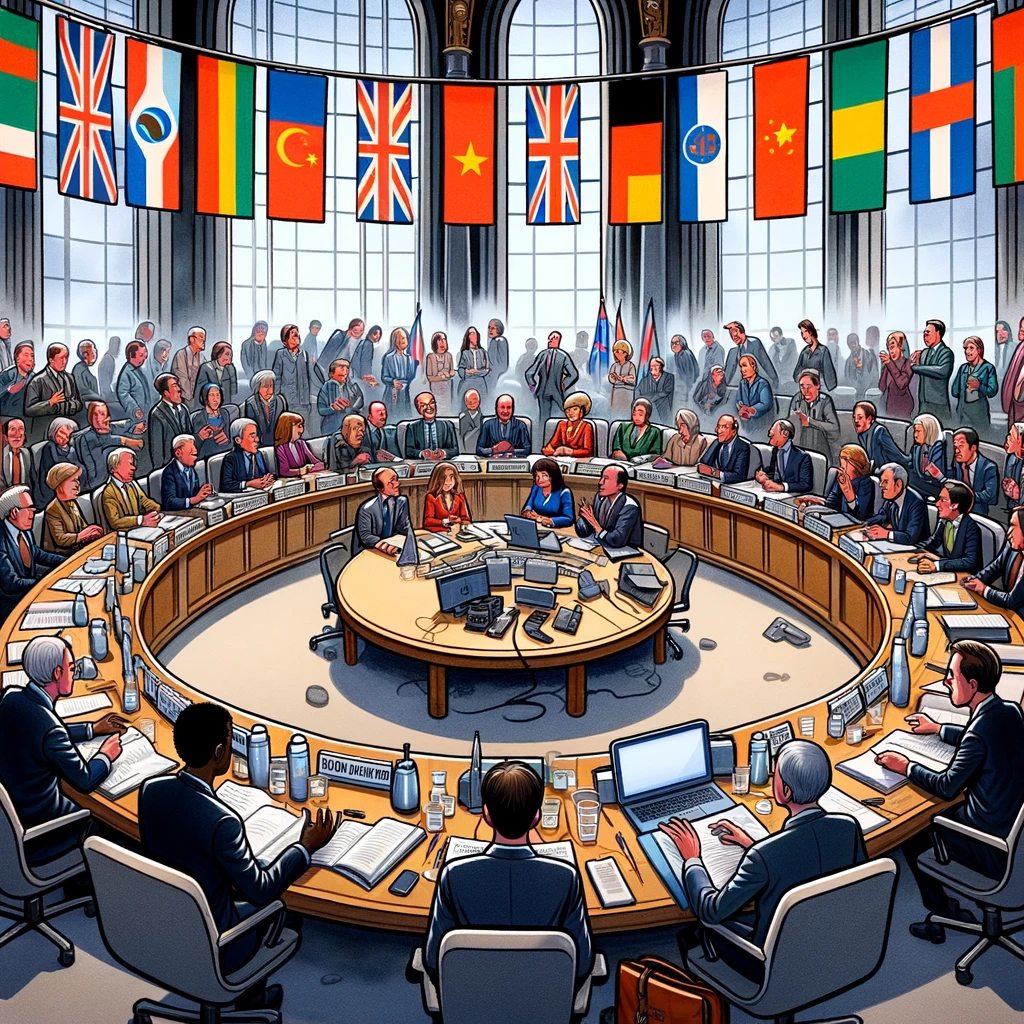
Understanding political discussions in English can be daunting, especially for ESL learners. The language used in politics is not only formal but also filled with specific vocabulary and phrases that carry significant weight in debates, speeches, and news reports. This article aims to demystify the world of political English, helping learners to not only understand but also participate in political discussions.
Why Learn Political English?
Politics is everywhere—from television news to everyday conversations, social media, and even when decisions are made that affect education, healthcare, and personal freedoms. For ESL learners, understanding the language of politics is crucial not only for academic purposes but also for integrating more fully into English-speaking societies, enhancing career opportunities, and participating in civic activities.
Basic Political Vocabulary
Let’s start with some fundamental terms that are essential in any political discussion:
- Government: The group of people who govern an area, especially a country.
- Policy: A course of action adopted and pursued by a government, party, ruler, or organization.
- Election: A formal group decision-making process by which a population chooses an individual or multiple individuals to hold public office.
- Democracy: A system of government where the citizens exercise power by voting.
- Constitution: A body of fundamental principles or established precedents according to which a state is acknowledged to be governed.
Political Systems
Understanding different political systems is key to grasping the broader political discourse:
- Democracy: Government by the people; especially, rule of the majority.
- Republic: A state in which supreme power is held by the people and their elected representatives.
- Monarchy: A form of government with a monarch at the head.
- Autocracy: A system of government by one person with absolute power.
- Oligarchy: A small group of people having control of a country or organization.
Election-Related Terms
Elections are a fundamental aspect of many political systems. Here are some terms commonly associated with elections:
- Candidate: A person who applies for a job or is nominated for election.
- Ballot: A process of voting, in writing and typically in secret.
- Campaign: An organized effort to influence decision making within a specific group.
- Debate: A formal discussion on a particular topic in a public meeting or legislative assembly, in which opposing arguments are put forward.
- Polls: The process of voting in an election.
Government Structure
Different countries have different structures for their governments. Common terms include:
- Executive: The person or branch of a government responsible for putting decisions or laws into effect.
- Legislature: A group of people who have the power to make laws.
- Judiciary: The judicial authorities of a country; judges collectively.
Important Phrases in Political Discussions
Phrases commonly used in politics can often seem cryptic or loaded with meaning. Here are a few to understand:
- “Cross the aisle”: To work with members of an opposing party.
- “A hot-button issue”: A controversial subject or issue that elicits strong emotional reactions.
- “Grassroots movement”: A movement driven by the politics of a community.
- “Political leverage”: The power to influence a situation to one’s own advantage.
Key Verbs in Political English
Verbs carry the action in a sentence and are crucial in political language:
- Elect: Choose (someone) to hold public office or some other position by voting.
- Amend: Make minor changes to (a text, piece of legislation, etc.) to make it fairer or more accurate.
- Advocate: Publicly recommend or support.
- Implement: Put (a decision, plan, agreement, etc.) into effect.
Reading and Understanding Political News
When you start reading political news, focus on identifying the vocabulary and phrases discussed here. Notice the context in which different terms are used and how they relate to one another. Practice makes perfect, and over time, the complex world of political English will become more familiar.
Learning political English is not just about vocabulary acquisition; it’s about understanding the dynamics of power, governance, and public opinion in English-speaking societies. This knowledge will not only enhance your language skills but also empower you to engage more effectively in political discourse, making informed decisions and contributing to discussions that shape the world.

Engaging with Political Speeches
Political speeches are a goldmine for ESL learners to hear political vocabulary in action. Speakers often use rhetoric to persuade, inform, or motivate the public. Here are a few tips for ESL learners to get the most out of political speeches:
- Listen for repetition: Politicians often repeat key terms and phrases to emphasize their points.
- Note the context: Words in politics can have different meanings based on context. Pay attention to how terms are used in relation to current events or issues.
- Watch with subtitles: If available, use subtitles to better follow along and see the spelling of unfamiliar words.
Discussing Politics Respectfully
Politics can be a sensitive subject, so it’s important to discuss political topics respectfully, especially in a new language. Here are some phrases that can help:
- “I see your point, but I think…”: This phrase allows you to acknowledge another’s opinion before presenting your own.
- “Could you explain why you believe that?”: This question shows you are open to understanding other perspectives.
- “We might have to agree to disagree.”: Use this when it’s clear that consensus is not possible, yet you want to end the conversation amicably.
Practical Exercises for ESL Learners
To sharpen your political English, try these exercises:
- Follow a political campaign: Choose a candidate and follow their campaign closely. Watch their speeches, read their policy documents, and discuss their platforms with peers.
- Debate club: Join or start a debate club. Regular debating will improve not only your political vocabulary but also your speaking and argumentation skills.
- Write essays: Practice writing essays on political topics. This helps consolidate your knowledge of political vocabulary and trains you to express complex ideas.
Influential Political Speeches to Study
Studying famous speeches can provide insights into effective political communication. Here are a few speeches by English-speaking politicians that are noteworthy for their powerful use of language:
- Winston Churchill’s “We Shall Fight on the Beaches”
- John F. Kennedy’s Inaugural Address
- Martin Luther King Jr.’s “I Have a Dream”
These speeches use persuasive language, powerful imagery, and strong emotional appeals to connect with their audiences.
Online Resources for Learning Political English
Several online resources can help ESL learners expand their political vocabulary:
- News websites: Regularly reading news from reputable sources helps you stay updated on political issues while exposing you to political language.
- Educational platforms: Websites like Khan Academy, Coursera, or even YouTube have courses and videos focused on political science and English vocabulary.
- Language learning apps: Apps like Duolingo, Babbel, or Memrise offer courses specifically for learning English used in different contexts, including politics.
Conclusion
The journey to mastering political English is an enriching experience that goes beyond mere language learning. It involves understanding cultural nuances, historical contexts, and the ideological underpinnings that shape political discourse. By building your vocabulary and engaging with political content, you’ll not only improve your English skills but also gain a deeper appreciation for the political landscape of English-speaking countries. As you continue to learn and engage, remember that each conversation, each article, and each speech offers a chance to refine your understanding and express your thoughts more clearly. Embrace the complexity of political English and enjoy the process of becoming a more informed and articulate speaker.