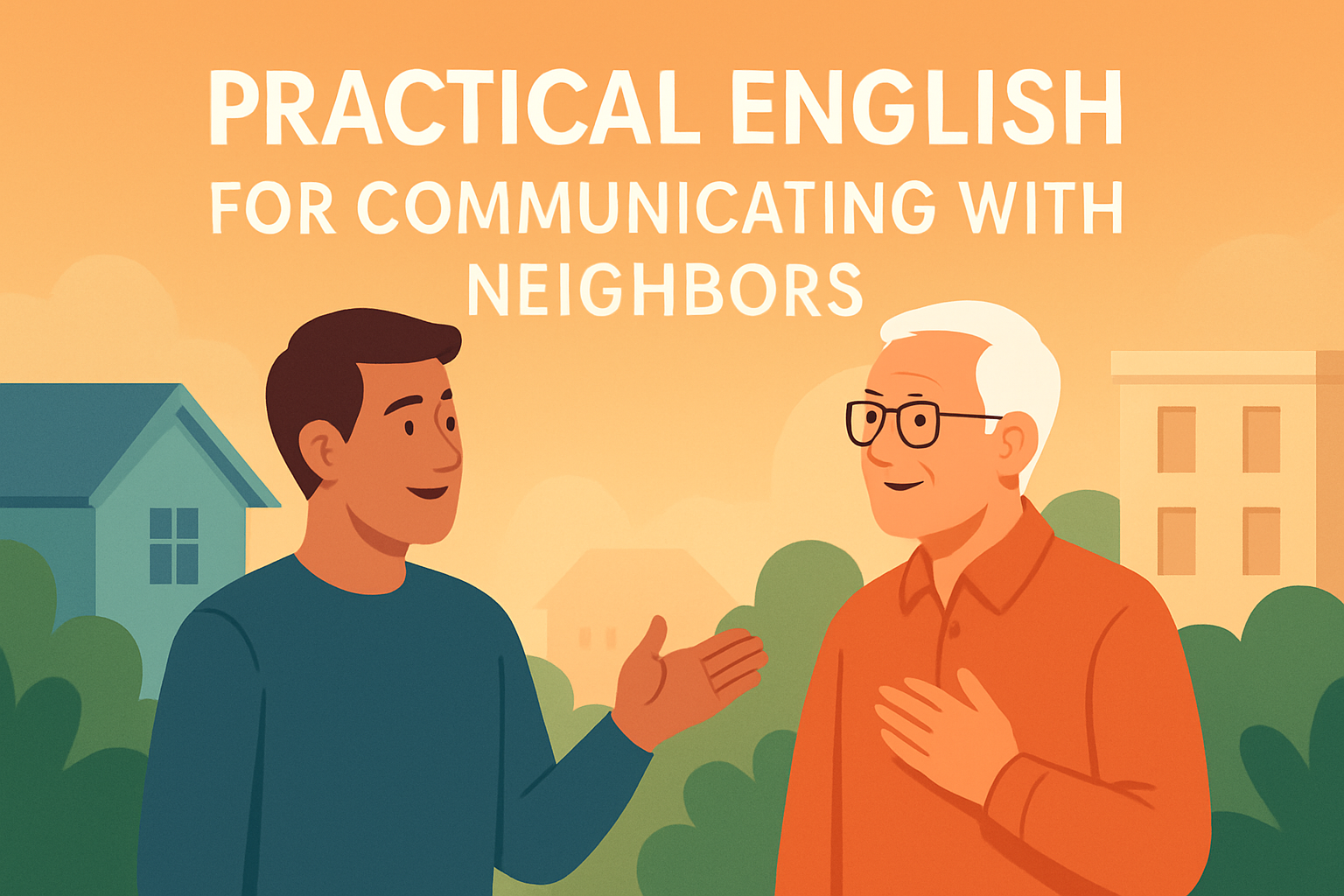
Introduction to Neighborly Communication
In today’s interconnected world, effective communication with the people living right next door has become more important than ever. The phrase “Practical English for Communicating with Neighbors” refers to using everyday language skills to build and maintain healthy and supportive neighborhood relationships. This type of communication is particularly vital for fostering a sense of community, resolving conflicts amicably, and ensuring the collective well-being of everyone in the neighborhood.
Neighborly communication encompasses various interactions, from simple greetings to discussing neighborhood concerns and offering or requesting assistance. Given the diverse backgrounds of neighbors in many communities, being able to communicate effectively can profoundly impact the quality of life for everyone involved. In an era where digital interactions often overshadow face-to-face encounters, maintaining open and positive communication channels with neighbors can provide a sense of belonging and support. Let’s explore why mastering practical English in this context matters and how it can enhance your daily life.
The Importance of Greetings and Small Talk
One of the foundational elements of neighborly communication is the act of greeting. A simple “Hello” or “Good morning” can go a long way in creating an atmosphere of friendliness and approachability. These greetings serve as an icebreaker and the first step towards building a more meaningful relationship with your neighbors.
Consider the example of Sarah, a new resident in a suburban area. She decided to start her interactions with her neighbors by making a conscious effort to greet them when she saw them outside. Sarah’s consistent use of friendly greetings led to more extended conversations, invitations to neighborhood gatherings, and a strong sense of community.
Moreover, small talk plays a crucial role in neighborly interactions. Discussing the weather, local events, or even new developments in the neighborhood can be a bridge to forming a more robust relationship. Small talk isn’t trivial; it’s a powerful tool for fostering connections and demonstrating that you value the people living around you.
Discussing Neighborhood Concerns
Another essential aspect of communicating with neighbors is the ability to discuss neighborhood concerns. Whether it’s about noise levels, property maintenance, or community safety, being able to address these topics in a respectful and constructive manner is critical.
An example of this is when the Johnson family noticed that their neighborhood’s shared garden was falling into disrepair. Instead of letting it become a point of contention, they organized an informal meeting with their neighbors to discuss the situation. The Johnsons used practical English to express their concerns clearly and proposed a solution that involved regular volunteer maintenance by the community. As a result, the neighbors collectively revived the garden, which enhanced both the aesthetics and cohesion of their living environment.
When discussing such matters, it’s important to use language that is clear, non-confrontational, and seeks resolution. Phrases like “I noticed that…” or “Have you seen…” can be helpful in opening up a dialogue without assigning blame or causing defensiveness.
Offering and Requesting Assistance
Another vital component of neighborly communication is the willingness to offer and request assistance. Neighbors can play a crucial role in each other’s lives by helping with small tasks or providing support during emergencies.
For instance, consider Tom, who lives next to an elderly couple. During the winter, he noticed that heavy snowfall made it challenging for them to clear their driveway. Tom offered to help, simply saying, “If you ever need a hand with the snow, just let me know.” His offer not only made their lives easier but also laid the foundation for mutual support, as the couple happily reciprocated by watering Tom’s plants while he was away.
Requesting help can be equally important, and knowing how to do so respectfully is a skill. Using polite language such as “Could you possibly…” or “I would appreciate it if…” makes it easier for neighbors to respond positively and builds a culture of cooperation.
Resolving Conflicts Amicably
Conflicts with neighbors, though never ideal, are an inevitable part of living in proximity to others. Practical English can be incredibly useful in resolving these issues amicably.
Imagine a scenario where two families, the Lees and the Garcias, face a dispute over trash left on a shared property line. Instead of letting frustrations boil over, the Lees decided to reach out with a note saying, “Hi, Garcia family, we noticed some trash on our property line. Would it be alright if we work together to clean it up?” The Garcias were more than willing to help, and the problem was quickly resolved without any hostility.
Using practical English, this letter avoided accusatory language and instead extended a collaborative solution. Effective conflict resolution involves active listening, empathy, and a focus on finding mutually beneficial outcomes.
Building a Supportive Community
A supportive neighborhood is one where all residents feel connected, valued, and safe. Using practical English to foster such an environment pays dividends in the form of better lives for everyone involved.
Consider the example of a community that decided to set up a neighborhood watch program to enhance security. By using clear and inclusive language, the organizers were able to enlist volunteers from different backgrounds and coordinate efforts to make the area safer. This initiative relied on practical English to communicate objectives, organize meetings, and distribute information effectively.
An environment where people feel comfortable communicating openly about their needs, concerns, and suggestions contributes to the overall well-being of the community. It also prepares neighbors to tackle larger challenges together, with a united front.
Real-World Applications through Visual Elements
Understanding how practical English can manifest in different neighborly scenarios can further solidify its application in daily life. Consider the following list, breaking down common tasks and how they might look in neighborhood interactions:
- Greeting: “Hi! How are you today?”
- Small Talk: “Lovely weather we’re having, isn’t it?”
- Addressing Concern: “I’ve noticed our shared fence needs repair. What do you think?”
- Offering Help: “I’m heading to the grocery store. Need anything?”
- Requesting Help: “Could you help me move a piece of furniture?”
- Conflict Resolution: “Let’s find a time to discuss this issue together.”
- Community Building: “Interested in organizing a block party?”
These examples demonstrate how everyday phrases and interactions can make a significant difference in building and maintaining healthy neighborhood dynamics.
Benefits and Next Steps
In summary, mastering practical English for communicating with neighbors can substantially benefit your personal and communal life. By prioritizing clear, respectful, and empathetic communication, you create an environment where open dialogue becomes the norm, thereby enhancing the quality of life for everyone involved.
The key takeaways include the importance of greetings and small talk in breaking down barriers, the necessity of discussing neighborhood concerns with tact, the mutual benefits of offering and requesting assistance, and the need for peaceful conflict resolution strategies. When used effectively, practical English promotes a supportive community that works collaboratively to improve living conditions and security.
Now, consider taking a moment to reflect on your current relationship with your neighbors. What small steps could you take today to improve your communication with them? Whether it’s a simple greeting, a thoughtful note, or an offer of assistance, your actions can help foster a more connected and harmonious community. Embrace the opportunity to use practical English as a tool for building stronger neighborhood ties and enhancing the overall quality of life for you and those around you.
Frequently Asked Questions
1. Why is it important to communicate effectively with my neighbors?
Communicating effectively with your neighbors is crucial for a number of reasons. Firstly, it helps to build a strong sense of community. When people know each other and feel connected, they are more likely to look out for one another, creating a safer and more supportive environment. Secondly, effective communication can help resolve conflicts amicably. Inevitably, small disputes can arise between neighbors, whether it’s about noise, property boundaries, or other issues. Having open lines of communication allows for these situations to be discussed calmly and resolved without escalating into more significant problems. Lastly, practical communication fosters cooperation for the greater good of the neighborhood. Whether it’s organizing a community event or tackling local issues, good communication helps to ensure that everyone is on the same page and can work together efficiently.
2. What are some practical English phrases I can use to start a conversation with my neighbor?
Starting a conversation with a neighbor might feel awkward at first, but using some simple and friendly phrases can help break the ice. Here’s a few you can use: – “Hi, I’m [Your Name], I live next door. I’ve been meaning to introduce myself.” – “Hello! I noticed that you’ve just moved in. Welcome to the neighborhood!” – “Hey there, I saw you working on your garden. It looks fantastic! What’s your secret?” – “Good morning, I saw there’s a community meeting coming up. Are you planning to attend?” These phrases are designed to be open-ended, encouraging further interaction and a natural progression of conversation.
3. How can I address a conflict with a neighbor without creating tension?
Addressing a conflict with a neighbor requires a tactful and considerate approach. Begin by assessing the situation to ensure your concerns are legitimate and not clouded by temporary emotions. Once you’re ready to talk, choose a time when both you and your neighbor are calm and unhurried. Start the conversation with a positive note or a compliment to soften the atmosphere. Use “I” statements rather than “You” statements to express your feelings and concerns—this reduces the chance of the other person feeling attacked. For instance, “I’ve noticed that the noise levels from your home are quite high in the evenings, and it’s difficult for my family to relax. Could we possibly find a way to manage it?” Maintain a solution-oriented mindset throughout the conversation and be prepared to compromise if necessary. At the end, ensure to thank your neighbor for their understanding and willingness to discuss the matter.
4. How can I maintain a good relationship with my neighbors?
Maintaining a good relationship with your neighbors boils down to being a respectful and considerate person. Make a habit of greeting your neighbors whenever you see them. Small gestures, such as offering help with carrying groceries or keeping an eye on their home while they’re on vacation, can go a long way in building trust. Additionally, try to participate in neighborhood events or gatherings—this involvement shows that you’re invested in the community. When differences arise, focus on understanding their perspective and finding a middle ground. Remember to communicate regularly and clearly about any shared concerns. Lastly, respect personal boundaries and privacy, as everyone has their space and comfort zone they value.
5. How can I encourage more active communication within my neighborhood?
Encouraging active communication within your neighborhood can significantly strengthen community bonds. Start by initiating activities that bring neighbors together, such as block parties, potlucks, or community clean-up days. These events can create opportunities for people to meet and socialize in a relaxed environment. You could also set up a neighborhood social media group or newsletter where updates, events, and notices can be shared easily. Be proactive about inviting neighbors to meetups or discussions on local issues, making sure everyone’s voice is heard and valued. It could also be beneficial to collaborate on a community project, whether it’s starting a neighborhood watch program or a communal garden, that provides a platform for regular interaction. All these efforts, backed by clear and courteous communication, will build a collaborative and communicative neighborhood atmosphere.