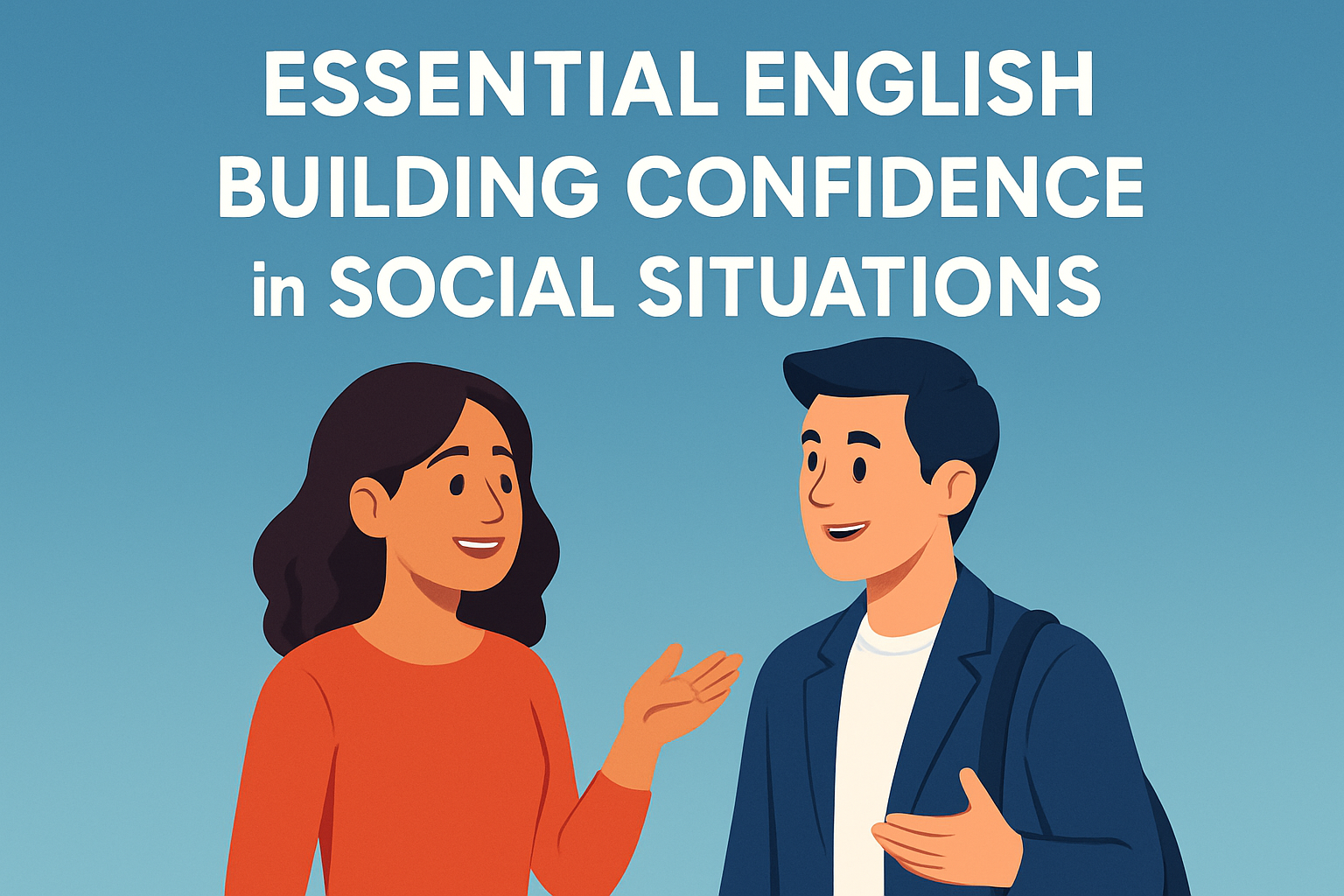
Language is a powerful tool for connecting with others and navigating a wide range of social situations. English, as a widely spoken global language, plays a significant role in daily interactions, professional environments, and international settings. For individuals seeking to improve their confidence in social scenarios, developing a firm grasp of essential English is crucial. This article aims to explore the fundamental aspects of English proficiency that contribute to boosting self-assurance in social contexts.
When we talk about “essential English,” we refer to the basic language skills and vocabulary necessary to communicate effectively with others. These skills include the ability to initiate and maintain conversations, convey thoughts and ideas clearly, and respond appropriately to different social cues. Confidence in social situations is often linked to proficiency in these areas, as the ability to express oneself fluently can alleviate anxiety and foster positive interactions.
The importance of mastering essential English extends beyond personal interactions; it also impacts professional success, educational opportunities, and cross-cultural experiences. By improving one’s command of the English language, individuals can access a broader range of opportunities and enhance their ability to form meaningful connections with people from diverse backgrounds. Whether attending a social gathering, participating in a group discussion, or networking at a professional event, strong English skills form a vital foundation for successful communication.
Building a Conversational Vocabulary
One of the primary components of essential English is the development of a strong conversational vocabulary. This involves familiarizing oneself with commonly used words and phrases that facilitate smooth and natural conversations. Having a robust vocabulary enables individuals to articulate their thoughts more effectively, ask relevant questions, and participate actively in discussions.
Consider an individual attending a party but struggling to engage in conversation due to a limited vocabulary. They might find it difficult to keep the conversation flowing, leading to awkward silences or misunderstandings. On the other hand, someone with a well-rounded vocabulary can effortlessly navigate discussions, share experiences, and contribute to a friendly atmosphere.
Understanding Social Cues and Context
Social interactions are often nuanced and influenced by various factors such as cultural norms, the setting, and the relationship between participants. Understanding social cues and context is a critical aspect of essential English, as it allows individuals to respond appropriately to different situations and communicate effectively with diverse audiences.
For example, in a professional setting, it may be important to use formal language and adhere to specific etiquette. Conversely, casual conversations with friends or family might involve informal language and humor. Misinterpreting these cues can lead to misunderstandings or offense. Therefore, developing the ability to read and respond to social cues is vital for building confidence in social situations.
Embracing Listening and Comprehension Skills
Effective communication is a two-way street, requiring both expressive and receptive skills. Listening and comprehension are integral components of essential English, as they enable individuals to understand others and respond thoughtfully. Good listening skills involve paying attention, interpreting the speaker’s message, and refraining from interrupting.
Imagine a group discussion where one participant is focused on expressing their own ideas without truly listening to others. This could result in missed information, frustration, or being perceived as disengaged. In contrast, an attentive listener who demonstrates understanding and interest can foster trust, build rapport, and contribute meaningfully to the conversation.
| Skill | Description | Example |
|---|---|---|
| Conversational Vocabulary | Knowledge of common words and phrases for smooth conversations | Using greetings like “Hi, how are you?” to start a conversation |
| Understanding Social Cues | Recognizing and reacting to social and cultural norms | Adopting a formal tone during a job interview |
| Listening and Comprehension | Ability to interpret and respond to spoken language effectively | Nodding and making eye contact to show active listening |
Developing Pronunciation and Accent Clarity
Pronunciation and accent clarity play a significant role in how effectively an individual is understood in English. Clarity in speech can help reduce communication barriers and prevent misunderstandings. Many people experience anxiety over their accents, fearing they might be judged or misinterpreted. However, focusing on clear pronunciation rather than achieving a “perfect” accent can greatly enhance confidence.
For instance, consider two individuals from different linguistic backgrounds engaging in a discussion. If one struggles with pronunciation, their message may get lost or misinterpreted. However, if they work on enunciating clearly and at an appropriate speed, the likelihood of a successful interaction increases, allowing both parties to feel understood and respected.
Practicing Non-Verbal Communication
Non-verbal communication, such as body language, facial expressions, and gestures, is another crucial element of essential English. Non-verbal cues often convey emotions and attitudes, complementing verbal communication. Being aware of one’s own non-verbal signals and interpreting others’ cues accurately can lead to more effective interpersonal interactions.
Imagine a scenario during a presentation where the speaker crosses their arms, avoiding eye contact, and speaks in a monotone voice. The audience may perceive this as disinterest or lack of confidence. Conversely, maintaining open body language, making eye contact, and using expressive gestures can enhance engagement and convey confidence to the audience.
Overcoming Fear of Mistakes
A common barrier to building confidence in social situations is the fear of making mistakes. Language learners often worry about grammatical errors or incorrect pronunciations, which can lead to hesitancy and anxiety. However, mistakes are a natural part of the learning process and provide valuable opportunities for growth and improvement.
Consider someone who avoids speaking English out of fear of ridicule for grammatical errors. This fear inhibits their progress and social interactions. However, embracing mistakes as learning experiences fosters resilience and encourages practice. As individuals grow more comfortable with trial and error, their confidence in speaking English inevitably increases.
Engaging in Active Practice and Exposure
The journey to mastering essential English and building confidence in social situations is supported by active practice and exposure. Engaging in conversations, attending social gatherings, joining language exchange programs, and participating in public speaking events can significantly enhance language skills and boost confidence.
For example, a language learner might join a local English conversation club where they can practice speaking with native speakers in a supportive environment. Over time, they become more confident, articulate their ideas with ease, and develop lasting friendships. Regular exposure to different speaking environments helps reinforce learning and alleviate social anxiety over time.
Summary and Key Takeaways
In summary, essential English skills are vital for building confidence in social situations. By focusing on conversational vocabulary, understanding social cues, developing listening and comprehension skills, working on pronunciation, embracing non-verbal communication, overcoming fears of mistakes, and actively engaging in practice, individuals can significantly enhance their English proficiency and self-assurance.
The primary benefit to readers is the empowerment to communicate effectively in diverse environments, whether personal or professional. By prioritizing the development of essential English, individuals gain the tools to express themselves clearly, connect meaningfully with others, and access a wider range of opportunities.
As a simple call-to-action, consider taking the first step by engaging in a conversation with a new acquaintance or participating in a language exchange session. Small efforts and consistent practice pave the way for greater confidence and competency in social situations.
Remember, building confidence in social settings through essential English takes time and patience, but the rewards are immense and transformative.
Frequently Asked Questions
1. Why is it important to build confidence with essential English in social situations?
Building confidence with essential English in social situations is vital because language is the primary tool for communication. English, being one of the most widely spoken languages in the world, often acts as a common medium in diverse settings, whether it’s a casual encounter or a formal meeting. Confidence in speaking and understanding English allows individuals to express themselves more effectively, leading to better interactions and deeper connections. It also reduces the fear of misunderstandings or making mistakes, which can be common when you’re not fully comfortable with a language. Furthermore, in professional arenas, being articulate in English opens doors to more opportunities, networking, and collaborations on a global scale. In essence, gaining proficiency in English amplifies your ability to connect with others, enhances personal relationships, and equips you with the self-assurance needed to navigate social landscapes confidently.
2. What are some essential English phrases that can help in everyday social situations?
Essential English phrases are the building blocks of daily interactions and can significantly elevate your confidence when communicating. Here are a few key phrases that are helpful in various scenarios:
– Greetings: “Hello! How are you?” – A warm greeting is always a great way to start a conversation.
– Introductions: “Nice to meet you. My name is…” – Introduce yourself clearly to make a positive impression.
– Small Talk: “What do you do for a living?” or “Do you have any plans for the weekend?” – These questions can help initiate and sustain conversation.
– For Clarification: “Could you please repeat that?” or “I’m not sure I understood you, can you elaborate?” – Useful for ensuring clear communication and shows engagement.
– Making polite requests: “Could you please…?” or “Would you mind…?” – Helps in asking for assistance or favors in a courteous manner.
– Agreeing/Disagreeing: “I see what you mean,” or “I understand, but I think…” – Express your agreement or disagreement respectfully.
– Closing Conversations: “It was nice talking to you,” or “Hope to see you soon.” – End conversations on a positive note.
Being equipped with these phrases can assist in handling a wide range of interactions with ease and grace, making you feel more comfortable and self-assured in any social setting.
3. How can I practice essential English to improve my confidence?
Practicing essential English to boost your confidence involves consistent and active engagement with the language. Here are some methods to enhance your practice routine:
– Conversational Practice: Engage in dialogue with native speakers or join conversation clubs online or in your area. Real-world practice is essential for building fluency.
– Language Apps and Online Resources: Utilize apps like Duolingo, Babbel, or Rosetta Stone to reinforce vocabulary and grammar concepts. Many offer speaking exercises and instant feedback.
– Watch and Listen: Immerse yourself in English by watching movies, series, or TED Talks, and listening to podcasts or audiobooks. This exposes you to various accents and contexts.
– Reading Aloud: Read books, articles, or online content related to your interests. Reading aloud helps with pronunciation and blending words smoothly.
– Write Regularly: Keep a journal in English or start a blog to articulate your thoughts in writing. This enhances vocabulary and structures thoughts clearly.
Remember, consistency is key. Frequency over duration in practice sessions tends to yield better results as it helps integrate learning into daily routines, which considerably lifts confidence over time.
4. How does mastering essential English impact professional settings?
Mastering essential English can have a profound impact in professional settings for various reasons:
– Enhanced Communication: Clear and effective communication in English fosters better understanding and collaboration among colleagues and stakeholders from different cultural and linguistic backgrounds.
– Greater Opportunities: Proficiency in English can open up opportunities for promotions, international projects, and positions in global companies, as it equips you with a valuable skill in the international job market.
– Networking: English proficiency facilitates networking at conferences, seminars, and professional gatherings, allowing for building professional relationships and alliances.
– Confidence in Presentations: With strong English skills, giving presentations, leading meetings, and participating in discussions becomes less daunting and more effective.
– Access to Information: Understanding English expands your access to a vast array of professional and academic resources, keeping you informed about new developments, which is crucial in many fields.
Overall, proficiency in essential English not only enhances your professional communication but also elevates your profile in the workforce, making you stand out as a capable and versatile professional.
5. What are the common challenges individuals face when improving their English for social situations, and how can they overcome them?
The journey to improving English for social situations often involves several challenges, but with persistence and the right strategies, they can be overcome:
– Fear of Mistakes: Many individuals fear making errors while speaking. Overcoming this requires a mindset shift to view mistakes as learning opportunities rather than failures. Practice speaking in a supportive environment where corrections are given constructively.
– Vocabulary Limitations: Expanding vocabulary can be daunting. Reading extensively and maintaining a vocabulary journal to note down and review new words regularly can help. Try to use new words in conversations to better retain them.
– Pronunciation Difficulties: Pronunciation can be tricky, but practice and repetition are vital. Listen to native speakers and use language learning apps focusing on speaking. Recording your voice and comparing it with native speakers can also aid improvement.
– Listening Comprehension: Sometimes, understanding spoken English, especially in crowded or fast-paced settings, can be tough. To improve, listen to varied English content at different speeds. Gradually increase the speed to improve comprehension.
– Cultural Nuances: Tone, body language, and cultural references may be confusing. Immersing yourself in English culture through media, or asking questions during conversations to clarify cultural context enhances understanding.
Facing such challenges head-on with a positive attitude and continuous effort will gradually build confidence and ensure steady improvement in using essential English effectively in social scenarios.