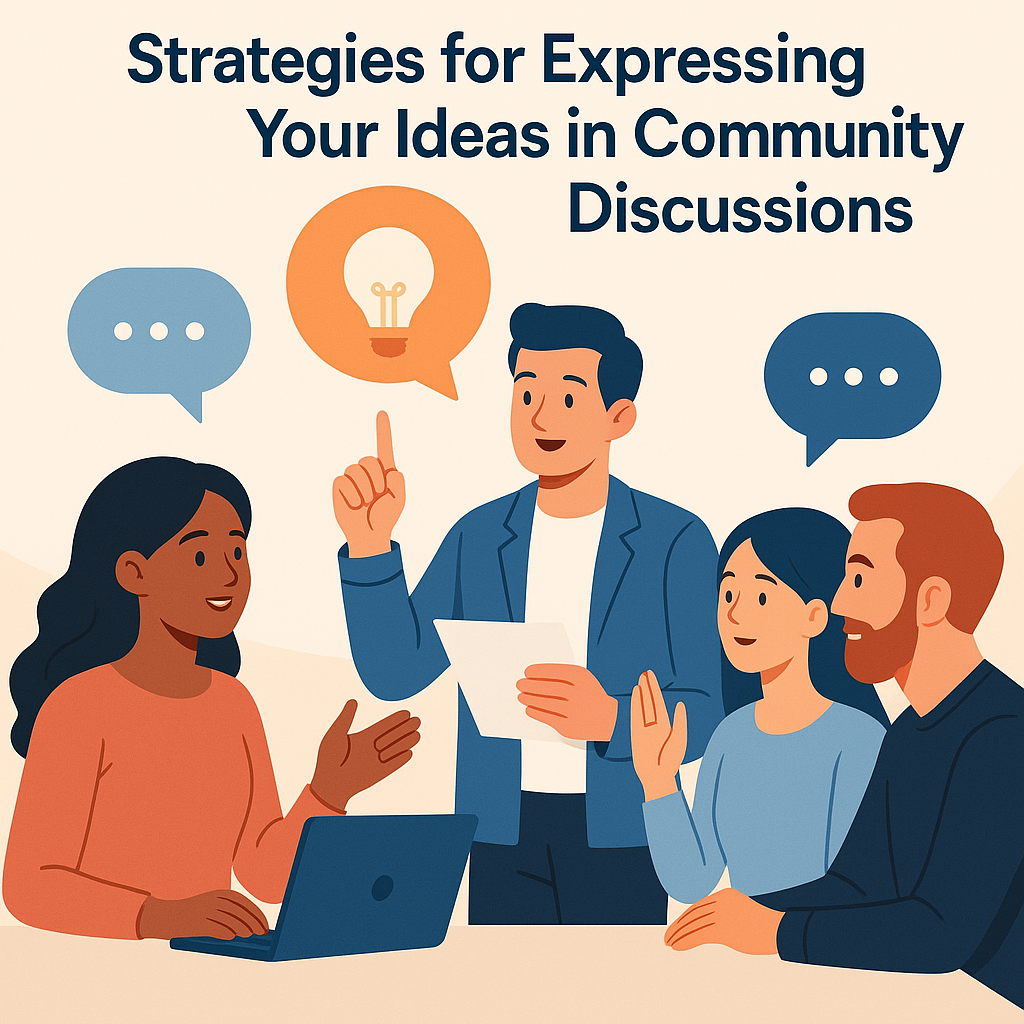
Community discussions, whether online or in-person, offer a platform for sharing perspectives, promoting understanding, and building relationships. They are an essential element of society, enabling individuals to voice their thoughts and collaborate towards common goals. Yet, expressing ideas effectively within these discussions can sometimes be challenging. Key terms like “communication” and “expression” might seem straightforward, but they hold significant weight in successfully delivering one’s message. Communication refers to the process of conveying information, while expression is about how you present that information with clarity and intention.
Communicating your ideas in community discussions is crucial for several reasons. First, it fosters mutual understanding, enabling participants to appreciate diverse viewpoints. This is vital in creating inclusive environments where everyone feels heard. Second, effective expression of ideas often leads to more productive outcomes, as clear communication paves the way for successful collaboration. Lastly, expressing ideas confidently can boost personal and collective efficacy, empowering individuals to drive meaningful change within their communities. Recognizing the importance of these discussions and mastering the art of idea expression can transform community interactions, promoting a culture of openness and innovation.
Understanding Your Audience
The success of expressing your ideas begins with understanding your audience. Knowing who you are speaking to allows you to tailor your message to resonate with them effectively. For example, consider a local town hall meeting discussing environmental issues. If your audience comprises local residents concerned about their community, you might focus on tangible impacts such as air and water quality. However, if the attendees are largely policymakers, your strategy might shift towards presenting data and potential legislation impacts.
Understanding your audience involves recognizing their interests, values, and levels of knowledge. Adjust your vocabulary and depth of explanation accordingly. Using overly technical terms with a lay audience might cause confusion, whereas oversimplifying complex topics can lead to a lack of engagement with more informed participants. In practice, actively listening to the community’s concerns and feedback will guide you in shaping your discourse, ensuring your ideas are both accessible and meaningful.
Using Clear and Concise Language
When contributing to community discussions, clarity is paramount. Complex language and lengthy explanations can obscure your message and hinder understanding. For instance, during a community meeting regarding local traffic congestion, rather than saying, “Multimodal transportation networks present a panacea through which vehicular bottlenecks can be alleviated, and urban mobility can be optimized,” opt for a clear statement like, “Improving public transport can reduce traffic and make it easier to get around.” This approach ensures that the essential information is transmitted without dilution.
To achieve clarity, focus on brevity and simplicity. Structure your sentences to convey one main idea at a time. Avoid jargon unless it is commonly understood within the community’s context. Additionally, using analogies or visual aids can bolster understanding. Analogies help relate new ideas to familiar concepts, making them more relatable. Visual aids can further simplify complex data or processes, offering a clear picture of your points.
Engaging Through Stories and Examples
Stories and examples are powerful tools for engaging audiences and illustrating your points compellingly. People are naturally drawn to narratives because they can evoke emotions and make abstract concepts tangible. For instance, when discussing the importance of community gardens, sharing a story about how a local garden transformed a vacant lot into a vibrant community hub can highlight the broader benefits beyond just growing food.
Using examples allows you to anchor your ideas in reality. Demonstrating how a specific initiative benefited another community with similar challenges can add credibility and context to your suggestion. An effective story or example should be relevant and align closely with the discussion topic. By personalizing your message with stories or examples, you can evoke empathy, inspire action, and make your ideas more memorable.
Encouraging Participation and Feedback
Community discussions thrive on interaction. Encouraging participation can enhance the quality of dialogue and ensure diverse perspectives are included. Prompting questions, inviting opinions, or soliciting feedback can engage even the quieter members of the community. For example, during a neighborhood meeting about developing a shared public space, asking open-ended questions like “What features should this space include to serve our community best?” invites varied input, fostering a collaborative atmosphere.
Creating a welcoming environment where everyone feels comfortable sharing their thoughts is essential for open dialogue. Acknowledge contributions with respect and gratitude, even if they differ from your viewpoint. Collectively refining ideas through discussion and constructive feedback can lead to more innovative and accepted solutions. This practice not only energizes the dialogue process but promotes investment and ownership in community outcomes.
Listening Actively and Responding Appropriately
Effective communication is as much about listening as it is about speaking. Active listening involves fully concentrating, understanding, responding, and – remembering what is being said. This approach fosters mutual respect and allows you to respond to others thoughtfully. Consider an online forum discussing educational reform; by acknowledging participants’ input through comments like “I see your point about integrating technology in classrooms,” you demonstrate engagement and willingness to consider diverse opinions.
| Active Listening Steps | Benefits |
|---|---|
| Listening without interruption | Ensures full understanding |
| Reflecting on what’s said | Clarifies meaning and intent |
| Responding thoughtfully | Builds trust and conversation flow |
Respond appropriately by acknowledging diverse ideas and using them as a springboard for further discussion. This demonstrates respect and consideration, making collaborators feel valued. It also enables the identification of common ground, facilitating smoother consensus-building processes within the community.
Maintaining Confidence and Composure
Confidence in expressing your ideas significantly impacts how they are received. A confident speaker can engage an audience more effectively and will likely inspire confidence in their convictions. Visualize a scenario where two individuals present ideas for improving community safety. The first, speaking hesitantly and avoiding eye contact, may not captivate the audience. In contrast, the second speaker, poised and articulate, is more likely to maintain the audience’s attention and persuade them of their viewpoint.
To maintain confidence, prepare thoroughly beforehand. Familiarizing yourself with the subject matter and anticipating questions or counterarguments can bolster your self-assurance. Moreover, practice speaking calmly under pressure. Techniques such as deep breathing or positive visualization can help manage anxiety and maintain composure. By projecting confidence, you enhance your credibility and make a convincing case for your ideas.
Summarizing and Reinforcing Ideas
Conclusively summarizing your points is crucial in ensuring lasting impact and clarity. Recapping the main ideas allows the audience to consolidate the discussion and recall critical insights. In a community forum about local healthcare improvements, progressively highlighting the benefits – such as increased access, enhanced quality of care, and community wellness – ensures that these vital aspects remain at the forefront of participants’ minds.
Reinforce ideas by linking them back to the community’s shared goals or values, thereby underscoring their relevance. Offering actionable steps or suggestions can guide the community in implementing the discussed ideas. For instance, providing a clear call-to-action such as “Let’s form a committee to further explore these healthcare initiatives” harnesses the momentum generated during the discussion, paving the way for future engagements.
Summary and Next Steps
Mastering the art of expressing your ideas effectively in community discussions opens doors to impactful communication and collaborative progress. By understanding your audience, utilizing clear language, and engaging through stories and examples, you can create dynamic discussions. Encouraging participation, listening actively, and responding appropriately fosters a spirit of inclusivity and respect. Maintaining confidence further enhances the delivery of your ideas, ensuring they are compelling and receive due consideration. Moreover, summarizing and reinforcing your points solidifies the discussion’s outcomes, setting the stage for meaningful action.
The benefits of these strategies are manifold. They not only improve personal communication skills but also contribute to more informed, productive community dialogues. Engaging effectively can lead to shared insights, fostered trust, and actionable solutions that serve the collective interest. These practices ensure your voice is not only heard but also valued and considered in shaping community endeavors.
As a next step, consider reflecting on recent discussions you have participated in. Identify the strategies you have utilized effectively and those you might improve. Actively seek opportunities to practice these techniques in upcoming discussions, whether informal exchanges or formal meetings. As you refine your communication skills, you’ll find that expressing your ideas becomes second nature, enriching both your experience and that of the community. By prioritizing effective communication, you become an integral part of fostering vibrant, inclusive community dialogues.
“`htmlFrequently Asked Questions
1. How can I prepare to express my ideas effectively in a community discussion?
Preparation is key when it comes to expressing your ideas in community discussions. Start by familiarizing yourself with the topic, as having a solid understanding provides a foundation for your contributions. Research relevant information, read articles, and review opinions similar and contrary to yours. Organize your thoughts in an outline form, highlighting key points you want to address. Consider the perspectives of other participants and think about how your points fit within the broader discussion. Rehearse articulating your thoughts clearly and confidently, which can help reduce anxiety and improve coherence. Additionally, mentally prepare for varying reactions and remain open to constructive feedback and challenges from others.
2. What strategies can I use to engage effectively with fellow participants during a discussion?
Engaging effectively in a community discussion involves active listening and mutual respect. Always be attentive to what others are saying; this shows respect and helps you craft responses that are relevant and thoughtful. Use open-ended questions to encourage dialogue and show genuine interest in the opinions of others, which can lead to richer discussions. Additionally, always address participants by their name or title, demonstrating courtesy and personal connection. Practice empathy and patience, as understanding different viewpoints requires openness to diverse perspectives. Be courteous and avoid interrupting others while they’re speaking, allowing for a fluid and respectful exchange of ideas.
3. What should I do if the discussion becomes heated or off-topic?
It’s not uncommon for community discussions to become heated, especially on sensitive topics. If this happens, strive to maintain a calm and composed demeanor. Acknowledge differing viewpoints without agreeing with them if they conflict with your beliefs. Use neutral language to de-escalate tension, and try to redirect the conversation back to the topic by gently reminding everyone of the discussion’s original purpose. If participants are talking over each other, suggest a speaking order to ensure that everyone has a chance to express their ideas. Setting clear, respectful boundaries during the conversation can also help prevent the discussion from veering too far off track.
4. How can I clearly articulate my ideas to ensure they are understood?
Clear articulation of your ideas begins with simplicity and clarity in your choice of words. Avoid jargon or overly complex language that might confuse listeners. Structure your points logically, using frameworks or bullet points to guide others through your thought process. Use examples or anecdotes to illustrate your ideas, as storytelling can be a powerful tool in making complex concepts more relatable and easier to understand. Pay attention to your tone and pace, ensuring that you speak slowly and clearly. After presenting your ideas, encourage feedback by asking if clarification is needed, thus creating an interactive platform where misunderstandings can be easily addressed.
5. How do I handle disagreement or criticism constructively during a community discussion?
Handling disagreement or criticism constructively is crucial for maintaining a healthy and productive discussion environment. First, approach disagreement as an opportunity to learn and understand differing viewpoints. Listen intently and try to discern the rationale behind opposing arguments. Respond to criticism by first acknowledging it; this shows that you respect the other party’s opinion. Defend your position with evidence and examples, but remain open to revising your perspective if presented with compelling arguments. It’s important not to take criticisms personally – focus on the ideas rather than the individuals presenting them. Thank participants for their contributions and maintain a positive demeanor, fostering an atmosphere of mutual respect and collaboration.
“`