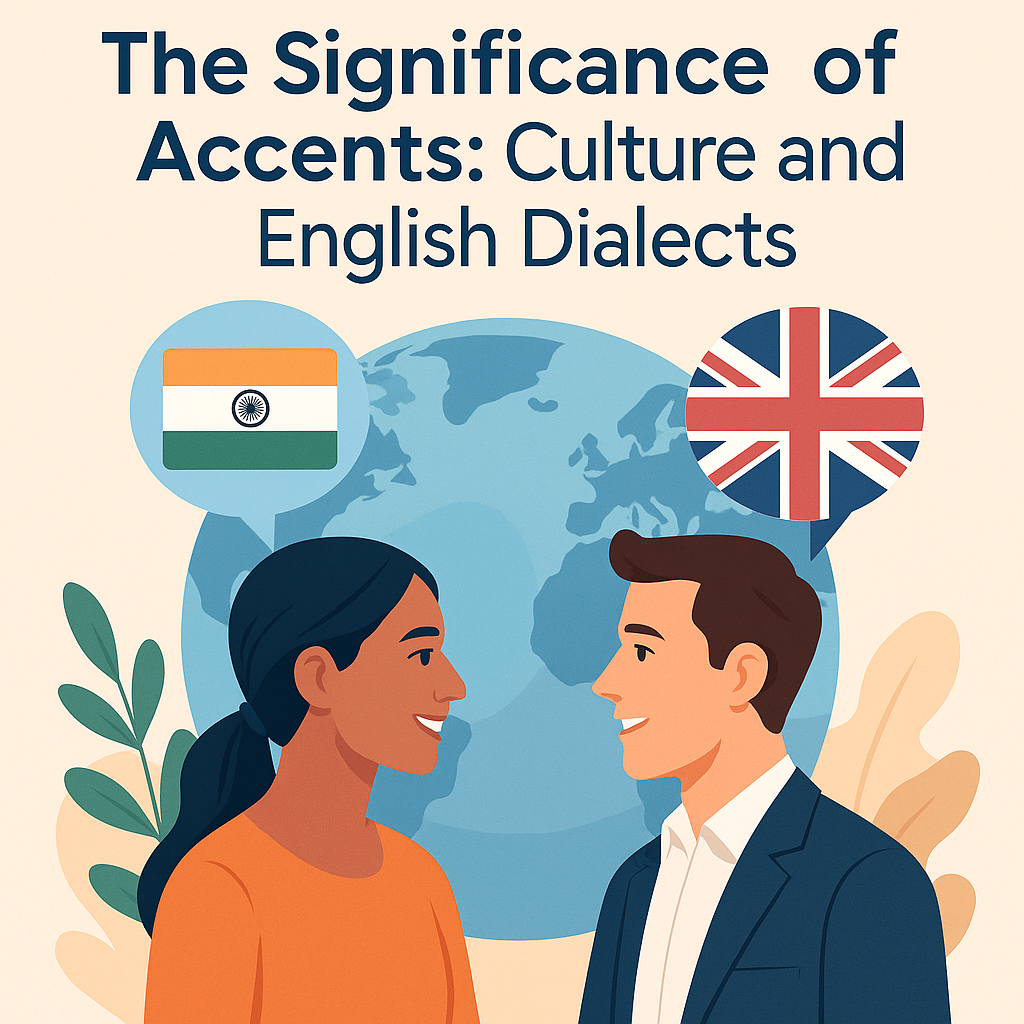
Accents are more than just distinctive ways of pronunciation; they embody the rich cultural, historical, and social fabrics that make up different communities. An accent is the unique way in which individuals from specific regions or social groups pronounce their language. Dialects, closely related to accents, encompass variations in grammar and vocabulary as well as pronunciation. Both accents and dialects are compelling markers of identity that convey belonging, heritage, and even social standing. Understanding accents and dialects in the English language is crucial for fostering mutual respect, embracing diversity, and improving communication across global contexts. The significance of accents cannot be overstated; they reflect our histories and influence our interactions in personal, educational, and professional arenas. As we delve into the nuances of English dialects, we uncover the cultural narratives and meanings woven into our everyday speech, unraveling the layers that make accents such a pivotal part of our lives. By appreciating these distinctions, we can bridge gaps in communication and foster a deeper sense of connection amidst our differences.
The Historical Roots of English Accents
The origins of English accents can be traced back to the history of England itself, starting from the migration of Angles, Saxons, and Jutes in the fifth century. These groups brought with them Germanic languages, setting the foundation for Old English. Over time, interactions with Norse invaders, followed by the Norman Conquest in 1066, introduced new words and grammatical structures, further diversifying the dialects. By the Middle Ages, England was a linguistic tapestry, with regional dialects evolving in isolation due to limited mobility and communication. For instance, the Scouse accent of Liverpool, known for its nasal tone and distinct rhythm, has roots in the influx of Irish and Welsh immigrants during the 19th century. This historical melting pot gave birth to a multitude of dialects, each embedding its area’s cultural and social narratives. Understanding the historical trajectory of English accents reveals how much of our spoken language is tied to past events and regional interactions.
The Influence of Migration and Colonization
Migrations and colonization have significantly shaped English dialects around the world. The British Empire’s expansive reach spread English far beyond the British Isles, leading to the development of regional dialects on continents such as North America, Africa, and Australia. In the United States, waves of immigrants from varied countries contributed to the diverse array of American accents, from the Southern drawl to the Bostonian accent. Similarly, colonization in the Caribbean resulted in a vibrant Creole language in Jamaica, heavily influenced by African languages, which blends rhythm and syntax in unique ways. In Australia, the accent developed from the early settlers who arrived during the late eighteenth century, primarily convicts and settlers from the British Isles. The unique evolution of Australian English is a testament to its distinct social history. Through migration and colonization, English dialects have absorbed influences from a myriad of other languages, creating new linguistic blends and diversifying spoken English worldwide.
Social Connotations and Accents
Accents often carry social connotations and stereotypes that impact how individuals are perceived and treated. In many English-speaking countries, certain accents are associated with prestige, intelligence, or authority, while others might be unfairly stigmatized. For example, in the United Kingdom, Received Pronunciation (RP), often referred to as the “Queen’s English,” is traditionally seen as a marker of education and high social status. Conversely, accents like Cockney, often associated with East London, have historically been stereotyped as working-class. These social perceptions can affect job opportunities and educational experiences. A notable example is the case of Sara Cox, a British broadcaster who faced biases due to her Northern accent. Despite deeper societal connections and unique cultural expressions that accents offer, such biases highlight existing prejudices and the need to challenge stereotypes, emphasizing empathy and respect in our interactions.
Accents and Communication in Global Contexts
In our increasingly interconnected world, understanding accents plays a significant role in facilitating effective communication. English often serves as a lingua franca in international business, education, and travel, making it vital for individuals to navigate various accents and dialects. In customer service and call center industries, employees are frequently trained to use neutral accents or learn regional variances to communicate effectively with a diverse clientele. Real-world examples include multinational companies like HSBC and Accenture, where an understanding of accent and cultural nuances is integrated into communication training programs. Effective communication in global contexts requires sensitivity to accent variations, fostering improved understanding and reduced miscommunication. By valuing the cultural richness each accent brings, individuals and organizations can enhance inclusivity and cooperation in multilingual contexts.
Technology’s Role in Bridging Accent Barriers
Technology has become a critical tool in bridging the gap between accents and fostering clearer communication across different English dialects. Voice recognition software and AI-driven language learning applications, such as Duolingo and Rosetta Stone, incorporate diverse accents to educate users on variations in pronunciation. Platforms like Google’s speech-to-text technology are designed to understand and adapt to numerous English accents, providing a more inclusive user experience. Moreover, subtitles and translation features in streaming services like Netflix make content more accessible to global audiences, highlighting accent diversity. As technology continues to advance, the barriers posed by accents can be further minimized, enabling more effective cross-cultural communication and understanding. Through continued innovation, technology offers avenues for celebrating linguistic diversity while ensuring that accent differences do not hinder connectivity across varied societal contexts.
| Region | Accent Example | Notable Characteristics |
|---|---|---|
| London | Cockney | Glottal stops, rhyming slang |
| Liverpool | Scouse | Nasal tone, unique intonation |
| United States South | Southern Drawl | Elongated vowels, slower pace |
| Jamaica | Patois (Creole) | Rhythmical speech, African influence |
| Australia | Australian English | Broad vowels, rising intonation |
The Personal Impact of Accent Awareness
Individual awareness and sensitivity towards accents bring enhanced empathy and cultural appreciation. When individuals make an effort to understand or adapt to diverse accents, they foster inclusive environments that celebrate linguistic diversity. Prominent figures like Idris Elba, whose ability to switch seamlessly between different accents, highlight the dynamic interplay of language and identity. In educational settings, accent awareness allows for diverse cultural expressions within classrooms and encourages students to express themselves without fear of judgment. Initiatives like the “Accent Bias in Britain” project provide resources to better understand accent diversity and challenge stereotypes, fostering an open-minded society. Recognizing and celebrating the multiplicity of accents helps us acknowledge the diverse cultural tapestries that shape our societies and impart empathy in our interactions.
Conclusion: Embracing the Diversity of English Accents
As we have explored, accents are intricate tapestries woven from historical, social, and cultural threads, shaping and defining our communicative landscapes. Understanding and appreciating the diversity of English accents offer profound benefits, from fostering empathy and combating stereotypes to improving communication and inclusivity in global contexts. The journey through the historical evolution, societal implications, and technological advancements in accent adaptation underscores the pivotal role language plays in connecting humanity. As everyday speakers, educators, and learners, we hold the power to appreciate and celebrate linguistic diversity, broadening perspectives and bridging divides. Let us embrace the richness and color of our accents, recognizing them as a testament to our shared human experience. Engage with content that exposes you to varied accents, participate in discussions that celebrate linguistic differences, and take active steps toward nurturing open, inclusive dialogues that honor the myriad ways English is spoken and understood across cultures.
Frequently Asked Questions
1. What makes accents significant in understanding culture?
Accents are a window into the rich tapestry of culture and community. They tell a story of our past, present, and even our social environment. When we hear someone speak with a particular accent, we’re getting a glimpse into their world – where they grew up, the influences they’ve had, and the community to which they belong. Every inflection, every nuance in how words are pronounced, carries cultural significance. For instance, a Southern American accent is often tied to hospitality, warmth, and tradition, whereas a British Received Pronunciation might conjure images of formality and elegance. Accents also play a vital role in preserving cultural heritage. They are passed down through generations, maintaining the linguistic traditions of communities even as everything else changes around them.
2. How do English dialects differ from each other?
English dialects differ in several ways, primarily in pronunciation (accents), vocabulary, and grammar. Let’s break these down: Pronunciation: Each region within English-speaking countries may pronounce words differently. For example, the word ‘car’ might sound distinctly different when spoken in Boston as opposed to how it sounds in London. Vocabulary: Dialects often have unique words or phrases. For instance, in the UK, you might hear ‘lorry’ instead of ‘truck,’ or ‘boot’ instead of ‘trunk’ in reference to a car part. Grammar: You’ll also find differences in sentence structure and verb forms. Some dialects might use the past participle differently or have unique ways of forming the plural of words.
3. Why do people have strong reactions to different accents?
Accents can evoke strong reactions because they are deeply associated with identity, perceptions, and biases. When people hear an accent, they often make assumptions, consciously or unconsciously, about the speaker’s background, education level, and even personality traits. For some, an accent may sound exotic and charming, yet to others, it might be difficult to understand or even unintelligible. Accents can lead to stereotyping, where assumptions are based on pre-conceived notions of what individuals who possess certain accents ‘should’ be like. This reaction can stem from cultural portrayals in media, historical biases, or mere unfamiliarity. However, recognizing that an accent is simply a form of linguistic diversity can help people appreciate rather than judge.
4. Are accents and dialects becoming less distinct in today’s globalized world?
Globalization and mass communication are indeed impacting accents and dialects. With people frequently moving across regions and countries, certain accents and dialects may become less pronounced over time. Exposure to global media, such as television, movies, and the internet, also contributes to a convergence of linguistic styles, slightly eroding the distinctiveness of some accents and dialects. However, despite these influences, many communities strive to preserve their unique linguistic characteristics because they are vital to cultural identity. Efforts are being made globally to document, study, and promote regional dialects and accents, ensuring they remain vibrant and passed on to future generations.
5. How can understanding accents enhance communication and social interaction?
Understanding accents can vastly enhance communication and foster better social interactions by breaking down barriers of misunderstanding and fostering empathy. When we take the time to understand and appreciate the intricacies of different accents, we’re showing respect for the speaker’s background and identity. This understanding can lead to more effective communication as it reduces misunderstandings that arise from variations in pronunciation or vocabulary. Furthermore, it opens up channels for cultural exchange and learning, providing opportunities to connect with diverse perspectives. In a professional setting, being accent-aware can aid inclusivity and collaboration, as well as preventing the marginalization of individuals based on how they speak. Embracing accents truly enriches the interpersonal and cross-cultural interactions that define our world today.