
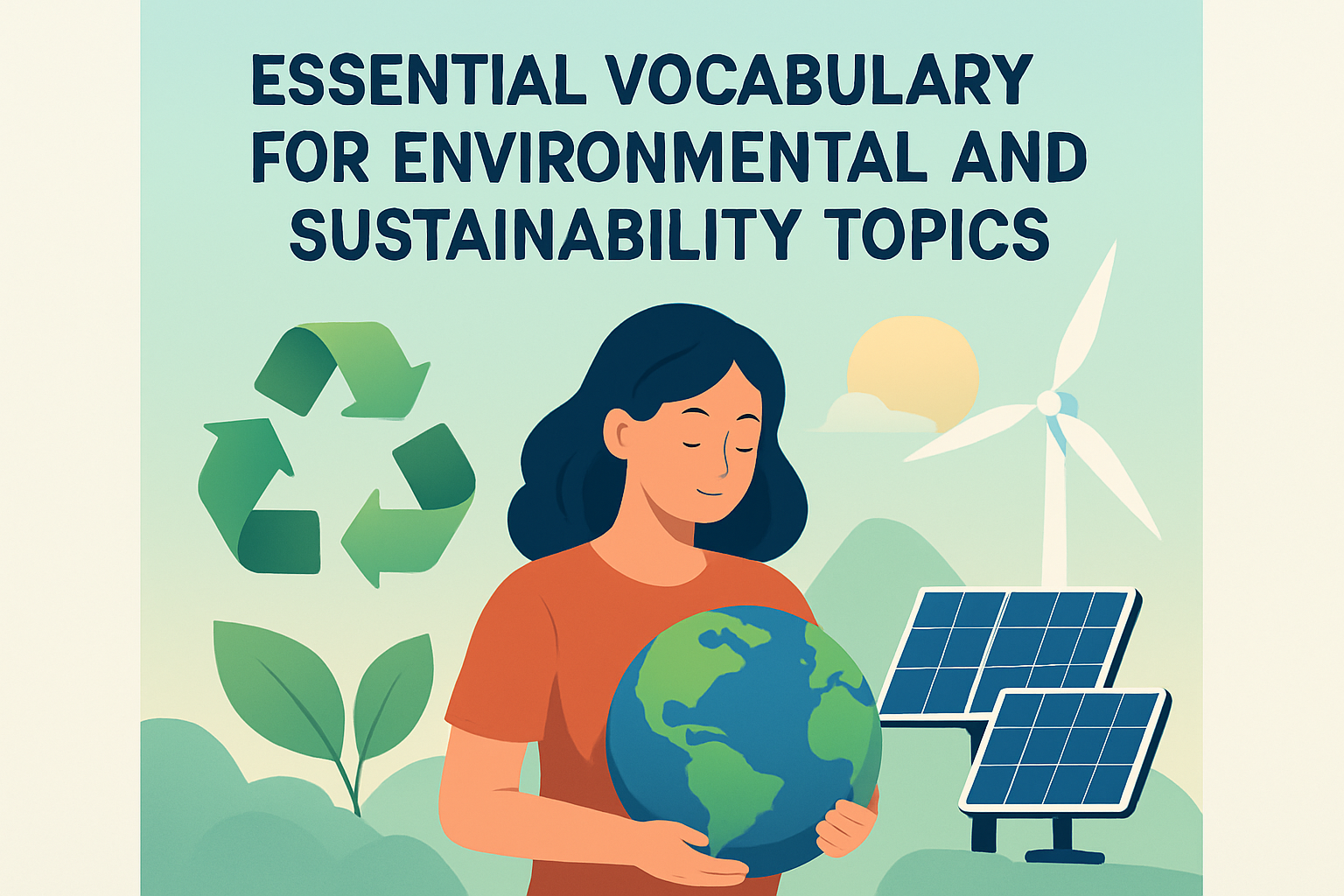
Environmental and sustainability topics are increasingly critical in today’s rapidly changing world. Understanding these subjects is essential, not only for professionals in science and policy but for anyone interested in the health of our planet. By defining and understanding key terms associated with environmental and sustainability issues, individuals can engage in informed discussions, make better decisions, and contribute positively to sustainable development.
Key terms such as “climate change,” “biodiversity,” “carbon footprint,” and “renewable energy” are frequently used in discussions surrounding environmental protection. These terms refer to complex systems and processes that have profound implications for the planet’s future and our everyday lives. Recognizing their meanings relaxes communication barriers, facilitating cooperation across various sectors and communities. This article elucidates these essential vocabularies, providing real-world examples and practical explanations.
Climate Change: Understanding the Impacts and Solutions
Climate change refers to significant alterations in climate patterns, primarily resulting from human activities, notably fossil fuel consumption. The notion of “global warming” characterizes the increase in Earth’s average temperatures attributed to greenhouse gas emissions. Examples abound; the most notable is the melting Arctic sea ice. As temperatures rise, ice caps melt faster, contributing to global sea-level rise and altering weather patterns. Consequences like these underline the importance of reducing emissions through international agreements such as the Paris Agreement.
In terms of everyday implications, climate change may lead to hotter summers or colder winters, depending on where you live. It may also mean more frequent and severe hurricanes, droughts, and floods. These changes threaten food security, water supply, and even health, as warmer climates can promote the spread of infectious diseases.
Renewable Energy: The Shift Away from Fossil Fuels
Renewable energy denotes energy sourced from natural processes replenished at a rate faster than consumed. Typical sources include wind, solar, hydro, and geothermal energy. A real-world exemplar is Denmark’s substantial wind energy production, meeting about 47% of its total electricity consumption. By transitioning from fossil fuels to renewable energy, societies can reduce carbon emissions, slow climate change, and enjoy more sustainable energy supplies.
For individuals, adopting renewable energy can manifest in purchasing solar panels for homes or choosing electric vehicles over traditional gas-powered cars. These changes not only support the environment but can also result in cost savings over time.
Biodiversity: The Importance of Diverse Ecosystems
Biodiversity represents the variety of life on Earth across all levels, from genes to ecosystems. It significantly affects ecosystem functions and services that support life, such as food production, climate regulation, and disease control. An emblematic example is the Amazon rainforest, harboring an estimated 390 billion individual trees that store carbon, helping to regulate the global climate.
The loss of biodiversity can lead to fragile ecosystems that are less reliable and less able to withstand environmental pressures. Maintaining biodiversity is crucial for ecosystem resilience, supporting plants, animals, and humans alike.
- Conservation efforts: Protecting endangered species and their habitats
- Sustainable agriculture: Practices that preserve biodiversity, like crop rotation
- Reducing pollution: Less waste and chemicals safeguard diverse ecosystems
Carbon Footprint: Measuring Human Impact
The term “carbon footprint” measures the total greenhouse gases emitted directly or indirectly by human activities, typically expressed in carbon dioxide equivalent. Everyday activities, such as driving a car, heating a home, or purchasing goods, all contribute to one’s carbon footprint. For example, online shopping’s rise poses questions about its carbon footprint owing to packaging waste and transportation emissions.
To reduce one’s carbon footprint, consider utilizing public transportation, adopting a plant-based diet, or supporting companies committed to sustainability. Monitoring personal and organizational carbon footprints can lead to more informed decisions and proactive strategies to lessen impacts.
Waste Management: Strategies for a Sustainable Future
Waste management encompasses the collection, transport, and disposal or recycling of waste materials. Efficient waste management practices help protect the environment, conserve resources, and enhance sustainability. For instance, Sweden is renowned for its effective waste management system, recycling almost 99% of its household waste, even importing waste from other countries to fuel its waste-to-energy systems.
Individually, waste management can begin with simple practices like separating recyclables, reducing single-use plastics, and composting organic waste. Communities can promote larger-scale projects like neighborhood recycling programs or municipal composting initiatives.
Conclusion: Advancing Understanding and Responsibility
In summation, apprehending essential vocabulary for environmental and sustainability topics accelerates our capacity to engage meaningfully with ongoing challenges. Topics like climate change, renewable energy, biodiversity, carbon footprint, and waste management are instrumental to informed global citizenship and responsible action.
Realizing the impact of our daily decisions provides the foundation needed to foster positive environmental changes, safeguarding this planet for future generations. It’s not merely an academic exercise; it’s the groundwork for impactful change. Engage proactively: start by evaluating your carbon footprint, consider switching to renewable energies, advocate for biodiversity, and support responsible waste management practices.
By demystifying these essential concepts and adopting a proactive approach, anyone can contribute to sustainable development. Empower yourself and others with knowledge—today’s informed choices are tomorrow’s legacy.
Frequently Asked Questions
1. Why is it important to understand fundamental vocabulary in environmental and sustainability topics?
Understanding essential vocabulary in environmental and sustainability topics is vital because these fields are interconnected with many aspects of our daily lives. Whether it’s through government policy, business practices, community planning, or personal lifestyle choices, environmental and sustainability issues impact us all. Familiarity with key terms allows individuals to engage in conversations, understand current events, and make informed decisions that contribute to a more sustainable future. For example, terms like “climate change,” “renewable energy,” and “biodiversity” are frequently used in media and discussions about the environment. Knowing what these mean and how they relate to each other empowers people to participate more actively in discussions and initiatives aimed at preserving our planet. In essence, understanding these concepts helps bridge the gap between scientific knowledge and practical application, encouraging informed decision-making and fostering behaviors that support sustainable living.
2. What are the fundamental terms one should know when exploring sustainability?
When delving into sustainability, certain terms are fundamental in understanding the subject comprehensively. “Sustainability” itself refers to meeting our present needs without compromising the ability of future generations to meet their own needs, often balancing ecological, economic, and social factors. “Climate change” describes significant long-term changes in weather patterns, often linked to human activity and greenhouse gas emissions. “Carbon footprint” measures the total greenhouse gas emissions caused by an individual, organization, event, or product, highlighting areas for reduction. “Biodiversity” refers to the diversity of life forms within a given ecosystem, which contributes to its resilience and productivity. “Renewable energy” includes natural sources that are replenished more quickly than they are consumed, such as solar, wind, and hydropower, which are crucial for reducing dependency on fossil fuels. Understanding these and other related terms like “ecosystem services,” “sustainable agriculture,” or “circular economy” forms the foundation for grasping the global effort toward sustainability.
3. How does knowing environmental terminology help in everyday life?
Grasping environmental terminology can significantly influence everyday life by informing personal choices and behaviors that contribute to sustainability. For instance, understanding what “recycling” means goes beyond just separating waste; it’s about knowing the process and the environmental benefits, which can lead to better participation in recycling programs. Similarly, knowing about “energy efficiency” can guide the selection of appliances and vehicles that consume less power, reducing both utility bills and environmental impact. An awareness of “sustainable agriculture” might influence dietary choices toward organic or locally sourced products, supporting farmers who prioritize environmentally friendly practices. Additionally, familiarity with terms like “water conservation” or “urban sprawl” can encourage practices like reducing water waste and supporting policies that promote efficient land use. Overall, this knowledge turns general awareness into actionable insights that foster sustainable living.
4. How do environmental and sustainability vocabularies play a role in policy and business decisions?
In policy and business contexts, environmental and sustainability vocabularies form the language through which objectives, challenges, and strategies are communicated and implemented. Policymakers use terms like “carbon neutrality” to set goals for reducing emissions and combating climate change. These terms help in drafting regulations and standards that industries and businesses must adhere to, ensuring alignment with national and international sustainability commitments. In the business realm, understanding terms like “corporate social responsibility” (CSR) and “environmental impact assessment” allows companies to evaluate and mitigate their environmental footprints, often enhancing brand reputation and compliance with legal standards. For instance, a business engaging in “sustainable supply chain management” can reduce waste, optimize resources, and enhance its overall sustainability. Ultimately, the use of precise and widely understood terminology enables clear communication, facilitates transparency, and drives concerted efforts toward achieving sustainability goals.
5. Are there any resources recommended for learning more about environmental and sustainability terminology?
Absolutely! There are numerous resources available to help individuals learn more about environmental and sustainability terminology. Online platforms like Coursera, edX, or Khan Academy offer free and paid courses that cover basic to advanced topics in sustainability and environmental science. Websites of organizations such as the United Nations Environment Programme (UNEP) or the World Wildlife Fund (WWF) often have glossaries and articles that explain key terms in context. Books like “The Sixth Extinction” by Elizabeth Kolbert or “This Changes Everything” by Naomi Klein delve deeply into environmental issues while introducing critical vocabulary. Additionally, governmental and research bodies often provide reports and white papers that are rich with terminology and conceptual explanations. Engaging with these resources can expand one’s understanding and capability to contribute to sustainability discussions and actions.





